Blog

  • Does Walking Actually Help Knee Arthritis? Here Is What the Research Shows

    Does Walking Actually Help Knee Arthritis? Here Is What the Research Shows

    One question I hear more than almost any other is this: “Coach D, does walking help knee arthritis, or does it make things worse?”

    It is a fair question. When your knees hurt, walking feels like the last thing you should be doing. The instinct is to rest, protect, and wait for something to change.

    But here is what the research actually shows about whether walking helps knee arthritis. A study following more than 1,200 adults with knee osteoarthritis found that those who walked for exercise had 40% lower odds of developing frequent knee pain compared to those who did not (Lo et al., 2022). Same diagnosis. Very different outcomes. The difference was whether walking was happening consistently.

    If you have been wondering whether walking helps knee pain or makes things worse, the answer is clearer than most people realize.

    KEY TAKEAWAY

    Yes. Walking for exercise helps with knee pain. Adults with knee osteoarthritis who walk regularly have significantly lower odds of developing frequent knee pain and show less structural joint damage over time compared to those who do not walk (Lo et al., 2022).

    Here is what the research shows about how walking protects the knee, how much you need, and what to watch out for as you build the habit.

    Ready to Find Out What Your Body Can Do?

    It takes less than 3 minutes. No gym. No equipment. Just a simple test that shows you if your body can do more than it’s been telling you.

    Take the 3-Minute Walk Test

    M3 is a behavioral wellness coaching program. It is not medical treatment and does not replace advice from your physician. Consult your doctor before beginning any new movement or nutrition program.

    Does walking actually help knee arthritis?

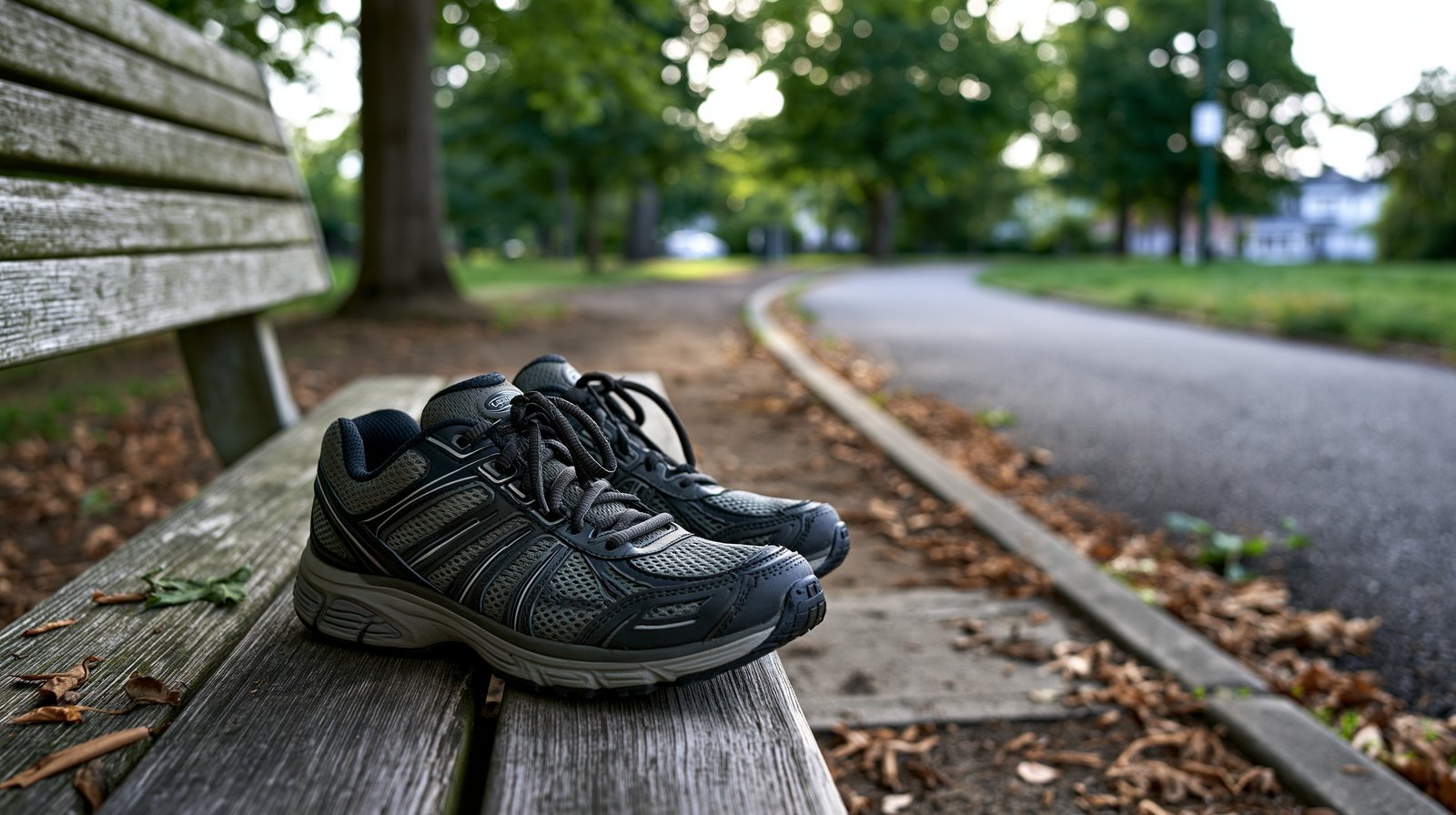
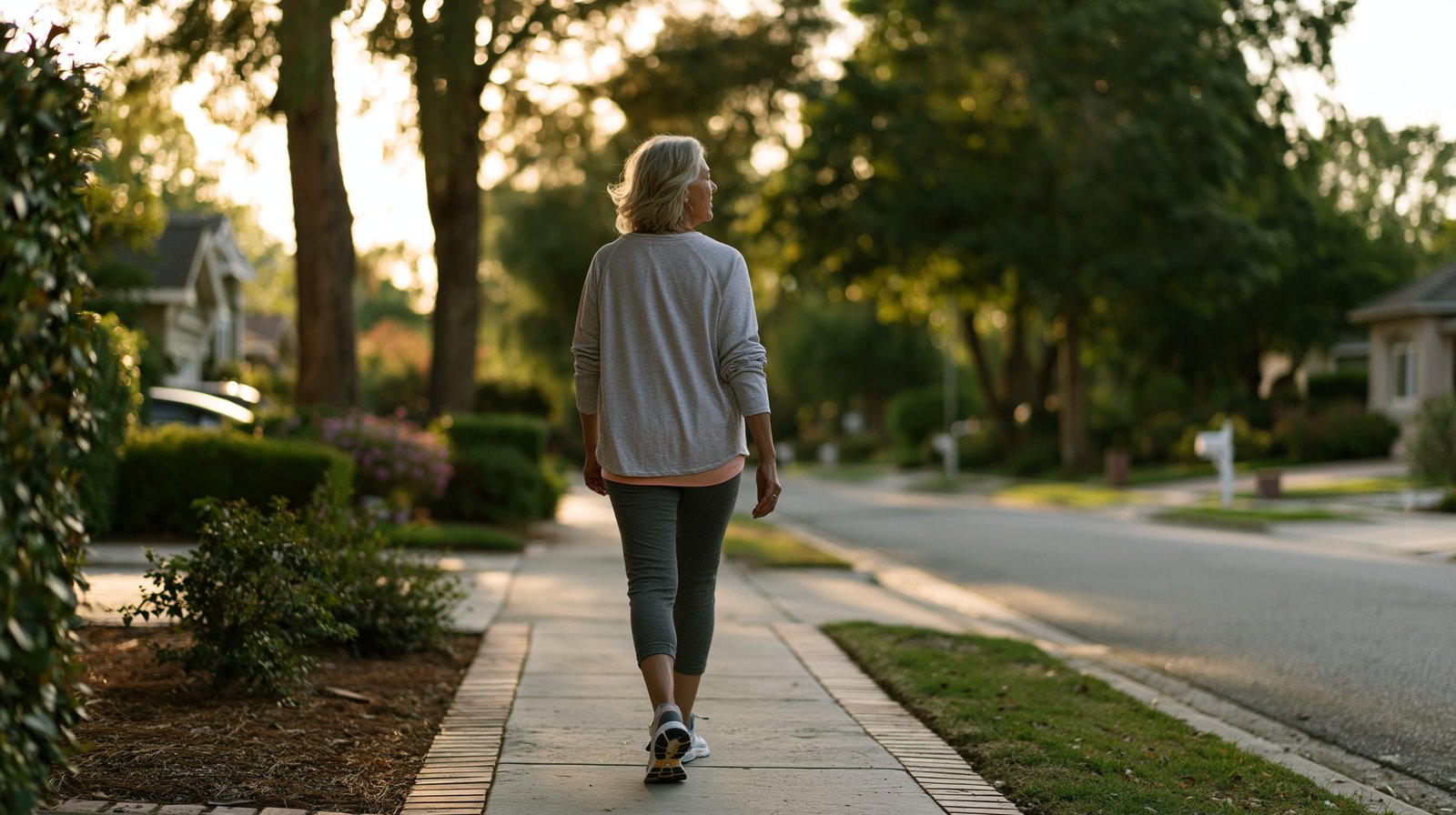
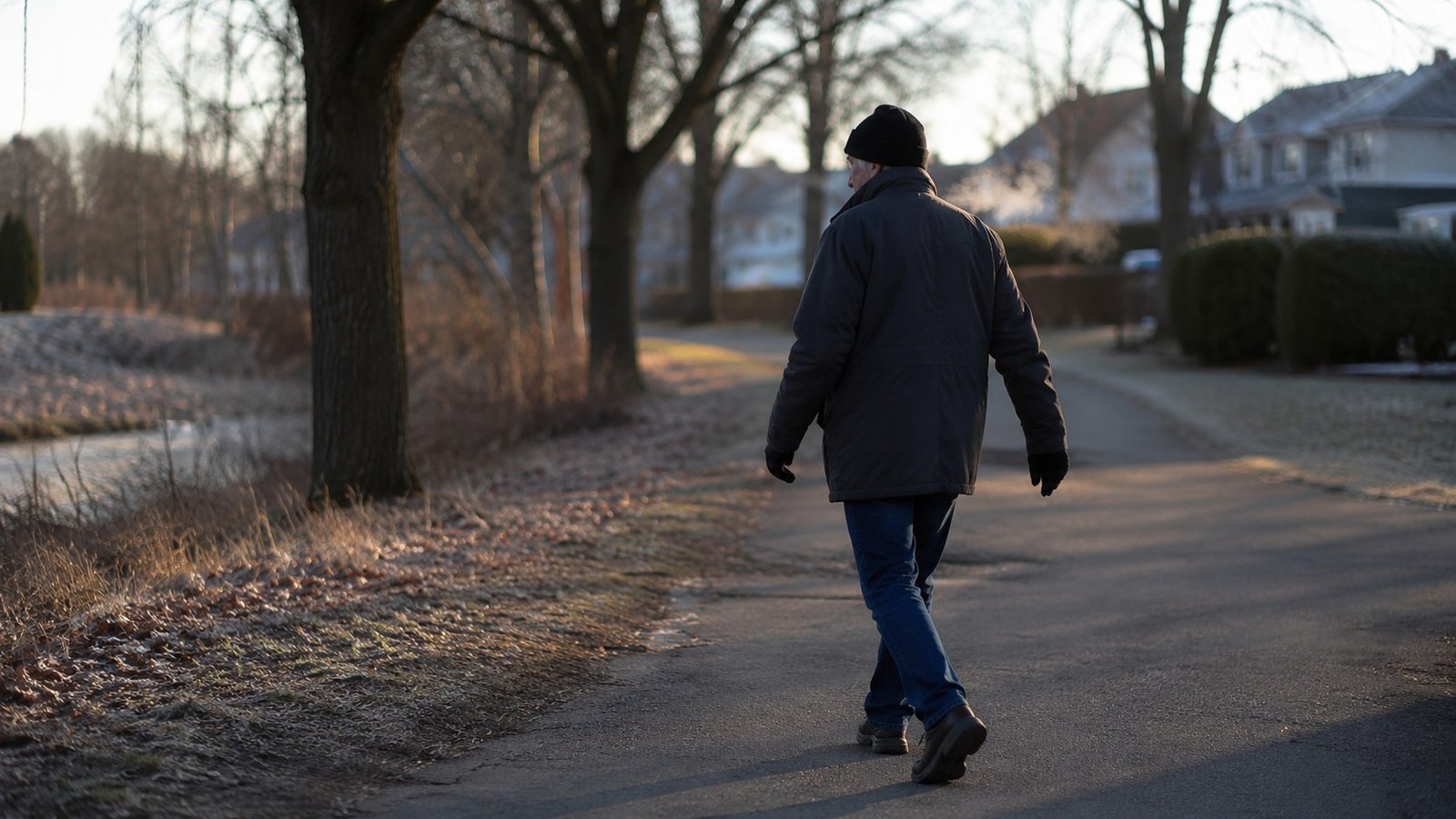
    does walking help knee arthritis close up walking sneakers suburban path

    The short answer is yes. And the evidence behind that answer is more substantial than most people with knee arthritis have ever been told.

    Does walking help knee arthritis? A large observational study of more than 1,200 adults with knee osteoarthritis found that those who walked for exercise had 40% lower odds of developing frequent knee pain compared to those who did not (Lo et al., 2022). The walkers also showed less structural joint damage on X-ray over the follow-up period. Same diagnosis. Less progression. The difference was consistent walking.

    What makes this finding particularly meaningful is the population it studied. These were adults aged 50 and older who already had radiographic evidence of osteoarthritis. Not people trying to prevent the condition. People who already had it. And walking still made a measurable difference.

    There is also a statistic worth knowing on the other side of this. Only 39% of adults with osteoarthritis receive a referral or recommendation to exercise from their primary care provider (Keogh et al., 2024). That means the majority of people with knee arthritis are never told about the one intervention with the clearest evidence behind it. If nobody told you walking was this effective, that is not an oversight on your part. It is a gap in how osteoarthritis care gets delivered.

    How does walking protect your knee joint?

    how does walking help arthritic knees woman stretching park bench morning

    Think of cartilage like a sponge. It has no blood supply of its own. The only way it receives nutrients and stays healthy is through movement. Every step you take compresses the cartilage and squeezes fluid out, then as the weight lifts, fresh nutrient-rich fluid flows back in. Stop moving, and the cartilage starts to starve.

    That is why walking to help knee arthritis is a better question than most people think to ask. Joints are not like car tires grinding down with use. They are living tissue that depends on movement for repair. The research describes it more accurately as a process of wear and repair, and walking tips that balance in your favor.

    Walking also strengthens the muscles that surround your knee. Those muscles, particularly the quadriceps, are your joints’ primary shock absorbers. When they are strong, they take on the load that would otherwise fall directly on the cartilage and bone. Research on aerobic walking for knee osteoarthritis consistently shows that this muscle-building effect reduces both pain and functional limitation over time (Roddy et al., 2005).

    There is one more thing worth knowing. Fewer than 4 in 10 adults with osteoarthritis are ever referred to exercise by their primary care provider (Keogh et al., 2024). Most people who wonder whether walking helps knee arthritis never get a clear answer from the people treating them. The research has been available for decades. It just has not been making its way into the room where it matters most.

    What does the research actually show?

    research walking knee osteoarthritis man reviewing notes kitchen morning light

    The research on walking and knee osteoarthritis is more consistent than most people realize. A large observational study following more than 1,200 adults aged 50 and older with knee osteoarthritis found that those who walked for exercise had 40% lower odds of developing frequent knee pain compared to those who did not walk (Lo et al., 2022). That is a substantial difference for an activity that requires no equipment, no gym, and no prescription.

    The same study found that walkers also showed less structural joint damage on X-ray over the follow-up period. That matters because it suggests walking does not just help people feel better. It may slow the physical progression of the condition itself.

    The Cochrane review of exercise and knee osteoarthritis, which pooled data from dozens of randomized controlled trials, confirms the same direction. Exercise reduces pain and improves function in adults with knee osteoarthritis, with low-impact aerobic activity like walking among the most consistently supported approaches (Fransen et al., 2015).

    What the research does not support is the idea that walking with arthritis damages the joint further. For most adults with mild to moderate knee osteoarthritis, the evidence consistently points the other way. The joint does not wear out faster with use. Used correctly, it responds.

    If you have any doubt about whether walking is appropriate for your specific situation, that is a conversation for your physician before you start.

    How much walking do you need for knee arthritis?

    how much walking for knee arthritis woman checking watch before walk

    This is where most advice about whether walking helps knee arthritis goes wrong. It jumps straight to targets like 10,000 steps or 30 minutes a day without accounting for where you are starting from. For adults with knee arthritis, the starting point matters more than the target.

    The research on how much walking helps knee arthritis points to consistency over volume. The Lo et al. (2022) study classified participants as walkers if they reported 10 or more instances of walking for exercise since age 50. That is not a daily target. It is a pattern. Adults who walked regularly, even if not every day or for long durations, experienced meaningfully better outcomes than those who did not walk at all.

    A practical framework based on the evidence looks like this:

    • Start shorter than feels necessary. Five to ten minutes is a real session. It is enough to compress and nourish the cartilage, engage the supporting muscles, and establish the habit.
    • Build gradually. Add one to two minutes per session every few days when your knees are responding well. The signal that guides you is how your knees feel in the two to four hours after a walk, not during it.
    • Aim for consistency over distance. Three to five sessions per week of walking can sustain matters more than occasional long walks that leave your knees paying for it the next day.

    There is no single number that works for every person with knee arthritis. Your body’s response is the most reliable guide you have.

    What should you watch out for when walking with arthritis?

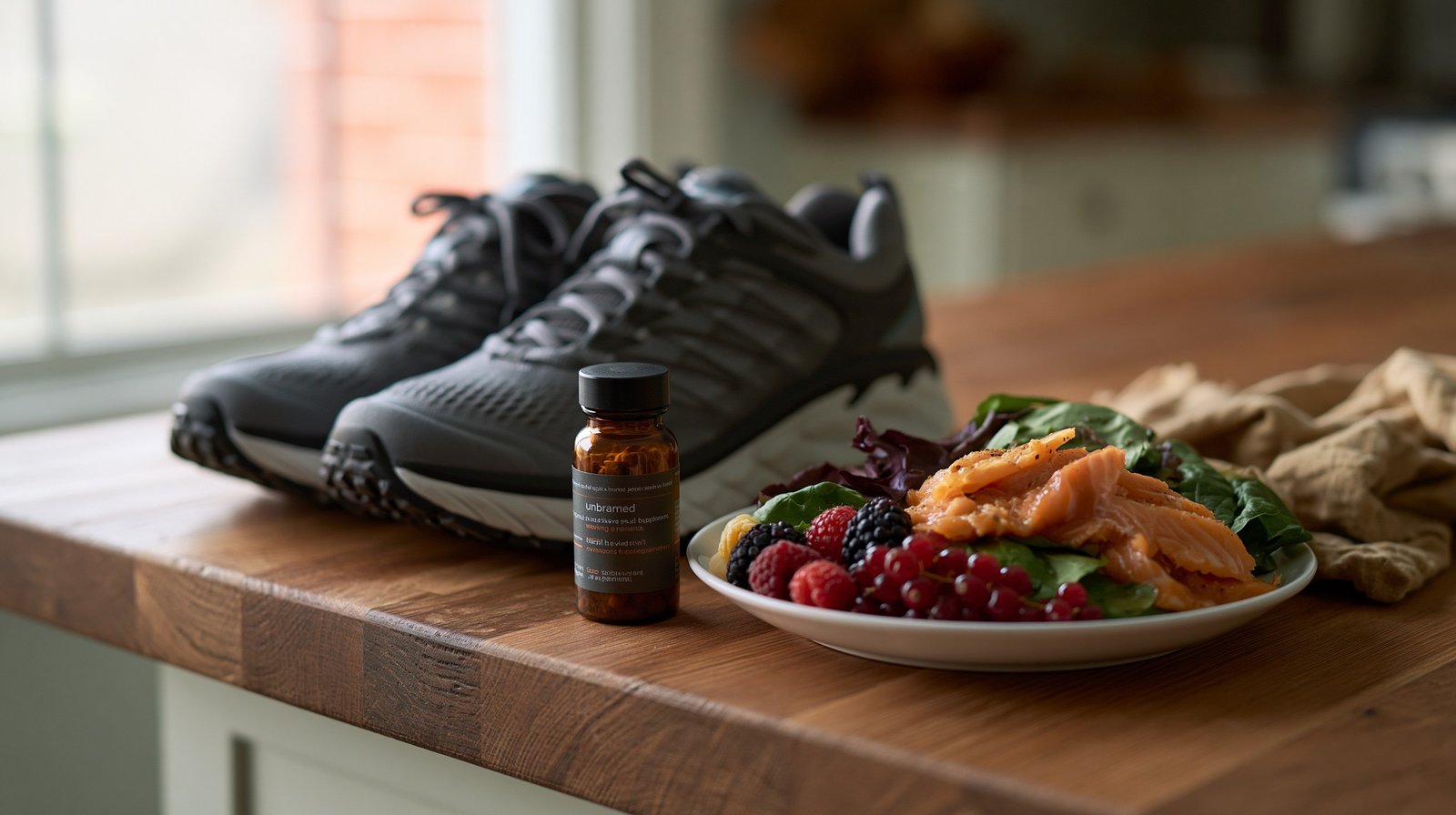
    walking tips for knee arthritis flat lay sneakers water bottle pedometer

    Does walking help knee arthritis when it already hurts? For most adults with mild to moderate osteoarthritis, yes. But there are a few things worth knowing before you start, because how you walk matters as much as whether you walk.

    Pain during the walk versus pain after. Some discomfort during a walk is normal, particularly in the early weeks. The signal that matters is what happens two to four hours afterward. If your knees feel meaningfully worse in that window, the session was longer or more intense than your joint was ready for. Shorten the next session rather than stopping altogether.

    Sharp pain, swelling, or instability are different. These are not the normal discomfort of a joint being asked to work. They are signals to stop and check in with your physician before continuing. Walking through this kind of pain does not build tolerance. It adds load to a joint that is telling you something important.

    Footwear matters more than most people expect. Cushioned, supportive sneakers with a firm midsole reduce the impact your knees absorb with each step. Worn-out soles that have compressed visibly are no longer doing that job. If your walking shoes are more than a year old and you walk regularly, they have likely passed their useful life for joint protection.

    Surface and pace work together. Softer surfaces reduce impact. A conversational pace keeps the load manageable. Neither factor matters as much as session length in the early weeks, but both help when you are trying to find a rhythm that your knees respond well to.

    Nothing in this section replaces a conversation with your physician, particularly if you are managing a specific diagnosis, recent surgery, or significant swelling.

    Wrap-up: Does walking help knee arthritis?

    Yes. And the evidence behind that answer is more substantial than most adults with knee arthritis have ever been told.

    Walking for exercise reduces the odds of developing frequent knee pain by 40% in adults with osteoarthritis (Lo et al., 2022). It nourishes cartilage that has no other way to receive nutrients. It strengthens the muscles that protect the joint from the load it was never meant to absorb alone. And it does this without equipment, without a gym, and without pushing through pain that signals something is wrong.

    Walking is one piece of a larger picture. The complete guide to knee pain relief for adults over 55 covers all three pillars together.

    Ready to Find Out What Your Body Can Do?

    It takes less than 3 minutes. No gym. No equipment. Just a simple test that shows you if your body can do more than it’s been telling you.

    Ready to Find Out What Your Body Can Do?

    It takes less than 3 minutes. No gym. No equipment. Just a simple test that shows you if your body can do more than it’s been telling you.

    Take the 3-Minute Walk Test

    M3 is a behavioral wellness coaching program. It is not medical treatment and does not replace advice from your physician. Consult your doctor before beginning any new movement or nutrition program.

    Frequently Asked Questions

    Does walking help knee arthritis or make it worse?

    The short answer to whether walking helps knee arthritis is yes, and the evidence is specific. A study of more than 1,200 adults with knee osteoarthritis found that those who walked for exercise had 40% lower odds of developing frequent knee pain compared to those who did not walk (Lo et al., 2022). The same study found that walkers showed less structural joint damage over time. Walking does not wear the joint out faster. Used consistently and at the right level, it supports the repair process that the joint depends on.

    How much walking is good for knee arthritis?

    Consistency matters more than duration, especially at the start. Begin with five to ten minutes at a comfortable pace and build gradually based on how your knees respond in the two to four hours after each session. Three to five sessions per week is a reasonable target. The research supports accumulated walking over time, not daily distance goals.

    Is it okay to walk when my knees hurt from arthritis?

    Mild discomfort during a walk is normal and does not mean you are causing damage. The signal to pay attention to is how your knees feel two to four hours afterward. Sharp pain, swelling, or instability during a walk are different and warrant a conversation with your physician before continuing. If you are uncertain whether walking is appropriate for your specific situation, start there.

    What type of walking is best for knee arthritis?

    Flat surfaces, a conversational pace, and supportive footwear create the conditions where walking is most likely to help knee arthritis without adding unnecessary load to the joint. Shorter sessions done consistently outperform occasional long walks. The goal in the early weeks is to find a pattern your knees respond well to, then build from there.

    How long does it take for walking to help knee arthritis?

    The Lo et al. (2022) study tracked participants over 48 months and found meaningful differences between walkers and non-walkers in both pain and structural outcomes. In practice, most adults notice that their knees stop paying for their walks in the days or weeks after starting a consistent pattern, before they notice any reduction in baseline discomfort. Consistency over weeks and months is what produces lasting change.

    Is cycling or swimming better than walking for knee arthritis?

    Does walking help knee arthritis more than cycling or swimming? The evidence base for walking is strong and specific. The research base for walking and knee osteoarthritis is strong and specific (Lo et al., 2022; Fransen et al., 2015). Walking also builds the functional capability most adults with knee arthritis actually want back. If walking is accessible and your knees tolerate it, it is worth prioritizing.

    References

    Fransen, M., McConnell, S., Harmer, A. R., Van der Esch, M., Simic, M., & Bennell, K. L. (2015). Exercise for osteoarthritis of the knee: A Cochrane systematic review. British Journal of Sports Medicine, 49(24), 1554–1557. https://doi.org/10.1136/bjsports-2015-095424

    Keogh, A., Toomey, C., Matthews, J., & Hurley, D. A. (2024). Guideline-based exercise management for hip and knee osteoarthritis: a cross-sectional comparison of healthcare professional and patient beliefs in Ireland. BMJ Open, 14(1), e079019. https://doi.org/10.1136/bmjopen-2023-079019

    Lo, G. H., Vinod, S., Richard, M. J., Harkey, M. S., McAlindon, T. E., Kriska, A. M., Rockette-Wagner, B., Eaton, C. B., Hochberg, M. C., Jackson, R. D., Kwoh, C. K., Nevitt, M. C., & Driban, J. B. (2022). Association between walking for exercise and symptomatic and structural progression in individuals with knee osteoarthritis: Data from the Osteoarthritis Initiative Cohort. Arthritis & Rheumatology, 74(10), 1660–1667. https://doi.org/10.1002/art.42241

    Roddy, E., Zhang, W., & Doherty, M. (2005). Aerobic walking or strengthening exercise for osteoarthritis of the knee: A systematic review. Annals of the Rheumatic Diseases, 64(4), 544–548. https://doi.org/10.1136/ard.2004.028746

  • The Emotional Side of Chronic Knee Pain (The Part Nobody Talks About)

    The Emotional Side of Chronic Knee Pain (The Part Nobody Talks About)

    I have watched people manage knee pain for years. The ones who struggle most are rarely the ones with the most severe physical symptoms. They are the ones carrying something nobody ever addressed: the emotional weight that builds up quietly alongside the pain.

    Nobody told them that chronic knee pain has a documented psychological dimension. Nobody mentioned that the frustration, the low motivation, the creeping sense of isolation. Those are not character flaws. They are recognized patterns that show up in the research consistently.

    If the emotional impact of chronic knee pain has been affecting you more than you let on, you are not alone, and you are not overreacting. This post addresses the part that most knee pain programs completely skip.

    Key Takeaway

    Research analyzing 49 studies and 15,855 individuals found that one in five adults with osteoarthritis experience symptoms of depression, and a similar proportion experience anxiety (Stubbs et al., 2016). The emotional side of chronic knee pain is not incidental. It is part of the condition.

    Here is what the research shows about how chronic knee pain affects mood, identity, and self-perception, and what a whole-person approach actually does about it.

    Ready to Find Out What Your Body Can Do?

    It takes less than 3 minutes. No gym. No equipment. Just a simple test that shows you if your body can do more than it’s been telling you.

    Take the 3-Minute Knee Test

    M3 is a behavioral wellness coaching program. It is not medical treatment and does not replace advice from your physician. Consult your doctor before beginning any new movement or nutrition program.

    Does chronic knee pain actually cause depression?

    Emotional Side of Chronic Knee Pain: woman sitting kitchen table morning light

    The emotional side of chronic knee pain and depression are more closely linked than most people realize. Research analyzing 49 studies and more than 15,000 individuals found that one in five adults with osteoarthritis experience symptoms of depression, with a similar proportion reporting anxiety (Stubbs et al., 2016). The emotional effects of chronic knee pain are not a side issue. They are part of the clinical picture.

    That does not mean knee pain causes depression in every person who has it. What the research shows is that the rate is significantly elevated compared to the general population. Living with persistent pain changes things. It limits what you can do. It interrupts sleep. It shifts the way you think about your body and your future. Those are not small things, and their cumulative effect on mood is real and measurable.

    What matters for you is recognizing that if you have been feeling lower than usual since your knee pain started, that pattern has a name. It is not a weakness. It is not a lack of gratitude. It is a documented response to living with a chronic physical condition that most people manage in silence.

    The first step toward addressing it is naming it honestly, which is what the rest of this post does.

    Why does knee pain affect your mood and motivation?

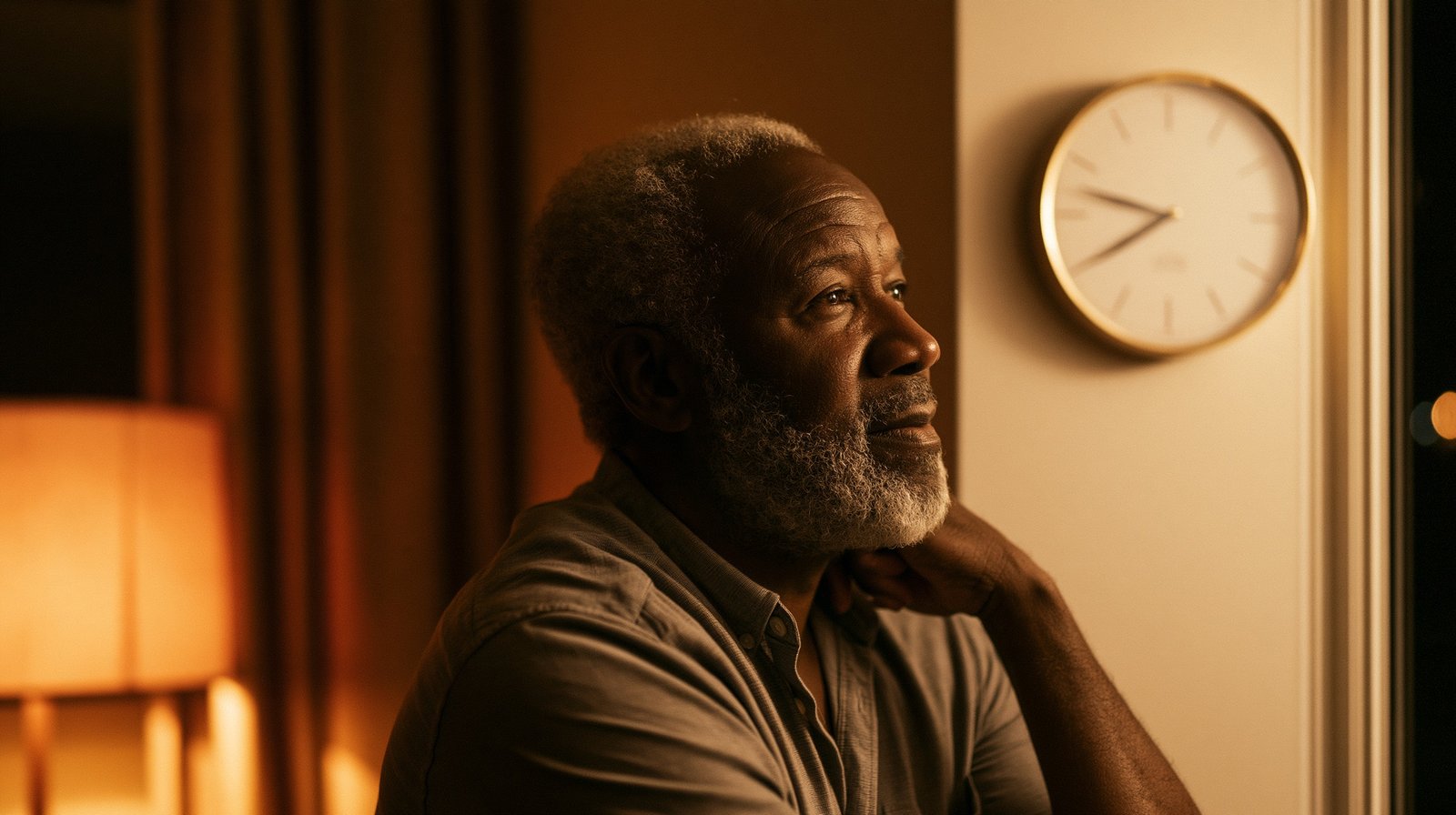
    how chronic pain affects mood man looking out window afternoon light

    Chronic pain and anxiety often travel together, and the reason comes down to what pain quietly removes from your life. It is not just the physical limitation. It is everything that physical limitation takes with it.

    When knee pain makes walking uncomfortable, you stop going to the places that walking took you. The morning walks with a neighbor. The errands you ran yourself. The grandchildren you kept up with. As those things disappear, so do the social connections, the sense of capability, and the daily rhythm that kept your mood regulated. The absence is gradual enough that most people do not notice it happening until they look back and realize how much has changed.

    Research on cognitive and behavioral factors in knee pain found that how you think about your pain directly shapes how much it affects your life (Urquhart et al., 2015). Adults who developed a strong sense that their body could still do things reported significantly better function and mood outcomes than those who did not. Adults who began to fear movement, anticipating that any activity would make things worse, experienced higher pain levels and greater limitation over time.

    This is not about positive thinking as a cure. It is about recognizing that knee pain and mental health are connected in both directions. Pain affects mood. Mood affects how much pain you experience and how well you function. Breaking into that cycle is part of what recovery actually requires.

    The first place that the cycle can be interrupted is in how you understand what is happening to you. Not just in the joint. In the whole experience of living with it.

    What does chronic knee pain do to your sense of identity?

    chronic pain social isolation man sitting empty sports field

    This is the part of the emotional side of chronic knee pain that nobody talks about. Chronic pain and social isolation are well-documented together, but the deeper loss is harder to name. It is not just that you see fewer people. It is that the activities that told you who you were have quietly stepped back, one by one.

    Maybe you were the person who walked every morning. The grandparent who got down on the floor. The one in your group who suggested the hike, organized the trip, and kept up with everyone else. Knee pain did not just make those things harder. It began to rewrite the story you told yourself about what kind of person you are.

    That shift in identity is real, and it compounds. When knee pain limits your quality of life long enough, many adults begin to define themselves by what they can no longer do rather than what they still can. The activities that once gave them energy, confidence, and connection start to feel like reminders of loss instead of possibilities. Motivation drops not because of laziness but because the future feels smaller than it used to.

    What is worth knowing is that this pattern is recognized, and it is not permanent. The research on cognitive factors and knee pain is clear that identity and self-belief are modifiable (Urquhart et al., 2015). Adults who rebuild a sense of what their body is capable of, even starting from very small wins, show measurably better outcomes than those who do not.

    You are not the sum of what your knees currently prevent. That story is still being written.

    How does the way you talk to yourself affect your knee pain?

    mindset and chronic pain woman eyes closed calm expression

    Mindset and chronic pain are connected in ways that go beyond attitude. The research on cognitive factors in knee pain found that adults with high pain self-efficacy, a belief that their body was still capable, reported significantly better function and lower pain levels than those without it (Urquhart et al., 2015). How you think about your body is not separate from how your body performs. It is part of the same system.

    This shows up in a specific way with knee pain. When pain has been present long enough, many adults develop a habit of bracing for it. They anticipate the worst before each walk. They interpret every twinge as confirmation that things are getting worse. That pattern of thinking amplifies how pain feels and makes movement feel more threatening than it is. The result is less movement, more stiffness, and a stronger belief that the body cannot be trusted. The cycle reinforces itself.

    The way you talk to yourself about your body either opens that cycle or closes it. Small, honest encouragement works differently from false positivity. It is not about telling yourself the pain is not there. It is about noticing when your body does something it could not do last week, however small, and letting that register.

    That kind of internal language is something you can practice. It does not require a program or a framework. It starts with paying attention to what you say to yourself in the two minutes after a walk, and choosing something accurate and encouraging instead of defaulting to what still hurts.

    What does a whole-person approach to knee pain actually look like?

    whole person approach knee pain woman walking suburban path

    Holistic knee pain management is a phrase that gets used loosely, but what it means in practice is straightforward. It means treating the physical, nutritional, and emotional dimensions of knee pain at the same time, not one after the other.

    Most knee pain programs address the joint. Some address movement. Very few address what is happening in the mind and the identity of the person living with the pain. That gap is not a minor oversight. Research consistently shows that exercise reduces pain and improves function in adults with knee osteoarthritis (Fransen et al., 2015), but adherence, actually doing the movement consistently, depends heavily on whether the emotional and psychological side is being addressed alongside it.

    A mind-body approach to knee pain looks like this in practice:

    • Movement that starts small enough to build confidence, not just capability. Sessions short enough that your knees respond well and your belief in your body grows alongside your physical tolerance.
    • Meals that reduce the inflammatory baseline your joints are working against every day, so that movement feels more possible and recovery happens faster.
    • Mindfulness that addresses the thought patterns, the self-talk, and the emotional weight that chronic pain accumulates over time.

    None of these three works as well alone as all three do together. Managing knee pain naturally means managing the whole experience of having it, not just the tissue.

    That is what the research points toward. It is also what most adults with chronic knee pain have never been offered.

    Wrap-up: the emotional side of chronic knee pain

    Chronic knee pain is not just a joint problem. The research is clear on this. One in five adults with osteoarthritis experiences depressive symptoms. A similar proportion experience anxiety. The isolation, the identity shift, the quiet erosion of motivation, these are not personal failures. They are documented patterns that show up consistently when pain is present long enough and goes unaddressed as a whole experience.

    The physical side of knee pain gets most of the attention. The emotional side of chronic knee pain gets almost none. That imbalance is part of why so many adults manage their symptoms for years without making meaningful progress. They are working on one part of a three-part problem.

    What changes outcomes is addressing all three parts together. Movement that builds slowly and builds confidence alongside capability. Food choices that lower the inflammatory baseline the joint is working against. And honest attention to the mental and emotional load that chronic pain carries with it, including how you talk to yourself about what your body can do.

    You do not have to have everything figured out before you start. The smallest possible starting point is still a starting point. The 3-Minute Knee Test is exactly that, a structured way to find out what your body responds to, before you commit to anything more.

    Ready to Find Out What Your Body Can Do?

    It takes less than 3 minutes. No gym. No equipment. Just a simple test that shows you if your body can do more than it’s been telling you.

    Take the 3-Minute Knee Test

    M3 is a behavioral wellness coaching program. It is not medical treatment and does not replace advice from your physician. Consult your doctor before beginning any new movement or nutrition program.

    Frequently Asked Questions

    Can chronic pain cause depression?

    Yes. Research analyzing 49 studies and more than 15,000 adults with osteoarthritis found that one in five experience symptoms of depression, with a similar proportion reporting anxiety (Stubbs et al., 2016). The emotional side of chronic knee pain includes documented impacts on sleep, mood, and daily motivation. The emotional effects of chronic knee pain are not incidental. They are a recognized and documented part of living with persistent pain.

    Why does knee pain make me feel isolated?

    Because knee pain limits the activities that connect you to other people. Walking with friends, keeping up with grandchildren, attending events that require being on your feet, when those things become difficult, the social fabric that supported your mood and sense of belonging quietly thins. That is not a weakness. It is a predictable consequence of chronic pain and social isolation that researchers have documented consistently.

    How does mindset affect knee pain recovery?

    Research on cognitive factors in knee pain found that adults with a strong belief in their body’s capability reported significantly better function and lower pain levels than those without it (Urquhart et al., 2015). Mindset and chronic pain are connected in both directions. How you think about your body affects how much you move. How much you move affects how your body feels. Building a realistic, encouraging internal narrative about small progress is part of what recovery actually requires.

    Is it normal to feel anxious about your knee pain getting worse?

    Very common, yes. Fear of movement is one of the most documented cognitive patterns in chronic knee pain. Many adults begin to anticipate pain before it arrives, which leads them to move less, which leads to more stiffness and greater limitation over time. Recognizing that pattern is the first step toward changing it. If anxiety about your knees is affecting your daily decisions, that is worth addressing directly alongside the physical side of your pain.

    What does a whole-person approach to knee pain look like?

    It means addressing movement, nutrition, and the emotional and mental dimensions of knee pain at the same time rather than one after the other. Exercise reduces pain and improves function in adults with knee osteoarthritis (Fransen et al., 2015), but sustained progress depends on whether the psychological side is being addressed alongside it. A whole-person approach combines movement that builds confidence, food choices that reduce inflammation, and attention to the thought patterns that chronic pain creates over time.

    Can improving your mood actually reduce knee pain?

    The relationship runs in both directions. Pain affects mood, and mood affects pain perception. Research on cognitive factors in knee pain found that how you think about your body — your level of self-belief, your expectations about what is possible — directly influences your functional outcomes (Urquhart et al., 2015). Addressing the emotional side of chronic knee pain is not a soft add-on to physical treatment. It is part of what determines how well the physical treatment works.

    References

    Fransen, M., McConnell, S., Harmer, A. R., Van der Esch, M., Simic, M., & Bennell, K. L. (2015). Exercise for osteoarthritis of the knee: A Cochrane systematic review. British Journal of Sports Medicine, 49(24), 1554–1557. https://doi.org/10.1136/bjsports-2015-095424

    Stubbs, B., Aluko, Y., Myint, P. K., & Smith, T. O. (2016). Prevalence of depressive symptoms and anxiety in osteoarthritis: a systematic review and meta-analysis. Age and Ageing, 45(2), 228–235. https://doi.org/10.1093/ageing/afw001

    Urquhart, D. M., Phyomaung, P. P., Dubowitz, J., Fernando, S., Wluka, A. E., Raajmaakers, P., Wang, Y., & Cicuttini, F. M. (2015). Are cognitive and behavioural factors associated with knee pain? A systematic review. Seminars in Arthritis and Rheumatism, 44(4), 445–455. https://doi.org/10.1016/j.semarthrit.2014.07.005

  • Why Short Bursts of Walking Work Better for Sore Knees After 55

    Why Short Bursts of Walking Work Better for Sore Knees After 55

    I used to think longer walks meant better results. More time on your feet, more benefit for your knees. It seemed logical. It was wrong.

    What the research actually shows surprised me when I first came across it. A study comparing continuous walking with shorter bouts in adults with knee osteoarthritis found that continuous walking increased knee pain over time, while the shorter bouts did not (Farrokhi et al., 2017). Same total walking time. Very different experience for the knees.

    If you have been searching for a short-burst walking approach that works for knee pain after 55, the research behind it is more specific than most people realize.

    For adults who have been cutting their walks short because their knees start complaining after ten or fifteen minutes, that instinct may be exactly right. You are not failing at walking. You may be doing precisely what your knees need without knowing it.

    Key Takeaways

    For adults with knee osteoarthritis, shorter bouts of walking outperform one long continuous session for managing knee pain during exercise. Research comparing the two found that continuous walking increased knee pain while interval walking did not, even when total walking time was equal (Farrokhi et al., 2017).

    Here is what the research shows about why short bursts work better, how to structure them, and what to pay attention to as you build your walking habit.

    Ready to Find Out What Your Body Can Do?

    It takes less than 3 minutes. No gym. No equipment. Just a simple test that shows you if your body can do more than it’s been telling you.

    Take the 3-Minute Knee Test

    M3 is a behavioral wellness coaching program. It is not medical treatment and does not replace advice from your physician. Consult your doctor before beginning any new movement or nutrition program.

    Why does walking start to hurt after a certain point?

    Close-up of a mature adult's knee mid-stride on a flat suburban path, warm afternoon light

    If your knees feel reasonable at the start of a walk and progressively worse as you keep going, that is not just how things are. There is a mechanical reason for it.

    When you walk continuously for an extended period, the muscles surrounding your knee gradually fatigue (Doherty, 2003). Those muscles, particularly the quadriceps, are your knee’s primary shock absorbers. When they are fresh, they absorb a meaningful portion of the force each step produces. As they tire, they absorb less of it. The joint itself takes on more of that load with every subsequent step.

    Research measuring knee contact forces during walking found that forces increased significantly after 30 minutes of continuous walking in adults with knee osteoarthritis, regardless of pace (Farrokhi et al., 2017). The joint was absorbing more load at 30 minutes than it was at minute one. That increased loading corresponded directly with increased knee pain in the continuous walking group.

    This matters because most generic walking advice assumes the goal is to build toward longer and longer sessions. For adults over 55 with knee concerns, that assumption skips a critical variable. Duration is not neutral. After a certain point, it starts working against you.

    The good news is that the same study found a straightforward way around this. You do not have to walk less. You have to walk differently.

    What does the research say about shorter walking bouts and knee pain?

    A mature adult man reviewing notes on a clipboard outdoors on a park bench, relaxed and thoughtful expression

    The evidence here is more specific than most people realize. It is not just that shorter walks feel better. There is a measurable mechanical reason why they are better.

    Farrokhi et al. (2017) compared two groups of adults with knee osteoarthritis. One group walked continuously for 45 minutes. The other group walked in three separate 15-minute bouts with rest periods in between — the same total walking time, broken up. The findings were clear:

    Continuous walking increased knee pain over time. The interval walking group experienced no significant increase in knee pain, even though they walked the same total distance.

    The researchers also measured knee contact forces throughout both sessions. After 30 minutes of continuous walking, joint loading increased by 22 to 25 percent above baseline. That is the joint absorbing significantly more force than it was at the start, because the surrounding muscles had fatigued and stopped doing their share of the work.

    The interval group did not escape the loading increase entirely. But they did escape the pain increase. The rest periods between bouts allowed the muscles to partially recover before the next session began. The joint never reached the sustained loading threshold that the continuous walkers hit.

    For adults over 55 with knee concerns, this finding reframes the whole question. The goal is not to build toward a 30-minute continuous walk as fast as possible. The goal is to accumulate walking time in a way that keeps your knees responding well throughout. That is a different target, and it changes how you start.

    How do you structure short walking bouts when your knees are sore?

    A woman in her late 50s checking a simple wristwatch before starting a short walk on a flat residential street, morning light

    The research used 15-minute bouts with one-hour rest periods. That is the clinical format. For most adults starting out with knee concerns, that structure is actually more than you need to begin with.

    Here is a practical starting framework:

    • Start at 5 to 10 minutes per bout. Not 15. If your knees have been limiting your walking for weeks or months, start shorter than feels necessary. You can always add time. You cannot undo a session that pushed too far.
    • Rest between bouts means actual rest. Sitting or light activity. Not another form of exercise. The muscles surrounding your knee need enough recovery time to be useful again before the next walk.
    • Two to three bouts per day is a reasonable starting target. Morning, midday, and late afternoon work well for many adults. The specific times matter less than the consistency.
    • Track how your knees feel two to four hours after each bout, not during it. Post-session feedback is your most reliable data point. Discomfort that ramps up hours later means shortening the next bout. Discomfort that stays flat or fades means you are working at the right level.

    One thing to be clear about. This is not a permanent structure. It is a starting point. As your joint tolerance builds and your supporting muscles get stronger, the bouts get longer and the rest periods get shorter. That progression happens on your body’s timeline, not a generic program’s.

    Nothing in this post substitutes for a conversation with your physician. If you are uncertain whether your knee situation is safe to work with, start there.

    How do you know if short bursts are working for you?

    A mature adult woman writing in a small notebook at a kitchen table, morning light through a window, warm domestic setting

    The most common mistake adults make when starting any new movement approach is measuring the wrong thing. They check how their knees feel during the walk. That is useful information, but it is not the number that tells you whether the approach is working.

    The two to four-hour window after a bout is your real data point.

    Here is a simple tracking framework:

    What to trackWhat it tells you
    Pain during the boutWhether the current session length is too long
    Pain 2 to 4 hours afterWhether the overall load was appropriate
    Pain the following morningWhether cumulative load is building correctly
    Energy and mood afterWhether the approach is sustainable

    If your knees feel roughly the same or better two to four hours after a bout, you are working at the right level. If they feel meaningfully worse, shorten the next bout before you add anything else.

    Progress with this approach is not always linear and it is rarely dramatic in the first week. What most adults notice first is not a reduction in knee pain during walks. It is that the pain after walks stops escalating. The walks stop costing them the rest of the day. That is the first signal that the approach is working.

    From there, the bouts get longer. The rest periods get shorter. The daily total accumulates. The pattern builds on itself when the foundation is right.

    What else affects how your knees respond during a walk?

    Flat lay of supportive walking sneakers, a small water bottle, and a simple pedometer on a wooden floor, warm natural light

    The approach of breaking walking into shorter sessions with rest in between is the most important variable. But several other factors influence how your knees respond, and getting them right makes the difference between a session that builds your capacity and one that just adds to the load.

    Surface. Packed dirt, grass, or a rubberized track absorbs more impact than concrete or asphalt. If you have a choice, use the softer surface. If you do not, the session length matters more than the surface. A 5-minute walk on concrete is still better than a 30-minute walk on a trail.

    Footwear. Cushioned, supportive sneakers with a firm midsole reduce the impact your knees absorb with each step. Worn-out soles that have compressed visibly are no longer doing that job. If your walking shoes are more than a year old and you walk regularly, they are likely past their useful life for joint protection.

    Pace. Comfortable and conversational is the right pace for short walks. You should be able to speak a short sentence without effort. Moving faster than that during the early weeks adds load without adding benefit. Speed becomes relevant later, once your joint tolerance has built and the pattern of shorter sessions is well established.

    Time of day. Many adults with knee concerns find that morning walks feel stiffer than afternoon walks. A few minutes of light movement before your first walk redistributes that stiffness and makes the first session feel considerably different.

    None of these factors replaces the foundation. Think of them as variables you can adjust once you have the habit of short, broken-up walking sessions in place.

    Wrap-up: why short bursts of walking work better for sore knees after 55

    The instinct when your knees hurt during a walk is to push through or stop entirely. The research points to a third option that most adults over 55 have never been given: walk shorter, more often, with rest in between.

    Farrokhi et al. (2017) found that continuous walking increased knee pain in adults with osteoarthritis while interval walking did not, even when the total walking time was identical. The difference was not effort or willpower. It was structure. Shorter sessions keep the muscles around your knee functional throughout the walk. They never reach the fatigue threshold where the joint starts absorbing load on its own.

    That one shift changes what walking feels like after 55. Not easier in the sense of requiring less from you. Easier in the sense that your knees stop making you pay for it afterward.

    Start with sessions your knees can handle. Track how you feel two to four hours later. Build from there. The 3-Minute Knee Test is the smallest possible starting point — a structured way to find out what your body responds to before you commit to anything more.

    Ready to Find Out What Your Body Can Do?

    It takes less than 3 minutes. No gym. No equipment. Just a simple test that shows you if your body can do more than it’s been telling you.

    Take the 3-Minute Knee Test

    M3 is a behavioral wellness coaching program. It is not medical treatment and does not replace advice from your physician. Consult your doctor before beginning any new movement or nutrition program.

    Frequently Asked Questions

    Is it better to walk for 10 minutes three times a day or 30 minutes all at once for knee pain?

    For adults over 55 with knee concerns, three shorter sessions outperform one long continuous walk. Research found that continuous walking increased knee pain in adults with osteoarthritis, while the same total walking time broken into shorter bouts did not (Farrokhi et al., 2017). The muscles surrounding your knee stay more functional throughout shorter sessions, which means the joint absorbs less unassisted load.

    How long should I rest between short walking sessions?

    The research used one-hour rest periods between 15-minute bouts. For most adults starting out, that is a reasonable guideline. The goal of the rest period is to allow the muscles surrounding your knee to partially recover before the next session. If you find that one hour is not enough and your knees feel worse going into the second bout, extend the rest. Your post-session feedback is more reliable than any fixed number.

    Can I do other activities between my short walking sessions?

    Light activity is fine. Sitting, gentle stretching, or everyday household movement between sessions will not undermine the rest period. What you want to avoid is stacking another form of loading exercise directly before or after a walking session. The goal is to let the muscles around your knee recover enough to be useful for the next walk.

    What if my knees feel fine during the walk but hurt later?

    That is your most important signal. Discomfort that surfaces two to four hours after a session means the session was longer or more intense than your joint was ready for. Shorten the next session rather than stopping altogether. The pattern you are looking for is walks that leave your knees feeling roughly the same or better in that two-to-four-hour window, not worse.

    How do I know when I am ready to make my walking sessions longer?

    When your knees consistently feel the same or better in the two to four hours after a session, and that pattern holds for at least five to seven consecutive days, you are ready to add one to two minutes to each session. Do not increase more than one variable at a time. Add duration first. Add frequency later. Add pace last.

    Does walking in short sessions build the same fitness as one long walk?

    For adults managing knee pain, the priority at the start is joint tolerance, not cardiovascular fitness. Short sessions done consistently do build aerobic capacity over time, and research supports accumulated walking time as an effective approach for overall health outcomes. The difference is that shorter sessions allow you to accumulate that time without the joint loading that comes with continuous walking past the 30-minute mark. As your capacity builds and your sessions get longer, the fitness benefits compound alongside the joint benefits.

    References

    Doherty, T. J. (2003). Invited review: Aging and sarcopenia. Journal of Applied Physiology, 95(4), 1717–1727. https://doi.org/10.1152/japplphysiol.00347.2003

    Farrokhi, S., Jayabalan, P., Gustafson, J. A., Klatt, B. A., Sowa, G. A., & Piva, S. R. (2017). The influence of continuous versus interval walking exercise on knee joint loading and pain in patients with knee osteoarthritis. Gait & Posture, 56, 129–133. https://doi.org/10.1016/j.gaitpost.2017.05.024

    Fransen, M., McConnell, S., Harmer, A. R., Van der Esch, M., Simic, M., & Bennell, K. L. (2015). Exercise for osteoarthritis of the knee: A Cochrane systematic review. British Journal of Sports Medicine, 49(24), 1554–1557. https://doi.org/10.1136/bjsports-2015-095424

    Roddy, E., Zhang, W., & Doherty, M. (2005). Aerobic walking or strengthening exercise for osteoarthritis of the knee: A systematic review. Annals of the Rheumatic Diseases, 64(4), 544–548. https://doi.org/10.1136/ard.2004.028746

  • Knee Pain Relief for Adults Over 55: The Complete Guide

    Knee Pain Relief for Adults Over 55: The Complete Guide

    Knee pain relief for adults over 55 comes down to three factors working together: how you move, what you eat, and how you think about your body. Rest alone does not change the pattern. A Cochrane review of 54 trials found that exercise consistently improves function and reduces discomfort in adults with knee osteoarthritis (Fransen et al., 2015). This guide covers all three factors and links to the research behind each one.

    I spent years telling people that knee pain was something you managed, not something you changed. That was wrong. Not because I was trying to mislead anyone. Because nobody had shown me the full picture yet.

    The research on knee pain and adults over 55 is clearer than I expected. Movement done correctly does not make knee pain worse. What you eat affects how your joints feel every single day. And the way I think about my own knees, what I believed was possible after three surgeries, turned out to matter more than I ever would have guessed.

    None of those three factors works as well alone as all three do together. That is the idea behind everything on this page.

    The three factors that determine outcomes

    Most adults who find me have already tried to fix this. They pushed through the pain and paid for it the next day. They followed a walking program or a YouTube routine and ended up worse off than when they started. After a few rounds of that, stopping movement feels like the safe choice.

    It is not wrong to stop something that is hurting you. What was missing was not effort. It was a starting point that matched where they actually were, not where a generic program assumed they would be.

    Here is what the research points to when all three factors are addressed together.

    Movement is the factor most adults get backwards. The instinct when something hurts is to move less. For chronic knee pain in adults over 55, the opposite is true. Joints need movement to stay lubricated. The muscles around your knee need regular load to stay capable of absorbing the force each step produces (Doherty, 2003). A Cochrane review of 54 trials confirmed that exercise consistently improves function and reduces discomfort in adults with knee osteoarthritis (Fransen et al., 2015). The key is not how much you move. It is how you start.

    Meals affect the inflammatory environment your joints are operating in every single day. Chronic joint discomfort has an inflammatory component. Foods that drive systemic inflammation raise your baseline before you take a single step. Foods that lower it, fatty fish, leafy greens, olive oil, and berries, work in the other direction over weeks and months of consistent choices. No food reverses structural joint changes. But the environment your joints are working in matters more than most people expect.

    Mindfulness is the factor that gets dismissed most often. What you believe about your body shapes what you attempt. What you tell yourself during a difficult walk shapes whether you go again tomorrow. The behavioral side of chronic knee pain is real, measurable, and addressable. It does not fix the joint. It determines whether everything else you do actually sticks.

    None of those three factors works as well alone as all three do together. That is what M3 is built on.

    Ready to Find Out What Your Body Can Do?

    It takes less than 3 minutes. No gym. No equipment. Just a simple test that shows you if your body can do more than it’s been telling you.

    Take the 3-Minute Knee Test

    M3 is a behavioral wellness coaching program. It is not medical treatment and does not replace advice from your physician. Consult your doctor before beginning any new movement or nutrition program.

    What does a 90-day path to walking 30 minutes actually look like?

    Close-up of a mature adult's feet in supportive white sneakers taking a deliberate step on a flat suburban sidewalk, warm morning light casting a soft shadow
    What does a 90-day path to walking 30 minutes actually look like?

    Most programs hand you a schedule and assume you are starting from a reasonable baseline. A 20-minute walk three times a week. A set of exercises you do in the morning. For adults over 55 who have been avoiding movement because it hurts, that is not a starting point. That is week six of someone else’s program.

    A realistic 90-day path starts where you actually are.

    The first month is about one thing: showing your body that movement is safe. Sessions are short, often two to three minutes. The goal is not fitness. It is not progress in the traditional sense. It is proof. Proof that you can move without paying for it the next day. That proof is what makes everything after it possible.

    The second month builds on that foundation. Sessions get longer. Consistency becomes the focus. You are not just moving. You are building a pattern your body recognizes and expects. That shift from occasional effort to daily habit is where most programs fail people. It is also where the research is clearest about what works.

    The third month is when the goal becomes real. Thirty minutes of brisk walking, done comfortably, without cutting it short. Not because you pushed through. Because you built toward it correctly from the beginning.

    Nothing in this post substitutes for a conversation with your physician. If you are uncertain whether your knee pain is safe to work with, start there.

    Ready to Find Out What Your Body Can Do?

    It takes less than 3 minutes. No gym. No equipment. Just a simple test that shows you if your body can do more than it’s been telling you.

    Take the 3-Minute Knee Test

    M3 is a behavioral wellness coaching program. It is not medical treatment and does not replace advice from your physician. Consult your doctor before beginning any new movement or nutrition program.

    Walking and knee pain

    A man in his late 50s stretching his legs on a park bench before a morning walk, relaxed and prepared expression, dappled sunlight through trees, green foliage
    Walking and knee pain

    These posts cover the research on walking safely with knee pain, why movement helps rather than hurts, and how to build a walking habit that sticks.

    Food and joint health

    A wooden kitchen table with a flat lay arrangement of anti-inflammatory foods, wild salmon fillet, fresh blueberries, leafy spinach, olive oil bottle, sliced ginger root, warm natural light from a window
    Food and joint health

    These posts cover the connection between what you eat and how your joints feel, with specific foods backed by research.

    The mental side of knee pain

    A woman in her early 60s sitting quietly on a porch step in the early morning, eyes closed, hands relaxed in her lap, soft golden light
    The mental side of knee pain

    These posts cover the emotional and behavioral dimensions of living with chronic knee pain, and what actually helps.

    • More posts coming soon.

    What you wear and use

    A close-up flat lay of a pair of supportive cushioned walking sneakers on a wooden floor beside a water bottle and a simple fitness tracker, warm natural light
    What you wear and use

    These posts cover footwear, surfaces, and gear choices that affect how your knees respond to walking.

    • More posts coming soon.

    Rest and recovery

    A mature adult man sleeping peacefully in a softly lit bedroom, white bedding, early morning light through sheer curtains
    Rest and recovery

    These posts cover the relationship between sleep quality and joint health in adults over 55.

    • More posts coming soon.

    Knees and everyday movement

    A woman in her late 50s descending a short flight of outdoor steps carefully and confidently, holding a light grocery bag, warm afternoon light, calm suburban setting
    Knees and everyday movement

    These posts cover the moments between walks: stairs, chairs, cars, and the daily habits that add up.

    • More posts coming soon.

    Walking in every season

    A split composition showing the same suburban walking path across four seasons, spring blossoms, summer green, autumn leaves, light winter frost
    Walking in every season

    These posts cover how temperature, humidity, and seasonal changes affect knee pain and walking habits.

    • More posts coming soon.

    Ready to Find Out What Your Body Can Do?

    It takes less than 3 minutes. No gym. No equipment. Just a simple test that shows you if your body can do more than it’s been telling you.

    Take the 3-Minute Knee Test

    M3 is a behavioral wellness coaching program. It is not medical treatment and does not replace advice from your physician. Consult your doctor before beginning any new movement or nutrition program.

    Wrap-up: knee pain relief for adults over 55

    Knee pain after 55 is not a verdict. It is a pattern. And patterns respond to the right approach applied consistently over time.

    Everything on this page points in the same direction. Move correctly. Eat in a way that lowers your baseline inflammation. Address the mental side of living with chronic joint concerns. None of those three works as well alone as all three do together.

    The posts in each section above go deeper into every piece of this. Start wherever the question is most urgent for you right now. The 3-Minute Knee Test is the place to begin if you are not sure where that is.

    References

    Doherty, T. J. (2003). Invited review: Aging and sarcopenia. Journal of Applied Physiology, 95(4), 1717–1727. https://doi.org/10.1152/japplphysiol.00347.2003

    Fransen, M., McConnell, S., Harmer, A. R., Van der Esch, M., Simic, M., & Bennell, K. L. (2015). Exercise for osteoarthritis of the knee: A Cochrane systematic review. British Journal of Sports Medicine, 49(24), 1554–1557. https://doi.org/10.1136/bjsports-2015-095424

    Calder, P. C. (2013). Omega-3 polyunsaturated fatty acids and inflammatory processes: Nutrition or pharmacology? British Journal of Clinical Pharmacology, 75(3), 645–662. https://doi.org/10.1111/j.1365-2125.2012.04374.x

    Urquhart, D. M., Phyomaung, P. P., Dubowitz, J., Fernando, S., Wluka, A. E., Raajmaakers, P., Wang, Y., & Cicuttini, F. M. (2015). Are cognitive and behavioural factors associated with knee pain? A systematic review. Seminars in Arthritis and Rheumatism, 44(4), 445–455. https://doi.org/10.1016/j.semarthrit.2014.07.005

  • 7 Anti-Inflammatory Foods Adults Over 55 Should Know About

    7 Anti-Inflammatory Foods Adults Over 55 Should Know About

    I did not change what I ate until after my second surgery. Nobody told me to. The focus was always on the joint itself — what to do with it, how to move it, when to rest it. Food felt like a separate conversation.

    It is not a separate conversation. It never was.

    If you have been looking for the best anti-inflammatory foods for knee pain, here is what I wish someone had told me twenty years ago. What you eat affects the level of inflammation your body is running at baseline. And that baseline is what your knees are working against every time you take a step. Lower the baseline, and the same walk feels different. Not because the joint changed overnight, but because the environment it is operating in did.

    KEY TAKEAWAY

    Certain foods consistently lower systemic inflammation, which affects how joints feel and function in adults with knee concerns. Omega-3 fatty acids have the strongest research support, with evidence showing they modulate the production of inflammatory compounds at the cellular level (Calder, 2013). No food reverses structural joint changes. But lowering baseline inflammation changes the daily experience of living in a body with knee pain.

    Here are seven foods the research points to consistently, what each one actually does, and how to add them without turning your kitchen upside down.

    Ready to Find Out What Your Body Can Do?

    It takes less than 3 minutes. No gym. No equipment. Just a simple test that shows you if your body can do more than it’s been telling you.

    Take the 3-Minute Knee Test

    M3 is a behavioral wellness coaching program. It is not medical treatment and does not replace advice from your physician. Consult your doctor before beginning any new movement or nutrition program.

    What do anti-inflammatory foods actually do for your knees?

    Before we get to the list, it helps to understand what you are actually trying to accomplish.

    Chronic joint discomfort has an inflammatory component. Your body produces inflammatory compounds called cytokines that sensitize joint tissue. When that process is running at a high baseline, your knees start every walk already more irritated than they need to be. The joint is not just dealing with the mechanical load of movement. It is dealing with that load on top of tissue that is already primed to hurt.

    Anti-inflammatory foods work by reducing the production of those compounds. Omega-3 fatty acids in particular modulate the body’s inflammatory response at the cellular level, affecting the same pathways that drive chronic joint discomfort (Calder, 2013). The effect is not dramatic or immediate. It is cumulative. Consistent intake over weeks and months shifts the baseline in a direction that makes daily movement more manageable.

    What these foods do not do is reverse structural changes in the joint. Cartilage loss, bone spurs, changes that show up on imaging — food choices do not undo those. What they do is change the inflammatory environment those structures are sitting in. That distinction matters because it sets realistic expectations while still making a real case for why this is worth paying attention to.

    If you want to understand more about what is driving your knee pain in the first place, I covered the three most common causes of why your knees hurt when you walk. The inflammatory component is one of them, and what you eat connects directly to it.

    Why is fatty fish one of the best foods for knee pain?

    What do anti-inflammatory foods actually do for your knees

    Fatty fish sits at the top of this list for a reason. Salmon, mackerel, sardines, and herring are the most concentrated dietary sources of EPA and DHA, the two omega-3 fatty acids with the strongest evidence for reducing inflammation.

    Here is what they actually do. EPA and DHA modulate the production of inflammatory eicosanoids and cytokines, the compounds your body produces when chronic inflammation is running (Calder, 2013). They do not switch inflammation off. They turn down the volume on a process that, in adults with chronic joint concerns, has been running too loud for too long.

    The research on omega-3s and joint health is among the most consistent in the nutritional science space. Most studies use two to three servings of fatty fish per week as the intake level that produces measurable effects on inflammatory markers. That is the context for what the research looks at, not a prescription for what you must eat.

    Sardines are worth a special mention here. They are the most affordable option on the list, they are shelf-stable, and they are one of the few foods where you eat the small bones, which adds a meaningful calcium contribution alongside the omega-3s. A can of sardines on whole-grain crackers is not glamorous. It is practical, and it works.

    If you do not eat fish, plant-based omega-3 sources exist, and we will get to them. They are a useful addition, but they work differently, and the conversion rate to EPA and DHA is limited compared to direct consumption of fatty fish.

    What makes leafy greens worth eating when your knees hurt?

    Why is fatty fish one of the best foods for knee pain

    Spinach, kale, Swiss chard, arugula. These are not on this list because they are generally healthy. They are on it because of specific compounds that show up consistently in joint health research.

    Leafy greens are high in vitamin K and in antioxidants, including quercetin and kaempferol. Vitamin K plays a role in cartilage metabolism and has been associated with lower rates of knee osteoarthritis progression in observational studies. Quercetin and kaempferol inhibit inflammatory pathways, including some of the same ones targeted by the omega-3s in fatty fish. Different mechanism, same general direction.

    The antioxidant piece matters for a reason that often gets overlooked. Chronic inflammation generates oxidative stress, a kind of cellular wear that compounds over time in joints that are already dealing with structural changes. Antioxidants from food help manage that process. They are not a cure for oxidative damage. They reduce the rate at which it accumulates.

    One practical note on preparation. Raw or lightly cooked greens retain more of the active compounds than heavily processed or overcooked versions. A handful of spinach in a smoothie, arugula as a salad base, lightly sauteed kale with olive oil, all of these preserve what you are actually after. Boiling until grey is less useful.

    You do not need to eat a pound of greens a day. Consistent daily exposure, even a modest amount, is more valuable than occasional large servings with nothing in between.

    Why do berries belong on the anti-inflammatory foods list?

    What makes leafy greens worth eating when your knees hurt

    Blueberries, strawberries, raspberries, cherries. The thing that puts all of these in the same conversation is anthocyanins, a class of flavonoid that gives berries their color and does measurable work on inflammation.

    Anthocyanins inhibit the COX-2 enzyme. If that sounds familiar, it is because COX-2 is the same pathway targeted by many over-the-counter anti-inflammatory medications. The effect of food is milder and more gradual than that of medication. But it is real, it accumulates with consistent consumption, and it comes without the gastrointestinal side effects that chronic NSAID use can produce in older adults.

    Tart cherries deserve a separate mention. The research on tart cherry juice, specifically the tart variety rather than the sweet, shows reductions in inflammatory markers and muscle soreness following physical activity. That post-activity recovery piece is worth paying attention to.

    A few practical notes. Fresh, frozen, and dried berries all retain meaningful levels of anthocyanins. Frozen is often more practical and significantly less expensive, particularly outside of peak season. If you are using dried berries, check the label; many commercially dried fruits have added sugar that works against what you are trying to accomplish.

    Berries also happen to be one of the most accessible additions on this list. Most people already eat them occasionally. The shift is from occasional to consistent. That is a smaller ask than it might sound.

    What does olive oil do for joint inflammation?

    Why do berries belong on the anti-inflammatory foods list

    Extra virgin olive oil contains a compound called oleocanthal. Oleocanthal inhibits the COX-1 and COX-2 enzymes, which are the same pathways targeted by non-steroidal anti-inflammatory drugs. It was identified as a COX inhibitor in 2005 when researchers noticed that fresh extra virgin olive oil produced the same throat sensation as liquid ibuprofen.

    The mechanism is real. The effect is dose-dependent and cumulative, not acute. Oleocanthal works over weeks and months of consistent use, not in the hours after a single meal. Managing expectations here matters. This is not a replacement for medication when you need it. It is a consistent background contribution to a lower inflammatory baseline.

    Two things worth knowing about form and quality. First, extra virgin is the relevant designation. Refined olive oils lose most of the oleocanthal during processing. Light olive oil, pure olive oil, and other refined versions do not carry the same benefit. Second, oleocanthal degrades with heat. Using extra virgin olive oil as a finishing oil on cooked vegetables or as the base for salad dressings preserves more of the active compound than using it as a high-heat cooking oil.

    The most practical shift for most people is replacing whatever oil they currently use most often with extra virgin olive oil. That one substitution, done consistently, is more useful than adding olive oil on top of an existing pattern that includes a lot of refined seed oils.

    Is turmeric actually helpful for knee pain?

    Is turmeric actually helpful for knee pain

    The honest answer is: probably yes, with some important caveats.

    The active compound in turmeric is curcumin. Curcumin has well-documented anti-inflammatory properties in laboratory research and has been studied in several clinical trials involving adults with knee osteoarthritis. Meta-analyses of those trials show meaningful improvements in self-reported pain and physical function compared to placebo. The effect sizes are modest but consistent across studies.

    The caveats matter. Study quality varies considerably. Many trials use concentrated curcumin supplements rather than culinary turmeric, which contains curcumin at much lower levels. And curcumin has a bioavailability problem: it absorbs poorly on its own. The body processes and eliminates it quickly before much of it reaches circulation.

    The practical solution to the bioavailability issue is straightforward. Combining turmeric with black pepper significantly increases absorption. Black pepper contains piperine, a compound that inhibits the metabolic pathway that breaks curcumin down before it can be absorbed. Studies suggest piperine increases curcumin bioavailability by up to 2,000 percent. Cooking with turmeric and black pepper together is the most accessible way to take advantage of that interaction.

    Where does this leave turmeric on the list? The research is encouraging rather than definitive. It is not at the level of omega-3s, where the evidence is deep and consistent. But it is a reasonable addition to an anti-inflammatory eating pattern, particularly when used in cooking alongside a fat source, which also aids absorption.

    Add it to cooking. Use it with black pepper. Keep expectations proportionate to what the evidence actually supports.

    Why does ginger show up in joint health research?

    Why does ginger show up in joint health research

    Ginger has been used for joint pain across a number of traditional medicine systems for centuries. The reason it keeps showing up in modern research is that the active compounds, gingerols and shogaols, have measurable effects on inflammatory pathways that are directly relevant to knee osteoarthritis.

    Specifically, gingerols and shogaols inhibit the production of inflammatory cytokines and have shown analgesic properties in several small trials. A 2015 meta-analysis by Bartels et al. looked at the pooled evidence from randomized placebo-controlled trials and found statistically significant reductions in pain and disability in adults with knee osteoarthritis who consumed ginger compared to placebo (Bartels et al., 2015).

    The honest framing on effect size: modest. Ginger is not a powerful standalone intervention. It is a useful contributor to an overall anti-inflammatory eating pattern, and the research supports including it on that basis.

    Practically, ginger is one of the more versatile items on this list. Fresh ginger, grated for cooking, adds flavor alongside its function. Dried ginger works in baking and spice rubs. Steeped as tea, it is one of the most accessible daily habits on the list, particularly for adults who find the idea of dietary change overwhelming. A cup of ginger tea in the morning is a small, consistent, zero-disruption addition that most people can sustain.

    Fresh and dried ginger both contain the active compounds, though fresh ginger has higher concentrations of gingerols specifically. Either form is a reasonable choice depending on what fits your cooking habits.

    What role do nuts and seeds play in reducing inflammation?

    What role do nuts and seeds play in reducing inflammation

    Nuts and seeds earn their place on this list through two different mechanisms, and understanding both helps you make better choices about which ones to prioritize.

    The first mechanism is omega-3 fatty acids. Walnuts, flaxseeds, and chia seeds are the plant kingdom’s most concentrated sources of ALA, an omega-3 fatty acid that the body can convert to EPA and DHA. The conversion rate is limited compared to getting EPA and DHA directly from fatty fish, somewhere between five and fifteen percent, depending on the individual. That limitation is worth knowing about honestly. Plant-based omega-3s are a useful contribution to overall intake, not a direct substitute for fatty fish.

    The second mechanism is vitamin E. Almonds, sunflower seeds, and hazelnuts are high in vitamin E, a fat-soluble antioxidant that reduces oxidative stress associated with chronic inflammation. For adults managing ongoing joint concerns, oxidative stress is a real contributor to the daily experience of discomfort. Vitamin E works on that piece specifically.

    Walnuts are worth highlighting because they sit at the intersection of both mechanisms. They are the highest ALA source among tree nuts, and they also carry meaningful antioxidant compounds. A small handful of walnuts as a daily snack is one of the simpler additions on this list and one of the more efficient ones in terms of what you get per serving.

    One practical note on form. Whole nuts and seeds retain their nutritional profile better than heavily processed versions. Nut butters made with just the nut and nothing else are a reasonable alternative. Products with added oils, sugar, or hydrogenated fats work against what you are trying to accomplish.

    How do you put anti-inflammatory eating into practice without overhauling your diet?

    How do you put anti-inflammatory eating into practice without overhauling your diet

    Seven foods are not a diet. It is a direction.

    Anti-inflammatory eating is not a protocol with rules you follow perfectly or abandon entirely. It is a pattern of consistent choices that, over weeks and months, shifts your body’s baseline inflammation in a direction that makes daily movement more manageable. The goal is not perfection. It is a gradual accumulation of small, sustainable additions.

    The foods that work against that direction are worth knowing about briefly. Refined sugar, processed seed oils, ultra-processed products, and refined carbohydrates consistently appear in research as drivers of systemic inflammation. You do not need to eliminate them entirely. Reducing their frequency and replacing them gradually with foods from this list is a more realistic and more durable approach than any version of starting over from scratch.

    A practical starting point. Pick one food from the seven and add it to something you are already eating this week. Not all seven. One. Sardines on the crackers you already buy. A handful of walnuts alongside the afternoon snack you already have. Frozen blueberries in the yogurt you already eat. One consistent addition over two weeks builds more than seven simultaneous changes that last four days.

    From there, add another. Then another. The pattern builds itself if you give it enough time and enough grace.

    This is one pillar of three. Movement and Mindfulness work alongside it. None of the three works as well alone as all three do together, and that combination is exactly what M3 is built on.

    Before making significant dietary changes, particularly if you are managing other health conditions, consult your physician. Nutritional guidance in this post is educational.

    Ready to Find Out What Your Body Can Do?

    It takes less than 3 minutes. No gym. No equipment. Just a simple test that shows you if your body can do more than it’s been telling you.

    Take the 3-Minute Knee Test

    M3 is a behavioral wellness coaching program. It is not medical treatment and does not replace advice from your physician. Consult your doctor before beginning any new movement or nutrition program.

    Wrap-up: The best anti-inflammatory foods for knee pain

    Food is not the whole answer. Anyone who tells you otherwise is selling something.

    But it is one real piece of a picture that most people managing knee pain have never been given completely. The joint gets all the attention. The environment the joint is operating in gets almost none. What you eat is part of that environment, and it is one of the few parts you can change starting today without waiting for an appointment, a prescription, or a program.

    The seven foods on this list work by lowering the baseline inflammation your knees are working against every single day. Not dramatically. Not overnight. Gradually, cumulatively, in a way that compounds over weeks and months of consistent choices.

    Fatty fish for the omega-3s that modulate your inflammatory response at the cellular level. Leafy greens for the vitamin K and antioxidants that support cartilage metabolism. Berries contain anthocyanins that inhibit the same enzyme pathways as common anti-inflammatories. Olive oil contains oleocanthal that does similar work more gently over time. Turmeric and ginger for their cumulative contributions to the same direction. Nuts and seeds provide plant-based omega-3s and vitamin E that fill in what the others do not cover.

    One food this week. Then another. That is the whole instruction.

    Movement works alongside this. So does how you manage the mental load of living with chronic joint concerns. All three pillars together are what produce lasting change. This post covers one of them.

    Ready to Find Out What Your Body Can Do?

    It takes less than 3 minutes. No gym. No equipment. Just a simple test that shows you if your body can do more than it’s been telling you.

    Take the 3-Minute Knee Test

    M3 is a behavioral wellness coaching program. It is not medical treatment and does not replace advice from your physician. Consult your doctor before beginning any new movement or nutrition program.

    Frequently Asked Questions

    What foods make knee inflammation worse?

    Refined sugar, processed seed oils, and ultra-processed products are the most consistent drivers of systemic inflammation in the research. Refined carbohydrates, alcohol consumed in large quantities, and trans fats also appear regularly as contributors. You do not need to eliminate all of these overnight. Reducing their frequency while gradually increasing the foods on the anti-inflammatory list is a more durable approach than any version of starting over completely.

    How long does it take for anti-inflammatory foods to work?

    Most research on dietary inflammation patterns looks at outcomes over eight to twelve weeks of consistent intake. You are unlikely to notice a dramatic shift in the first week. What most adults report after four to six weeks of consistent anti-inflammatory eating is a subtle reduction in the daily baseline of discomfort, less morning stiffness, and joints that feel somewhat more responsive to movement. The effect is gradual and cumulative, not acute.

    Do I need a special diet for knee pain?

    No. What the research supports is a directional shift in eating patterns, not a specific named diet or a set of rigid rules. Adding more of the seven foods covered in this post, reducing the foods that consistently drive inflammation, and doing both consistently over time is the whole approach. It fits inside whatever eating pattern you currently have rather than replacing it.

    Can food changes reduce knee swelling?

    Acute swelling following injury or a flare needs medical attention, and food choices are not the right intervention there. Chronic, low-grade joint inflammation that contributes to ongoing discomfort and stiffness is a different situation. Consistent anti-inflammatory eating has been shown to reduce inflammatory markers in the blood over time, which affects the chronic inflammatory component of knee osteoarthritis. That is not the same as reducing acute swelling, and the distinction matters.

    Is turmeric or ginger better for knee pain?

    They work through related but different mechanisms, and the research supports including both rather than choosing between them. Turmeric via curcumin has broader anti-inflammatory evidence, but a bioavailability limitation that is addressed by combining it with black pepper. Ginger, via gingerols and shogaols, has more specific trial evidence in knee osteoarthritis populations from the Bartels et al. 2015 meta-analysis. Used together in cooking, they contribute to the same overall direction without duplicating each other.

    What is the one dietary change that makes the biggest difference for knee pain?

    Replace refined seed oils with extra virgin olive oil as your primary cooking and finishing oil. It addresses the inflammatory baseline from two directions simultaneously: reducing a known driver of inflammation and adding oleocanthal, which inhibits the same COX pathways as common anti-inflammatory medications. It is also one of the most seamless substitutions on the list because it replaces something you are already using rather than adding something new.

    References

    Bartels, E. M., Folmer, V. N., Bliddal, H., Altman, R. D., Juhl, C., Tarp, S., Zhang, W., & Christensen, R. (2015). Efficacy and safety of ginger in osteoarthritis patients: A meta-analysis of randomized placebo-controlled trials. Osteoarthritis and Cartilage, 23(1), 13–21. https://doi.org/10.1016/j.joca.2014.09.024

    Beauchamp, G. K., Keast, R. S. J., Morel, D., Lin, J., Pika, J., Han, Q., Lee, C.-H., Smith, A. B., & Breslin, P. A. S. (2005). Phytochemistry: Ibuprofen-like activity in extra-virgin olive oil. Nature, 437(7055), 45–46. https://doi.org/10.1038/437045a

    Burdge, G. C., & Calder, P. C. (2005). Conversion of alpha-linolenic acid to longer-chain polyunsaturated fatty acids in human adults. Reproduction, Nutrition, Development, 45(5), 581–597. https://doi.org/10.1051/rnd:2005047

    Calder, P. C. (2013). Omega-3 polyunsaturated fatty acids and inflammatory processes: Nutrition or pharmacology? British Journal of Clinical Pharmacology, 75(3), 645–662. https://doi.org/10.1111/j.1365-2125.2012.04374.x

    Hewlings, S. J., & Kalman, D. S. (2017). Curcumin: A review of its effects on human health. Foods, 6(10), Article 92. https://doi.org/10.3390/foods6100092

    Minihane, A. M., Vinoy, S., Russell, W. R., Baka, A., Roche, H. M., Tuohy, K. M., Teeling, J. L., Blaak, E. E., Fenech, M., Vauzour, D., McArdle, H. J., Kremer, B. H. A., Sterkman, L., Vafeiadou, K., Benedetti, M. M., Williams, C. M., & Calder, P. C. (2015). Low-grade inflammation, diet composition and health: Current research evidence and its translation. British Journal of Nutrition, 114(7), 999–1012. https://doi.org/10.1017/S0007114515002093

    Seeram, N. P., Momin, R. A., Nair, M. G., & Bourquin, L. D. (2001). Cyclooxygenase inhibitory and antioxidant cyanidin glycosides in cherries and berries. Phytomedicine, 8(5), 362–369. https://doi.org/10.1078/0944-7113-00053

    Shea, M. K., & Booth, S. L. (2016). Concepts and controversies in evaluating vitamin K status in population-based studies. Nutrients, 8(1), Article 8. https://doi.org/10.3390/nu8010008

  • Is It Safe To Walk With Knee Pain?

    Is It Safe To Walk With Knee Pain?

    A client I worked with, I’ll call her Carol, stopped walking entirely for six months. Not because her doctor told her to. Because she was convinced that every step was grinding her knee down a little more. By the time she found me, she had gained twelve pounds, her knee was stiffer than it had been before she stopped, and she was more afraid of movement than ever.

    Carol is not unusual. The fear makes sense. When something hurts when you do it, stopping feels like the obvious answer. If you have been wondering whether it is okay to walk with knee pain, you are not alone. And the answer matters more than the generic advice you have probably already received.

    For most adults over 55 with chronic knee pain, it is the wrong one.

    KEY TAKEAWAY

    For most adults with knee pain, walking is not only safe — it is one of the most effective things you can do. The American College of Rheumatology classifies exercise as first-line management for knee osteoarthritis (ACR/AF, 2019). A Cochrane review of 54 trials confirmed that exercise improves function and reduces discomfort in adults with knee OA (Fransen et al., 2015). The key is how you start.

    Here is what the research says: when to pump the brakes and see a doctor, and the smallest safe starting point for someone who has been avoiding movement for months.

    Ready to Find Out What Your Body Can Do?

    It takes less than 3 minutes. No gym. No equipment. Just a simple test that shows you if your body can do more than it’s been telling you.

    Take the 3-Minute Knee Test

    M3 is a behavioral wellness coaching program. It is not medical treatment and does not replace advice from your physician. Consult your doctor before beginning any new movement or nutrition program.

    Is walking safe when your knees already hurt?

    For most people, yes. But let me be more specific than that, because the answer depends on what kind of pain you are dealing with.

    There is a difference between chronic aching and acute injury. Chronic aching is the dull, ongoing discomfort that has been showing up for weeks or months without a clear cause. No fall. No impact. It just arrived and stayed. That is the pattern most adults over 55 come to me with, and that is the pattern this post addresses.

    Acute injury is different. Sharp, sudden pain after a fall or impact, visible swelling, or a feeling that your knee might give way are signals to stop and see your doctor before doing anything else. Those need imaging and clinical assessment. Do not walk through those.

    If you are in the chronic aching category and you are wondering whether every step is making things worse, the research has a clear answer. It is not. For most adults managing knee osteoarthritis or age-related joint changes, walking done correctly does not damage the joint further. It helps it. I cover exactly why that is in the next section.

    One more thing before we move on. Nothing in this post is medical advice. If you are uncertain whether your situation is safe to work with, start with your physician. That conversation costs you nothing and rules out anything that needs attention before you begin. If you want to understand more about what is actually causing your knee pain during walking, I covered that in detail in why your knees hurt when you walk.

    What does the research actually say about walking and knee pain?

    What does the research actually say about walking and knee pain

    More than most people expect, and it is clearer than the generic advice you have probably been given.

    The American College of Rheumatology and the Arthritis Foundation classify exercise, including walking, as first-line management for knee osteoarthritis (ACR/AF, 2019). Not a supplement to treatment. Not something to try if other things do not work. First line. That is the standard clinical recommendation, and it has been for years.

    The research behind that recommendation is substantial. Fransen et al. (2015) analyzed 54 randomized controlled trials and found that land-based exercise consistently improved function and reduced discomfort in adults with knee osteoarthritis. Fifty-four trials. That is not a promising early signal. That is a settled body of evidence.

    Here is the part that surprises most of my clients. The people who kept moving, within their capacity, were the ones who stayed more capable over time. Not the ones who rested more. Not the ones who waited until the pain was gone. The ones who found a level of movement they could sustain and stuck with it.

    There is a physiological reason for this. Your knee joint depends on movement to circulate synovial fluid, its built-in lubricant. When you stop moving, that fluid stagnates. Stiffness increases. The muscles that surround and support the joint continue their natural decline after 55, regardless of whether you are in pain or not. The joint ends up absorbing a load it was never designed to handle alone.

    Rest has a place. Acute injury, significant swelling, and post-surgical recovery, those call for rest. Chronic, ongoing aching during a regular walk is a different situation entirely. The research points in one direction. Movement is the answer, not more time on the couch.

    When should you stop walking and see a doctor?

    I want to be direct about this because getting it wrong in either direction has real consequences.

    If you experience any of the following, stop walking and see your doctor before you do anything else.

    • Sharp, sudden pain after a fall or impact.
    • Visible swelling in or around the knee joint.
    • A feeling that your knee might give way or buckle underneath you.
    • Pain that is significantly worse than your usual baseline, not just a bad day, but a meaningful shift in what you are feeling.
    • Any new symptom that has not been part of your usual pattern.

    Those signals are your body asking for clinical attention. Do not walk through them and do not use this post, or any post, as a reason to delay that conversation.

    Post-surgical situations deserve a separate note. If you have had knee surgery recently, your return-to-activity timeline comes from your surgeon, not from general guidance about walking and knee pain. Follow their protocol.

    For everyone else, the question to ask yourself is this. Is what I am feeling a chronic, ongoing ache that has been present for weeks or months without a clear acute event behind it? If yes, you are in the group the research consistently supports. Movement, done correctly, is the right direction.

    You know your body. If something feels different from your usual ache, that difference is worth a conversation with your doctor. That instinct is good information. Use it.

    How do you start walking safely when knee pain has been stopping you?

    How do you start walking safely when knee pain has been stopping you

    This is where most programs lose the adults I work with. They assume you already have a walking habit and ask you to walk thirty minutes three times a week, starting on day one. For someone who has been avoiding movement for months out of fear or pain, that is not a starting point. That is a finish line.

    Two minutes is a real starting point. Not a warm-up. An actual session.

    I know that sounds almost embarrassingly small. It is not. The goal in the first week is not fitness. It is not even progress in the traditional sense. It is showing your joint that the movement is safe. You are building a signal, not a habit yet. The habit comes later, once the signal is established.

    Four practical things to get right from the beginning.

    Duration. Start at two to three minutes. Add one to two minutes every few days, not every day. Let your joint tell you when it is ready for more.

    Surface. Flat and even with some give. Packed dirt, a rubberized track, or a treadmill is more forgiving than hard concrete. Pick the surface you will actually use over the one that sounds ideal.

    Pace. Comfortable. Conversational. If you cannot hold a short conversation while walking, you are moving too fast for this stage.

    Footwear. Cushioned, supportive sneakers with a firm midsole. Not fashion. Not flat shoes. Not whatever is nearest the door. This is the one equipment investment that actually moves the needle.

    Here is the most important thing I can tell you about tracking your progress. How your knees feel two to four hours after a walk is your real data point, not how they feel mid-walk or immediately after. Discomfort that ramps up hours later means shortening the next session. Discomfort that fades or stays flat means you are working at the right level. That post-session window tells you more than anything else.

    The 3-Minute Knee Test gives you a structured 7-day tracking sheet built around exactly this approach. You try it once. You track how your body responds. You have real data before you commit to anything more.

    Ready to Find Out What Your Body Can Do?

    It takes less than 3 minutes. No gym. No equipment. Just a simple test that shows you if your body can do more than it’s been telling you.

    Take the 3-Minute Knee Test

    M3 is a behavioral wellness coaching program. It is not medical treatment and does not replace advice from your physician. Consult your doctor before beginning any new movement or nutrition program.

    What else makes a difference when you walk with knee pain?

    What else makes a difference when you walk with knee pain

    The starting point matters most. But once you are moving consistently, a few other factors influence how your knees respond.

    Consistency beats intensity every time. Two minutes every day builds joint tolerance faster than twenty minutes twice a week. Your joint responds to pattern, not volume. The adults I work with who make the most progress early are not the ones who push hardest on good days. They are the ones who show up on the ordinary days when nothing feels particularly inspiring.

    Morning stiffness is real, and it has a reason. Synovial fluid thickens overnight from inactivity. The first few steps after waking can feel worse than any walk you take later in the day. A short warm-up before you head out, even just walking slowly around the house for a minute or two, redistributes that fluid and makes the actual walk feel considerably different.

    What you eat affects how your knees feel on a walk. Chronic joint discomfort has an inflammatory component. Foods that drive systemic inflammation, particularly refined sugar, processed seed oils, and ultra-processed products, raise your baseline. Your knees start every walk already more sensitized than they need to be. Anti-inflammatory foods, including fatty fish, leafy greens, olive oil, and berries, work in the other direction. They will not reverse structural joint changes. But lower baseline inflammation often means the same walk produces less discomfort.

    Worn-out shoes are a silent contributor. Most people replace walking shoes far less often than they should. A midsole that has compressed visibly is no longer absorbing impact the way it was designed to. If your shoes are more than a year old and you walk regularly, they are probably past their useful life for joint protection purposes.

    None of these factors matters as much as simply starting. The best surface is the one you will actually walk on. The best time is the one you will actually keep. Get the basics right first, then layer these in as you build.

    Wrap-up: Is it safe to walk with knee pain?

    For most adults over 55 with chronic knee pain, yes. Not recklessly. Not by pushing through signals your body is sending you. But with the right approach, at the right starting point, walking is not something to be afraid of.

    Carol eventually got back to walking. She started with two minutes. She tracked how her knees felt two to four hours after each session. She added time slowly. Eight weeks later, she was walking twenty minutes most mornings, and her knee was less stiff than it had been in two years. She told me the hardest part was giving herself permission to start that small.

    That is the part most people skip. They wait until they feel ready for a real walk. A real walk is whatever you can do today without paying for it tomorrow. For some people, that is two minutes. That is enough to begin.

    The research is on your side. The clinical guidelines are on your side. Thirty years of working with adults in exactly your situation tells me the same thing. Movement done correctly is not what is hurting your knees. Avoiding it is.

    Start where you are. Track what happens. Let your body show you what it can do.

    Ready to Find Out What Your Body Can Do?

    It takes less than 3 minutes. No gym. No equipment. Just a simple test that shows you if your body can do more than it’s been telling you.

    Take the 3-Minute Knee Test

    M3 is a behavioral wellness coaching program. It is not medical treatment and does not replace advice from your physician. Consult your doctor before beginning any new movement or nutrition program.

    Frequently Asked Questions

    Can walking make knee pain worse?

    It can, if the approach is wrong. Going too far too fast, walking on hard surfaces in unsupportive shoes, or pushing through sharp pain during a session are the most common ways walking backfires. The approach matters as much as the activity itself. Short sessions, manageable pace, and attention to how your knees feel two to four hours after are what keep walking in the helpful column rather than the harmful one.

    How far should I walk if my knees hurt?

    Start with two to three minutes and build from there. Distance is the wrong measure at the beginning. Duration is more useful, and even that is secondary to how your joint responds post-session. Add one to two minutes every few days when your post-session feedback tells you the current level is manageable. Most adults find they are walking fifteen to twenty minutes consistently within six to eight weeks of starting at two minutes.

    What type of walking surface is best for knee pain?

    Packed dirt trails, rubberized tracks, and treadmills are the most forgiving surfaces for adults managing knee pain. They absorb more impact than concrete or asphalt. Hard flat pavement is the least forgiving option. That said, the best surface is the one you will actually use consistently. A daily walk on concrete beats an occasional walk on the perfect trail every time.

    When should I see a doctor about knee pain during walking?

    See your doctor if you experience sharp, sudden pain after a fall or impact, visible swelling, a feeling that your knee might give way, or pain that is meaningfully worse than your usual baseline. Ongoing chronic aching without a clear acute cause is generally not an emergency, though a physician visit before starting any new movement routine is always a reasonable first step. When in doubt, get it checked.

    Is it better to walk every day or rest some days when you have knee pain?

    For chronic knee pain, daily short walks tend to outperform longer walks with rest days in between. Your joint responds to consistent movement. Synovial fluid circulates better, stiffness reduces more reliably, and the habit builds more durably when movement is part of everyday life rather than an event that happens a few times a week. If a particular day produces more discomfort, shorten the session rather than skipping it entirely.

    Does walking speed matter when you have knee pain?

    At the beginning, no. Comfortable and conversational is the right pace for the first several weeks. If you cannot hold a short conversation while walking, you are moving too fast for this stage. Speed becomes relevant later, once you have established a consistent daily habit and your joint has built some tolerance. For now, showing up matters more than how fast you get there.

    References

    American College of Rheumatology/Arthritis Foundation. (2019). Guideline for the management of osteoarthritis of the hand, hip, and knee. Arthritis & Rheumatology, 72(2), 149-162.

    Fransen, M., McConnell, S., Harmer, A. R., Van der Esch, M., Simic, M., & Bennell, K. L. (2015). Exercise for osteoarthritis of the knee: A Cochrane systematic review. British Journal of Sports Medicine, 49(24), 1554-1557.

  • Why Do Your Knees Hurt When You Walk?

    Why Do Your Knees Hurt When You Walk?

    I remember standing in my driveway after my third knee surgery, thinking thirty feet was too far. Not thirty miles. Thirty feet.

    The surgeon had done everything right. Physical therapy was done. I was cleared to move. Nobody told me what came next, or why every walk still felt like a negotiation.

    If your knees hurt when you walk, you are probably in a version of that same place. You know movement is supposed to help. You are not sure where the line is between working through it and making it worse. And the advice you have gotten so far has been either too vague to act on or too aggressive to stick with.

    That changes here.

    Key Takeaway

    When knee discomfort makes walking harder, the cause is rarely just one thing. Weak muscles, inflamed tissue, and compensated movement patterns tend to work against you together. A Cochrane review of 54 trials found that exercise-based programs improve function and reduce discomfort in people with knee osteoarthritis (Fransen et al., 2015). Addressing all three factors gives you the best chance of keeping moving.

    Here is what the research says about each of those causes, what makes knee pain worse on a walk, and the smallest useful starting point for someone who has been near zero for months.

    Ready to Find Out What Your Body Can Do?

    It takes less than 3 minutes. No gym. No equipment. Just a simple test that shows you if your body can do more than it’s been telling you.

    Take the 3-Minute Knee Test

    M3 is a behavioral wellness coaching program. It is not medical treatment and does not replace advice from your physician. Consult your doctor before beginning any new movement or nutrition program.


    Why does walking make your knees hurt in the first place?

    Pain has a way of making walking feel like a problem to solve by doing less of it. That instinct makes sense. But for most adults dealing with knee pain when walking, rest is not the fix. Movement is.

    Your knees hurt when you walk for three specific reasons.

    Joint inflammation irritates tissue that is already sensitive. When cartilage thins or synovial tissue becomes irritated, the repeated compression of walking aggravates what is already there. In most cases, this is not a sign that walking is causing further damage. It is a sign the joint needs a specific kind of movement, not no movement at all.

    Weakened support muscles stop absorbing shock the way they should. The quadriceps, hamstrings, hip flexors, and calves are designed to absorb the force each step produces. After 55, muscle mass declines at roughly 1 to 2 percent per year without resistance work (Doherty, 2003). When those muscles cannot do their job, more of each step lands directly on the joint. The joint takes on load it was never designed to carry alone.

    The unconscious way you shift your weight to protect a sore knee creates new strain over time. When a knee hurts, most adults change how they walk to avoid the pain. They shift weight, shorten stride, or rotate the foot outward. Over months, that protective pattern becomes habitual. What made sense in the short term starts creating new strain in the hip, ankle, and lower back.

    Most people living with knee osteoarthritis and looking for a walking program are dealing with all three at once. Understanding each one changes what you do next.

    Is knee pain when walking a sign that something is seriously wrong?

    knee ache without injury

    Is knee pain when walking a sign that something is seriously wrong?

    For most people, no. But it depends on the type of pain you are feeling.

    Some signals do warrant seeing a doctor right away. Sharp sudden pain after a fall or impact, visible swelling, or a feeling that your knee might give out: those need imaging and clinical assessment. Do not wait on those.

    Ongoing chronic aching that has been around for weeks or months is a different pattern entirely. No single event caused it. It just showed up and stayed. That is common in adults managing knee osteoarthritis or age-related joint changes.

    Research suggests this pattern typically responds better to graduated movement than to rest. Fransen et al. (2015) found that exercise led to meaningful improvements in function and reduced discomfort for people with knee osteoarthritis.

    Nothing here substitutes for a conversation with your physician. If you are uncertain whether your knee pain is safe to work with, start there.

    Ready to Find Out What Your Body Can Do?

    It takes less than 3 minutes. No gym. No equipment. Just a simple test that shows you if your body can do more than it’s been telling you.

    Take the 3-Minute Knee Test

    M3 is a behavioral wellness coaching program. It is not medical treatment and does not replace advice from your physician. Consult your doctor before beginning any new movement or nutrition program.

    Does resting your knees actually help them heal?

    movement not prolonged rest

    If your knee has been aching for weeks or months with no clear injury behind it, resting it probably is not doing what you think it is.

    For an acute injury, yes. Rest makes sense. But for chronic aching, the research says otherwise.

    Your knee needs movement, not more rest. Synovial fluid, your joint’s built-in lubricant, only circulates when you move. When you stop moving, that fluid stagnates. Stiffness builds. And muscle mass keeps declining on its own, regardless of whether you are in pain or not.

    That matters because the muscles around your knee are what take the load off the joint itself. When they weaken, your knee absorbs more of the work it was never meant to handle alone. You end up less able to do the things you want to do, not because the joint is damaged beyond hope, but because the support system around it has quietly faded.

    Fransen et al. (2015) analyzed 54 randomized controlled trials and found that exercise consistently outperformed rest for long-term joint function in people with knee osteoarthritis. The people who kept moving, within their capacity, were the ones who stayed more capable over time.

    What does starting a walking routine look like when you are near zero?

    two minute gradual knee walks

    Two minutes is a real starting point. Not a warm-up. A session.

    In the first weeks, the goal is not distance or pace. It is showing your knee that the movement is safe. That is how you build the daily pattern that actually sticks, especially when knee discomfort has been walking you back from activity.

    Week Duration Focus
    1 2 minutes Joint safety signal
    2 4 minutes Pattern building
    3 6 minutes Light load tolerance

    Check in two to four hours after walking. That is your real data. Discomfort that ramps up post-session? Shorten the walk. Do not stop.

    Does what you eat affect how your knees feel on a walk?

    diet reduces knee inflammation

    Yes, and more directly than most people expect.

    Chronic joint discomfort has an inflammatory component. Foods like processed sugar, refined seed oils, and ultra-processed products raise your baseline inflammation. Your knees start every walk already more sensitized than they need to be.

    Anti-inflammatory foods that joint health research points to include fatty fish, leafy greens, olive oil, and berries. These choices may help lower your baseline inflammation over time. They will not reverse structural changes in the joint. But less baseline inflammation often means your knees respond better during the same walk you did yesterday.

    This is one piece of a larger picture, not the whole answer. Food choices work alongside movement, load management, and sleep. But it is something you can act on today.

    How do you know if graduated movement is right for your situation?

    gradual walking for chronic knees

    Graduated movement is not the right answer for every knee situation. But it is right for more people than you might think.

    Ask yourself three questions.

    Is your knee pain chronic and ongoing rather than sudden and acute? If joint discomfort has been making walking difficult for months, not days, graduated movement is likely the right therapy.

    Have you gotten medical clearance, or is there no reason to think your pain is an emergency? If yes, you do not have to wait to start.

    Are you willing to start smaller than feels necessary? That is the piece most people skip when they are wondering why walking has become something they avoid, and nothing seems to help.

    If you answered yes to all three, you are ready.

    Ready to Find Out What Your Body Can Do?

    It takes less than 3 minutes. No gym. No equipment. Just a simple test that shows you if your body can do more than it’s been telling you.

    Take the 3-Minute Knee Test

    M3 is a behavioral wellness coaching program. It is not medical treatment and does not replace advice from your physician. Consult your doctor before beginning any new movement or nutrition program.

    Wrap-up: Why do your knees hurt when you walk?

    Knee pain during walking after 55 is rarely one thing. It is usually inflammation, weakened muscles, and a movement pattern your body developed to protect itself, all working together.

    The part most adults get wrong is the response. Stopping movement feels like the safe choice. For acute injury, it is. For the chronic aching that shows up on a regular walk, the research points the other way. Joints need movement to stay lubricated. Muscles need load to stay capable. The habit of moving, even in very small doses, is what changes the pattern over time.

    What you eat plays a role. How you sleep plays a role. What you tell yourself about your knees plays a role, too. None of those factors works as well in isolation as all three do together.

    You do not need to walk far to start. Two minutes is a real session. The goal at the beginning is not fitness. It is proof, proof that your body responds to movement, that the pattern can shift, that you are not stuck where you are right now.

    Frequently Asked Questions

    Can knee pain when walking get worse before it gets better?

    Yes, your knees can feel worse before they improve. That is normal as your body adjusts to movement it has been avoiding. The key signal to watch is how you feel two to four hours after a session, not during. Discomfort that ramps up hours later means shortening the session. Discomfort that fades is a sign you are working at the right level.

    Should you walk on both bad knees or favor one side?

    Do not favor one side. When you shift your weight onto your stronger knee to protect the other, you overload healthy tissue and create a second problem alongside the first. Walk as evenly as you can manage. If gait compensation has become habitual, a session or two with a physical therapist can help you reset the pattern.

    What type of footwear makes the biggest difference for knee pain?

    Cushioned, supportive sneakers with a firm midsole distribute load more evenly and reduce the impact your knees absorb with each step. Hard, flat shoes and worn-out soles are the two most common footwear issues in adults managing knee pain. Replace walking shoes every 300 to 500 miles, sooner if the midsole compresses visibly.

    How long before graduated walking produces noticeable improvement?

    Most people notice a meaningful reduction in discomfort within two to four weeks of consistent graduated walking. You will not feel it immediately, but small daily sessions build joint tolerance faster than you might expect. Fransen et al. (2015) found that walking-based exercise improved function in adults with knee osteoarthritis over 8 to 12 weeks of consistent effort.

    Is swimming or cycling a better alternative when walking feels impossible?

    Both work well. Cycling is the stronger choice for building quad strength without joint stress. Swimming reduces load on the joint entirely and is a solid option if walking is temporarily too painful to start. Both can serve as a bridge until graduated walking becomes manageable, and neither replaces walking as the long-term goal.

    How is a walking program for knee pain different from regular exercise advice?

    Standard exercise advice assumes a baseline level of movement capacity that many adults over 55 no longer have. A program designed for knee pain starts where you actually are, not where you think you should be. Two-minute sessions, post-session feedback tracking, and gradual progression are not modifications of a normal program. They are the program.

    References

    Doherty, T. J. (2003). Invited review: Aging and sarcopenia. Journal of Applied Physiology, 95(4), 1717-1727.

    Fransen, M., McConnell, S., Harmer, A. R., Van der Esch, M., Simic, M., & Bennell, K. L. (2015). Exercise for osteoarthritis of the knee: A Cochrane systematic review. British Journal of Sports Medicine, 49(24), 1554-1557.