Tag: knee arthritis

  • Walking Program for Knee Arthritis Over 55: What a 90-Day Plan Looks Like

    Walking Program for Knee Arthritis Over 55: What a 90-Day Plan Looks Like

    Most walking plans hand you a schedule and assume you can already keep up. Walk 20 minutes, three times a week. For an adult over 55 whose knees have been sore for years, that is not a starting line. It is week six of someone else’s plan. A good walking program for knee arthritis over 55 starts where you actually are, not where a generic plan assumes.

    Gail learned that the hard way. She found a routine online, pushed through the first week, and her knees punished her for it. So she quit, sure that walking was the problem. It was not. The plan was. The research is clear that walking, done with the right on-ramp, helps. In a study of adults over 50 with knee arthritis, regular walkers were far less likely to develop new, frequent knee pain than non-walkers (Lo et al., 2022).

    Key Takeaway

    Walking helps knee arthritis when the plan fits the person. Adults over 50 who walked regularly were about 40 percent less likely to develop new, frequent knee pain (Lo et al., 2022). In nearly 900 early-arthritis adults, walkers showed less joint narrowing and stronger knee muscles (Hsieh et al., 2024). A gradual program that builds slowly is what makes that possible (Ng et al., 2010).

    Here is what the rest of the post covers. You will see why most walking programs for knee arthritis over 55 fail, whether one is safe, what a realistic 90-day plan looks like, how to start it, and how to keep going when progress feels slow.

    Ready to Find Out What Your Body Can Do?

    It takes less than 3 minutes. No gym. No equipment. Just a simple test that shows you if your body can do more than it’s been telling you.

    Take the 3-Minute Walk Test

    M3 is a behavioral wellness coaching program. It is not medical treatment and does not replace advice from your physician. Consult your doctor before beginning any new movement or nutrition program.

    Why do most walking programs for knee arthritis over 55 fail the people who try them?

    Man over 55 with sore knees after a walking program for knee arthritis that started too fast

    They fail for one simple reason: they start in the wrong place. A typical plan assumes you can comfortably walk 20 or 30 minutes from day one. For someone whose knees have been sore for years, that opening week is punishing, and the soreness that follows feels like proof that walking is the enemy. So they stop. Not from a lack of effort, but because the plan asked for week six on day one.

    Here is what gets missed. Stopping something that hurts is a reasonable response, not a failure of willpower. The problem was never the person. A good walking program for knee arthritis over 55 has to meet you at your real starting point, which for many adults is a short walk measured in minutes, not miles. Gail did not need more discipline. She needed a plan that did not set her up to hurt on day two. That difference is the whole game.

    Is a walking program for knee arthritis over 55 safe?
    A gentle walking path and shoes showing a walking program for knee arthritis over 55 can be safe

    Yes, when it is built sensibly, and the evidence on this is reassuring. For years, the worry was that walking would grind the joint down faster. The research points the other way. In a study of nearly 900 adults aged 50 and up with early knee arthritis, the ones who walked for exercise showed less narrowing of the joint over time and had stronger muscles supporting the knee than those who did not walk (Hsieh et al., 2024). Walking gave the joint something it needed, not something that harmed it.

    There is a catch worth saying plainly. Safe does not mean you ignore pain or push through it. A walking program for knee arthritis over 55 is safe when the dose matches where you are and you build up gradually, which is exactly what most generic plans get wrong. The research showing that walking helps knee arthritis is worth reading if you want the fuller picture of whether walking helps knee arthritis. If you are not sure your knee pain is safe to work with, start with your physician before you start the plan.

    What does a 90-day walking program for knee arthritis over 55 look like?

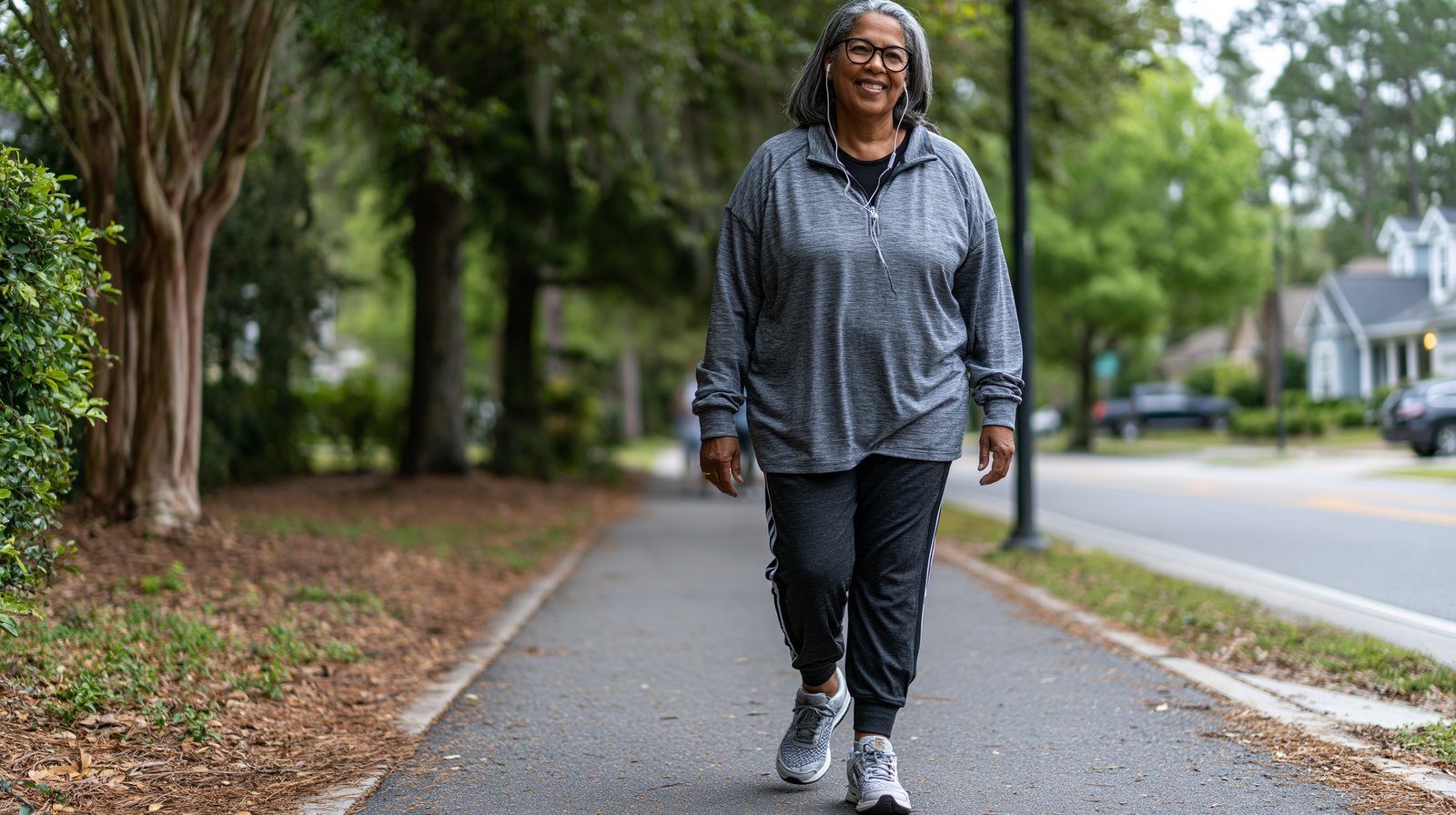
    Woman over 55 walking steadily as part of a 90-day walking program for knee arthritis over 55

    It looks slower at the start than you would expect, and that is the point. A sensible 90-day plan moves in three stages, and a feasibility study of a gradual walking program in adults with knee and hip arthritis showed why building up slowly works: participants started with short bouts and increased step by step over twelve weeks, rather than jumping to a big daily target (Ng et al., 2010).

    The first month is about proof, not fitness. Sessions are short, sometimes just a few minutes, and the only goal is to show your body that movement does not have to cost you the next day. The second month builds on that. Sessions get longer, and consistency becomes the focus, so walking shifts from an occasional effort into something your week is built around. The third month is when the goal gets real, working toward a comfortable 30-minute walk you do not have to cut short.

    A walking program for knee arthritis over 55 earns its results in that order. If you want the mechanics of each step, this guide on how to walk with bad knees goes deeper. You start small, build the habit, and only then stretch the time.

    How do you start a walking program for knee arthritis over 55?
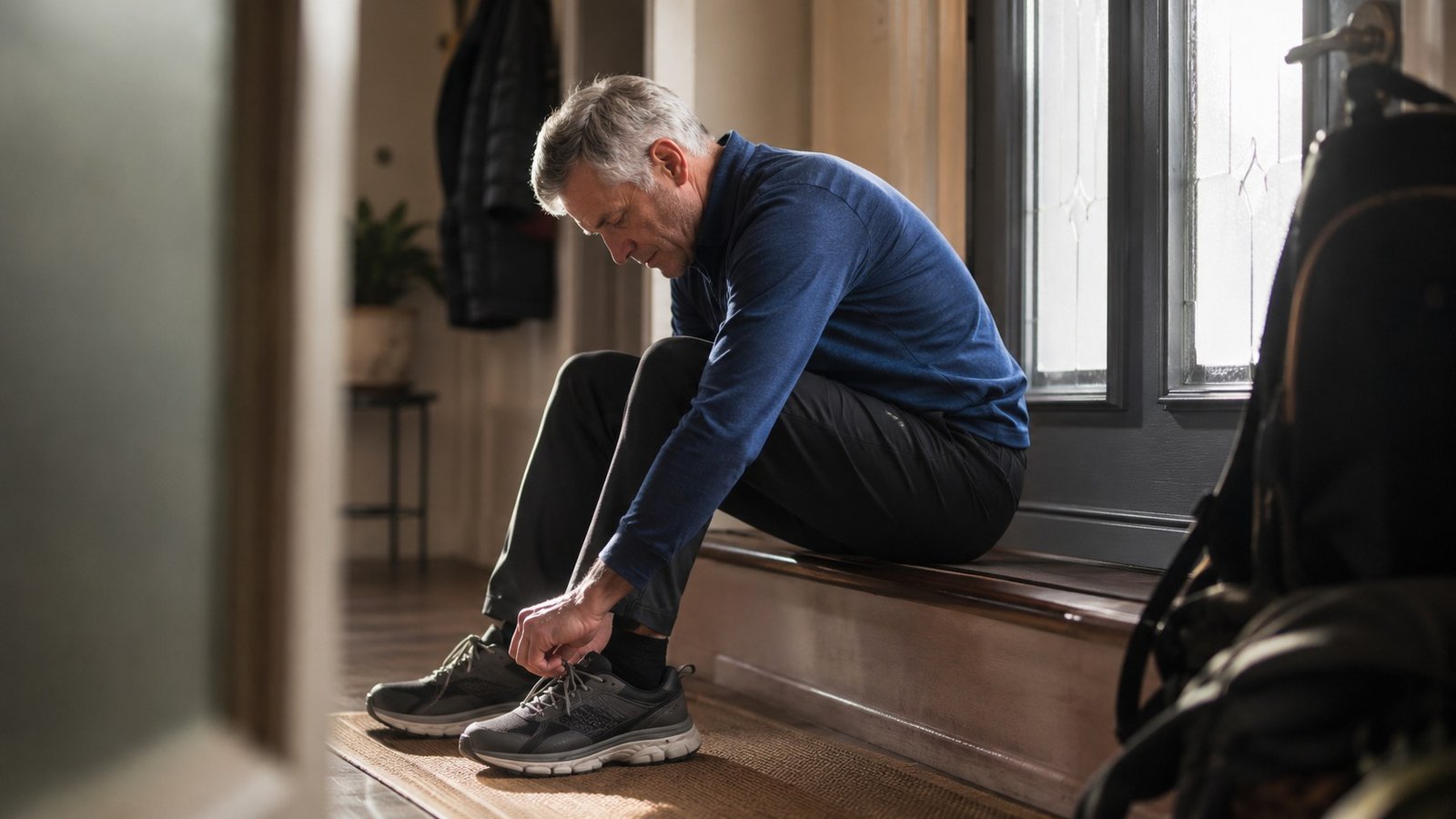
    Man over 55 preparing to begin a walking program for knee arthritis over 55 at his front door

    You start small enough that the first walk feels almost too easy, then build from there. These five steps turn a walking program for knee arthritis over 55 from an idea into something you do, and each one earns the next.

    In a 12-week walking study, adults who built up gradually saw real gains in pain and everyday function like standing from a chair and climbing stairs (O’Hanlon et al., 2016).

    Step 1. See where you stand.

    Take an honest look at what you can do comfortably right now, with no judgment about where that is. Your real starting point is the only one that works.

    Step 2. Take your first short walk.

    Walk for just a few minutes, slow and easy. The goal is proof that you can move without paying for it tomorrow, not fitness or distance.

    Step 3. Build the daily anchor.

    Repeat that short walk until it becomes a normal part of your day. Consistency at a small dose beats the occasional long, painful push every time.

    Step 4. Add time and find your rhythm.

    Once the short walk feels routine, lengthen it gradually and settle into a comfortable pace you can hold. Small increases your body barely notices are what stick.

    Step 5. Reach the 30-minute walk.

    Keep stretching the time until a comfortable 30-minute walk is something you finish without cutting it short. That is the destination this whole plan is built toward.

    Each step is small on its own. Together, they are how a sore-kneed start becomes a steady walking habit.

    How do you stick with a walking program for knee arthritis over 55 when progress is slow?

    A quiet morning walking path representing staying with a walking program for knee arthritis over 55

    You stick with it by changing what counts as a win. Progress with sore knees is rarely a straight line. Some days feel better, some worse, and a slow week is not a failed one. In a large program that paired education with exercise, more than half of the people who started with real difficulty walking reported clear improvement, and they still held that gain a full year later (GLA:D, 2023). The people who kept going were not the ones with the best knees. They were the ones who believed the effort was worth it.

    That belief is the part most plans ignore. A walking program for knee arthritis over 55 lives or dies on the days you do not feel like walking, so the measure that matters is showing up, not hitting a number. Did you take the short walk, even a slow one? That counts. On the harder days, the mental side does more work than the legs do, and the right mindset for walking with knee pain is often what carries people through. Slow progress is still progress.

    Wrap-up: walking program for knee arthritis over 55

    So what was different the second time for Gail? She stopped following a plan built for someone else and started one built for where she actually was. Short walks first. A daily habit before any push for distance. The 30-minute walk came later, once her body trusted that movement was safe.

    Three honest points are worth carrying. Walking helps knee arthritis when the plan fits the person. Starting too fast is what hurts people, not walking itself. And the win on any given day is showing up, even for a slow few minutes.

    The goal was never a number on a chart. It was walking 30 minutes comfortably and getting through the day without dreading the next step. A walking program for knee arthritis over 55 works best when food and the mental side move with it. The complete guide to knee pain relief for adults over 55 puts all three together. Gail walks most mornings now. The plan finally fit.

    Ready to Find Out What Your Body Can Do?

    It takes less than 3 minutes. No gym. No equipment. Just a simple test that shows you if your body can do more than it’s been telling you.

    Take the 3-Minute Walk Test

    M3 is a behavioral wellness coaching program. It is not medical treatment and does not replace advice from your physician. Consult your doctor before beginning any new movement or nutrition program.

    Frequently asked questions

    How many days a week should you walk with knee arthritis?

    Most people do well starting with short walks most days of the week rather than a few long ones. Frequency matters more than length early on, because a small daily dose builds the habit and keeps the joint moving without overloading it. If daily feels like too much at first, every other day is a reasonable start. What matters is that the walks are short enough to recover from comfortably.

    Should you walk every day with knee arthritis or rest?

    Gentle, regular walking is usually better for arthritic knees than long rest, because joints need movement to stay lubricated and the surrounding muscles need use to stay strong. That does not mean ignoring a flare. On a bad day, a shorter, slower walk is often fine, and full rest now and then is reasonable. The aim is steady movement over time, not pushing through sharp pain.

    Is it normal for knees to hurt more when you start walking?

    Some mild stiffness or aching when you begin a new walking routine is common, and it often eases as your body adjusts over the first week or two. What is not expected is sharp pain or soreness that lingers and worsens day after day. That is a sign you started too hard or too long. Ease back, shorten the walk, and build up more slowly from there.

    What is the best time of day to walk with knee arthritis?

    The best time is whenever you will reliably do it, since consistency matters more than the clock. That said, many people with arthritis feel stiff first thing in the morning, so a gentle warm-up or a slightly later start can make the first walk easier. Others prefer an evening walk to loosen up after sitting all day. Pick the slot you can keep.

    How far should someone over 55 walk with knee arthritis?

    Distance is the wrong thing to chase at the start. Time and comfort are better guides than miles, especially early on. Many people begin with just a few minutes and build gradually toward a comfortable 30-minute walk over several weeks. The right distance is one you can finish without paying for it the next day, and that distance grows as your body adapts.

    References

    Hsieh, R.-L., Lo, C.-Y., Lee, W.-C., & Hung, C.-Y. (2024). Effects of long-term walking exercise on structural progression, symptoms, and extensor muscle strength in patients with mild or at high risk of knee osteoarthritis: Data from the Osteoarthritis Initiative. American Journal of Physical Medicine & Rehabilitation, 103(7), 591–598. https://doi.org/10.1097/PHM.0000000000002413

    Lo, G. H., Vinod, S., Richard, M. J., Harkey, M. S., McAlindon, T. E., Kriska, A. M., Rockette-Wagner, B., Eaton, C. B., Hochberg, M. C., Jackson, R. D., Kwoh, C. K., Nevitt, M. C., & Driban, J. B. (2022). Association between walking for exercise and symptomatic and structural progression in individuals with knee osteoarthritis: Data from the Osteoarthritis Initiative cohort. Arthritis & Rheumatology, 74(10), 1660–1667. https://doi.org/10.1002/art.42241

    Ng, N. T. M., Heesch, K. C., & Brown, W. J. (2010). Efficacy of a progressive walking program and glucosamine sulphate supplementation on osteoarthritic symptoms of the hip and knee: A feasibility trial. Arthritis Research & Therapy, 12(1), R25. https://doi.org/10.1186/ar2932

    O’Hanlon, C. E., Edwards, K. L., Avery, A. J., & Doherty, M. (2016). A randomised controlled trial to investigate walking 6,000 steps per day on pain and function in knee osteoarthritis progression: The WalkOut study. Osteoarthritis and Cartilage, 24(Suppl. 1), S487–S488. https://doi.org/10.1016/j.joca.2016.01.891

    Roos, E. M., Grønne, D. T., Skou, S. T., Zywiel, M. G., McGlasson, R., Barton, C. J., Kemp, J. L., Crossley, K. M., & Davis, A. M. (2023). GLA:D to be walking better: Change in self-reported difficulty walking after exercise therapy and education in persons with knee osteoarthritis. Arthritis Care & Research, 75(10), 2199–2208. https://doi.org/10.1002/acr.25151

  • Does Walking Actually Help Knee Arthritis? Here Is What the Research Shows

    Does Walking Actually Help Knee Arthritis? Here Is What the Research Shows

    One question I hear more than almost any other is this: “Coach D, does walking help knee arthritis, or does it make things worse?”

    It is a fair question. When your knees hurt, walking feels like the last thing you should be doing. The instinct is to rest, protect, and wait for something to change.

    But here is what the research actually shows about whether walking helps knee arthritis. A study following more than 1,200 adults with knee osteoarthritis found that those who walked for exercise had 40% lower odds of developing frequent knee pain compared to those who did not (Lo et al., 2022). Same diagnosis. Very different outcomes. The difference was whether walking was happening consistently.

    If you have been wondering whether walking helps knee pain or makes things worse, the answer is clearer than most people realize.

    KEY TAKEAWAY

    Yes. Walking for exercise helps with knee pain. Adults with knee osteoarthritis who walk regularly have significantly lower odds of developing frequent knee pain and show less structural joint damage over time compared to those who do not walk (Lo et al., 2022).

    Here is what the research shows about how walking protects the knee, how much you need, and what to watch out for as you build the habit.

    Ready to Find Out What Your Body Can Do?

    It takes less than 3 minutes. No gym. No equipment. Just a simple test that shows you if your body can do more than it’s been telling you.

    Take the 3-Minute Walk Test

    M3 is a behavioral wellness coaching program. It is not medical treatment and does not replace advice from your physician. Consult your doctor before beginning any new movement or nutrition program.

    Does walking actually help knee arthritis?

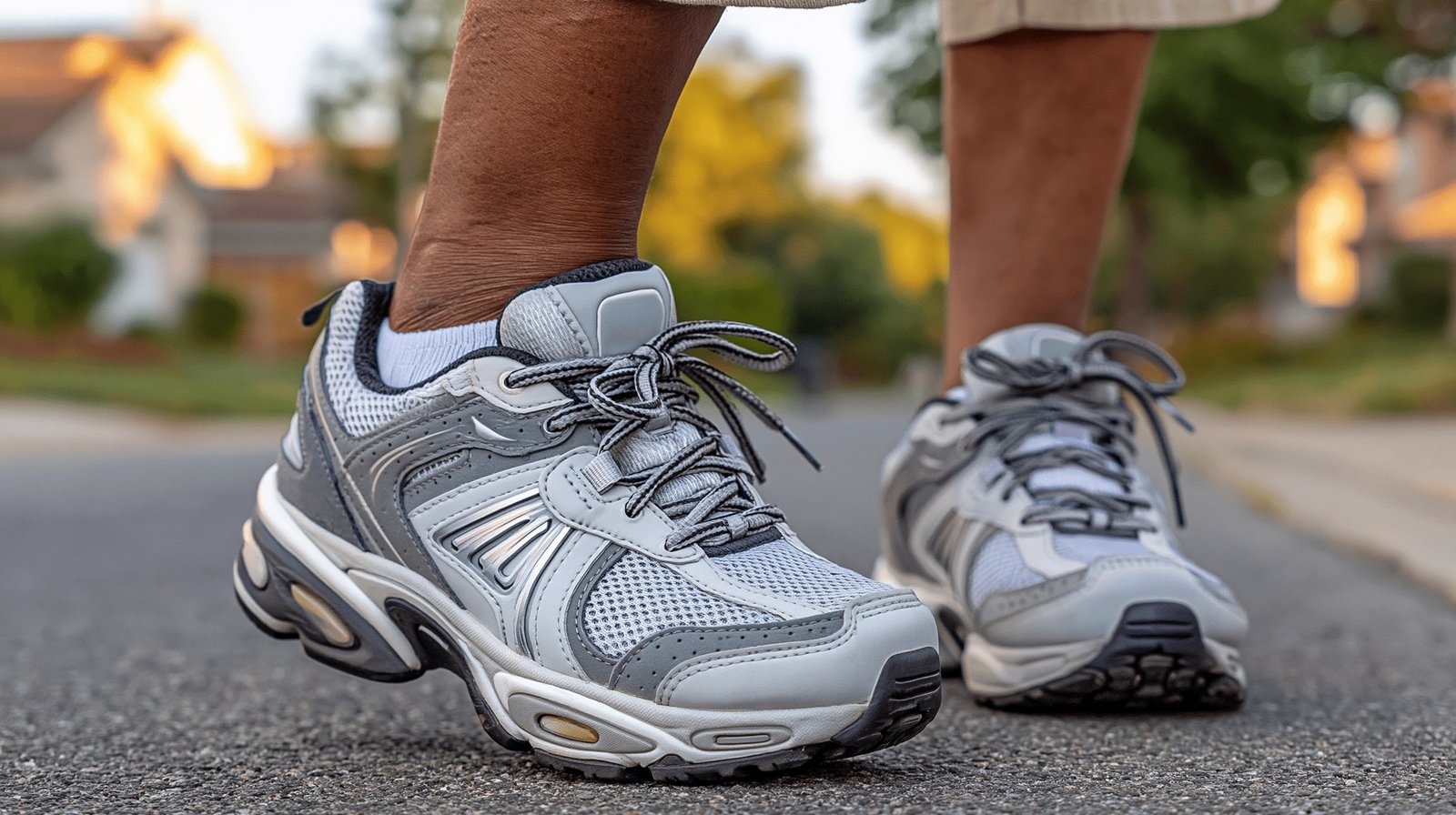
    does walking help knee arthritis close up walking sneakers suburban path

    The short answer is yes. And the evidence behind that answer is more substantial than most people with knee arthritis have ever been told.

    Does walking help knee arthritis? A large observational study of more than 1,200 adults with knee osteoarthritis found that those who walked for exercise had 40% lower odds of developing frequent knee pain compared to those who did not (Lo et al., 2022). The walkers also showed less structural joint damage on X-ray over the follow-up period. Same diagnosis. Less progression. The difference was consistent walking.

    What makes this finding particularly meaningful is the population it studied. These were adults aged 50 and older who already had radiographic evidence of osteoarthritis. Not people trying to prevent the condition. People who already had it. And walking still made a measurable difference.

    There is also a statistic worth knowing on the other side of this. Only 39% of adults with osteoarthritis receive a referral or recommendation to exercise from their primary care provider (Keogh et al., 2024). That means the majority of people with knee arthritis are never told about the one intervention with the clearest evidence behind it. If nobody told you walking was this effective, that is not an oversight on your part. It is a gap in how osteoarthritis care gets delivered.

    How does walking protect your knee joint?

    how does walking help arthritic knees woman stretching park bench morning

    Think of cartilage like a sponge. It has no blood supply of its own. The only way it receives nutrients and stays healthy is through movement. Every step you take compresses the cartilage and squeezes fluid out, then as the weight lifts, fresh nutrient-rich fluid flows back in. Stop moving, and the cartilage starts to starve.

    That is why walking to help knee arthritis is a better question than most people think to ask. Joints are not like car tires grinding down with use. They are living tissue that depends on movement for repair. The research describes it more accurately as a process of wear and repair, and walking tips that balance in your favor.

    Walking also strengthens the muscles that surround your knee. Those muscles, particularly the quadriceps, are your joints’ primary shock absorbers. When they are strong, they take on the load that would otherwise fall directly on the cartilage and bone. Research on aerobic walking for knee osteoarthritis consistently shows that this muscle-building effect reduces both pain and functional limitation over time (Roddy et al., 2005).

    There is one more thing worth knowing. Fewer than 4 in 10 adults with osteoarthritis are ever referred to exercise by their primary care provider (Keogh et al., 2024). Most people who wonder whether walking helps knee arthritis never get a clear answer from the people treating them. The research has been available for decades. It just has not been making its way into the room where it matters most.

    What does the research actually show?

    research walking knee osteoarthritis man reviewing notes kitchen morning light

    The research on walking and knee osteoarthritis is more consistent than most people realize. A large observational study following more than 1,200 adults aged 50 and older with knee osteoarthritis found that those who walked for exercise had 40% lower odds of developing frequent knee pain compared to those who did not walk (Lo et al., 2022). That is a substantial difference for an activity that requires no equipment, no gym, and no prescription.

    The same study found that walkers also showed less structural joint damage on X-ray over the follow-up period. That matters because it suggests walking does not just help people feel better. It may slow the physical progression of the condition itself.

    The Cochrane review of exercise and knee osteoarthritis, which pooled data from dozens of randomized controlled trials, confirms the same direction. Exercise reduces pain and improves function in adults with knee osteoarthritis, with low-impact aerobic activity like walking among the most consistently supported approaches (Fransen et al., 2015).

    What the research does not support is the idea that walking with arthritis damages the joint further. For most adults with mild to moderate knee osteoarthritis, the evidence consistently points the other way. The joint does not wear out faster with use. Used correctly, it responds.

    If you have any doubt about whether walking is appropriate for your specific situation, that is a conversation for your physician before you start.

    How much walking do you need for knee arthritis?

    how much walking for knee arthritis woman checking watch before walk

    This is where most advice about whether walking helps knee arthritis goes wrong. It jumps straight to targets like 10,000 steps or 30 minutes a day without accounting for where you are starting from. For adults with knee arthritis, the starting point matters more than the target.

    The research on how much walking helps knee arthritis points to consistency over volume. The Lo et al. (2022) study classified participants as walkers if they reported 10 or more instances of walking for exercise since age 50. That is not a daily target. It is a pattern. Adults who walked regularly, even if not every day or for long durations, experienced meaningfully better outcomes than those who did not walk at all.

    A practical framework based on the evidence looks like this:

    • Start shorter than feels necessary. Five to ten minutes is a real session. It is enough to compress and nourish the cartilage, engage the supporting muscles, and establish the habit.
    • Build gradually. Add one to two minutes per session every few days when your knees are responding well. The signal that guides you is how your knees feel in the two to four hours after a walk, not during it.
    • Aim for consistency over distance. Three to five sessions per week of walking can sustain matters more than occasional long walks that leave your knees paying for it the next day.

    There is no single number that works for every person with knee arthritis. Your body’s response is the most reliable guide you have.

    What should you watch out for when walking with arthritis?

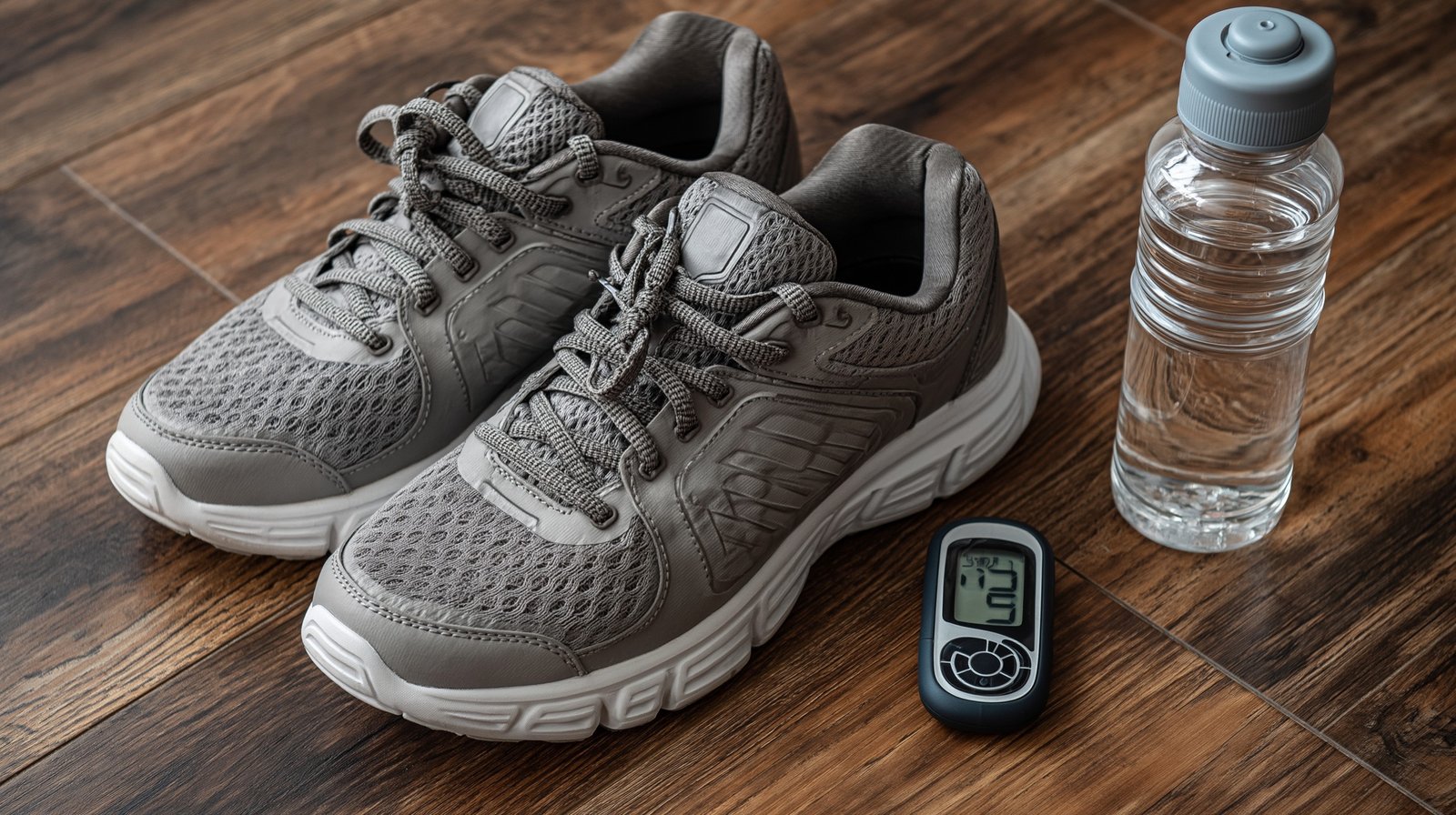
    walking tips for knee arthritis flat lay sneakers water bottle pedometer

    Does walking help knee arthritis when it already hurts? For most adults with mild to moderate osteoarthritis, yes. But there are a few things worth knowing before you start, because how you walk matters as much as whether you walk.

    Pain during the walk versus pain after. Some discomfort during a walk is normal, particularly in the early weeks. The signal that matters is what happens two to four hours afterward. If your knees feel meaningfully worse in that window, the session was longer or more intense than your joint was ready for. Shorten the next session rather than stopping altogether.

    Sharp pain, swelling, or instability are different. These are not the normal discomfort of a joint being asked to work. They are signals to stop and check in with your physician before continuing. Walking through this kind of pain does not build tolerance. It adds load to a joint that is telling you something important.

    Footwear matters more than most people expect. Cushioned, supportive sneakers with a firm midsole reduce the impact your knees absorb with each step. Worn-out soles that have compressed visibly are no longer doing that job. If your walking shoes are more than a year old and you walk regularly, they have likely passed their useful life for joint protection.

    Surface and pace work together. Softer surfaces reduce impact. A conversational pace keeps the load manageable. Neither factor matters as much as session length in the early weeks, but both help when you are trying to find a rhythm that your knees respond well to.

    Nothing in this section replaces a conversation with your physician, particularly if you are managing a specific diagnosis, recent surgery, or significant swelling.

    Wrap-up: Does walking help knee arthritis?

    Yes. And the evidence behind that answer is more substantial than most adults with knee arthritis have ever been told.

    Walking for exercise reduces the odds of developing frequent knee pain by 40% in adults with osteoarthritis (Lo et al., 2022). It nourishes cartilage that has no other way to receive nutrients. It strengthens the muscles that protect the joint from the load it was never meant to absorb alone. And it does this without equipment, without a gym, and without pushing through pain that signals something is wrong.

    Walking is one piece of a larger picture. The complete guide to knee pain relief for adults over 55 covers all three pillars together.

    Ready to Find Out What Your Body Can Do?

    It takes less than 3 minutes. No gym. No equipment. Just a simple test that shows you if your body can do more than it’s been telling you.

    Ready to Find Out What Your Body Can Do?

    It takes less than 3 minutes. No gym. No equipment. Just a simple test that shows you if your body can do more than it’s been telling you.

    Take the 3-Minute Walk Test

    M3 is a behavioral wellness coaching program. It is not medical treatment and does not replace advice from your physician. Consult your doctor before beginning any new movement or nutrition program.

    Frequently Asked Questions

    Does walking help knee arthritis or make it worse?

    The short answer to whether walking helps knee arthritis is yes, and the evidence is specific. A study of more than 1,200 adults with knee osteoarthritis found that those who walked for exercise had 40% lower odds of developing frequent knee pain compared to those who did not walk (Lo et al., 2022). The same study found that walkers showed less structural joint damage over time. Walking does not wear the joint out faster. Used consistently and at the right level, it supports the repair process that the joint depends on.

    How much walking is good for knee arthritis?

    Consistency matters more than duration, especially at the start. Begin with five to ten minutes at a comfortable pace and build gradually based on how your knees respond in the two to four hours after each session. Three to five sessions per week is a reasonable target. The research supports accumulated walking over time, not daily distance goals.

    Is it okay to walk when my knees hurt from arthritis?

    Mild discomfort during a walk is normal and does not mean you are causing damage. The signal to pay attention to is how your knees feel two to four hours afterward. Sharp pain, swelling, or instability during a walk are different and warrant a conversation with your physician before continuing. If you are uncertain whether walking is appropriate for your specific situation, start there.

    What type of walking is best for knee arthritis?

    Flat surfaces, a conversational pace, and supportive footwear create the conditions where walking is most likely to help knee arthritis without adding unnecessary load to the joint. Shorter sessions done consistently outperform occasional long walks. The goal in the early weeks is to find a pattern your knees respond well to, then build from there.

    How long does it take for walking to help knee arthritis?

    The Lo et al. (2022) study tracked participants over 48 months and found meaningful differences between walkers and non-walkers in both pain and structural outcomes. In practice, most adults notice that their knees stop paying for their walks in the days or weeks after starting a consistent pattern, before they notice any reduction in baseline discomfort. Consistency over weeks and months is what produces lasting change.

    Is cycling or swimming better than walking for knee arthritis?

    Does walking help knee arthritis more than cycling or swimming? The evidence base for walking is strong and specific. The research base for walking and knee osteoarthritis is strong and specific (Lo et al., 2022; Fransen et al., 2015). Walking also builds the functional capability most adults with knee arthritis actually want back. If walking is accessible and your knees tolerate it, it is worth prioritizing.

    References

    Fransen, M., McConnell, S., Harmer, A. R., Van der Esch, M., Simic, M., & Bennell, K. L. (2015). Exercise for osteoarthritis of the knee: A Cochrane systematic review. British Journal of Sports Medicine, 49(24), 1554–1557. https://doi.org/10.1136/bjsports-2015-095424

    Keogh, A., Toomey, C., Matthews, J., & Hurley, D. A. (2024). Guideline-based exercise management for hip and knee osteoarthritis: a cross-sectional comparison of healthcare professional and patient beliefs in Ireland. BMJ Open, 14(1), e079019. https://doi.org/10.1136/bmjopen-2023-079019

    Lo, G. H., Vinod, S., Richard, M. J., Harkey, M. S., McAlindon, T. E., Kriska, A. M., Rockette-Wagner, B., Eaton, C. B., Hochberg, M. C., Jackson, R. D., Kwoh, C. K., Nevitt, M. C., & Driban, J. B. (2022). Association between walking for exercise and symptomatic and structural progression in individuals with knee osteoarthritis: Data from the Osteoarthritis Initiative Cohort. Arthritis & Rheumatology, 74(10), 1660–1667. https://doi.org/10.1002/art.42241

    Roddy, E., Zhang, W., & Doherty, M. (2005). Aerobic walking or strengthening exercise for osteoarthritis of the knee: A systematic review. Annals of the Rheumatic Diseases, 64(4), 544–548. https://doi.org/10.1136/ard.2004.028746