
Foods for knee health over 55 rarely come up in conversation until something shifts. For Dennis, the shift happened when his walking started getting harder on days after heavier meals. He mentioned it almost offhand in one of our early sessions. That comment opened a conversation about what the research on diet and knee pain actually shows.
The research is more specific than most adults expect. A meta-analysis of 9 clinical trials involving nearly 900 participants found that dietary interventions significantly reduced OA-related pain across multiple diet types, with a medium effect size confirmed (Asadi et al., 2025). What you eat is not a workaround. For adults with knee OA, it is one of the most evidence-backed levers available.
Key Takeaway
Across 9 randomized clinical trials and 898 participants, dietary interventions significantly improved OA pain (SMD –0.67; 95% CI –1.01, –0.34; p<0.0001) (Asadi et al., 2025). Adults consuming the highest omega-3 fatty acid intake showed the greatest improvements in pain and physical function across 8 separate RCTs (Stanfar et al., 2024).
This post covers whether foods for knee health over 55 actually make a measurable difference, which foods help most, what to cut back on, why the Mediterranean pattern stands out, and how what you eat connects to how far you can walk.
Ready to Find Out What Your Body Can Do?
It takes less than 3 minutes. No gym. No equipment. Just a simple test that shows you if your body can do more than it’s been telling you.
M3 is a behavioral wellness coaching program. It is not medical treatment and does not replace advice from your physician. Consult your doctor before beginning any new movement or nutrition program.
Table of Contents
Does what you eat actually affect knee pain?
More than most adults over 55 have been told.
A 2025 systematic review and meta-analysis examined 9 randomized clinical trials involving 898 participants. Dietary interventions — Mediterranean, anti-inflammatory, plant-based, and low-fat patterns — significantly improved OA pain with a standardized mean difference of –0.67. That is a medium effect size, not a marginal one (Asadi et al., 2025).
The mechanism is inflammation. OA involves chronic low-grade inflammation that food can either reduce or amplify. Diets that reduce systemic inflammation reduce the baseline pain the joint is managing each day.
This is not a claim that foods for knee health over 55 cure osteoarthritis. It is a claim that they measurably shift the conditions under which your knee operates. If you have read about how sugar affects knee pain, the principle runs in both directions.
If you are considering significant dietary changes, speaking with a physician or registered dietitian first is worth doing.
Which foods have the strongest evidence for knee health?
Two categories stand out across the research.
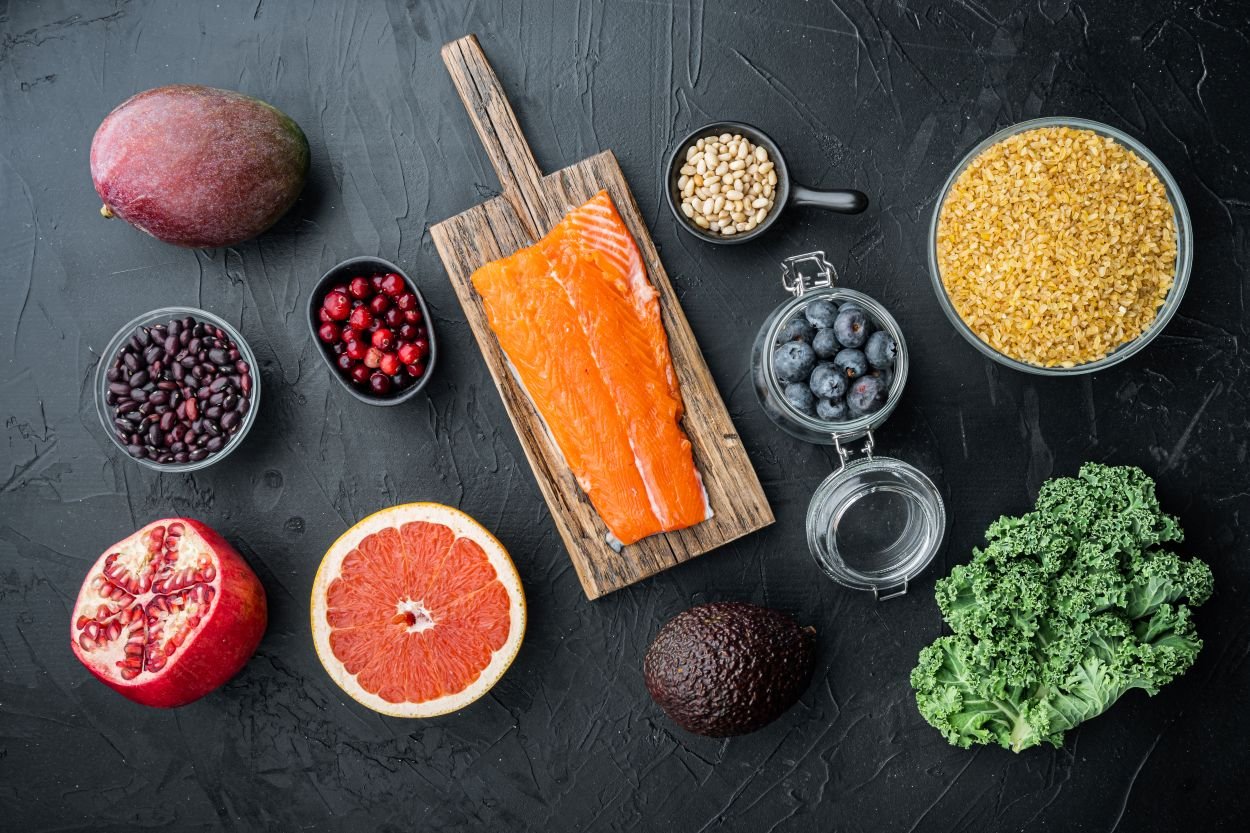
The first is omega-3 fatty acids. A systematic review of 8 clinical trials found that adults consuming the most omega-3 fatty acids showed the greatest improvements in pain and physical function of any dietary component studied (Stanfar et al., 2024). On a plate: fatty fish two or three times a week — salmon, sardines, mackerel. Olive oil instead of vegetable oil. Walnuts or flaxseed where they fit naturally.
The second is plant phenols. Berries, dark leafy greens, whole grains, and legumes are the primary sources. Not exotic. These are the same foods that have appeared in evidence-based dietary guidance for decades because the evidence keeps pointing in the same direction.
Together, these two categories form the practical core of foods for knee health over 55. The 7 anti-inflammatory foods post covers specific options in more detail.
What should you cut back on for knee health over 55?

The same research that identified which foods help also identified which foods hurt.
The systematic review that found omega-3s and plant phenols to be beneficial specifically found that adults consuming higher proportions of saturated fats, omega-6 fatty acids, and refined carbohydrates had worse pain and function outcomes compared to those eating fewer of them (Stanfar et al., 2024). The two patterns are opposite sides of the same finding.
In practical terms, this means three things worth reducing: ultra-processed foods, refined grains like white bread and white rice, and fried foods cooked in seed oils high in omega-6 fatty acids. Not eliminating — reducing. The research did not find a clean threshold. It found a graded pattern.
This is not about eating perfectly. Foods for knee health over 55 are not a strict protocol. They are a direction. The adult who eats salmon twice a week and reduces packaged snack food is moving in the right direction, even if nothing else changes.
Why does the Mediterranean diet reduce knee pain?
Because the foods in it are the ones the research consistently points toward.
A randomized trial of 129 knee OA patients assigned them to a Mediterranean diet, a low-fat diet, or a regular diet for 12 weeks. Pain was significantly reduced in the Mediterranean group vs both the low-fat group (p=0.04) and the regular diet group (p=0.002). Importantly, both the Mediterranean and low-fat groups lost similar amounts of weight, but only the Mediterranean group showed significant pain improvement. The dietary components, not weight loss, drove the result (Sadeghi et al., 2022).
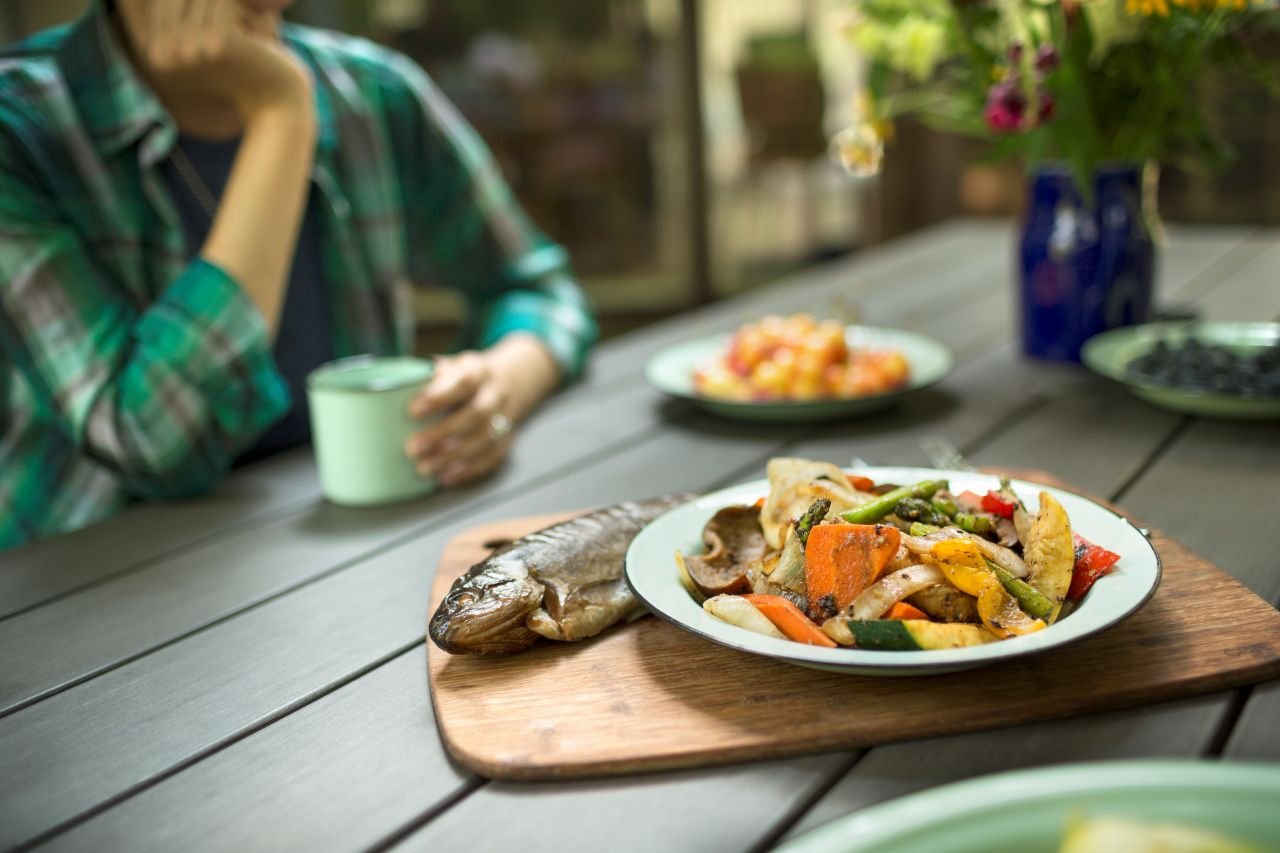
What this looks like in practice: fatty fish twice a week, olive oil as the primary cooking fat, more vegetables and legumes, and less processed food on the plate. Not a rigid meal plan. A daily pattern that gradually shifts the inflammatory load the knee is managing. For adults tracking foods for knee health over 55, it is the most researched and most practical starting point available.
How does what you eat connect to how far you can walk?

More directly than most adults expect.
A study of 413 adults aged 60 and older with lower extremity osteoarthritis found that higher diet quality scores were positively associated with faster walking speed on the six-minute walk test and better performance on chair-stand tests. Adults who ate better moved better (Schering et al., 2020).
The connection makes sense when you trace it. Lower dietary inflammation means less joint swelling overnight. Less overnight swelling means less morning stiffness. Less morning stiffness means easier first steps. Easier first steps mean more walks that actually get started.
This is where foods for knee health over 55 connect directly to the capability goal. Learning how to walk with bad knees covers the movement side of that equation. What you eat is the other half. Neither works as well without the other.
Wrap-up: Foods for knee health over 55
Dennis’s offhand comment turned out to be one of the most useful things he brought to those early sessions. He had simply never been told the research existed.
Dietary interventions significantly reduce OA pain, confirmed across nearly 900 trial participants. Omega-3 fatty acids and plant phenols produce the most consistent improvements. Cutting back on saturated fats and refined carbohydrates moves the pattern in the right direction as meaningfully as adding the right foods.
The goal is not a perfect diet. The goal is walking 30 minutes, and foods for knee health over 55 are one of the clearest levers for getting there.
Foods for knee health over 55 is one piece of a larger picture. The complete guide to knee pain relief for adults over 55 covers the full approach.
Ready to Find Out What Your Body Can Do?
It takes less than 3 minutes. No gym. No equipment. Just a simple test that shows you if your body can do more than it’s been telling you.
M3 is a behavioral wellness coaching program. It is not medical treatment and does not replace advice from your physician. Consult your doctor before beginning any new movement or nutrition program.
Frequently Asked Questions
Is the Mediterranean diet expensive or hard to follow?
Not as much as its reputation suggests. The core of the pattern — sardines, canned fish, beans, leafy greens, olive oil, oats, and walnuts — is available at most grocery stores at modest cost. The shift is more about proportion than premium ingredients. Foods for knee health over 55 do not require a specialty store or a kitchen overhaul to get started.
How long does it take for dietary changes to affect knee pain?
The clinical trials that confirmed the most benefit from foods for knee health over 55 ran for 8 to 12 weeks. Most participants showed meaningful improvement within that window. Some adults report less morning stiffness within two to four weeks of consistent changes. The pattern needs time and consistency. It is not a same-day intervention.
Do omega-3 supplements work as well as food sources?
Research on supplements shows mixed results, less consistent than dietary sources. Foods for knee health over 55 that are naturally rich in omega-3s, like fatty fish and plant oils, deliver the fatty acids alongside other nutrients that appear to work together. Supplements may help adults who cannot regularly include fatty fish in their diet, but whole food sources are the better-evidenced starting point.
What foods should adults with knee pain avoid?
Three categories are worth reducing: ultra-processed foods, refined grains like white bread and white rice, and foods high in omega-6 fatty acids from fried fast food and seed oil-based snacks. These are the dietary patterns associated with worse pain and function outcomes in the same studies that identified foods for knee health over 55 as beneficial.
Does losing weight through diet help knee pain?
It can, but it is not the whole explanation. A 12-week trial found that a Mediterranean diet reduced pain significantly more than a low-fat diet, despite both groups losing similar amounts of weight. The dietary pattern itself, not just calorie reduction, appears to drive the pain benefit. Dietary quality matters independently of weight change.
Can what you eat affect your energy for walking?
Yes. A study of 413 older adults with lower extremity OA found that higher diet quality was associated with faster walking speed and better physical function. Lower inflammation from better foods for knee health over 55 means less morning stiffness, easier first steps, and more capacity for daily walks. The dietary and movement improvements tend to build on each other.
References
Asadi, S., Grafenauer, S., Burley, C. V., Fitzgerald, C., Humburg, P., & Parmenter, B. J. (2025). The effectiveness of dietary intervention in osteoarthritis management: A systematic review and meta-analysis of randomized clinical trials. European Journal of Clinical Nutrition. Advance online publication. https://doi.org/10.1038/s41430-025-01622-0
Sadeghi, A., Zarrinjooiee, G., Mousavi, S. N., Abdollahi Sabet, S., & Jalili, N. (2022). Effects of a Mediterranean diet compared with the low-fat diet on patients with knee osteoarthritis: A randomized feeding trial. International Journal of Clinical Practice, 2022, Article 7275192. https://doi.org/10.1155/2022/7275192
Schering, T., Schiffer, L., McLeod, A., DeMott, A., Hughes, S., Fitzgibbon, M. L., & Tussing-Humphreys, L. (2020). Association of diet quality and physical function among overweight and obese primarily African American older adults with lower extremity osteoarthritis. Nutrition and Healthy Aging, 5(4), 301–314. https://doi.org/10.3233/nha-190081
Stanfar, K., Hawes, C., Ghajar, M., Byham-Gray, L., & Radler, D. R. (2024). Diet modification reduces pain and improves function in adults with osteoarthritis: A systematic review. Journal of Human Nutrition and Dietetics, 37(4), 847–884. https://doi.org/10.1111/jhn.13317