
I have watched people manage knee pain for years. The ones who struggle most are rarely the ones with the most severe physical symptoms. They are the ones carrying something nobody ever addressed: the emotional weight that builds up quietly alongside the pain.
Nobody told them that chronic knee pain has a documented psychological dimension. Nobody mentioned that the frustration, the low motivation, the creeping sense of isolation. Those are not character flaws. They are recognized patterns that show up in the research consistently.
If the emotional impact of chronic knee pain has been affecting you more than you let on, you are not alone, and you are not overreacting. This post addresses the part that most knee pain programs completely skip.
Key Takeaway
Research analyzing 49 studies and 15,855 individuals found that one in five adults with osteoarthritis experience symptoms of depression, and a similar proportion experience anxiety (Stubbs et al., 2016). The emotional side of chronic knee pain is not incidental. It is part of the condition.
Here is what the research shows about how chronic knee pain affects mood, identity, and self-perception, and what a whole-person approach actually does about it.
Ready to Find Out What Your Body Can Do?
It takes less than 3 minutes. No gym. No equipment. Just a simple test that shows you if your body can do more than it’s been telling you.
M3 is a behavioral wellness coaching program. It is not medical treatment and does not replace advice from your physician. Consult your doctor before beginning any new movement or nutrition program.
Table of Contents
Does chronic knee pain actually cause depression?

The emotional side of chronic knee pain and depression are more closely linked than most people realize. Research analyzing 49 studies and more than 15,000 individuals found that one in five adults with osteoarthritis experience symptoms of depression, with a similar proportion reporting anxiety (Stubbs et al., 2016). The emotional effects of chronic knee pain are not a side issue. They are part of the clinical picture.
That does not mean knee pain causes depression in every person who has it. What the research shows is that the rate is significantly elevated compared to the general population. Living with persistent pain changes things. It limits what you can do. It interrupts sleep. It shifts the way you think about your body and your future. Those are not small things, and their cumulative effect on mood is real and measurable.
What matters for you is recognizing that if you have been feeling lower than usual since your knee pain started, that pattern has a name. It is not a weakness. It is not a lack of gratitude. It is a documented response to living with a chronic physical condition that most people manage in silence.
The first step toward addressing it is naming it honestly, which is what the rest of this post does.
Why does knee pain affect your mood and motivation?
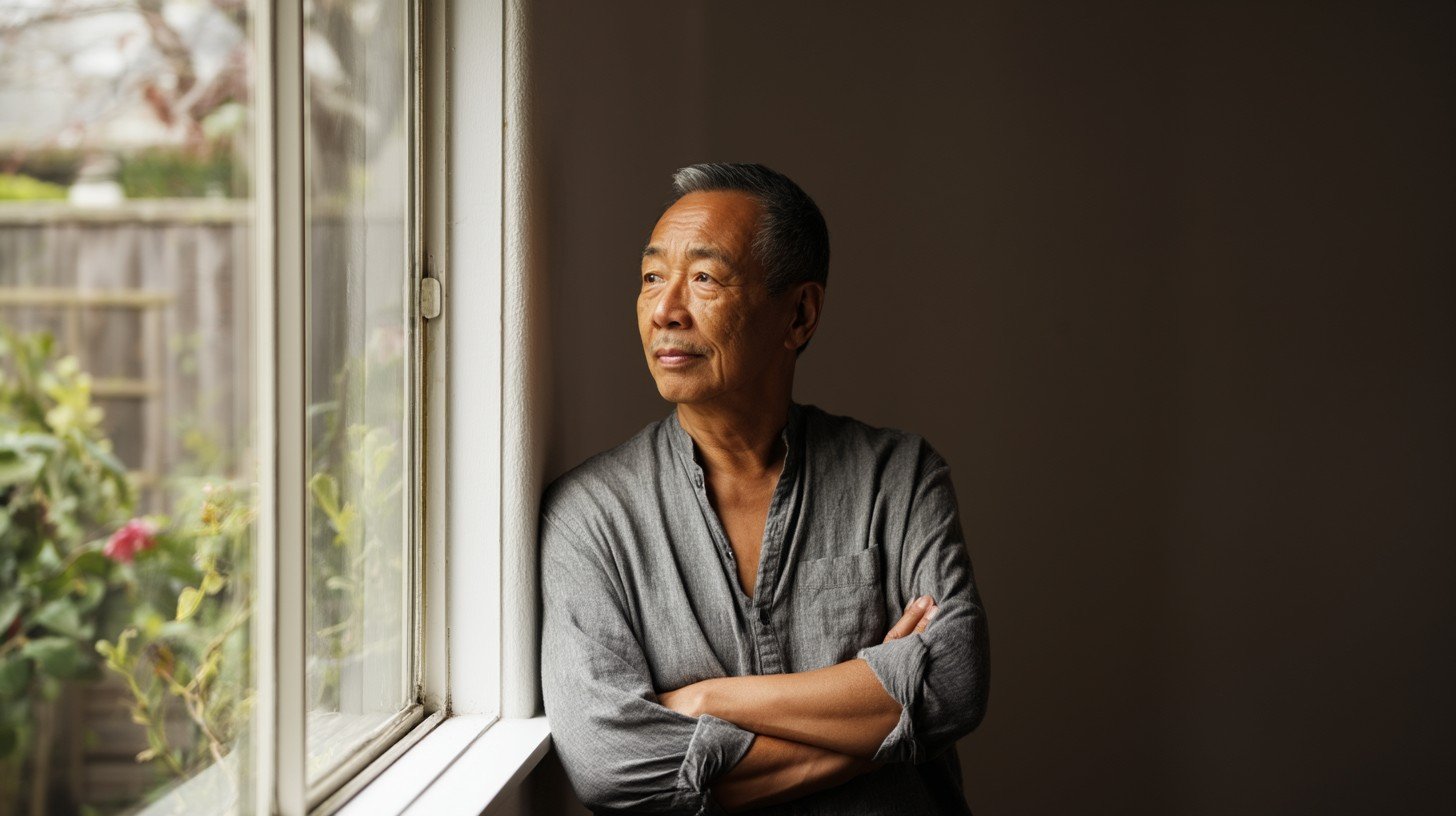
Chronic pain and anxiety often travel together, and the reason comes down to what pain quietly removes from your life. It is not just the physical limitation. It is everything that physical limitation takes with it.
When knee pain makes walking uncomfortable, you stop going to the places that walking took you. The morning walks with a neighbor. The errands you ran yourself. The grandchildren you kept up with. As those things disappear, so do the social connections, the sense of capability, and the daily rhythm that kept your mood regulated. The absence is gradual enough that most people do not notice it happening until they look back and realize how much has changed.
Research on cognitive and behavioral factors in knee pain found that how you think about your pain directly shapes how much it affects your life (Urquhart et al., 2015). Adults who developed a strong sense that their body could still do things reported significantly better function and mood outcomes than those who did not. Adults who began to fear movement, anticipating that any activity would make things worse, experienced higher pain levels and greater limitation over time.
This is not about positive thinking as a cure. It is about recognizing that knee pain and mental health are connected in both directions. Pain affects mood. Mood affects how much pain you experience and how well you function. Breaking into that cycle is part of what recovery actually requires.
The first place that the cycle can be interrupted is in how you understand what is happening to you. Not just in the joint. In the whole experience of living with it.
What does chronic knee pain do to your sense of identity?

This is the part of the emotional side of chronic knee pain that nobody talks about. Chronic pain and social isolation are well-documented together, but the deeper loss is harder to name. It is not just that you see fewer people. It is that the activities that told you who you were have quietly stepped back, one by one.
Maybe you were the person who walked every morning. The grandparent who got down on the floor. The one in your group who suggested the hike, organized the trip, and kept up with everyone else. Knee pain did not just make those things harder. It began to rewrite the story you told yourself about what kind of person you are.
That shift in identity is real, and it compounds. When knee pain limits your quality of life long enough, many adults begin to define themselves by what they can no longer do rather than what they still can. The activities that once gave them energy, confidence, and connection start to feel like reminders of loss instead of possibilities. Motivation drops not because of laziness but because the future feels smaller than it used to.
What is worth knowing is that this pattern is recognized, and it is not permanent. The research on cognitive factors and knee pain is clear that identity and self-belief are modifiable (Urquhart et al., 2015). Adults who rebuild a sense of what their body is capable of, even starting from very small wins, show measurably better outcomes than those who do not.
You are not the sum of what your knees currently prevent. That story is still being written.
How does the way you talk to yourself affect your knee pain?
Mindset and chronic pain are connected in ways that go beyond attitude. The research on cognitive factors in knee pain found that adults with high pain self-efficacy, a belief that their body was still capable, reported significantly better function and lower pain levels than those without it (Urquhart et al., 2015). How you think about your body is not separate from how your body performs. It is part of the same system.
This shows up in a specific way with knee pain. When pain has been present long enough, many adults develop a habit of bracing for it. They anticipate the worst before each walk. They interpret every twinge as confirmation that things are getting worse. That pattern of thinking amplifies how pain feels and makes movement feel more threatening than it is. The result is less movement, more stiffness, and a stronger belief that the body cannot be trusted. The cycle reinforces itself.
The way you talk to yourself about your body either opens that cycle or closes it. Small, honest encouragement works differently from false positivity. It is not about telling yourself the pain is not there. It is about noticing when your body does something it could not do last week, however small, and letting that register.
That kind of internal language is something you can practice. It does not require a program or a framework. It starts with paying attention to what you say to yourself in the two minutes after a walk, and choosing something accurate and encouraging instead of defaulting to what still hurts.
What does a whole-person approach to knee pain actually look like?

Holistic knee pain management is a phrase that gets used loosely, but what it means in practice is straightforward. It means treating the physical, nutritional, and emotional dimensions of knee pain at the same time, not one after the other.
Most knee pain programs address the joint. Some address movement. Very few address what is happening in the mind and the identity of the person living with the pain. That gap is not a minor oversight. Research consistently shows that exercise reduces pain and improves function in adults with knee osteoarthritis (Fransen et al., 2015), but adherence, actually doing the movement consistently, depends heavily on whether the emotional and psychological side is being addressed alongside it.
A mind-body approach to knee pain looks like this in practice:
- Movement that starts small enough to build confidence, not just capability. Sessions short enough that your knees respond well and your belief in your body grows alongside your physical tolerance.
- Meals that reduce the inflammatory baseline your joints are working against every day, so that movement feels more possible and recovery happens faster.
- Mindfulness that addresses the thought patterns, the self-talk, and the emotional weight that chronic pain accumulates over time.
None of these three works as well alone as all three do together. Managing knee pain naturally means managing the whole experience of having it, not just the tissue.
That is what the research points toward. It is also what most adults with chronic knee pain have never been offered.
Wrap-up: the emotional side of chronic knee pain
Chronic knee pain is not just a joint problem. The research is clear on this. One in five adults with osteoarthritis experiences depressive symptoms. A similar proportion experience anxiety. The isolation, the identity shift, the quiet erosion of motivation, these are not personal failures. They are documented patterns that show up consistently when pain is present long enough and goes unaddressed as a whole experience.
The physical side of knee pain gets most of the attention. The emotional side of chronic knee pain gets almost none. That imbalance is part of why so many adults manage their symptoms for years without making meaningful progress. They are working on one part of a three-part problem.
What changes outcomes is addressing all three parts together. Movement that builds slowly and builds confidence alongside capability. Food choices that lower the inflammatory baseline the joint is working against. And honest attention to the mental and emotional load that chronic pain carries with it, including how you talk to yourself about what your body can do.
You do not have to have everything figured out before you start. The smallest possible starting point is still a starting point. The 3-Minute Knee Test is exactly that, a structured way to find out what your body responds to, before you commit to anything more.
Ready to Find Out What Your Body Can Do?
It takes less than 3 minutes. No gym. No equipment. Just a simple test that shows you if your body can do more than it’s been telling you.
M3 is a behavioral wellness coaching program. It is not medical treatment and does not replace advice from your physician. Consult your doctor before beginning any new movement or nutrition program.
Frequently Asked Questions
Can chronic pain cause depression?
Yes. Research analyzing 49 studies and more than 15,000 adults with osteoarthritis found that one in five experience symptoms of depression, with a similar proportion reporting anxiety (Stubbs et al., 2016). The emotional side of chronic knee pain includes documented impacts on sleep, mood, and daily motivation. The emotional effects of chronic knee pain are not incidental. They are a recognized and documented part of living with persistent pain.
Why does knee pain make me feel isolated?
Because knee pain limits the activities that connect you to other people. Walking with friends, keeping up with grandchildren, attending events that require being on your feet, when those things become difficult, the social fabric that supported your mood and sense of belonging quietly thins. That is not a weakness. It is a predictable consequence of chronic pain and social isolation that researchers have documented consistently.
How does mindset affect knee pain recovery?
Research on cognitive factors in knee pain found that adults with a strong belief in their body’s capability reported significantly better function and lower pain levels than those without it (Urquhart et al., 2015). Mindset and chronic pain are connected in both directions. How you think about your body affects how much you move. How much you move affects how your body feels. Building a realistic, encouraging internal narrative about small progress is part of what recovery actually requires.
Is it normal to feel anxious about your knee pain getting worse?
Very common, yes. Fear of movement is one of the most documented cognitive patterns in chronic knee pain. Many adults begin to anticipate pain before it arrives, which leads them to move less, which leads to more stiffness and greater limitation over time. Recognizing that pattern is the first step toward changing it. If anxiety about your knees is affecting your daily decisions, that is worth addressing directly alongside the physical side of your pain.
What does a whole-person approach to knee pain look like?
It means addressing movement, nutrition, and the emotional and mental dimensions of knee pain at the same time rather than one after the other. Exercise reduces pain and improves function in adults with knee osteoarthritis (Fransen et al., 2015), but sustained progress depends on whether the psychological side is being addressed alongside it. A whole-person approach combines movement that builds confidence, food choices that reduce inflammation, and attention to the thought patterns that chronic pain creates over time.
Can improving your mood actually reduce knee pain?
The relationship runs in both directions. Pain affects mood, and mood affects pain perception. Research on cognitive factors in knee pain found that how you think about your body — your level of self-belief, your expectations about what is possible — directly influences your functional outcomes (Urquhart et al., 2015). Addressing the emotional side of chronic knee pain is not a soft add-on to physical treatment. It is part of what determines how well the physical treatment works.
References
Fransen, M., McConnell, S., Harmer, A. R., Van der Esch, M., Simic, M., & Bennell, K. L. (2015). Exercise for osteoarthritis of the knee: A Cochrane systematic review. British Journal of Sports Medicine, 49(24), 1554–1557. https://doi.org/10.1136/bjsports-2015-095424
Stubbs, B., Aluko, Y., Myint, P. K., & Smith, T. O. (2016). Prevalence of depressive symptoms and anxiety in osteoarthritis: a systematic review and meta-analysis. Age and Ageing, 45(2), 228–235. https://doi.org/10.1093/ageing/afw001
Urquhart, D. M., Phyomaung, P. P., Dubowitz, J., Fernando, S., Wluka, A. E., Raajmaakers, P., Wang, Y., & Cicuttini, F. M. (2015). Are cognitive and behavioural factors associated with knee pain? A systematic review. Seminars in Arthritis and Rheumatism, 44(4), 445–455. https://doi.org/10.1016/j.semarthrit.2014.07.005