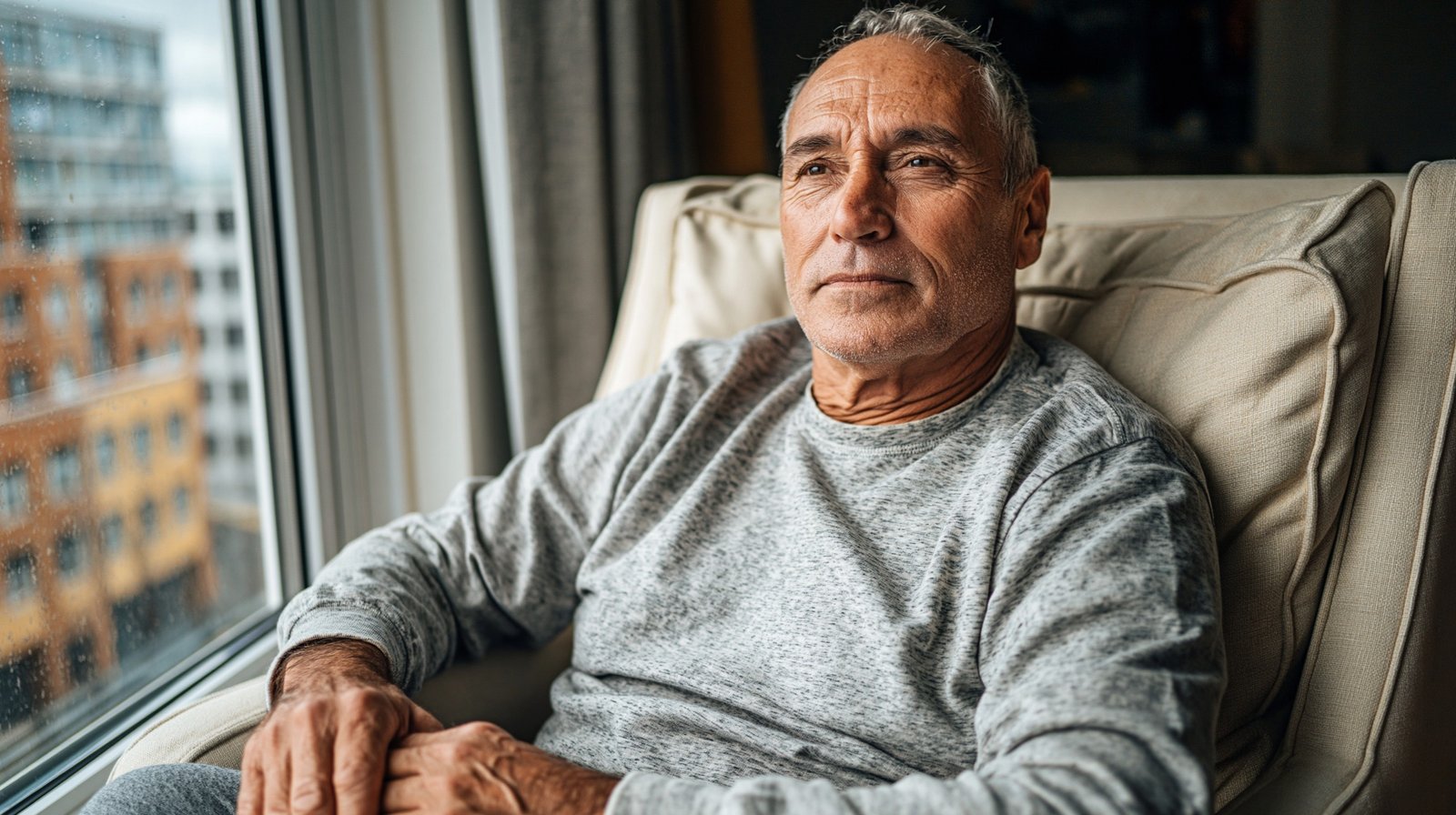
Will knee pain go away on its own? That is the question John called me with eight months after his knee pain started. He had managed to keep it together through the doctor visits, the exercises, and the nights he lay awake with the ache. But what he really wanted to know, the question he had been sitting with for months, was whether this was just his life now.
For most adults over 55 with osteoarthritis, the honest answer is no. Knee pain from a degenerative condition does not typically resolve without the right approach. But that is only half the answer. The other half matters more.
Key Takeaways
Chronic knee pain affects one in four adults aged 55 and older, with osteoarthritis as the commonest diagnosis (Mallen & Peat, 2007). In 514 adults with knee OA, those with higher self-efficacy and more positive outcome expectations were significantly more active at 3 and 6 months (Quicke et al., 2017). What you believe about your body shapes what it does.
This post covers why knee pain tends to stick around, how your mindset shapes your outcomes, and a better question to ask than will knee pain go away on its own.
Ready to Find Out What Your Body Can Do?
It takes less than 3 minutes. No gym. No equipment. Just a simple test that shows you if your body can do more than it’s been telling you.
M3 is a behavioral wellness coaching program. It is not medical treatment and does not replace advice from your physician. Consult your doctor before beginning any new movement or nutrition program.
Table of Contents
Will knee pain go away on its own for most adults over 55?
For most adults over 55 with osteoarthritis, the answer is no. Not without a change in approach.
Chronic knee pain affects one in four people aged 55 and older, and osteoarthritis is the most common diagnosis (Mallen & Peat, 2007). OA is a degenerative condition. The cartilage that cushions your knee joint thins over time. Waiting does not reverse that process.
What waiting does is give pain more time to become familiar. The nervous system learns pain patterns the same way it learns any other pattern, through repetition. The longer the knee pain stays without a response, the more normal it starts to feel.
That is the honest answer to will knee pain go away on its own. It does not disappear by itself. But that is not the whole story.
Why does knee pain from osteoarthritis tend to stick around?
The short version is that OA is a structural condition. The cartilage that cushions the knee joint thins over time and does not grow back. When cartilage thins, the bones experience more friction, and the tissue around the joint becomes more sensitive.
That sensitivity compounds. A nervous system that has been managing pain signals for months gets efficient at producing them. In plain terms, the body becomes better at generating pain the longer the cycle runs without interruption.
Rest alone does not break this cycle. In fact, sustained inactivity makes it worse. Muscles weaken, the joint loses support, and the threshold for pain drops further.
This structural picture is part of why will knee pain go away on its own is the wrong question for adults over 55 with OA. The structure is not changing on its own, and the nervous system is adapting in the wrong direction.
How does what you believe about your knees affect what they can do?

More than most people expect.
In a study of 514 adults with knee pain due to osteoarthritis, those with higher self-efficacy and more positive expectations about movement were significantly more physically active at 3 and 6 months, independent of pain severity, age, and other health conditions (Quicke et al., 2017).
What that means in practice: two adults with similar knee pain and similar OA severity can have very different activity levels based on what they believe their bodies can do. The one who expects movement to help tends to move more. Movement, in turn, shapes what the knee can actually do over time.
For anyone still asking will knee pain go away on its own, this is where the question starts to shift. The belief that progress is possible responds to the right environment, which is exactly the gap that structured support after physical therapy ends is designed to fill.
What does a mind-body approach to knee pain actually change?
More than one thing at a time.
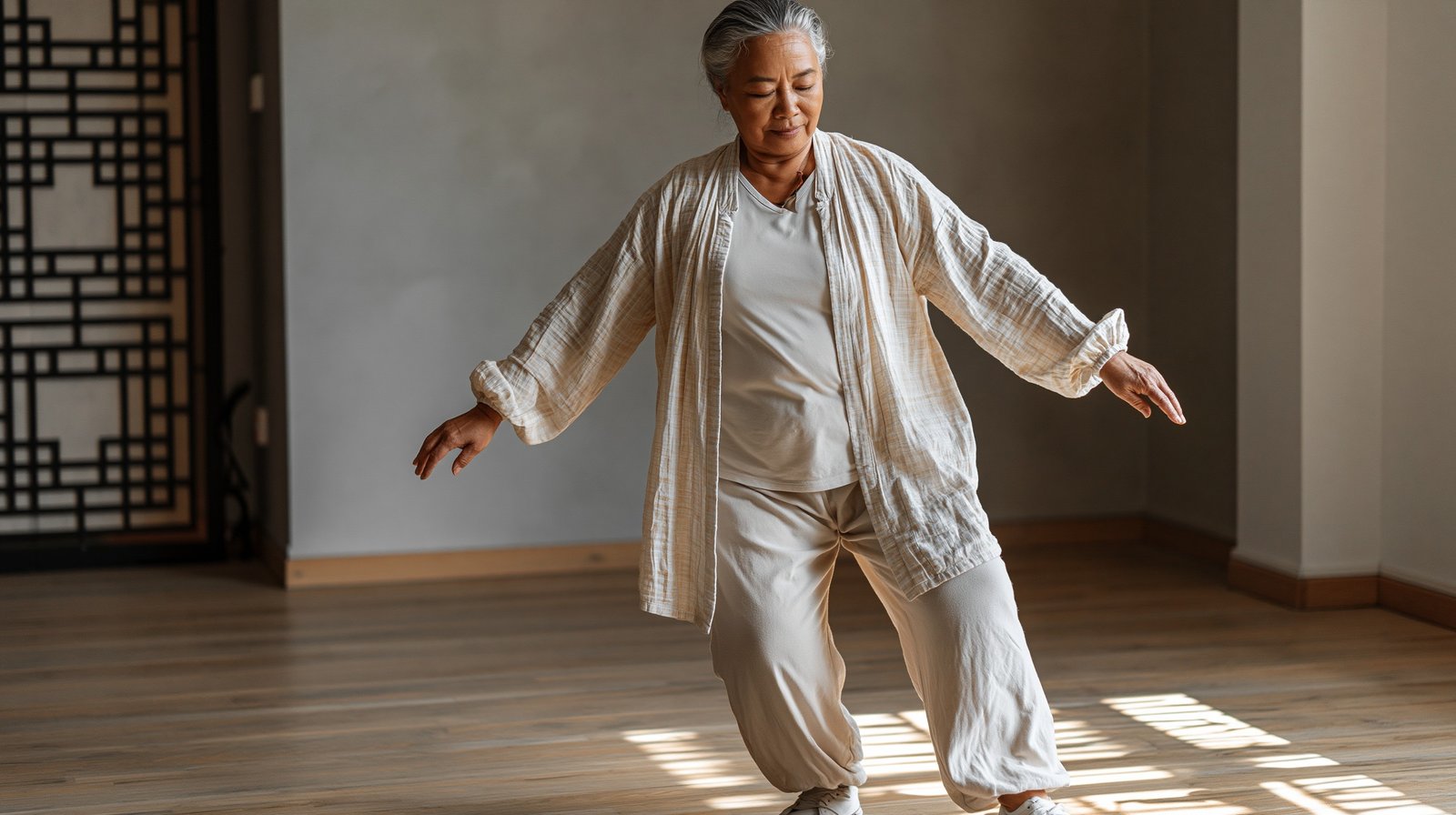
In a randomized clinical trial (RCT) of older adults with knee osteoarthritis, a structured Taichi intervention produced significant improvements in knee function, lower limb strength, and balance. Depression, anxiety, and stress also improved significantly in the same group (He & Wang, 2025).
The physical and psychological dimensions moved together. That matters for anyone still asking will knee pain go away on its own and waiting for the physical problem to resolve first. The mind-body connection in chronic joint conditions is measurable, not metaphor.
An approach that treats movement and mindfulness as one practice rather than two tends to produce outcomes in both. Not meditation. Not positive thinking. A way of moving that integrates how you feel with what you do.
What is a better question than will my knee pain go away?
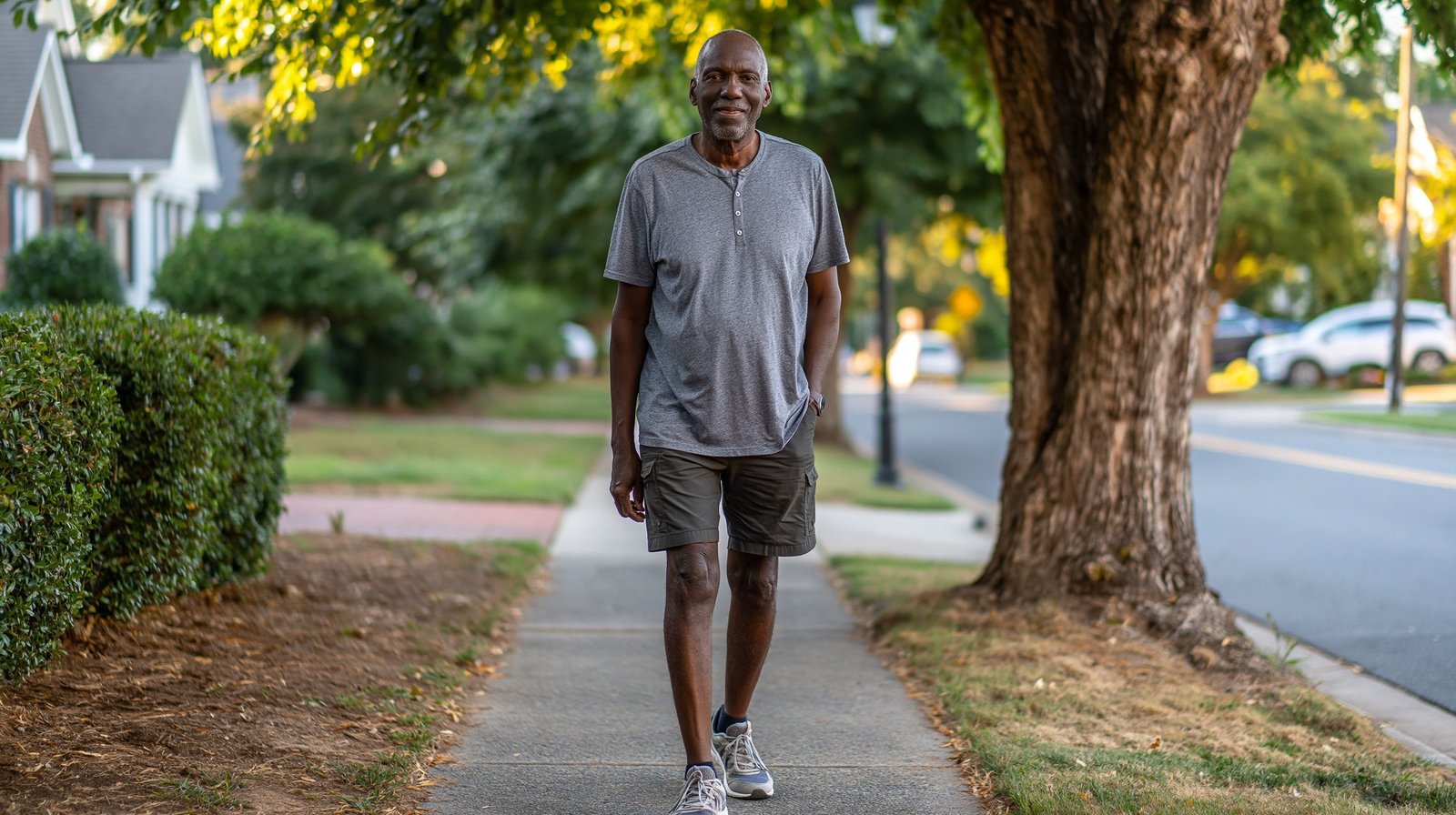
This one: what can my body do today that it could not do three months ago?
For adults over 55 with chronic knee pain, the question will knee pain go away on its own keeps attention fixed on a destination OA cannot reliably deliver. Pain levels fluctuate. Using pain as the only measure means good weeks feel fragile and bad weeks feel like failure.
Capability is a steadier measure. Can you walk to the end of the street? Around the block? For ten minutes without stopping? These are questions your body can answer with a yes.
The adults who move forward tend to share one thing. They stopped waiting for the pain to leave and started paying attention to what they could do. That shift is where nights with knee pain that used to wake you up start to matter less than the mornings where you lace up and go anyway.
Wrap-up: Will knee pain go away on its own?
For most adults over 55 with osteoarthritis, knee pain does not resolve on its own. The joint structure is not repairing itself, and a nervous system managing pain for months does not simply reset with rest.
But that is not the most useful thing to know.
What you believe about your body’s capacity to move predicts how much you actually move. A mind-body approach improves both physical function and psychological health at the same time. The question that creates forward progress is not, “Will knee pain go away on its own?” but “What can my body do today?”
Will knee pain go away on its own is one piece of a larger picture. The complete guide to knee pain relief for adults over 55 is where the full approach lives.
Ready to Find Out What Your Body Can Do?
It takes less than 3 minutes. No gym. No equipment. Just a simple test that shows you if your body can do more than it’s been telling you.
M3 is a behavioral wellness coaching program. It is not medical treatment and does not replace advice from your physician. Consult your doctor before beginning any new movement or nutrition program.
Frequently Asked Questions
Is it normal to have knee pain every day after 55?
For adults with osteoarthritis, daily knee pain is common but not inevitable. Research shows 1 in 4 adults over 55 experience chronic knee pain, but severity varies widely. Daily pain that limits basic movement, like walking across a room or getting out of a chair, is worth discussing with your doctor rather than accepting as normal aging.
Can stress make knee pain feel worse?
Yes, and the research supports it. Psychological stress activates the same inflammatory pathways that contribute to joint pain. Adults managing high stress alongside chronic knee OA often report pain that feels disproportionate to their physical condition. Addressing stress directly, through movement, sleep, or mindfulness practices, is not separate from managing the knee. It is part of it.
How do you know if your knee pain is getting better or worse?
Track what your body can do, not just how much it hurts. Pain fluctuates for reasons unrelated to actual joint health. A more reliable measure is functional capability: can you walk further than you could last month? Climb stairs with less hesitation? Get up from the floor more easily? Consistent gains in capability over 4 to 6 weeks indicate forward progress.
What is the difference between knee pain that heals and knee pain that is managed?
Healing implies that the underlying cause resolves completely. For OA-related knee pain after 55, the structural changes are permanent. Management means reducing how much those changes affect daily life, how far you walk, how easily you move, and how well you sleep. For most adults with OA, will knee pain go away on its own is the wrong goal. Walking well is the right one.
Should you push through knee pain or rest when it flares up?
Neither extreme serves you well. Pushing through sharp pain risks injury. Extended rest weakens the muscles that support the knee and lowers your pain threshold over time. A flare-up calls for reduced intensity, not a full stop. Gentle movement within a comfortable range keeps joint fluid moving and prevents the deconditioning cycle from starting.
How do you stop worrying about your knee pain getting worse?
Start tracking what your body can do rather than what it cannot. Worry grows when the only measure of progress is pain, which fluctuates unpredictably. When you shift to capability, a 5-minute walk that becomes 8 minutes is visible progress. That visibility reduces the uncertainty that feeds worry. Movement is both a physical and a psychological intervention.
References
He, Q., & Wang, F. (2025). Taichi is medicine: Effects of Taichi exercise on knee fitness and psychological health in older adults with knee osteoarthritis (KOA): A randomized controlled trial. Medicine, 104(38), e44612. https://doi.org/10.1097/MD.0000000000044612
Mallen, C. D., & Peat, G. (2007). Chronic knee pain. BMJ, 335(7614), 303. https://doi.org/10.1136/bmj.39231.735498.94
Quicke, J. G., Foster, N. E., Ogollah, R. O., Croft, P. R., & Holden, M. A. (2017). Relationship between attitudes and beliefs and physical activity in older adults with knee pain: Secondary analysis of a randomised controlled trial. Arthritis Care & Research, 69(8), 1192–1200. https://doi.org/10.1002/acr.23104