
Raymond showed up to our first call three weeks after his last physical therapy session. He was walking better than he had in years. His therapist had discharged him with a home exercise sheet and a handshake. What to do after physical therapy for knee pain was not something anyone had planned out with him. He just assumed he would figure it out.
Most adults over 55 in his situation do the same thing. And most of them, within a few months, are right back where they started.
Key Takeaway
A systematic review of 176 clinical trials found that mean unsupervised exercise adherence in knee osteoarthritis patients was 67.9%, with a range of 3.7% to 100% (Smith et al., 2023). The gap between those who kept going and those who stopped had one variable in common. Structure.
This post covers why PT gains disappear, what fills the gap, and a 3-step roadmap for what to do after physical therapy for knee pain so the progress you earn stays with you.
Ready to Find Out What Your Body Can Do?
It takes less than 3 minutes. No gym. No equipment. Just a simple test that shows you if your body can do more than it’s been telling you.
M3 is a behavioral wellness coaching program. It is not medical treatment and does not replace advice from your physician. Consult your doctor before beginning any new movement or nutrition program.
Table of Contents
Why do so many people lose their PT gains after discharge?

The honest answer is that PT works while someone is watching. The moment the appointments stop, adherence to unsupervised exercise drops fast, and the gains that came from supervised care start to erode.
A systematic review of 176 clinical trials found that when knee osteoarthritis patients exercised on their own, adherence ranged from 3.7% to 100% depending on the individual (Smith et al., 2023). The mean was 67.9%. That means roughly 1 in 3 people stop doing what their PT prescribed, on average, once no one is checking.
Knowing what to do after physical therapy for knee pain is not the problem. Most people got a sheet of exercises and a handshake. The problem is that the structure disappeared when the appointments did.
What is actually happening when PT ends, and the appointments stop?

Two things collapse at the same time.
The first is the external structure. Appointments, accountability, and someone watching your form all disappear on discharge day.
The second is internal confidence. Research on older adults with knee osteoarthritis found that outcome expectations, what people believe exercise will do for them, are a primary driver of whether they keep going (Chu & Wang, 2023). When the therapist stops reinforcing that the work is paying off, those expectations erode quietly.
A qualitative study found that structured coaching alongside PT improved exercise adherence because it kept the feedback loop alive after supervised sessions ended (Hinman et al., 2016). Without that loop, what to do after physical therapy for knee pain becomes a question most adults answer by doing less and less.
The gap is not a willpower problem. It is a structure problem.
How do you find your starting point after physical therapy for knee pain?
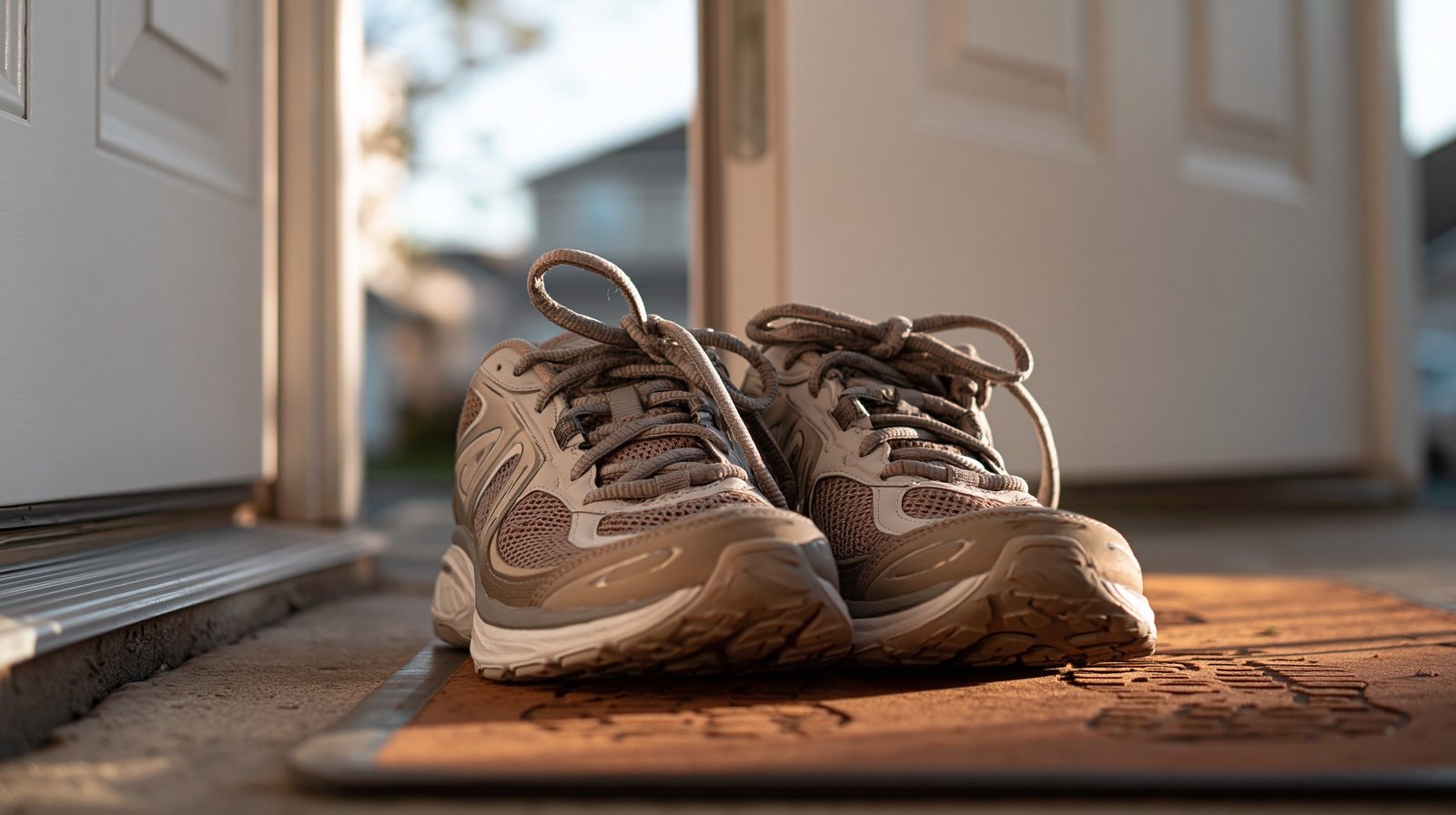
Before adding anything new, you need to know what your body can actually do right now.
Most adults leaving PT have a sense of their pain level, but not their capability. Pain scores tell you how much something hurts. Capability tells you what you can do. Those are different measurements, and capability is the one that matters for building forward.
The simplest assessment is a short walk. Go around the block at a comfortable pace. When you get back, note what felt easy and what felt harder than you expected. Write it down. That is your baseline.
Figuring out what to do after physical therapy for knee pain starts with an honest look at where you are right now. Once you know that, the next step has somewhere to begin.
How do you take your first small win after PT ends?
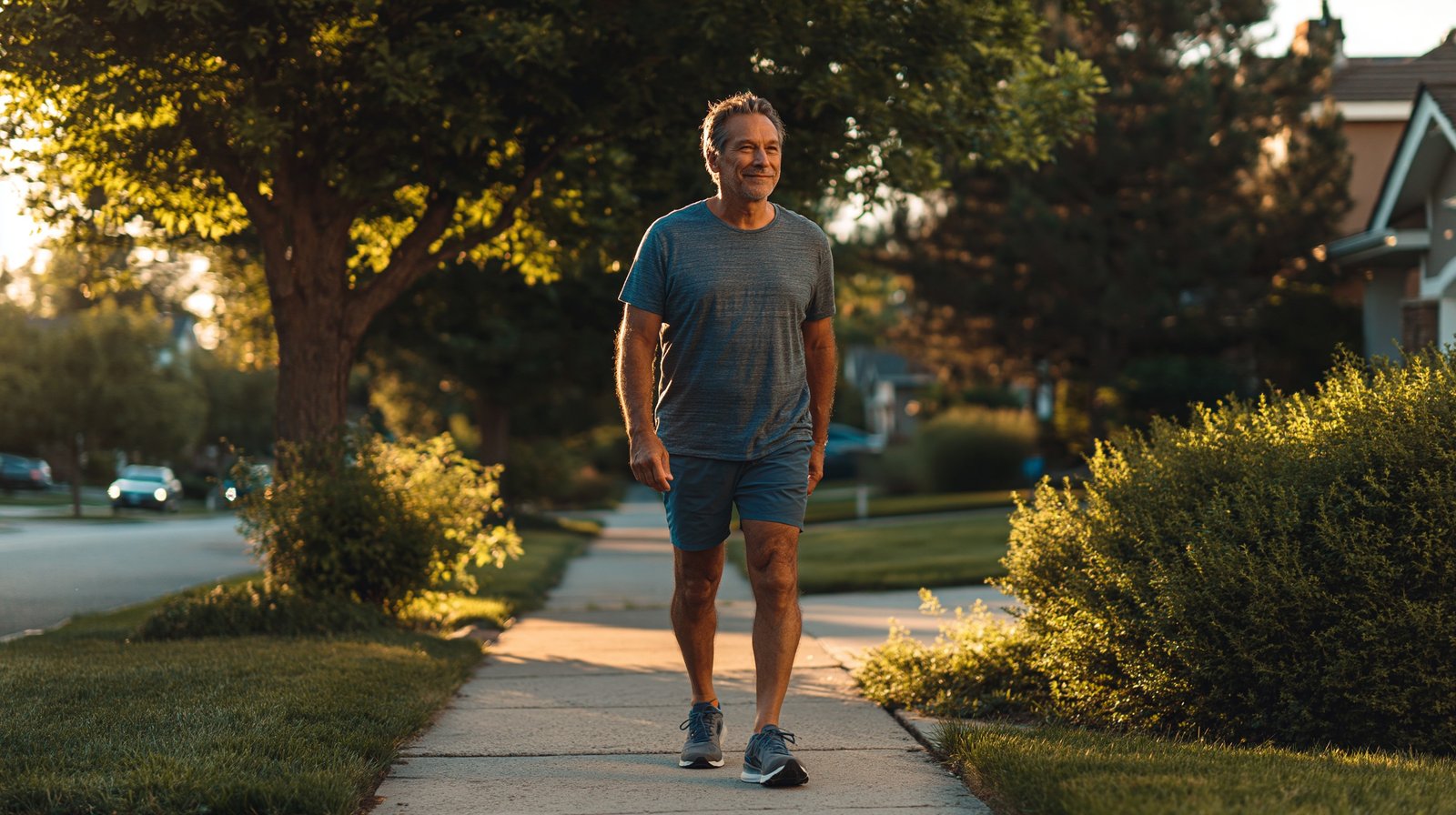
This is the step most people skip. They go straight from “PT ended” to “I need a full routine,” and the gap stops them before they start.
A small win is simpler. Walk for 2 to 3 minutes. Drink a glass of water first. When you finish, check one thing: do you feel better than when you started?
That single question is more useful than any pain score. If the answer is yes, your body just told you it can still respond. When thinking about what to do after physical therapy for knee pain, that moment is the foundation on which everything else builds.
The 3-Minute Walk Test at enneadhealth.com is built around exactly this idea. It takes under 3 minutes and tells you more than a week of wondering.
How do you make daily movement a habit without a therapist?

The answer is not a new workout program. It is one small anchor.
Pick a time of day you can protect. After your morning coffee. Before dinner. Attach a short walk to something you already do every day. The goal is not distance or intensity. The goal is to show up at the same time every day until the movement becomes automatic.
This is what the research on post-PT drop-off points consistently points to. When the external schedule disappears, the internal one has to take its place. If you have not built one yet, mornings tend to work well for adults over 55 because the morning stiffness that comes with inactivity gives you an immediate reason to move.
Small and daily beats long and occasional. That is how you make daily movement a habit without a therapist guiding what to do after physical therapy for knee pain.
Ready to Find Out What Your Body Can Do?
It takes less than 3 minutes. No gym. No equipment. Just a simple test that shows you if your body can do more than it’s been telling you.
M3 is a behavioral wellness coaching program. It is not medical treatment and does not replace advice from your physician. Consult your doctor before beginning any new movement or nutrition program.
Wrap-up: What to do after physical therapy for knee pain
Physical therapy gives you a window. What you do in the weeks after determines whether that window stays open.
The research is clear that unsupervised exercise adherence drops without structure. The people who keep their PT gains are not more motivated than those who lose them. They have a plan. Three steps: find your starting point, take your first small win, and build a daily anchor that grows with you.
What to do after physical therapy for knee pain is not a mystery. It is a practice. And like any practice, it works better with a structure behind it.
If you want to understand the full approach to knee pain relief for adults over 55, the complete guide is the place to start.
Frequently Asked Questions
How long does it take to lose PT gains if you stop exercising?
Deconditioning starts within 2 weeks of stopping structured movement. Strength gains from supervised PT can show measurable decline within 4 weeks without follow-through. For adults over 55, the window between keeping what you earned and starting over is shorter than most people expect.
Can I do my PT exercises forever on my own?
You can, and for many adults, the PT home program is a solid foundation. The challenge is that home programs are usually static — the same exercises at the same level indefinitely. Bodies adapt and need progression. Doing the same 8 exercises for 12 months stops being therapeutic and becomes maintenance at best.
What should I tell my doctor if my knee gets worse after PT ends?
Be specific about what changed and when. Note whether the worsening followed a change in activity, a period of inactivity, or appeared without a clear trigger. Sudden swelling, increased pain at rest, or any locking of the joint are worth flagging promptly. Gradual worsening over several weeks warrants a routine follow-up.
How often should I exercise after physical therapy for knee pain?
Daily light movement beats infrequent intense sessions for adults over 55 with knee pain. A 2-to-3-minute anchor every day is a stronger foundation than a 45-minute session twice a week that gets skipped when motivation dips. Once the daily habit is solid, adding one longer session per week is the natural next step.
Is it normal for knee pain to come back after physical therapy?
Yes, and it does not mean PT failed. Pain fluctuates with activity levels, sleep quality, stress, and diet. A flare-up after discharge is common, especially in the first 4 to 8 weeks when the transition from supervised to self-directed movement is most vulnerable. It is a signal to adjust, not a reason to stop.
What is the difference between finishing PT and being done with PT?
Finishing PT means your sessions ended or your therapist discharged you. Being done with PT means you no longer need structured movement support. For most adults over 55 with chronic knee pain, finishing PT and being done with PT are two very different things. Confusing them is where progress stalls.
References
Chu, S.-F., & Wang, H.-H. (2023). Outcome expectations and older adults with knee osteoarthritis: Their exercise outcome expectations in relation to perceived health, self-efficacy, and fear of falling. Healthcare, 11(1), 57. https://doi.org/10.3390/healthcare11010057
Hinman, R. S., Delany, C. M., Campbell, P. K., Gale, J., & Bennell, K. L. (2016). Physical therapists, telephone coaches, and patients with knee osteoarthritis: Qualitative study about working together to promote exercise adherence. Physical Therapy, 96(4), 479–493. https://doi.org/10.2522/ptj.20150260
Smith, K. M., Massey, B. J., Young, J. L., & Rhon, D. I. (2023). What are the unsupervised exercise adherence rates in clinical trials for knee osteoarthritis? A systematic review. Brazilian Journal of Physical Therapy, 27(4), 100533. https://doi.org/10.1016/j.bjpt.2023.100533