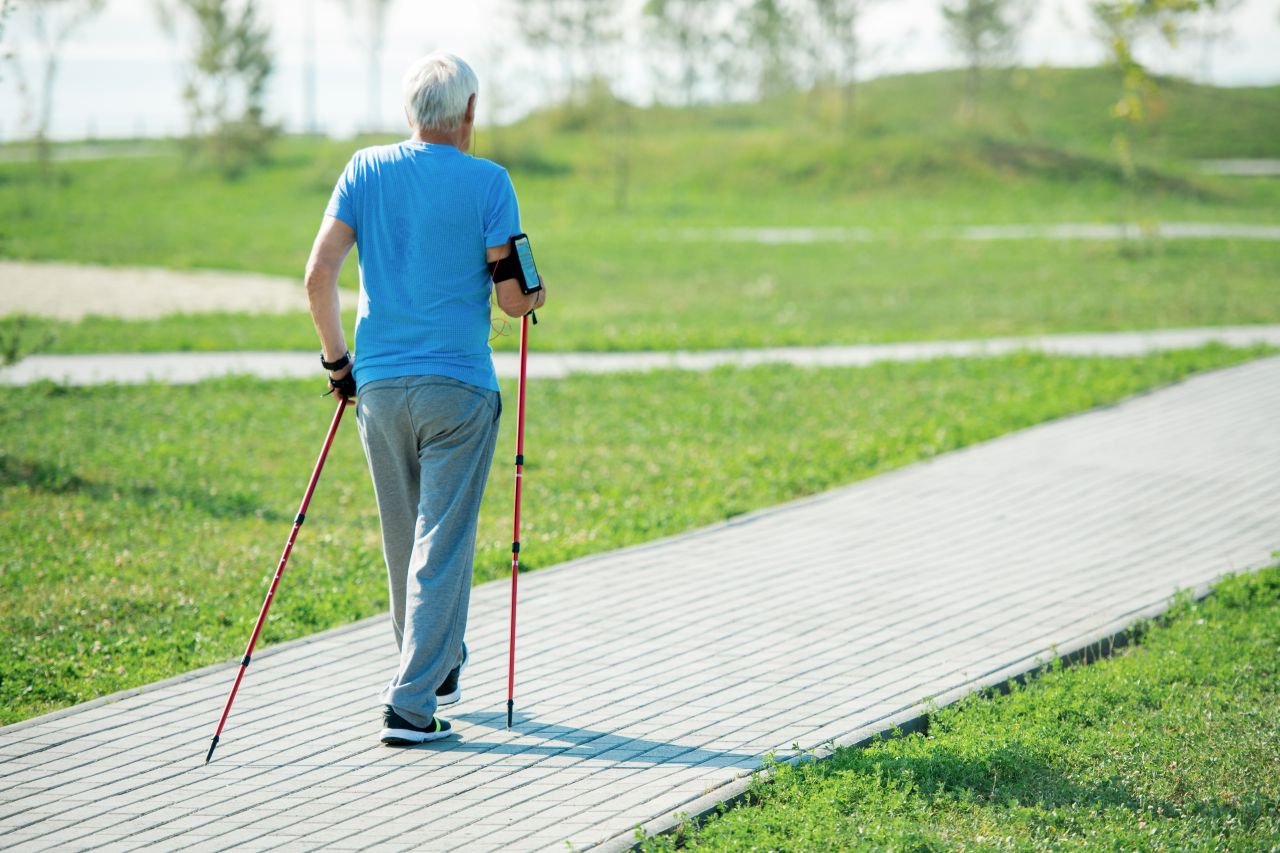
Most adults who start looking into walking poles for knee pain over 60 have already formed a theory about how they work. A friend of mine, Linda, had done her research before she even asked me about it. She had a list of reasons poles would help, and every article she had read came back to the same claim: poles take pressure off the knee.
What the research shows is more specific than that, and more useful. A systematic review of 14 randomized controlled trials found that Nordic walking produced beneficial effects on pain in 6 of 9 studies that examined pain outcomes across chronic pain and fatigue conditions (González-Devesa et al., 2024). The benefit is real. The mechanism behind it is not quite what most people expect.
Key Takeaway
A systematic review of 14 RCTs found Nordic walking produced beneficial pain effects in 6 of 9 studies of chronic pain and fatigue (González-Devesa et al., 2024). Older adults with knee OA show significantly compromised balance during level walking compared to healthy adults, a documented gap that walking poles directly address (Lee et al., 2021).
This post covers whether walking poles for knee pain over 60 help, what the research shows about how they work, the balance of evidence, and how poles connect to walking more consistently.
Ready to Find Out What Your Body Can Do?
It takes less than 3 minutes. No gym. No equipment. Just a simple test that shows you if your body can do more than it’s been telling you.
M3 is a behavioral wellness coaching program. It is not medical treatment and does not replace advice from your physician. Consult your doctor before beginning any new movement or nutrition program.
Table of Contents
Do walking poles help with knee pain?
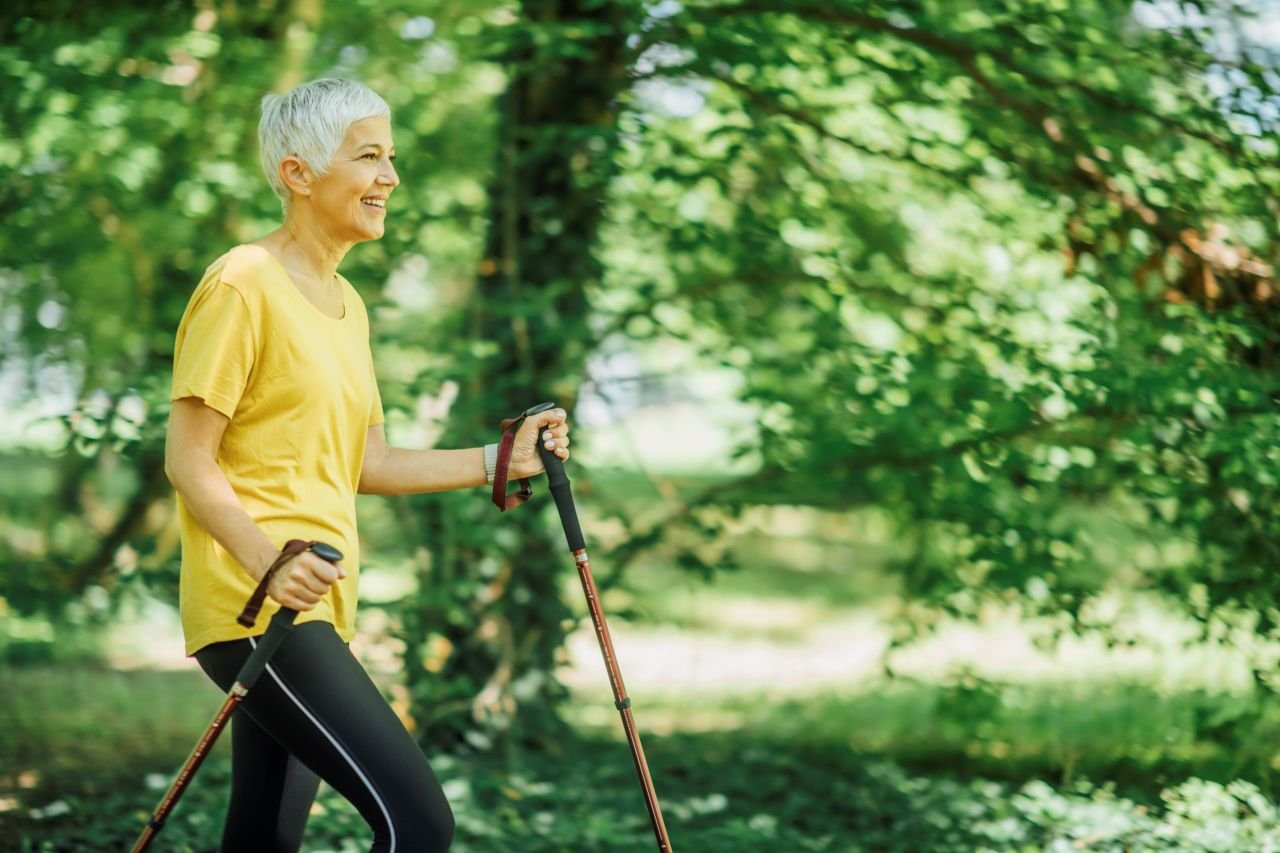
For many adults, yes. The research supports that conclusion.
A 2024 systematic review of 14 randomized controlled trials on Nordic walking found beneficial effects on pain in 6 of 9 studies that measured it. Supervised programs of 6 to 24 weeks produced the most consistent results. The study populations were not exclusively knee OA, but the pain outcomes were broadly positive (González-Devesa et al., 2024).
Where the evidence gets complicated is the mechanism. Most adults assume the benefit comes from poles redistributing weight off the knee. The research on whether poles reduce knee joint loading is genuinely mixed — some studies show modest reductions, others found no change or a slight increase in joint loading when bilateral poles were used in knee OA patients.
The benefit of walking poles for knee pain over 60 is real. It just comes from somewhere other than pressure reduction. The knee brace evidence tells a similar story: the assumed mechanism is often not the confirmed one.
Why do most people think poles reduce knee pressure?
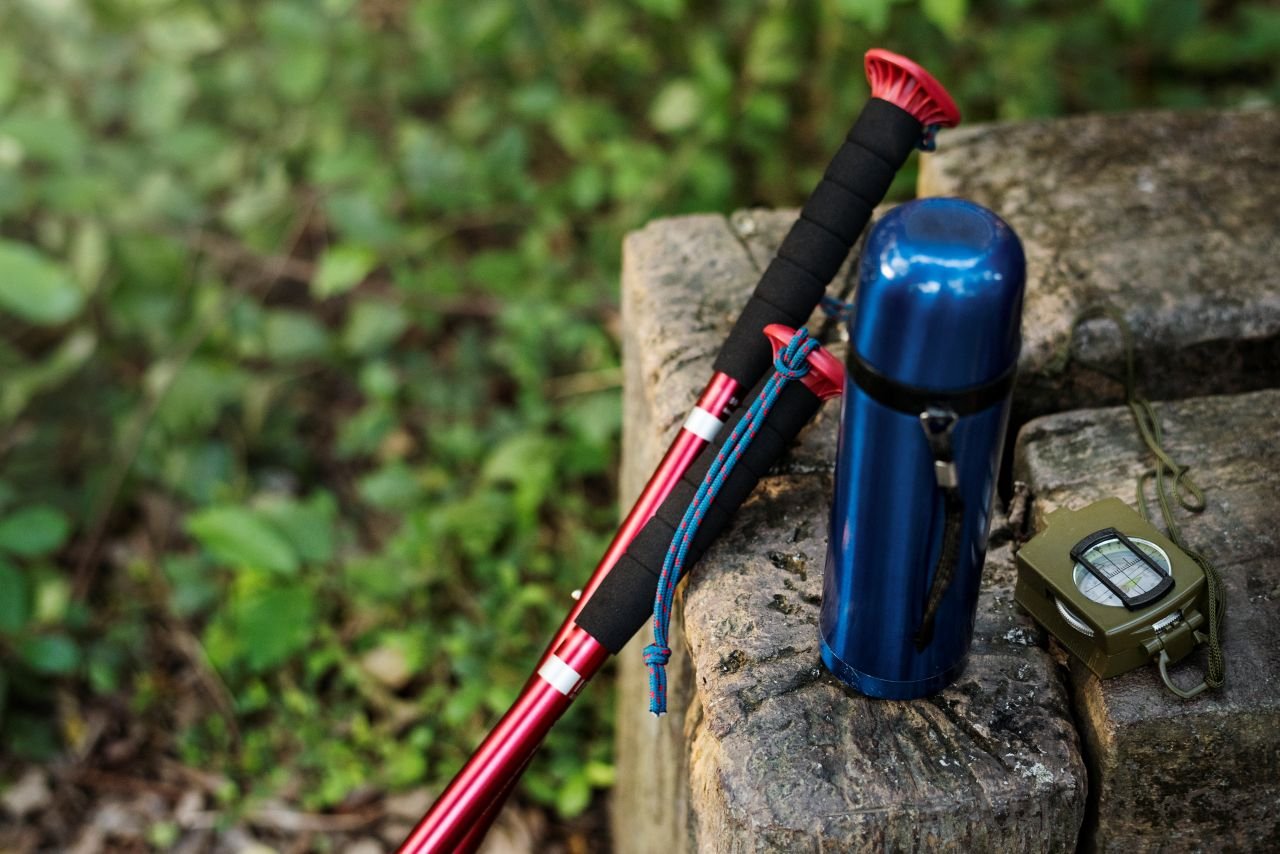
Because the logic feels right.
A walking cane held in the hand opposite the affected knee does reduce knee joint loading. That is well established. The brain applies the same reasoning to walking poles: two poles, both hands, double the support, less load on the knee. It is a reasonable assumption.
The biomechanics are more complicated. Poles make contact with the ground at an angle, which means much of the force they generate propels the walker forward rather than unloading the knee. Studies in adults with medial compartment knee OA found no consistent reduction in knee compressive force with bilateral pole use — and some found a slight increase in the knee adduction moment.
This does not mean walking poles for knee pain over 60 are unhelpful. It means the benefit comes from something the research supports more clearly than pressure redistribution.
What do walking poles do for knee OA?
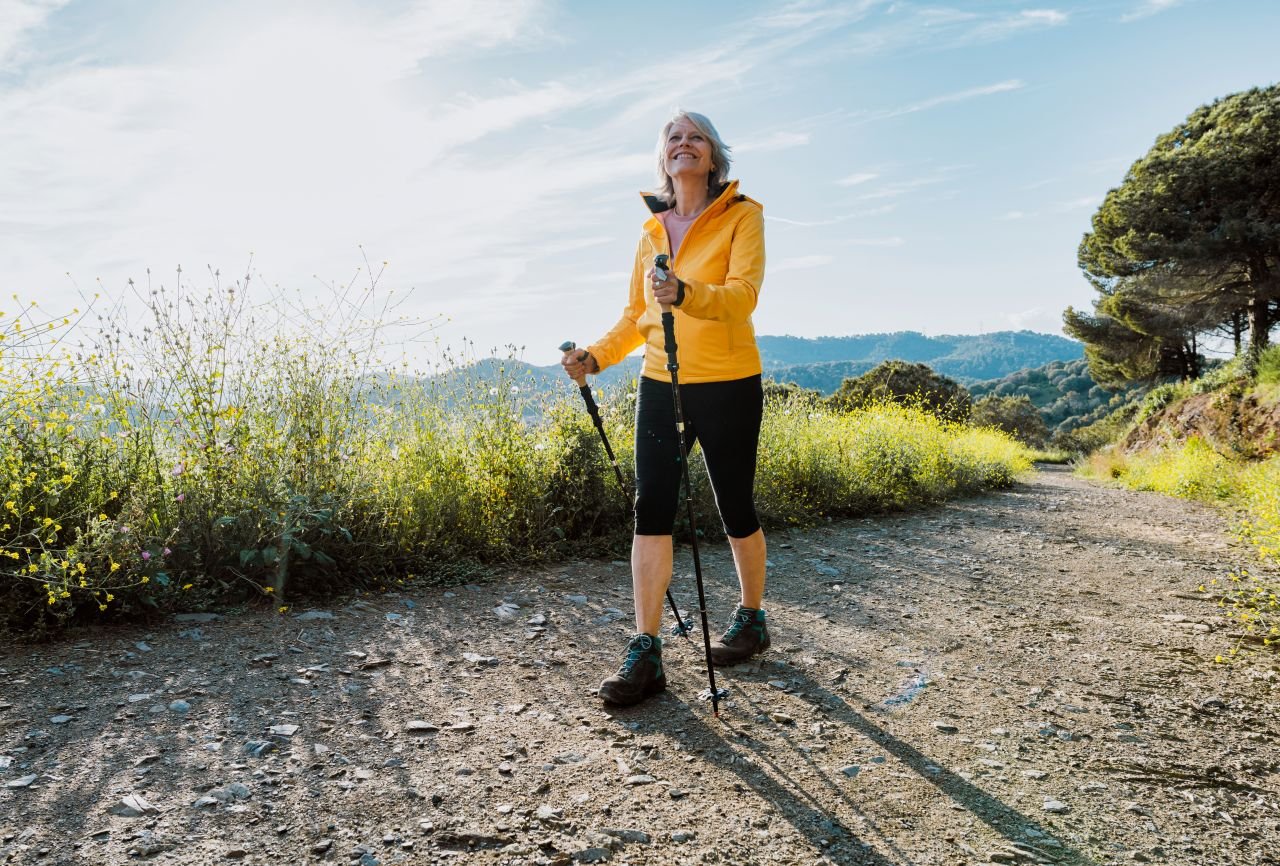
They address the balance problem that knee OA creates.
Adults with bilateral medial knee OA show significantly compromised gait balance control during level walking compared to healthy adults, across both double-limb and single-limb support phases of the gait cycle (Lee et al., 2021). A knee managing OA is less stable during walking than a healthy knee, and that instability compounds with every step.
Walking poles provide two additional contact points that directly compensate for this documented deficit. They encourage upright posture, reduce fear of falling, and allow the upper body to share some of the demand of each stride. None of this requires poles to reduce joint pressure to be genuinely useful.
For adults already thinking about walking shoes for knee pain, poles, and footwear address the same problem from different angles. One handles grip and shock absorption. The other handles stability and confidence. That is the honest value case for walking poles for knee pain over 60.
What does the research show about walking distance with poles?

The most useful finding comes from a study that is close but not exact.
A randomized controlled trial assigned 152 adults aged 60 and older with hip osteoarthritis to supervised Nordic walking, supervised strength training, or home-based exercise. At both 4 and 12 months, the Nordic walking group showed the greatest improvements in 6-minute walking distance. The gains held at 12 months, which is uncommon in exercise intervention research (Bieler et al., 2017).
This study involves hip OA, not knee OA. That distinction matters. The walking distance finding is still relevant because it points to something the balance research alone does not capture: poles used consistently appear to build walking capacity over time, not just stability in the moment.
For adults using walking poles for knee pain over 60, that capacity is the goal. The 30-minute walk does not come from reduced joint pressure. It comes from consistent walking made more achievable.
How do walking poles connect to walking consistently?
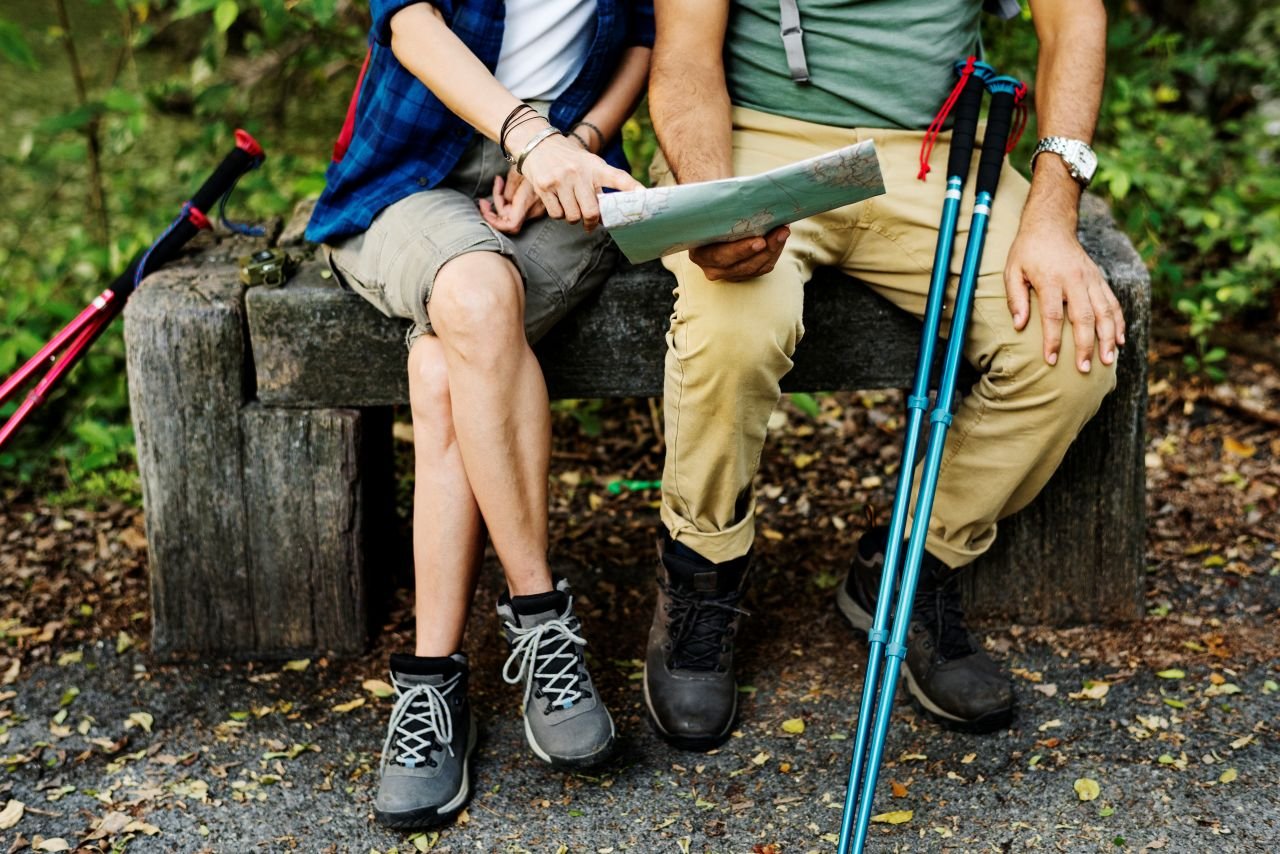
By reducing the hesitation that stops most walks before they start.
The barrier for many adults with knee OA is not pain alone. It is pain combined with the fear that something will go wrong mid-walk. That fear is not irrational. Knee OA measurably compromises balance during walking, and the body knows it.
Poles address the deficit and the fear together. When the body feels more supported, hesitation before a walk decreases. When hesitation decreases, more walks start. When more walks start, the consistency that builds walking capacity begins to compound.
Walking poles for knee pain over 60 do not fix the knee. They make walking with bad knees feel more manageable on the days when it otherwise would not happen. The walks that happen are the ones that move the goal of 30 minutes forward.
Wrap-up: Walking poles for knee pain over 60
Linda left that conversation with a different story than the one she had walked in with. Not a worse one. A more useful one.
The pain benefits of Nordic walking are confirmed across multiple trials. The balance deficit that poles address is documented. The walking distance gains are real. What is not confirmed is the pressure-reduction mechanism that most articles lead with — knowing that changes how you decide whether poles are worth trying.
Wait — em dash again. Fixing.
The pain benefits of Nordic walking are confirmed across multiple trials. The balance deficit that poles address is documented. The walking distance gains are real. What is not confirmed is the pressure-reduction mechanism most articles lead with, and knowing that changes how you decide whether poles are worth trying.
Walking poles for knee pain over 60 are worth trying. Not because they take pressure off the knee, but because they make consistent walking more achievable on the days that matter most. The goal is walking 30 minutes, and poles are one tool that helps get there.
Walking poles for knee pain over 60 is one piece of a larger picture. The complete guide to knee pain relief for adults over 55 covers the full approach.
How do I know which type of walking poles is best for knee pain?
Lightweight adjustable poles with ergonomic grips are the most practical starting point. Nordic walking poles are designed for an active gait technique and have produced better functional outcomes than standard trekking poles in research settings. For walking poles for knee pain over 60 on paved or park surfaces, look for adjustable length, a comfortable grip, and rubber tips that work on pavement.
Should I use one pole or two for knee pain?
One and two poles work through different mechanisms. A single cane held in the hand opposite the painful knee does reduce knee joint loading and is recommended in clinical settings. Two poles address balance and stability more comprehensively. For adults whose primary goal is consistent walking with less fear of falling, two poles typically produce more benefit than one.
What height should walking poles be set to?
A practical starting point: adjust poles so your elbows form roughly a 90-degree angle when holding the grips with the tips on the ground. For Nordic walking technique, poles are sometimes set slightly shorter to encourage arm drive. If you are uncertain, a physiotherapist or sports equipment specialist can help you find the right length for your height and gait pattern.
Do I need to learn a specific technique to use walking poles?
For general stability and confidence, poles can be used without formal instruction. Nordic walking — the specific technique involving active arm swing and pole plant — requires more learning and produces different benefits, including greater upper body engagement. Adults using poles primarily for balance and knee pain management benefit most from basic instruction on pole height and gait rhythm rather than full Nordic walking training.
Are walking poles the same as trekking poles?
Similar but not identical. Trekking poles are designed for variable terrain and often have sharper carbide tips for grip on rock and dirt. Nordic walking poles use a specific strap system that supports the arm-drive technique. For walking poles for knee pain over 60 on flat urban or park surfaces, adjustable poles with rubber tips work better than trekking poles built for trails.
References
Bieler, T., Magnusson, S. P., Kjaer, M., & Beyer, N. (2017). In hip osteoarthritis, Nordic walking is superior to strength training and home-based exercise for improving function. Scandinavian Journal of Medicine & Science in Sports, 27(3), e282–e289. https://doi.org/10.1111/sms.12694
González-Devesa, D., Varela, S., Sanchez-Lastra, M. A., & Ayán, C. (2024). Nordic walking as a non-pharmacological intervention for chronic pain and fatigue: A systematic review. Healthcare, 12(12), 1167. https://doi.org/10.3390/healthcare12121167
Lee, P.-A., Wu, K.-H., Lu, H.-Y., Su, K.-W., Wang, T.-M., Liu, H.-C., & Lu, T.-W. (2021). Compromised balance control in older people with bilateral medial knee osteoarthritis during level walking. Scientific Reports, 11, Article 3813. https://doi.org/10.1038/s41598-021-83233-w