
I used to think longer walks meant better results. More time on your feet, more benefit for your knees. It seemed logical. It was wrong.
What the research actually shows surprised me when I first came across it. A study comparing continuous walking with shorter bouts in adults with knee osteoarthritis found that continuous walking increased knee pain over time, while the shorter bouts did not (Farrokhi et al., 2017). Same total walking time. Very different experience for the knees.
If you have been searching for a short-burst walking approach that works for knee pain after 55, the research behind it is more specific than most people realize.
For adults who have been cutting their walks short because their knees start complaining after ten or fifteen minutes, that instinct may be exactly right. You are not failing at walking. You may be doing precisely what your knees need without knowing it.
Key Takeaways
For adults with knee osteoarthritis, shorter bouts of walking outperform one long continuous session for managing knee pain during exercise. Research comparing the two found that continuous walking increased knee pain while interval walking did not, even when total walking time was equal (Farrokhi et al., 2017).
Here is what the research shows about why short bursts work better, how to structure them, and what to pay attention to as you build your walking habit.
Ready to Find Out What Your Body Can Do?
It takes less than 3 minutes. No gym. No equipment. Just a simple test that shows you if your body can do more than it’s been telling you.
M3 is a behavioral wellness coaching program. It is not medical treatment and does not replace advice from your physician. Consult your doctor before beginning any new movement or nutrition program.
Table of Contents
Why does walking start to hurt after a certain point?

If your knees feel reasonable at the start of a walk and progressively worse as you keep going, that is not just how things are. There is a mechanical reason for it.
When you walk continuously for an extended period, the muscles surrounding your knee gradually fatigue (Doherty, 2003). Those muscles, particularly the quadriceps, are your knee’s primary shock absorbers. When they are fresh, they absorb a meaningful portion of the force each step produces. As they tire, they absorb less of it. The joint itself takes on more of that load with every subsequent step.
Research measuring knee contact forces during walking found that forces increased significantly after 30 minutes of continuous walking in adults with knee osteoarthritis, regardless of pace (Farrokhi et al., 2017). The joint was absorbing more load at 30 minutes than it was at minute one. That increased loading corresponded directly with increased knee pain in the continuous walking group.
This matters because most generic walking advice assumes the goal is to build toward longer and longer sessions. For adults over 55 with knee concerns, that assumption skips a critical variable. Duration is not neutral. After a certain point, it starts working against you.
The good news is that the same study found a straightforward way around this. You do not have to walk less. You have to walk differently.
What does the research say about shorter walking bouts and knee pain?

The evidence here is more specific than most people realize. It is not just that shorter walks feel better. There is a measurable mechanical reason why they are better.
Farrokhi et al. (2017) compared two groups of adults with knee osteoarthritis. One group walked continuously for 45 minutes. The other group walked in three separate 15-minute bouts with rest periods in between — the same total walking time, broken up. The findings were clear:
Continuous walking increased knee pain over time. The interval walking group experienced no significant increase in knee pain, even though they walked the same total distance.
The researchers also measured knee contact forces throughout both sessions. After 30 minutes of continuous walking, joint loading increased by 22 to 25 percent above baseline. That is the joint absorbing significantly more force than it was at the start, because the surrounding muscles had fatigued and stopped doing their share of the work.
The interval group did not escape the loading increase entirely. But they did escape the pain increase. The rest periods between bouts allowed the muscles to partially recover before the next session began. The joint never reached the sustained loading threshold that the continuous walkers hit.
For adults over 55 with knee concerns, this finding reframes the whole question. The goal is not to build toward a 30-minute continuous walk as fast as possible. The goal is to accumulate walking time in a way that keeps your knees responding well throughout. That is a different target, and it changes how you start.
How do you structure short walking bouts when your knees are sore?
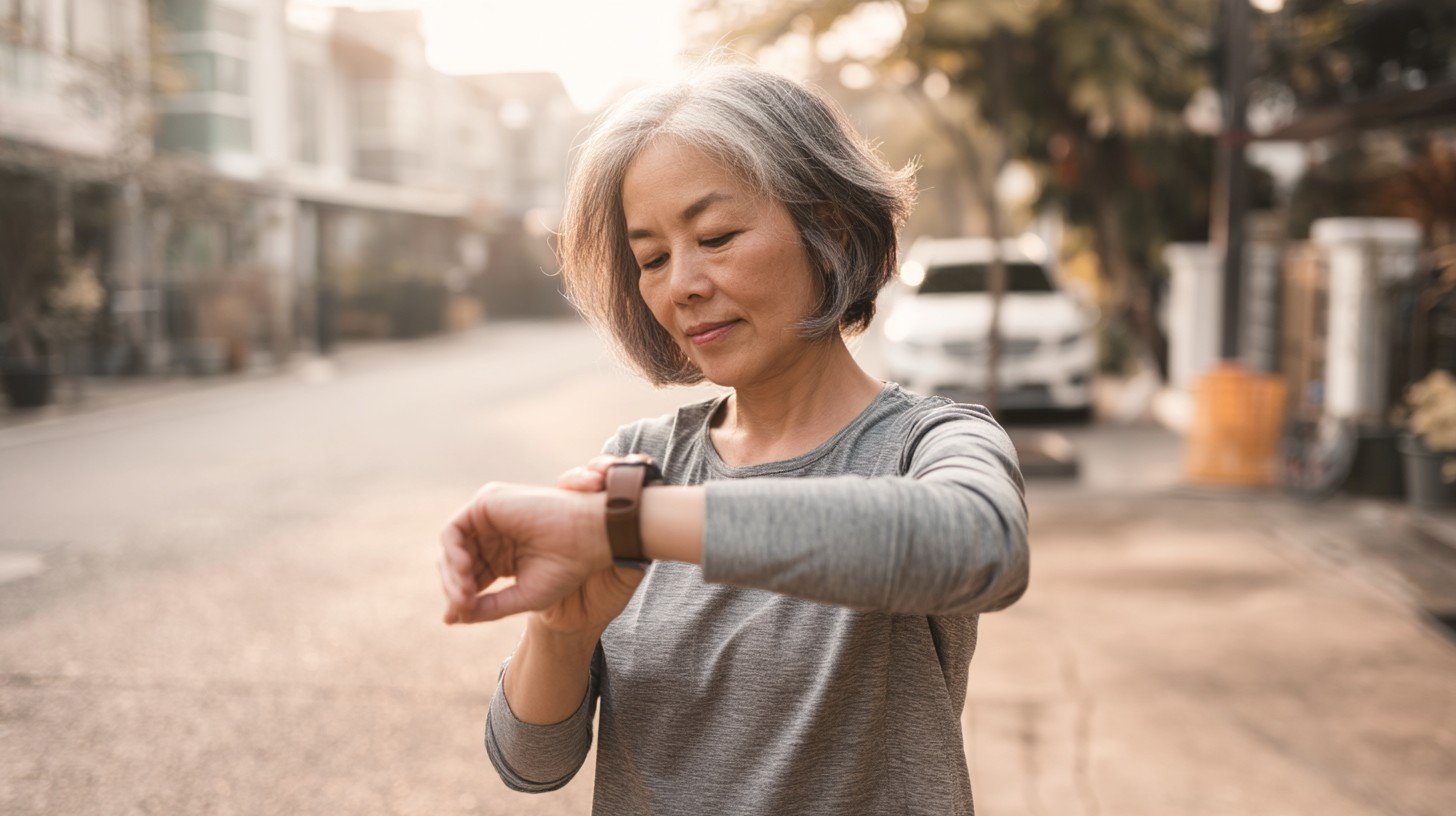
The research used 15-minute bouts with one-hour rest periods. That is the clinical format. For most adults starting out with knee concerns, that structure is actually more than you need to begin with.
Here is a practical starting framework:
- Start at 5 to 10 minutes per bout. Not 15. If your knees have been limiting your walking for weeks or months, start shorter than feels necessary. You can always add time. You cannot undo a session that pushed too far.
- Rest between bouts means actual rest. Sitting or light activity. Not another form of exercise. The muscles surrounding your knee need enough recovery time to be useful again before the next walk.
- Two to three bouts per day is a reasonable starting target. Morning, midday, and late afternoon work well for many adults. The specific times matter less than the consistency.
- Track how your knees feel two to four hours after each bout, not during it. Post-session feedback is your most reliable data point. Discomfort that ramps up hours later means shortening the next bout. Discomfort that stays flat or fades means you are working at the right level.
One thing to be clear about. This is not a permanent structure. It is a starting point. As your joint tolerance builds and your supporting muscles get stronger, the bouts get longer and the rest periods get shorter. That progression happens on your body’s timeline, not a generic program’s.
Nothing in this post substitutes for a conversation with your physician. If you are uncertain whether your knee situation is safe to work with, start there.
How do you know if short bursts are working for you?

The most common mistake adults make when starting any new movement approach is measuring the wrong thing. They check how their knees feel during the walk. That is useful information, but it is not the number that tells you whether the approach is working.
The two to four-hour window after a bout is your real data point.
Here is a simple tracking framework:
| What to track | What it tells you |
|---|---|
| Pain during the bout | Whether the current session length is too long |
| Pain 2 to 4 hours after | Whether the overall load was appropriate |
| Pain the following morning | Whether cumulative load is building correctly |
| Energy and mood after | Whether the approach is sustainable |
If your knees feel roughly the same or better two to four hours after a bout, you are working at the right level. If they feel meaningfully worse, shorten the next bout before you add anything else.
Progress with this approach is not always linear and it is rarely dramatic in the first week. What most adults notice first is not a reduction in knee pain during walks. It is that the pain after walks stops escalating. The walks stop costing them the rest of the day. That is the first signal that the approach is working.
From there, the bouts get longer. The rest periods get shorter. The daily total accumulates. The pattern builds on itself when the foundation is right.
What else affects how your knees respond during a walk?
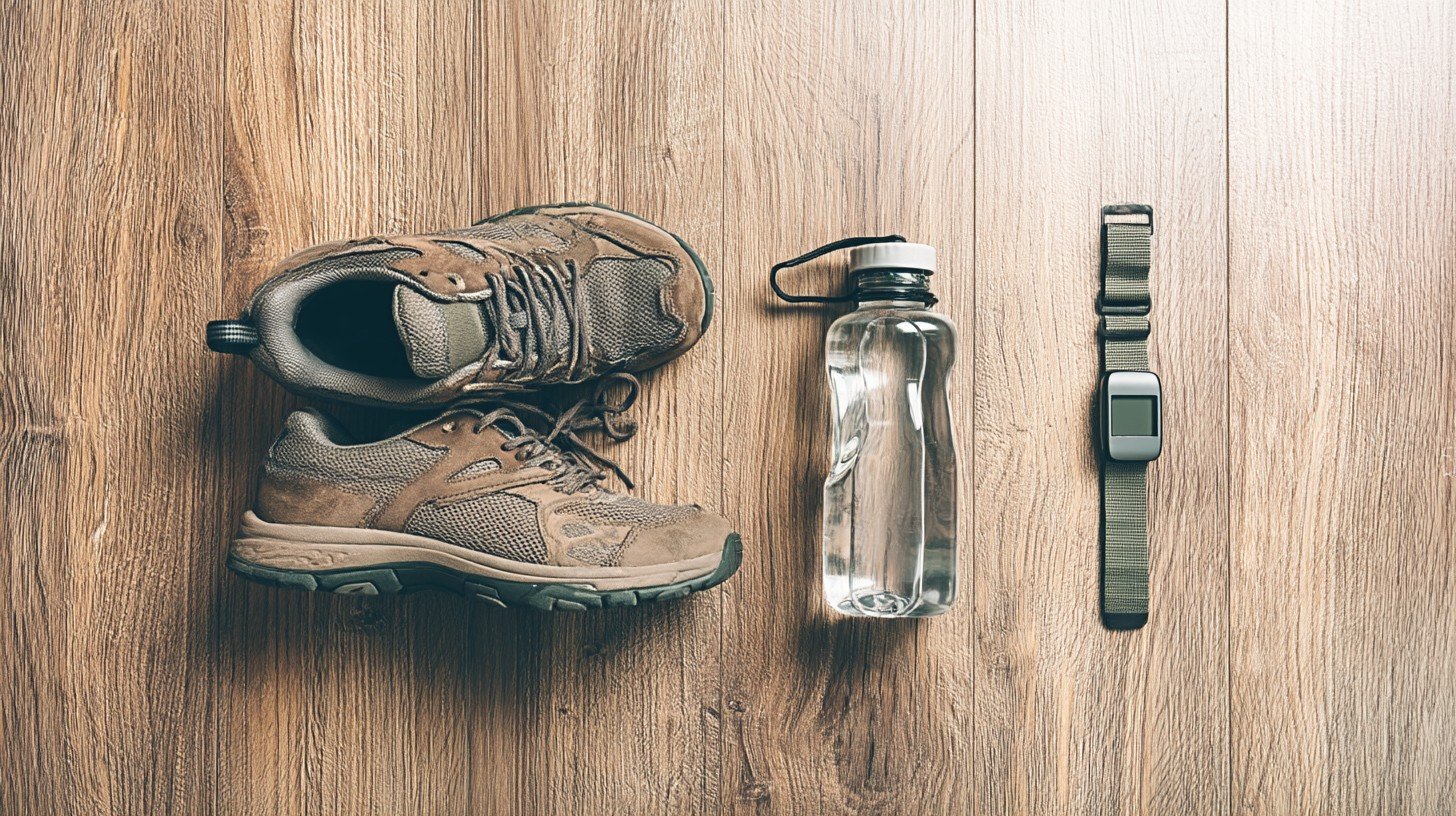
The approach of breaking walking into shorter sessions with rest in between is the most important variable. But several other factors influence how your knees respond, and getting them right makes the difference between a session that builds your capacity and one that just adds to the load.
Surface. Packed dirt, grass, or a rubberized track absorbs more impact than concrete or asphalt. If you have a choice, use the softer surface. If you do not, the session length matters more than the surface. A 5-minute walk on concrete is still better than a 30-minute walk on a trail.
Footwear. Cushioned, supportive sneakers with a firm midsole reduce the impact your knees absorb with each step. Worn-out soles that have compressed visibly are no longer doing that job. If your walking shoes are more than a year old and you walk regularly, they are likely past their useful life for joint protection.
Pace. Comfortable and conversational is the right pace for short walks. You should be able to speak a short sentence without effort. Moving faster than that during the early weeks adds load without adding benefit. Speed becomes relevant later, once your joint tolerance has built and the pattern of shorter sessions is well established.
Time of day. Many adults with knee concerns find that morning walks feel stiffer than afternoon walks. A few minutes of light movement before your first walk redistributes that stiffness and makes the first session feel considerably different.
None of these factors replaces the foundation. Think of them as variables you can adjust once you have the habit of short, broken-up walking sessions in place.
Wrap-up: why short bursts of walking work better for sore knees after 55
The instinct when your knees hurt during a walk is to push through or stop entirely. The research points to a third option that most adults over 55 have never been given: walk shorter, more often, with rest in between.
Farrokhi et al. (2017) found that continuous walking increased knee pain in adults with osteoarthritis while interval walking did not, even when the total walking time was identical. The difference was not effort or willpower. It was structure. Shorter sessions keep the muscles around your knee functional throughout the walk. They never reach the fatigue threshold where the joint starts absorbing load on its own.
That one shift changes what walking feels like after 55. Not easier in the sense of requiring less from you. Easier in the sense that your knees stop making you pay for it afterward.
Start with sessions your knees can handle. Track how you feel two to four hours later. Build from there. The 3-Minute Knee Test is the smallest possible starting point — a structured way to find out what your body responds to before you commit to anything more.
Ready to Find Out What Your Body Can Do?
It takes less than 3 minutes. No gym. No equipment. Just a simple test that shows you if your body can do more than it’s been telling you.
M3 is a behavioral wellness coaching program. It is not medical treatment and does not replace advice from your physician. Consult your doctor before beginning any new movement or nutrition program.
Frequently Asked Questions
Is it better to walk for 10 minutes three times a day or 30 minutes all at once for knee pain?
For adults over 55 with knee concerns, three shorter sessions outperform one long continuous walk. Research found that continuous walking increased knee pain in adults with osteoarthritis, while the same total walking time broken into shorter bouts did not (Farrokhi et al., 2017). The muscles surrounding your knee stay more functional throughout shorter sessions, which means the joint absorbs less unassisted load.
How long should I rest between short walking sessions?
The research used one-hour rest periods between 15-minute bouts. For most adults starting out, that is a reasonable guideline. The goal of the rest period is to allow the muscles surrounding your knee to partially recover before the next session. If you find that one hour is not enough and your knees feel worse going into the second bout, extend the rest. Your post-session feedback is more reliable than any fixed number.
Can I do other activities between my short walking sessions?
Light activity is fine. Sitting, gentle stretching, or everyday household movement between sessions will not undermine the rest period. What you want to avoid is stacking another form of loading exercise directly before or after a walking session. The goal is to let the muscles around your knee recover enough to be useful for the next walk.
What if my knees feel fine during the walk but hurt later?
That is your most important signal. Discomfort that surfaces two to four hours after a session means the session was longer or more intense than your joint was ready for. Shorten the next session rather than stopping altogether. The pattern you are looking for is walks that leave your knees feeling roughly the same or better in that two-to-four-hour window, not worse.
How do I know when I am ready to make my walking sessions longer?
When your knees consistently feel the same or better in the two to four hours after a session, and that pattern holds for at least five to seven consecutive days, you are ready to add one to two minutes to each session. Do not increase more than one variable at a time. Add duration first. Add frequency later. Add pace last.
Does walking in short sessions build the same fitness as one long walk?
For adults managing knee pain, the priority at the start is joint tolerance, not cardiovascular fitness. Short sessions done consistently do build aerobic capacity over time, and research supports accumulated walking time as an effective approach for overall health outcomes. The difference is that shorter sessions allow you to accumulate that time without the joint loading that comes with continuous walking past the 30-minute mark. As your capacity builds and your sessions get longer, the fitness benefits compound alongside the joint benefits.
References
Doherty, T. J. (2003). Invited review: Aging and sarcopenia. Journal of Applied Physiology, 95(4), 1717–1727. https://doi.org/10.1152/japplphysiol.00347.2003
Farrokhi, S., Jayabalan, P., Gustafson, J. A., Klatt, B. A., Sowa, G. A., & Piva, S. R. (2017). The influence of continuous versus interval walking exercise on knee joint loading and pain in patients with knee osteoarthritis. Gait & Posture, 56, 129–133. https://doi.org/10.1016/j.gaitpost.2017.05.024
Fransen, M., McConnell, S., Harmer, A. R., Van der Esch, M., Simic, M., & Bennell, K. L. (2015). Exercise for osteoarthritis of the knee: A Cochrane systematic review. British Journal of Sports Medicine, 49(24), 1554–1557. https://doi.org/10.1136/bjsports-2015-095424
Roddy, E., Zhang, W., & Doherty, M. (2005). Aerobic walking or strengthening exercise for osteoarthritis of the knee: A systematic review. Annals of the Rheumatic Diseases, 64(4), 544–548. https://doi.org/10.1136/ard.2004.028746
Leave a Reply