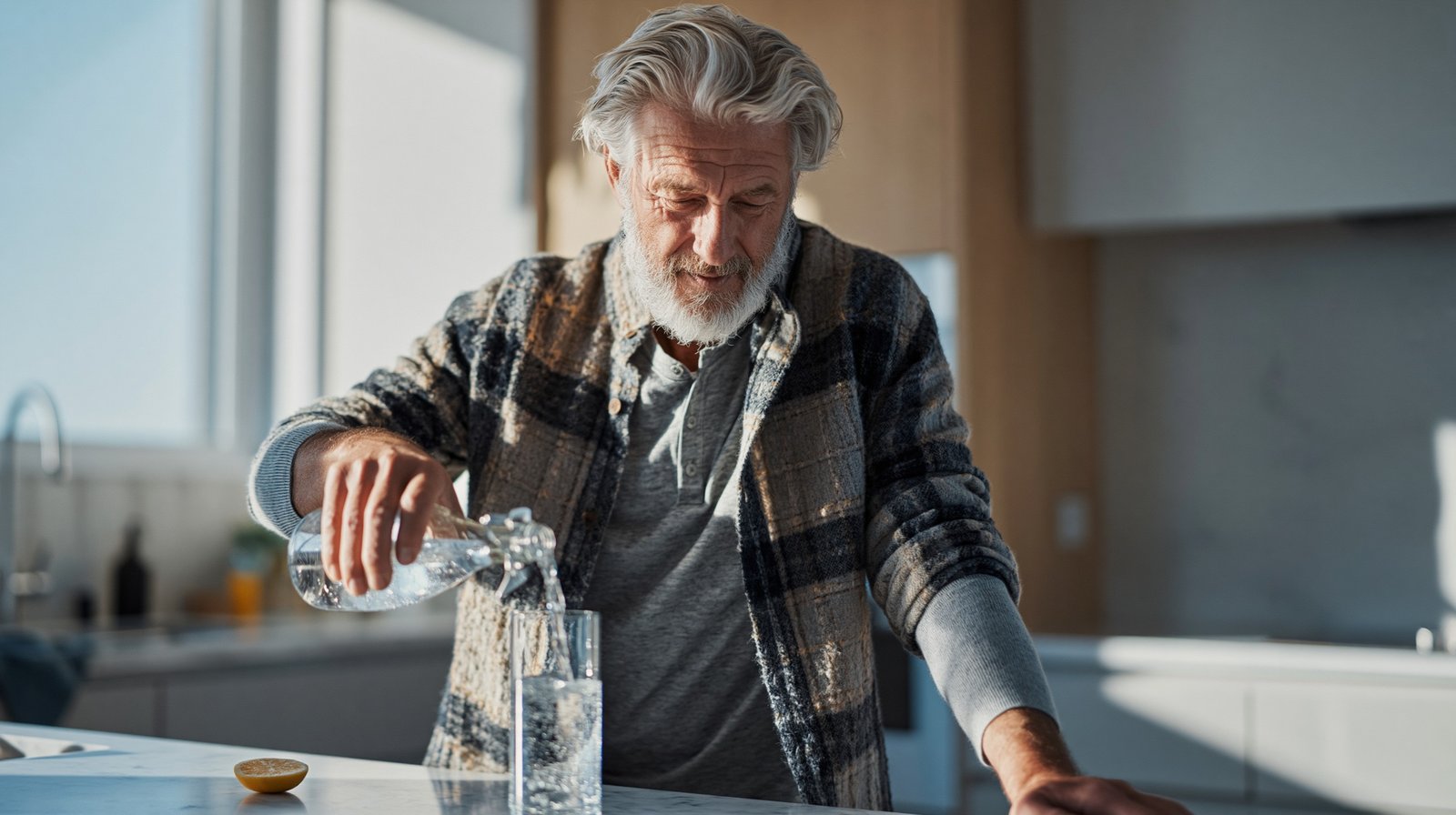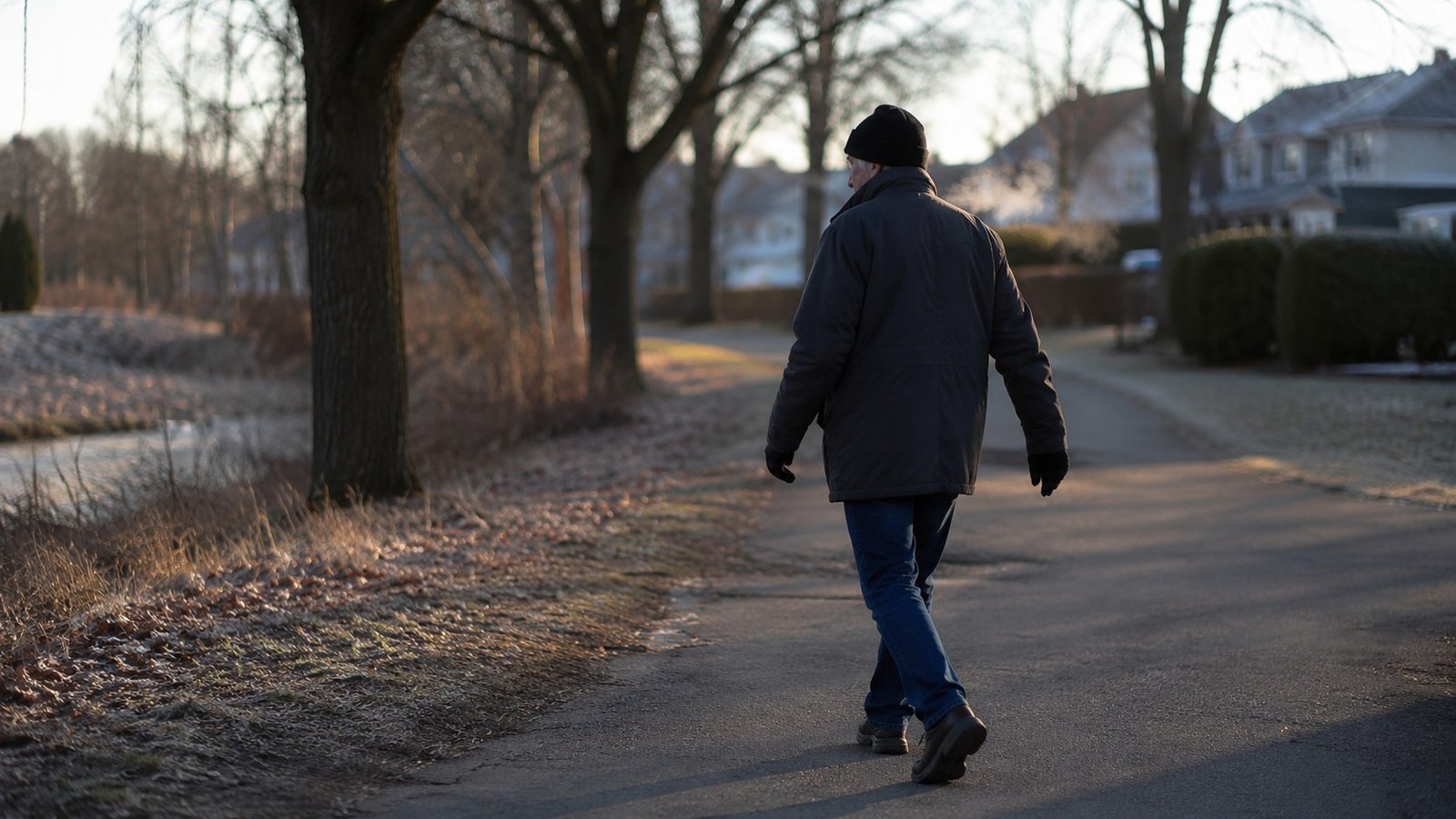
Tag: knee pain

  • Knee Pain Cold Weather Exercise Tips to Keep You Moving

    Knee Pain Cold Weather Exercise Tips to Keep You Moving

    Vincent could read the season in his knees. Every fall, as the temperature slid down, the stiffness crept in, and by real winter, he had usually parked his walking shoes by the door until spring. He was sure the cold made walking impossible, so why fight it?

    The truth turned out to be more useful. The research on cold and knees is genuinely mixed. Some studies find lower temperatures track with more joint pain, while others find no clear link at all (Wang et al., 2023; Ferreira et al., 2016). But here is the part that changes things, and it is why these knee pain cold weather exercise tips matter: the real problem in winter is not the ache, it is that people quietly stop moving.

    Key Takeaway

    Cold weather and knee pain have a real but modest connection. A review of 14 studies found weather conditions, including temperature, are associated with osteoarthritis pain (Wang et al., 2023). In older adults, season measurably affects knee stiffness and how far the joint moves (Iconaru et al., 2024). Yet not every study agrees that the weather drives pain (Ferreira et al., 2016), which is why having a plan matters more than winning the debate.

    These cold weather exercise tips for knee pain are built around one idea: keep moving. Here is what the rest of the post covers. You will see whether cold really worsens knee pain, why winter shrinks how much you move, the best knee pain cold weather exercise tips for staying active, how to protect the habit on rough days, and when to call your doctor.

    Ready to Find Out What Your Body Can Do?

    It takes less than 3 minutes. No gym. No equipment. Just a simple test that shows you if your body can do more than it’s been telling you.

    Take the 3-Minute Walk Test

    M3 is a behavioral wellness coaching program. It is not medical treatment and does not replace advice from your physician. Consult your doctor before beginning any new movement or nutrition program.

    Does cold weather really make knee pain worse, or is that a myth?

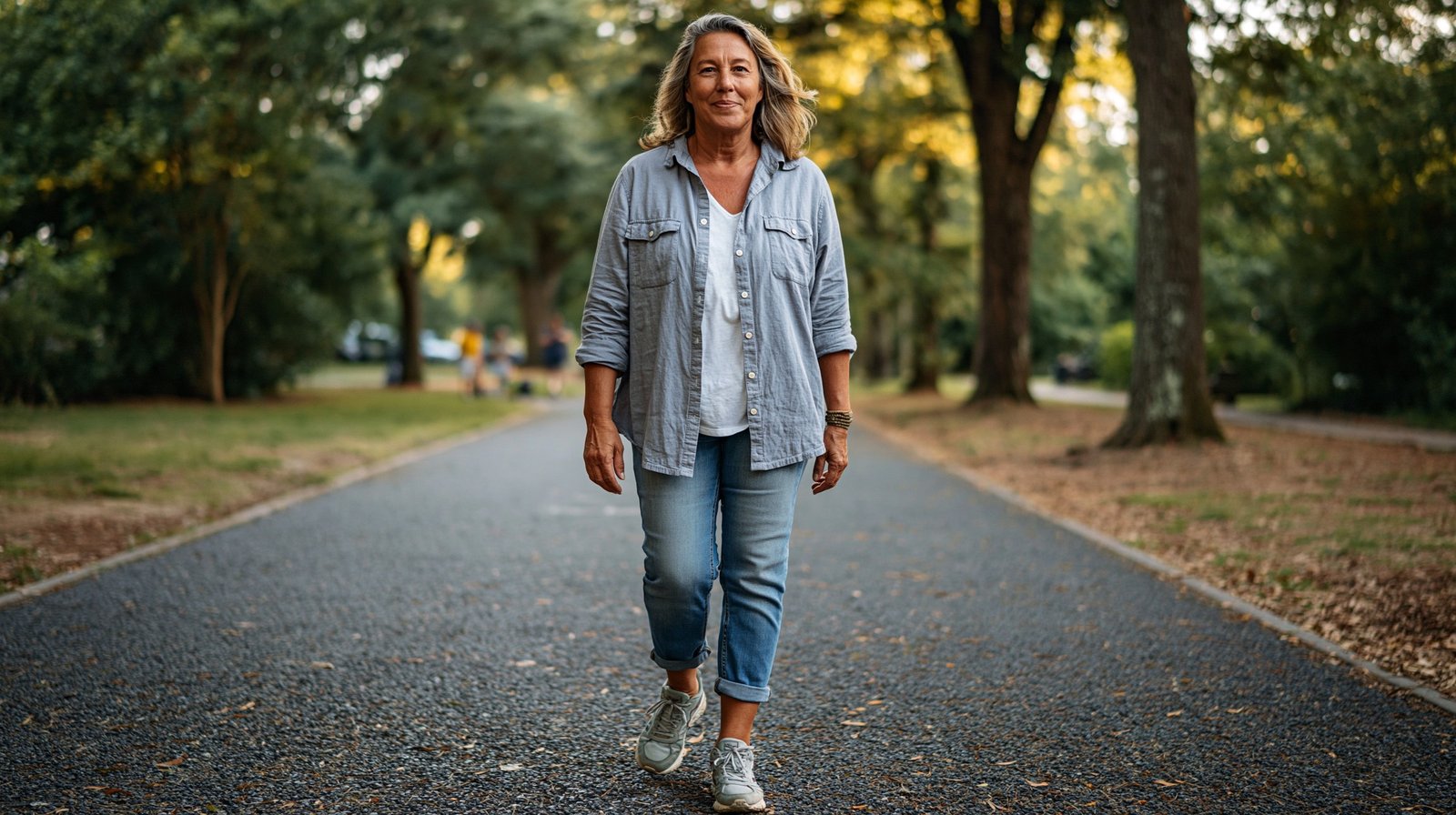
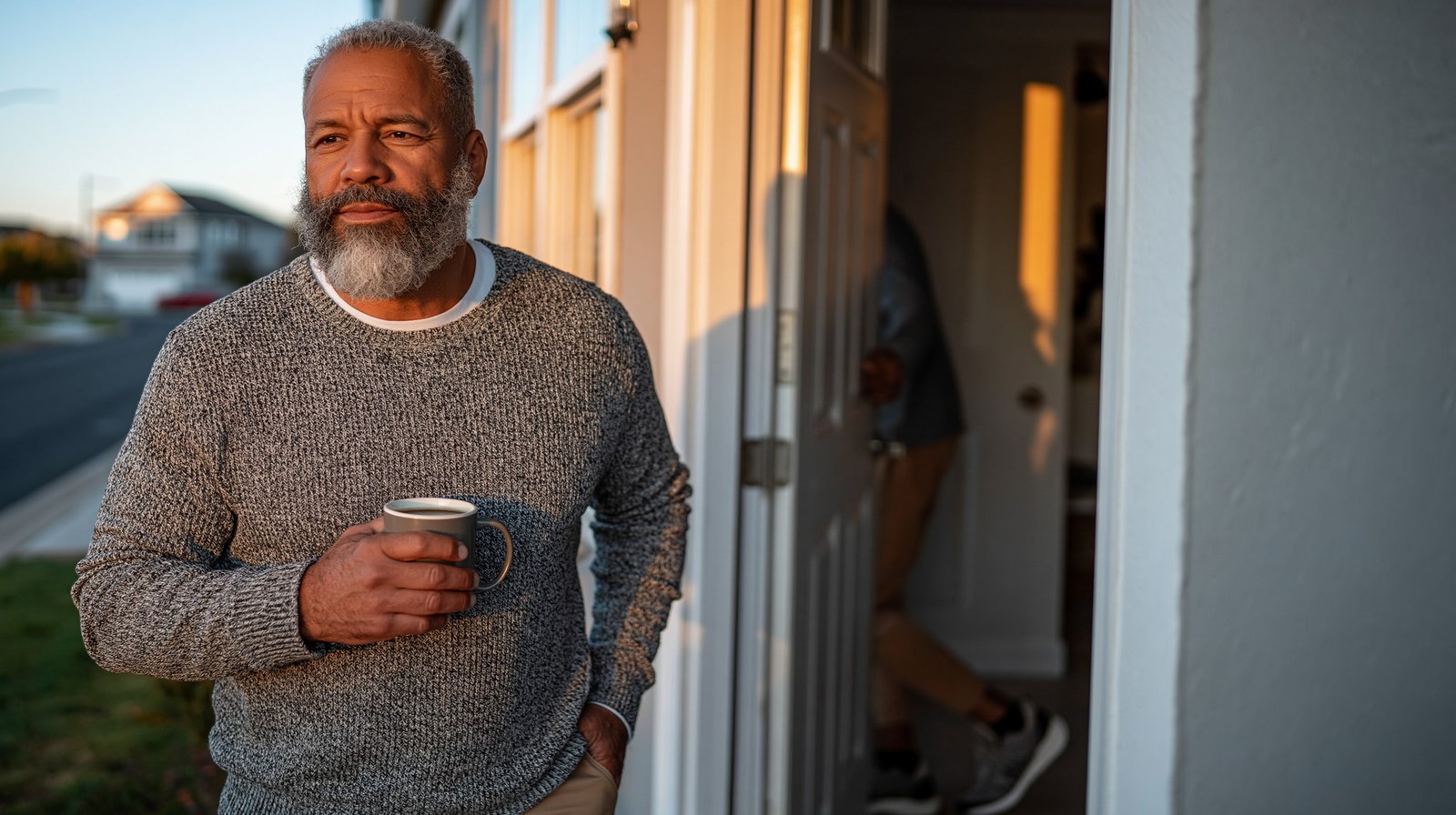
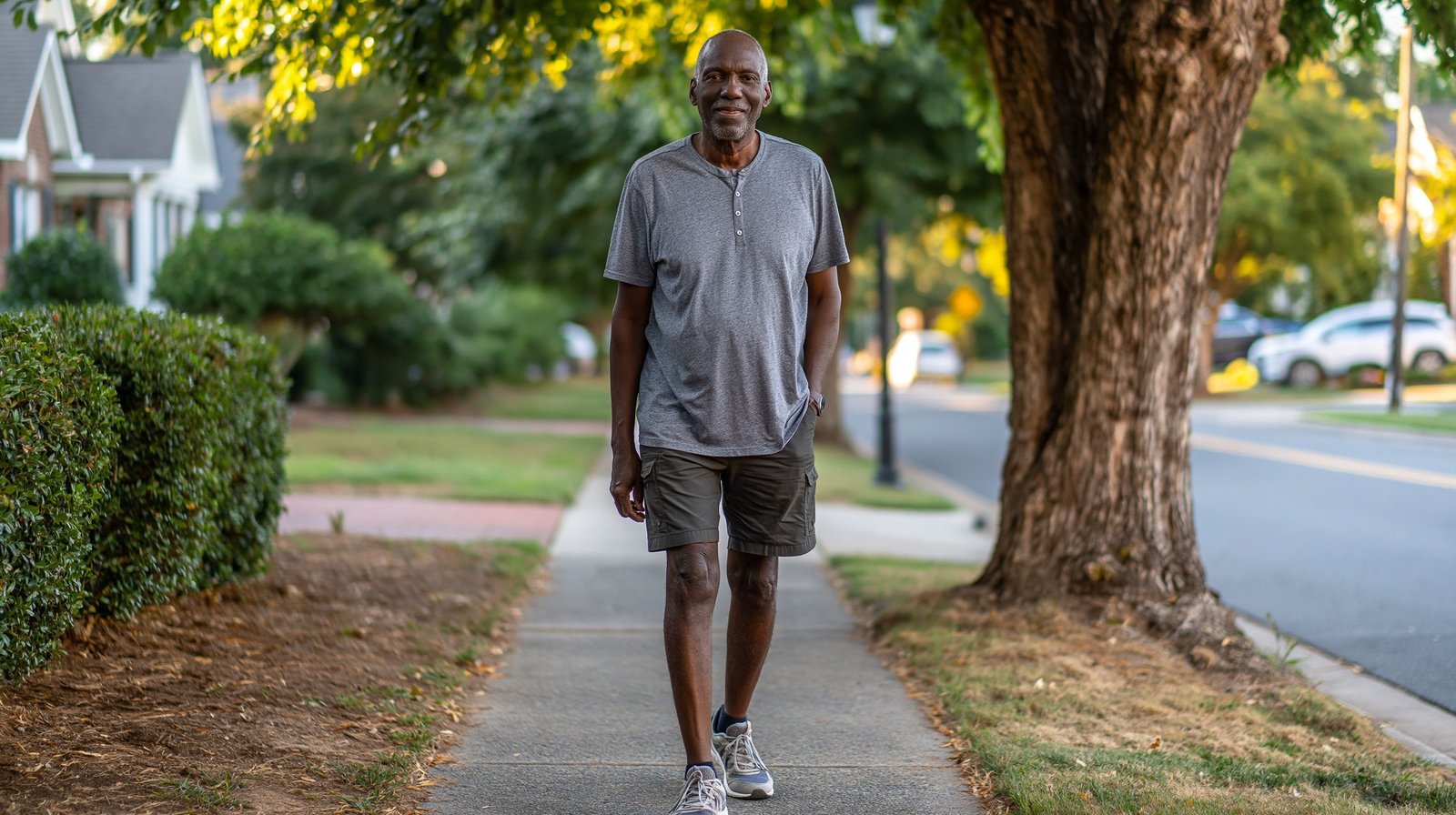
    Woman over 55 watching cold weather, wondering about knee pain cold weather exercise tips that work

    The honest answer is that it is neither fully true nor fully myth. Plenty of people swear their knees forecast the weather, and that experience is real, not imagined. The research leans their way, but only partly. A review of 14 studies found that weather conditions, including lower temperatures, are associated with more osteoarthritis pain (Wang et al., 2023). An older study of 200 people with knee osteoarthritis found that shifts in temperature and barometric pressure tracked with pain, though the effect was modest (McAlindon et al., 2007).

    Then there is the other side. A careful study of 345 people with knee osteoarthritis found no clear link between weather changes and pain flares at all (Ferreira et al., 2016). So the science is split, and you do not need to settle it. Whether the cold is the cause or just the backdrop, the knee pain cold weather exercise tips that follow work the same way. If you want the deeper science on the connection, this looks at why knees hurt when it rains and digs into it. What matters now is what you do next. That is where the right cold weather exercise tips come in.

    Why does winter quietly shrink how much you move?
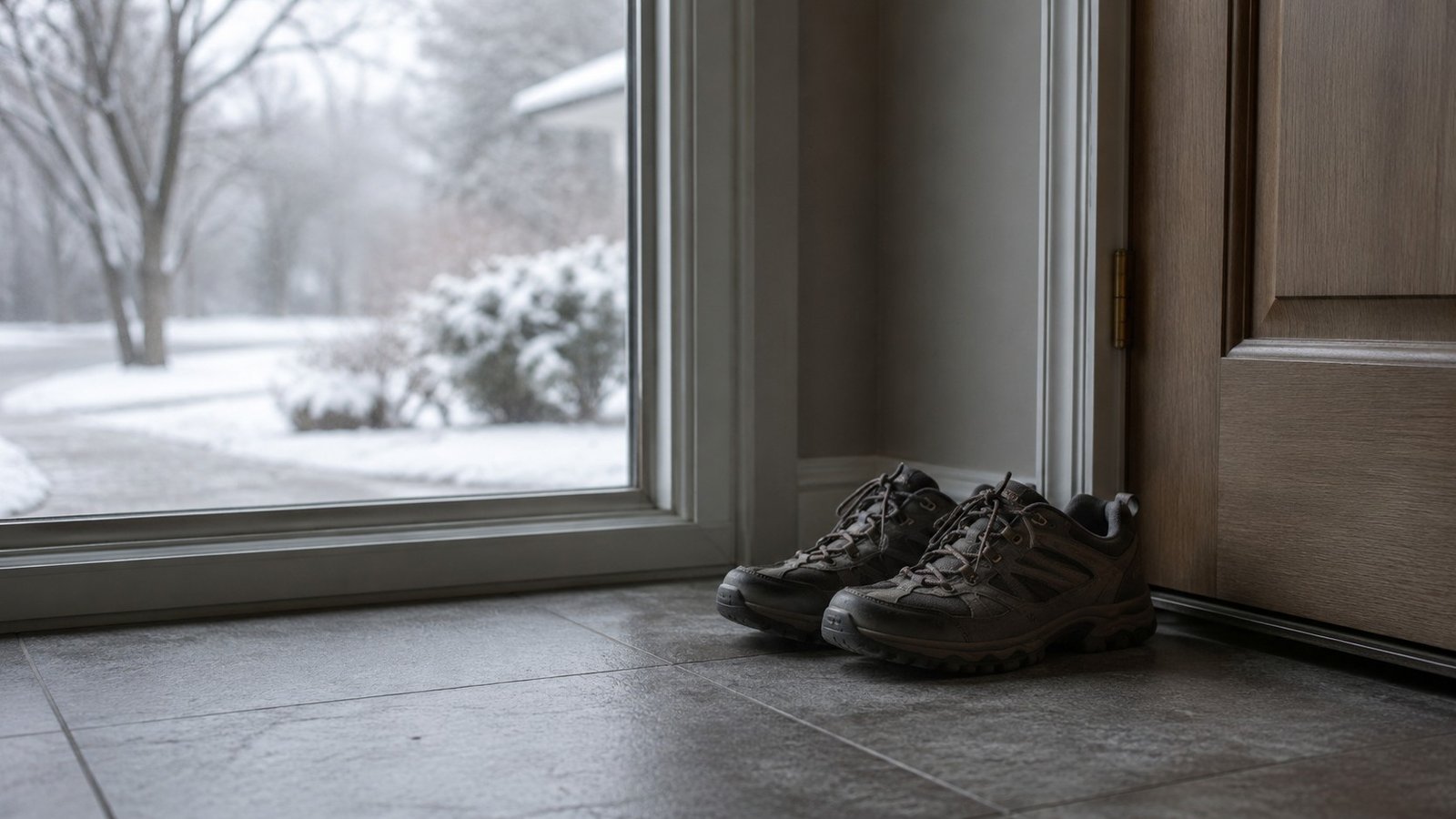
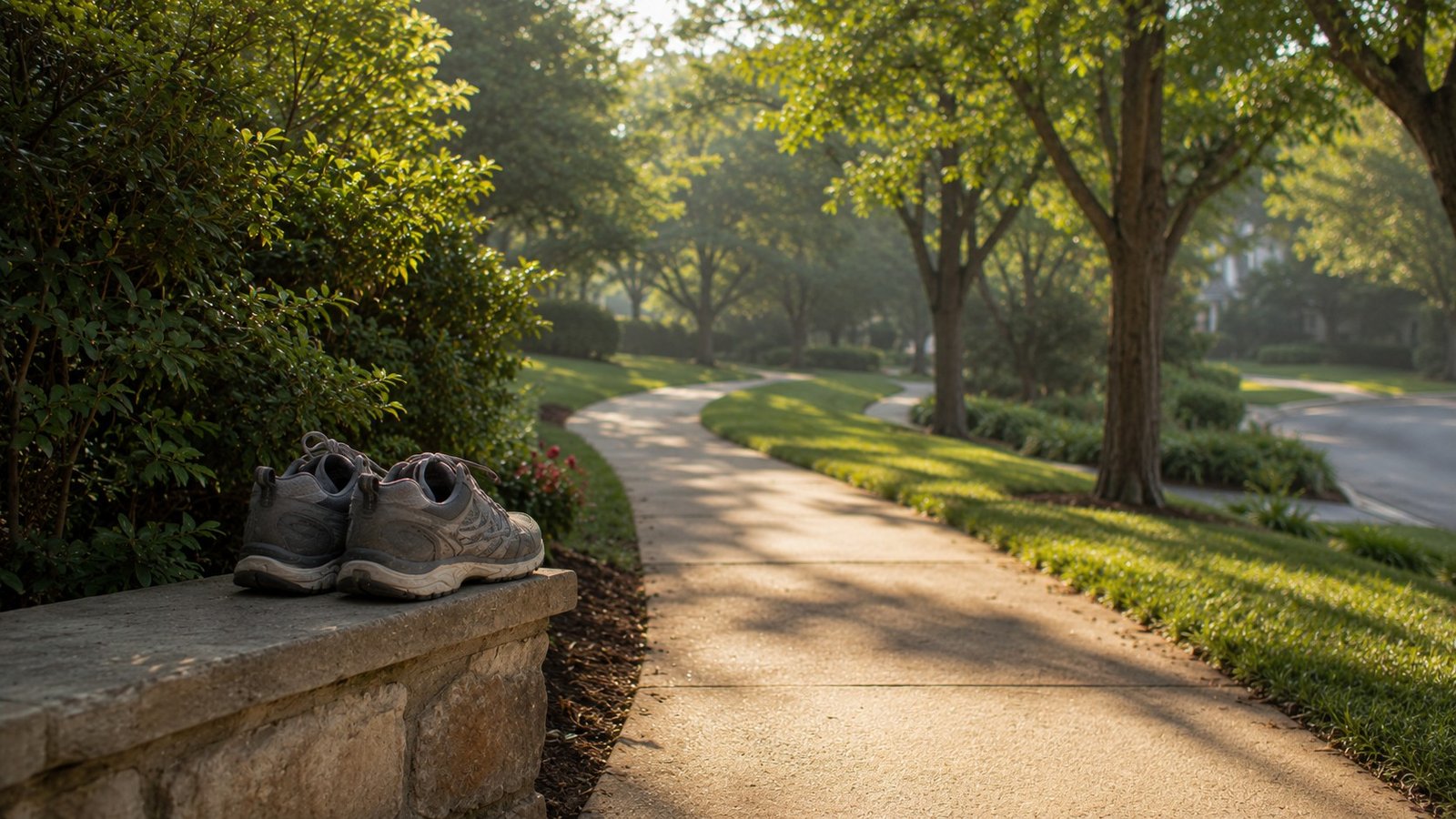
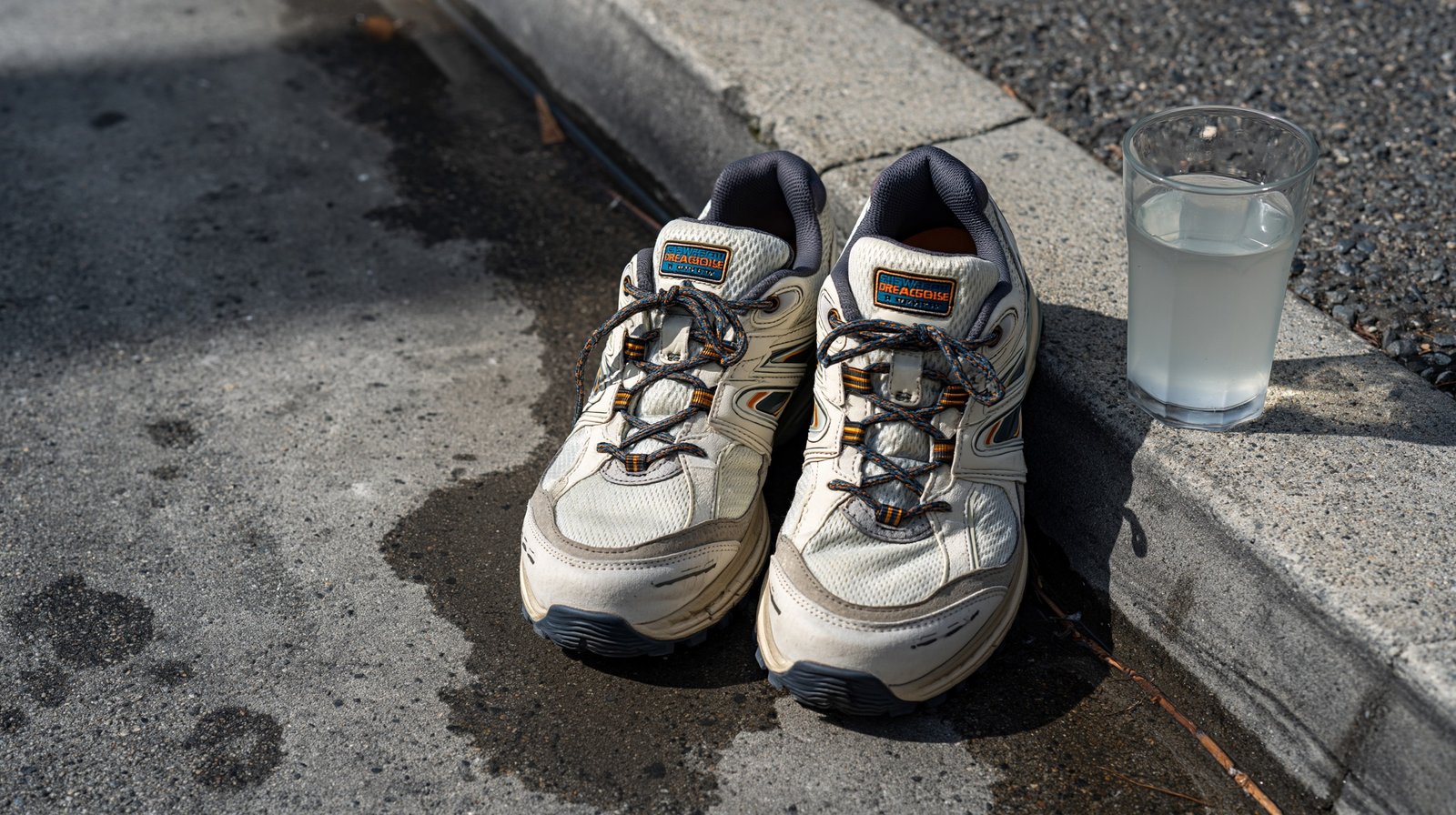
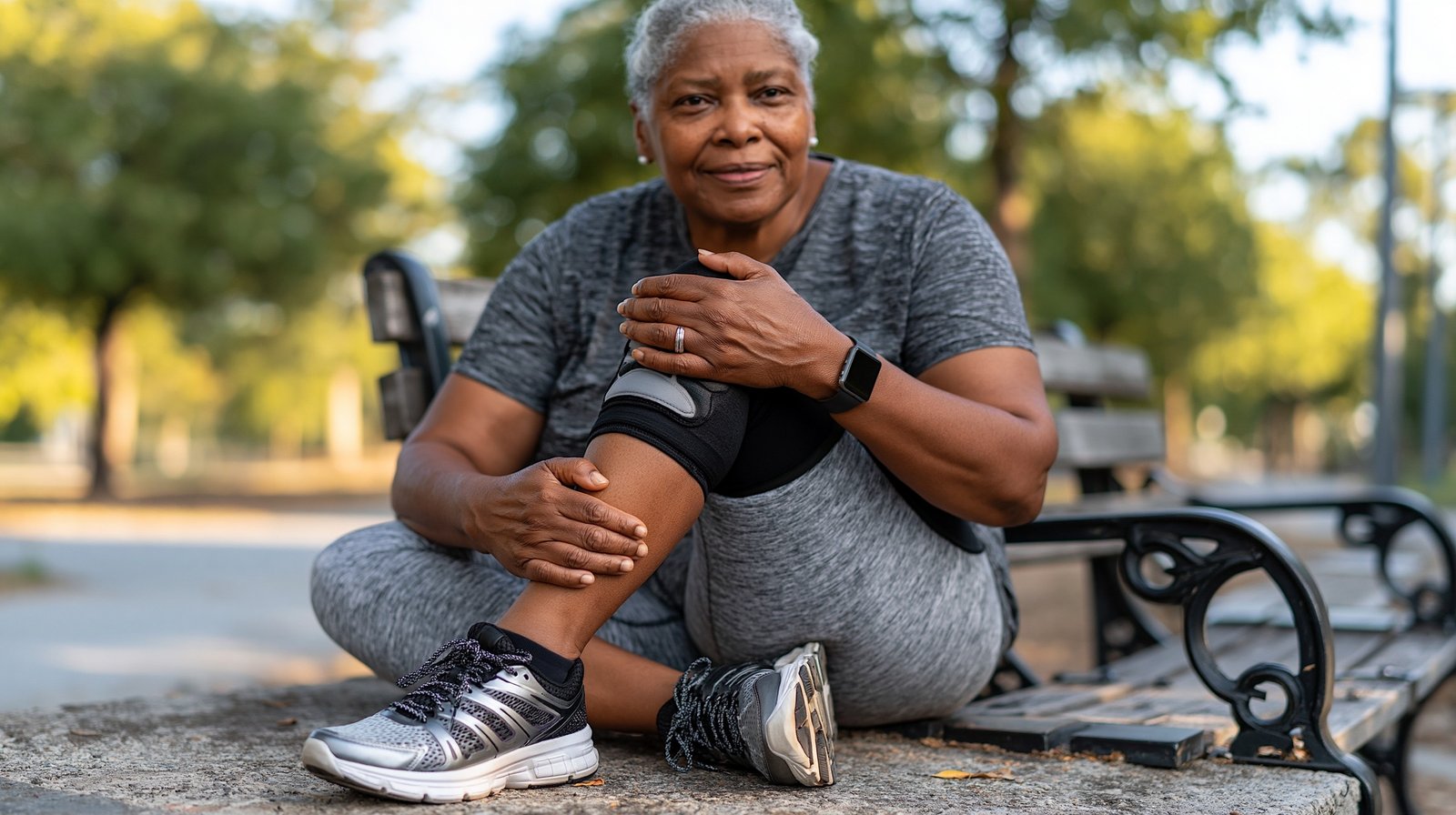
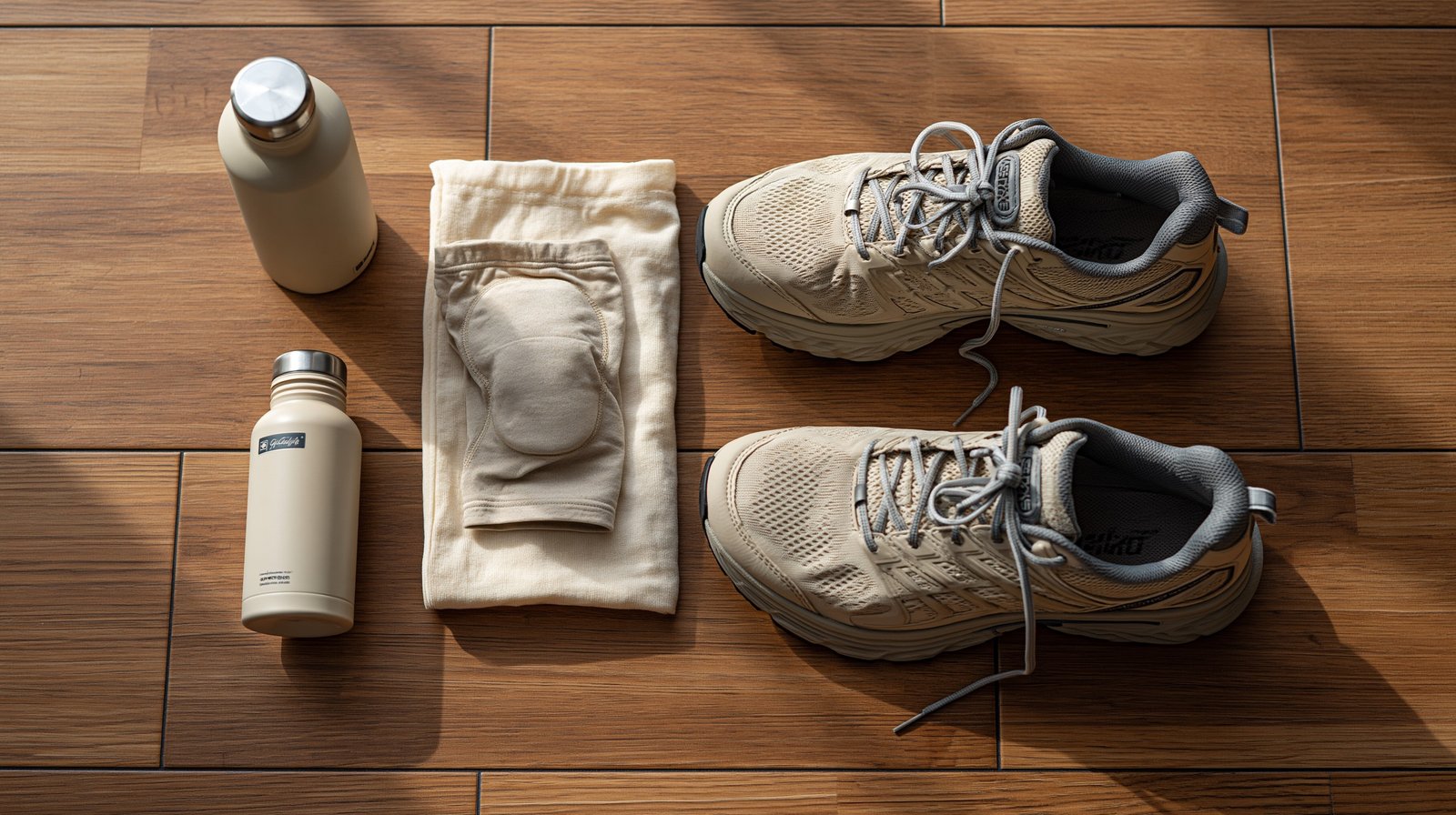
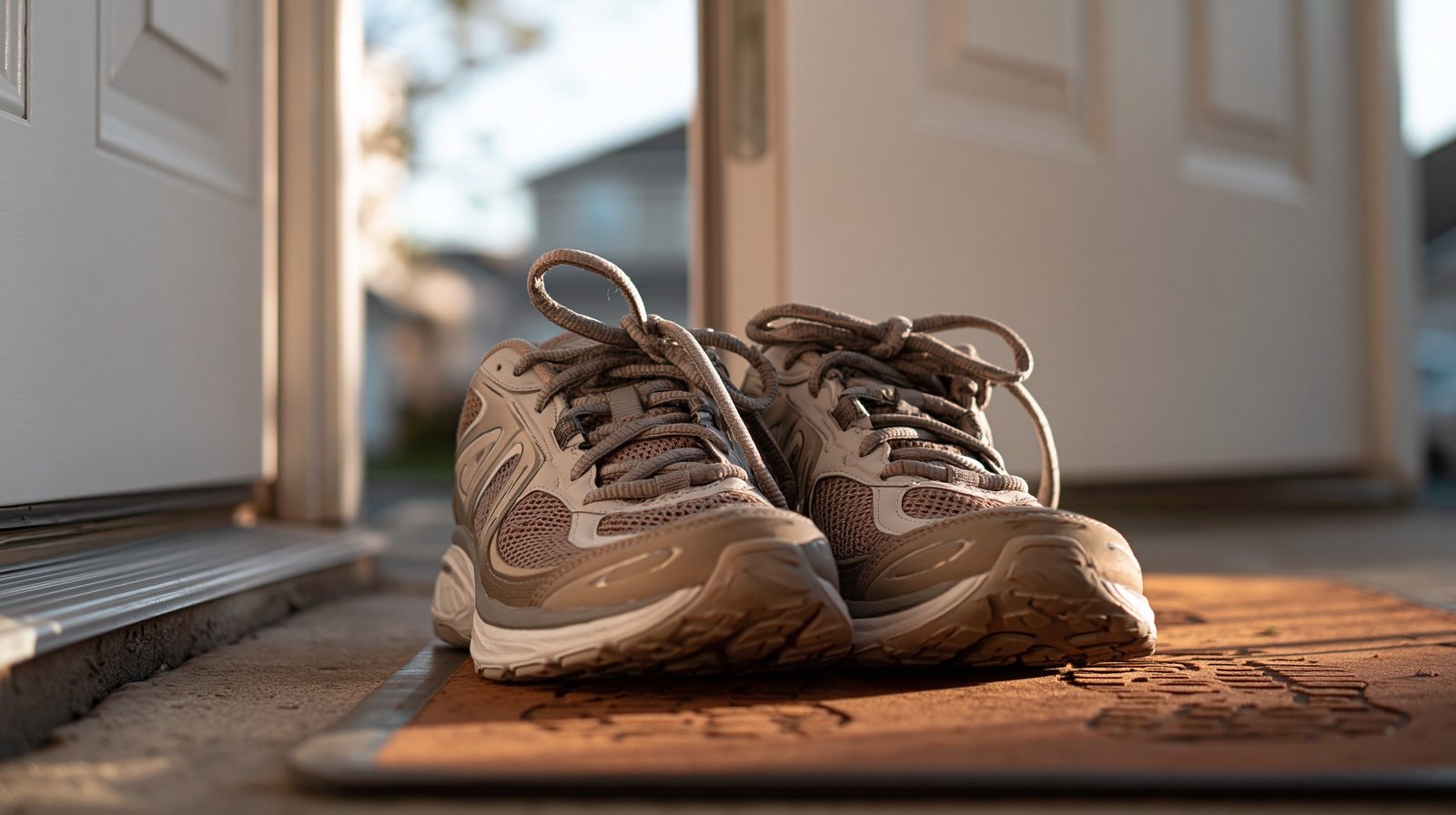
    Walking shoes paused by the door in winter, showing why knee pain cold weather exercise tips protect the habit

    This is the part that matters more than the weather debate. When it turns cold, people move less, often without noticing. In a study of older adults, daily step counts were meaningfully higher in summer than in winter; the same people simply walked less once the season turned (Kimura et al., 2015). Another study tracking community adults over 70 found that cold temperatures, wind, and snow all measurably lowered their daily activity (Jones et al., 2017).

    That slow shrinking is the real threat to your knees, not the ache itself. A joint that stops moving gets stiffer, the supporting muscles weaken, and come spring, you are starting over from further back than where you left off. The knee pain cold weather exercise tips that help most are the ones that keep the habit alive through the cold months, even in a smaller form. The cold-weather stiffness itself is worth understanding too, and this guide on cold weather knee stiffness covers it. The goal is simple: do not let winter quietly walk off with the progress you worked for.

    Good cold weather exercise tips are really habit-protection tips in disguise.”

    What are the best knee pain cold weather exercise tips for staying active?
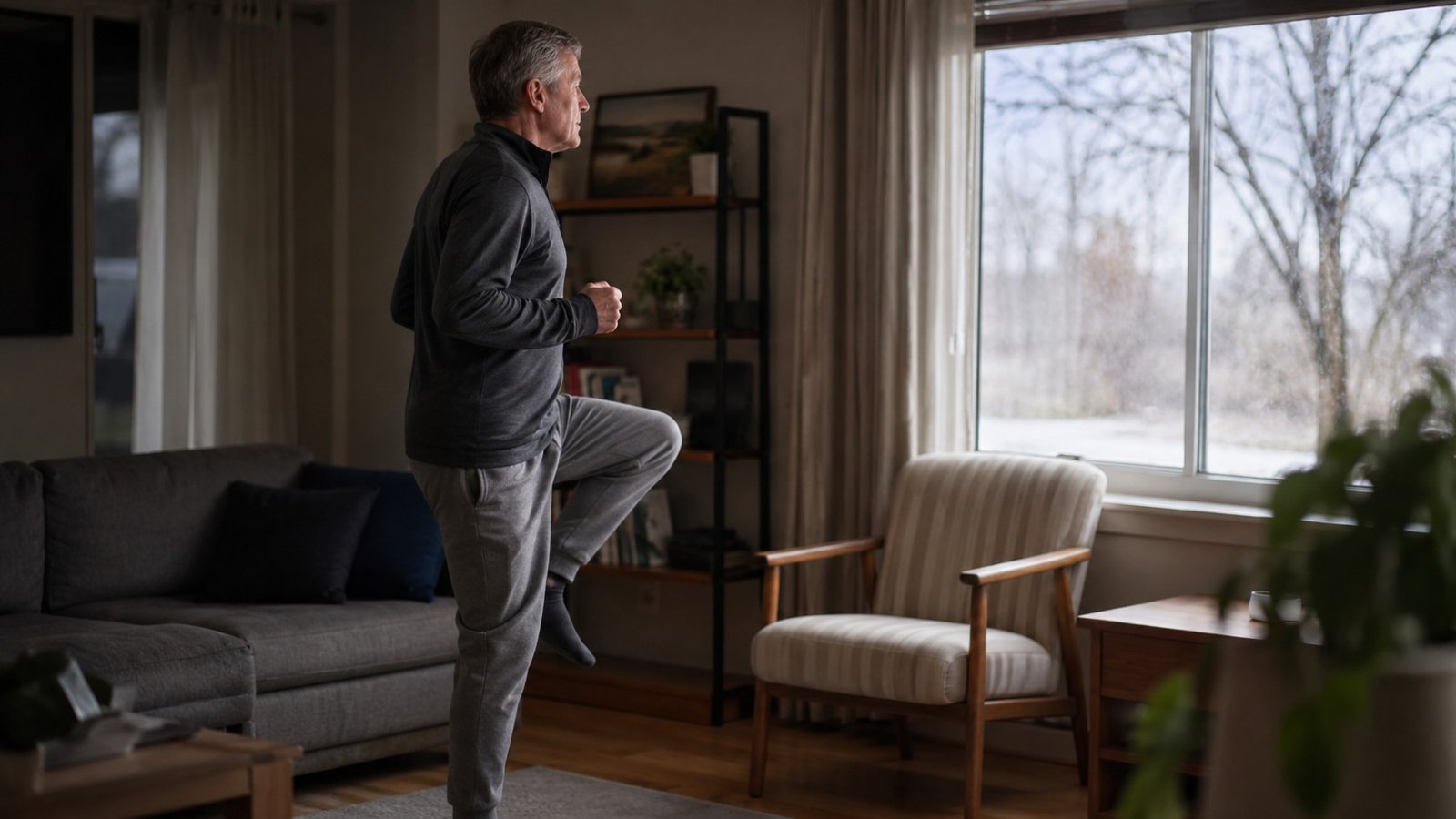
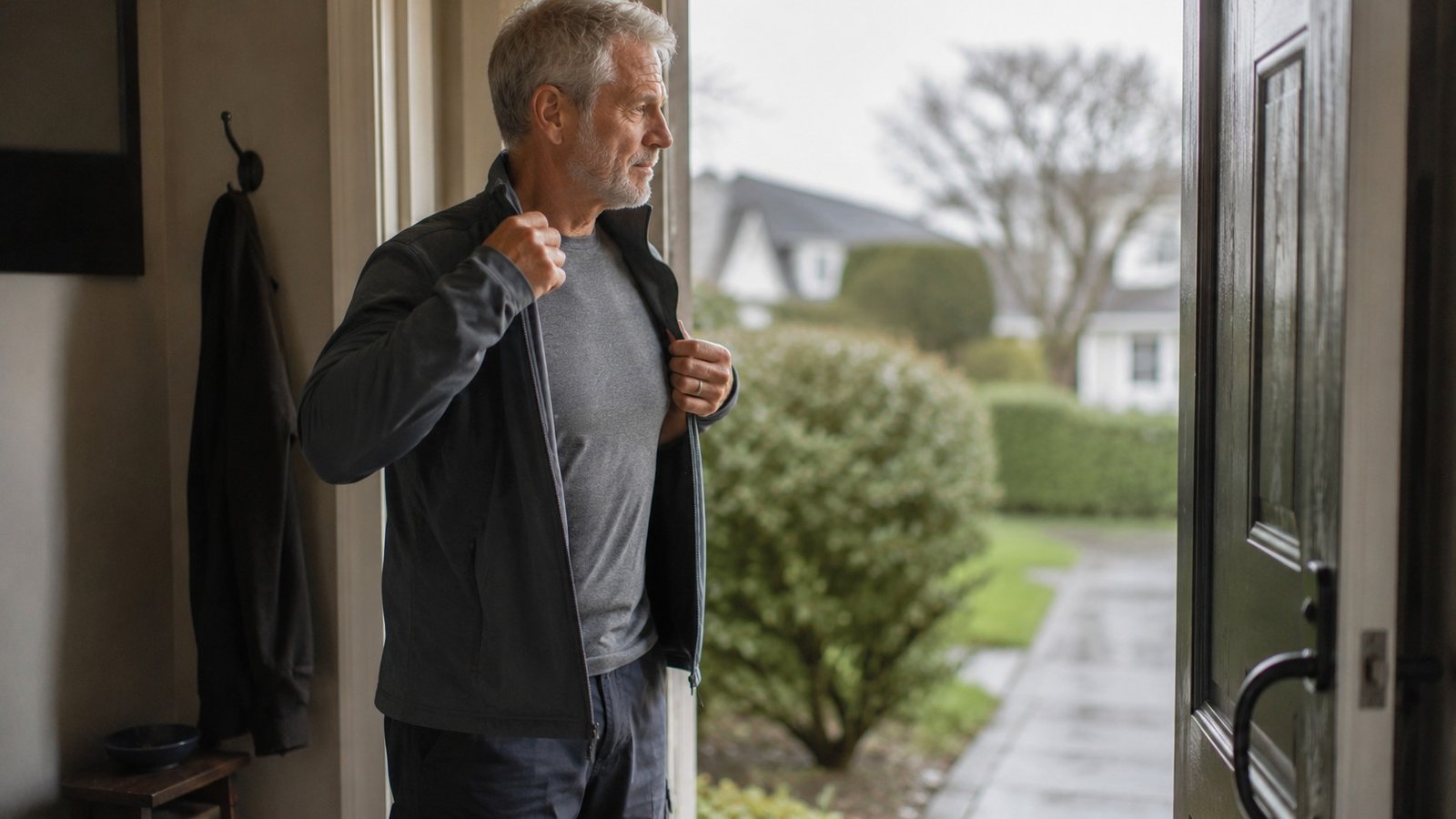
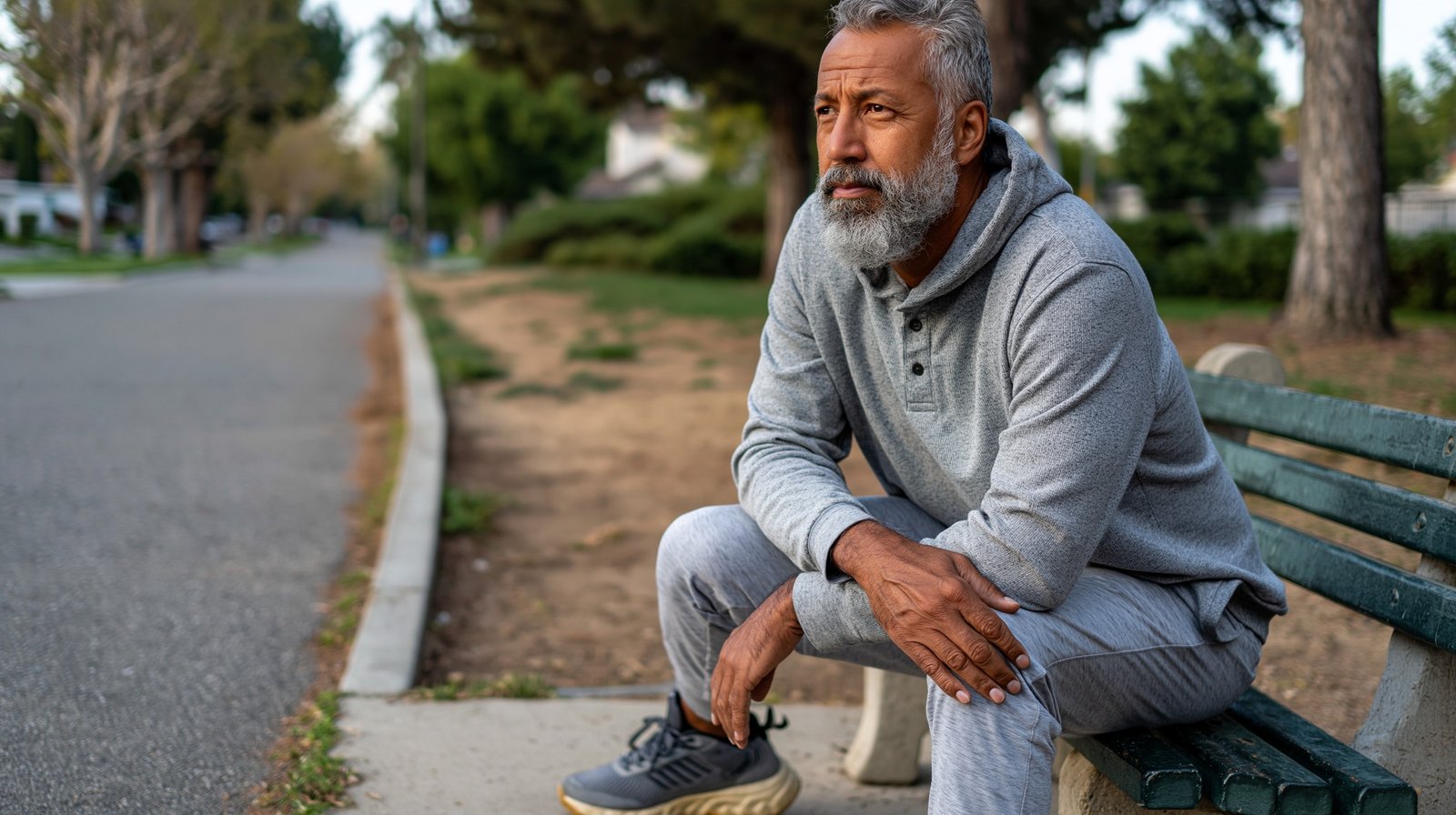
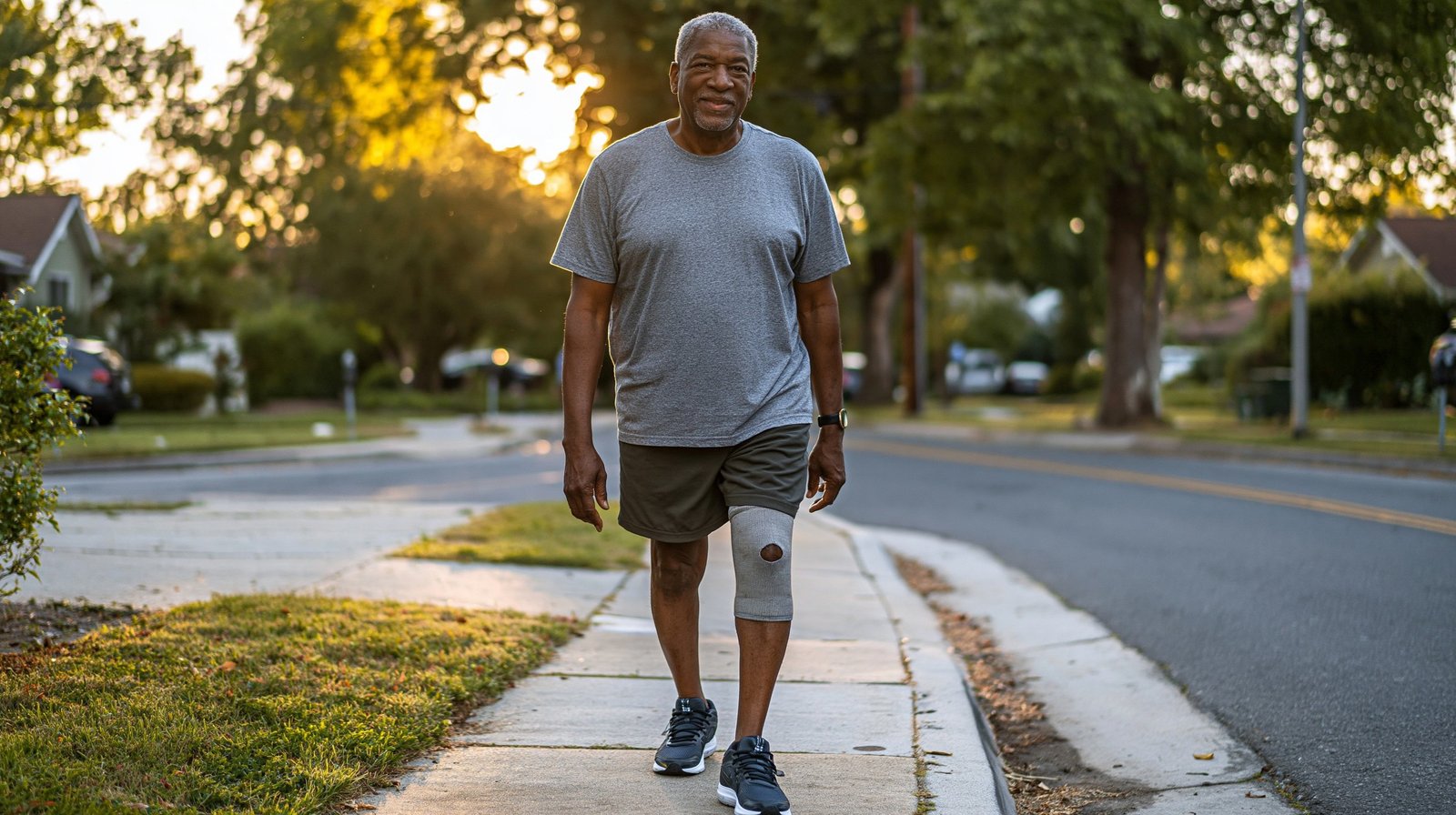
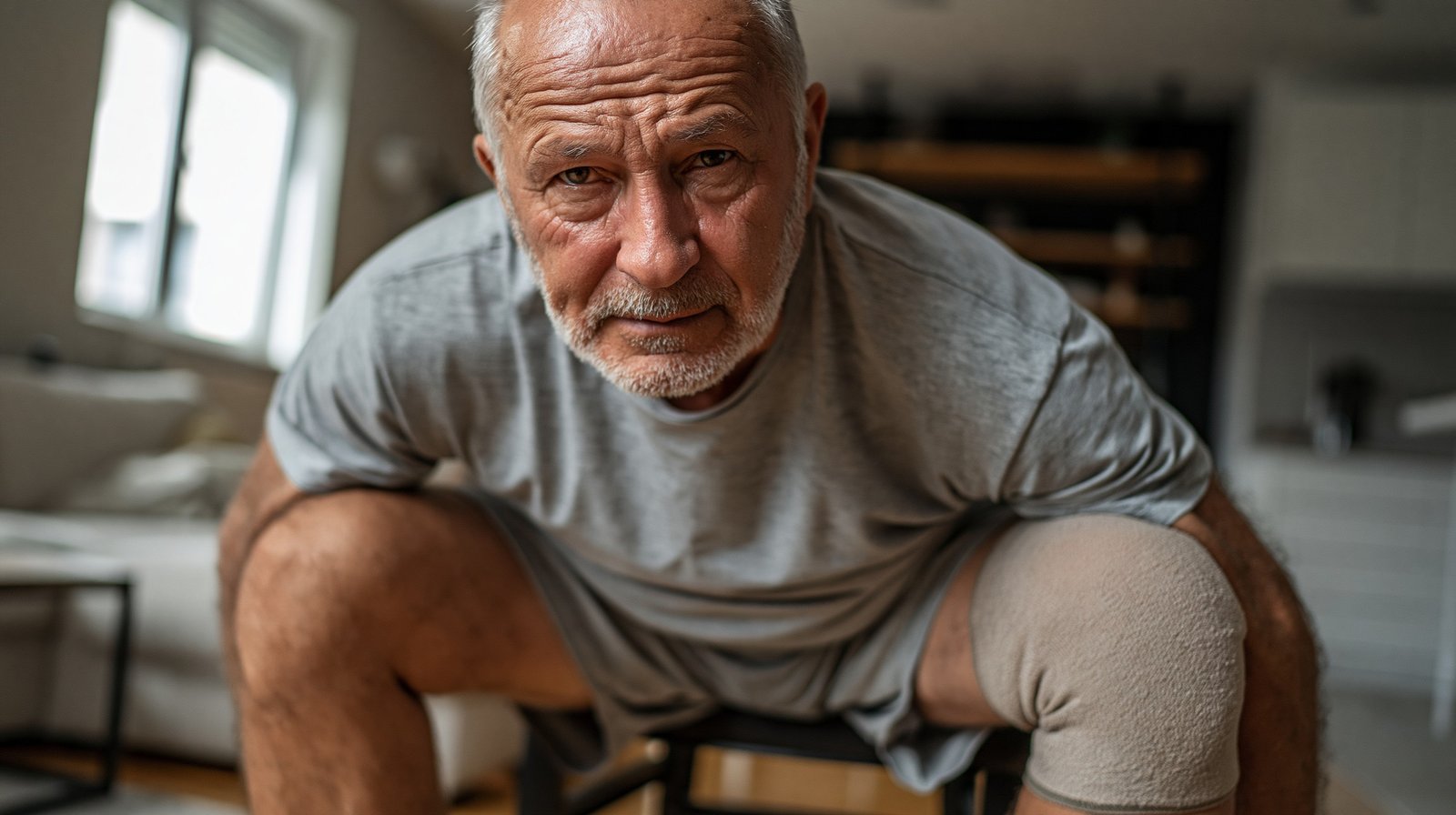
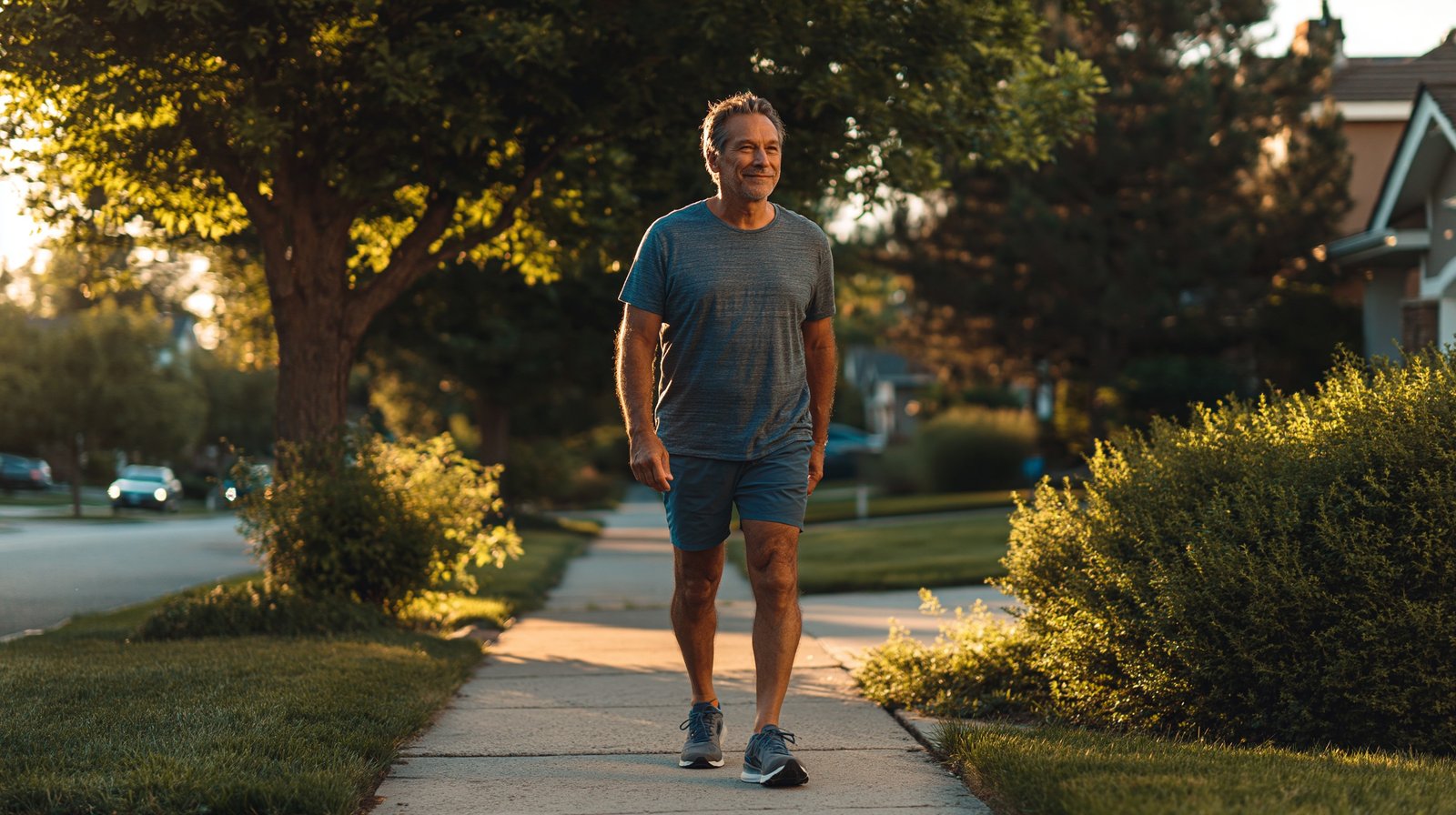
    Man over 55 warming up indoors, one of the key knee pain cold weather exercise tips for staying active

    Start by warming the joint before you ask anything of it. A few minutes of easy indoor movement before you head out gets blood flowing, so the first cold steps are not a shock. Marching in place works, and so does a slow lap of the house or some gentle knee bends. Think of it like letting an engine warm up before you drive it in the cold.

    Then dress for the joint, not just the weather. Layers keep the muscles around the knee loose, and a knee sleeve adds warmth right where you want it. Keep an indoor option ready for the days when the cold or ice makes outside a bad idea. A few laps of a hallway or some time on a treadmill counts just as much as a walk around the block.

    And mind your footing, because a fall does far more damage than a cold walk ever could. These knee pain cold weather exercise tips are not about pushing through harsh conditions. They are about adjusting so the cold stops being a reason to stop.

    How do you keep your walking habit alive on the worst weather days?
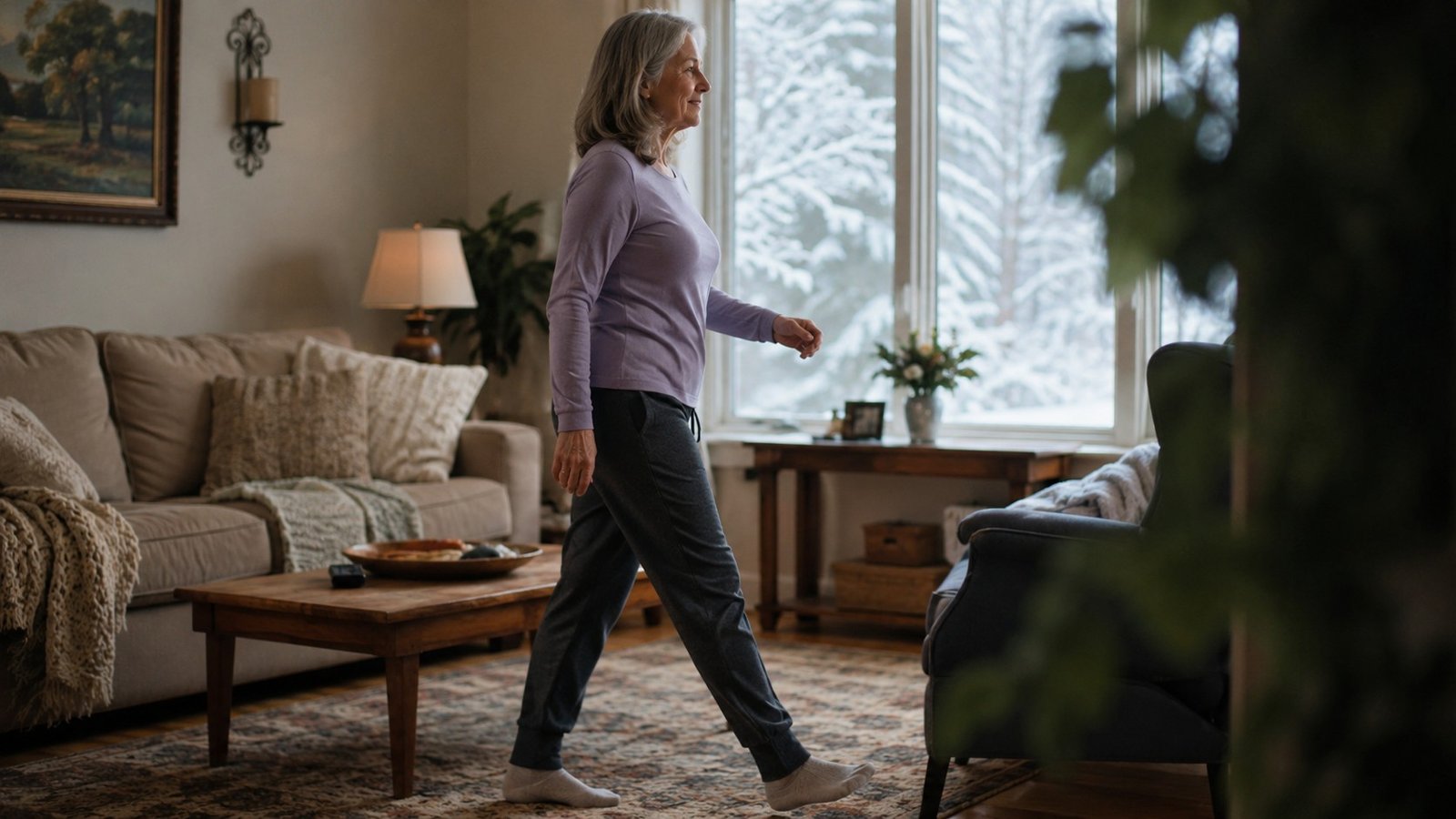
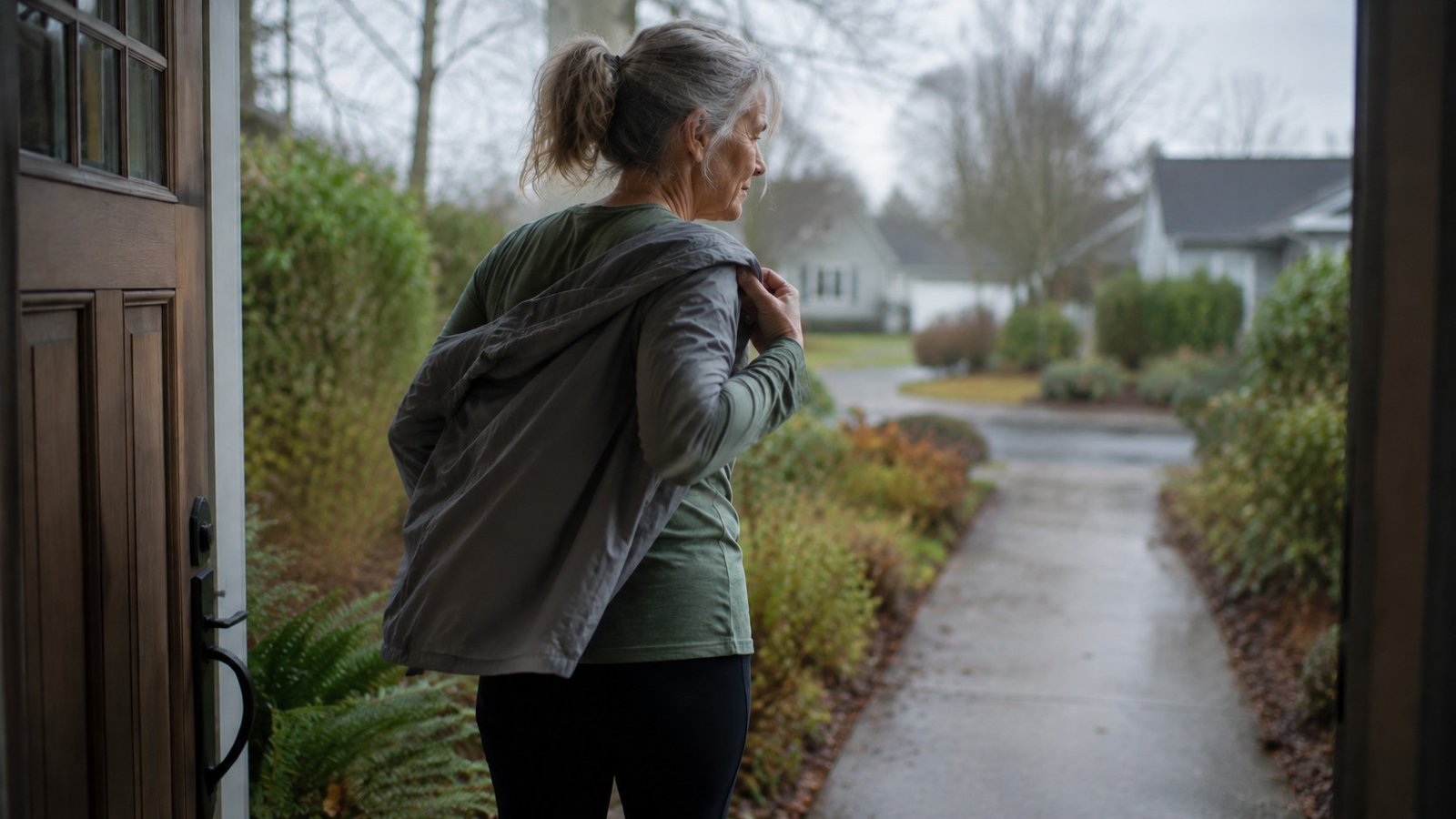
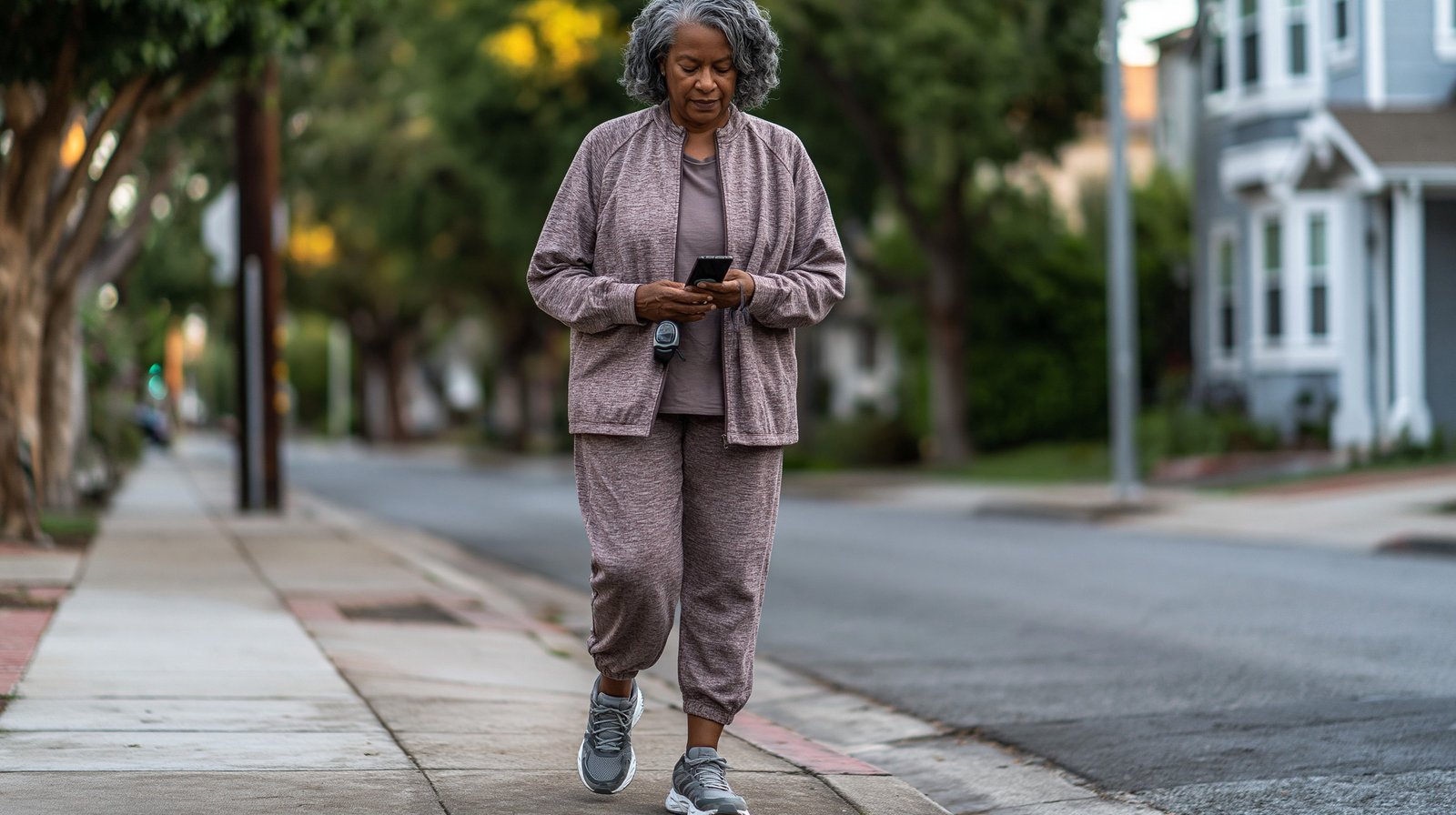
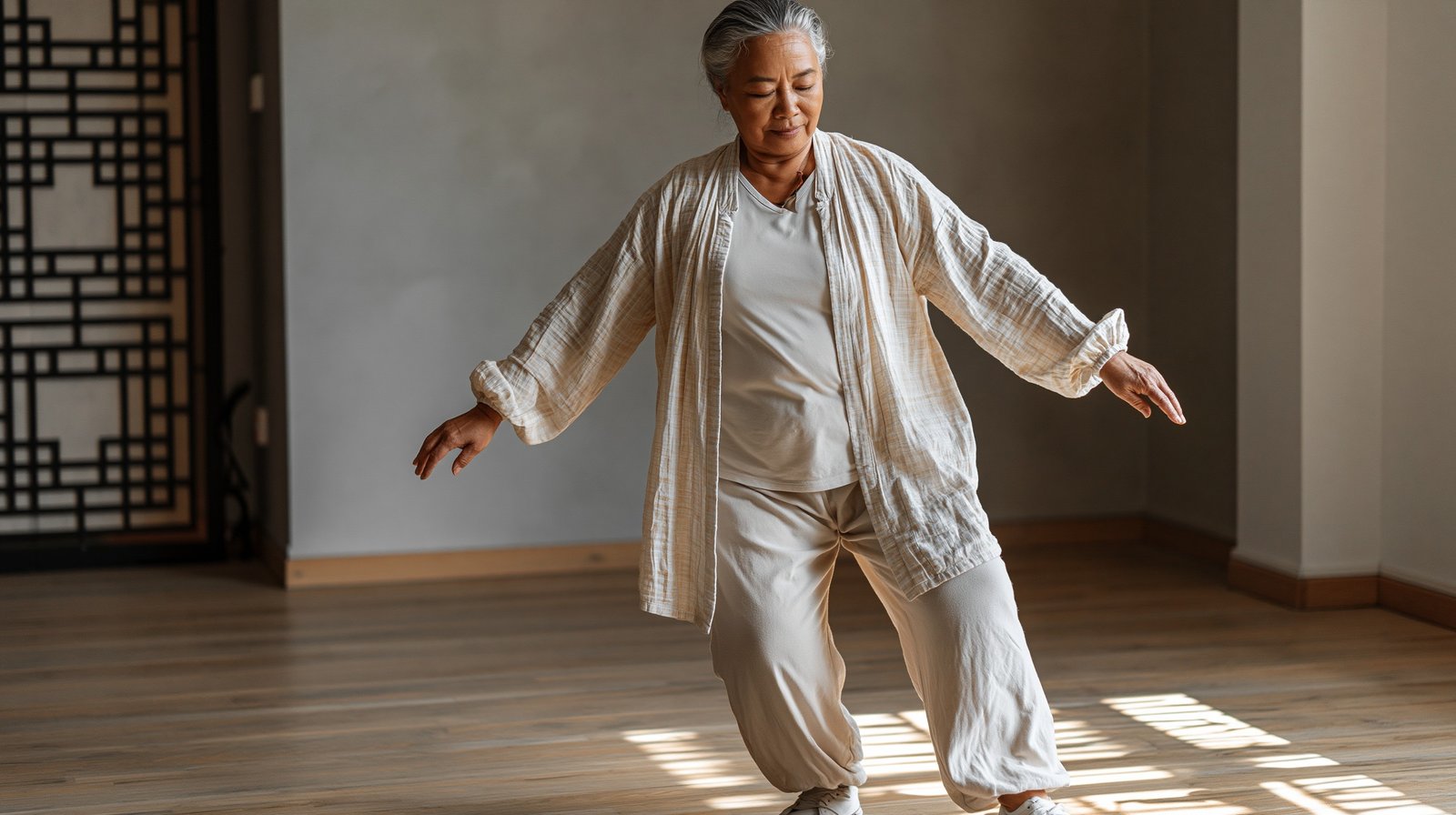
    Woman over 55 doing a short indoor walk, a knee pain cold weather exercise tip for the worst days

    You shrink the walk instead of skipping it. The research backs why this matters: when cold, wind, and snow set in, older adults measurably cut their activity, and those skipped days add up fast (Jones et al., 2017). The danger is not one missed walk. It is that one missed walk becomes a missed week, and the habit slips away while you wait for better weather.

    So on the worst days, drop the bar instead of the habit. Two minutes of marching in the kitchen is enough, and a few slow laps of the living room will do just as well. The point is to keep being someone who still moves, even when the walk is barely a walk.

    These knee pain cold weather exercise tips work because they make the cold-day decision small. Not “do I bundle up and brave the storm,” just “do I move a little, right here, right now.” That is a question you can almost always say yes to, and saying yes is what carries the habit through to spring.

    When should cold-weather knee pain prompt a call to your doctor?

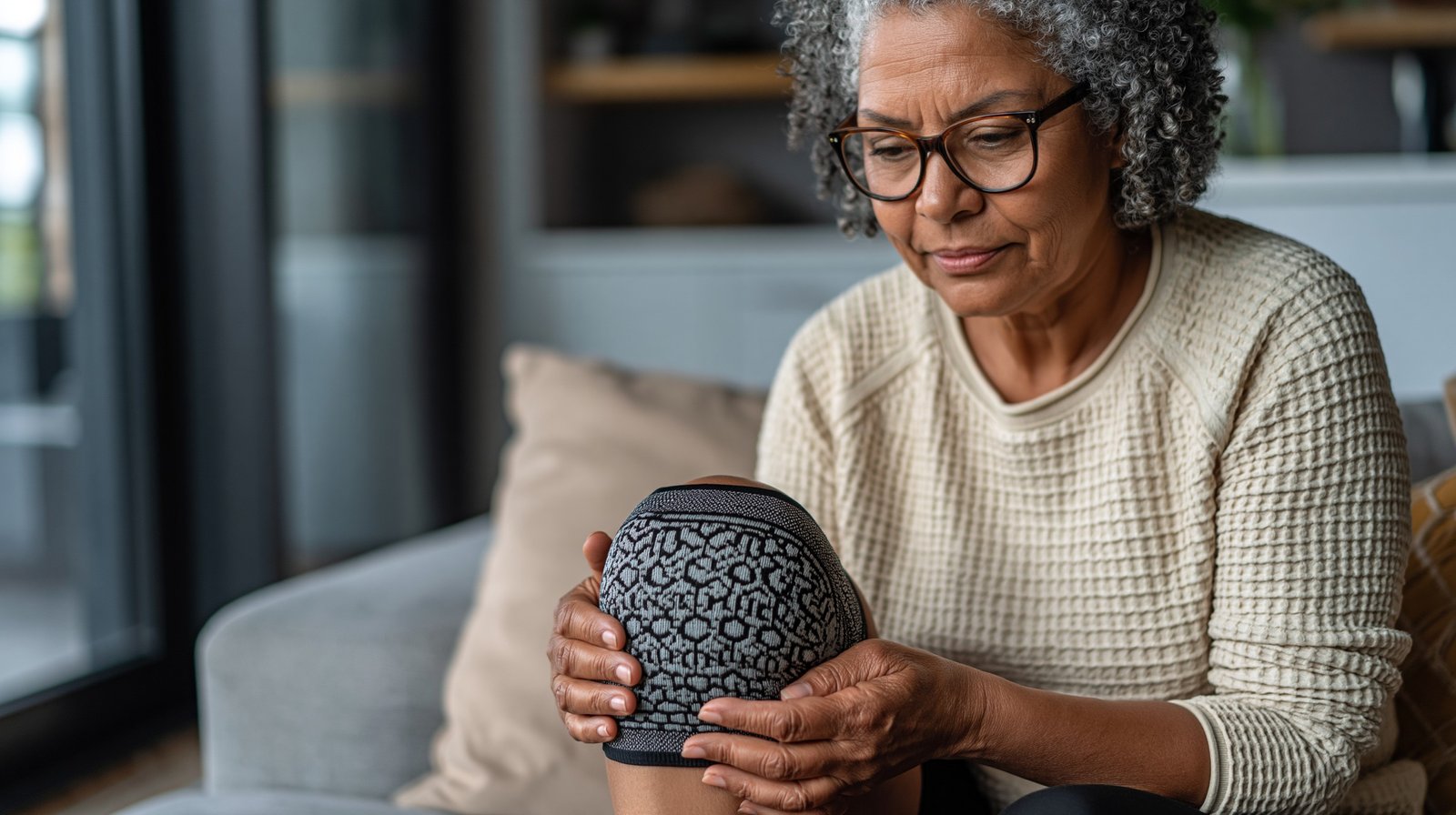
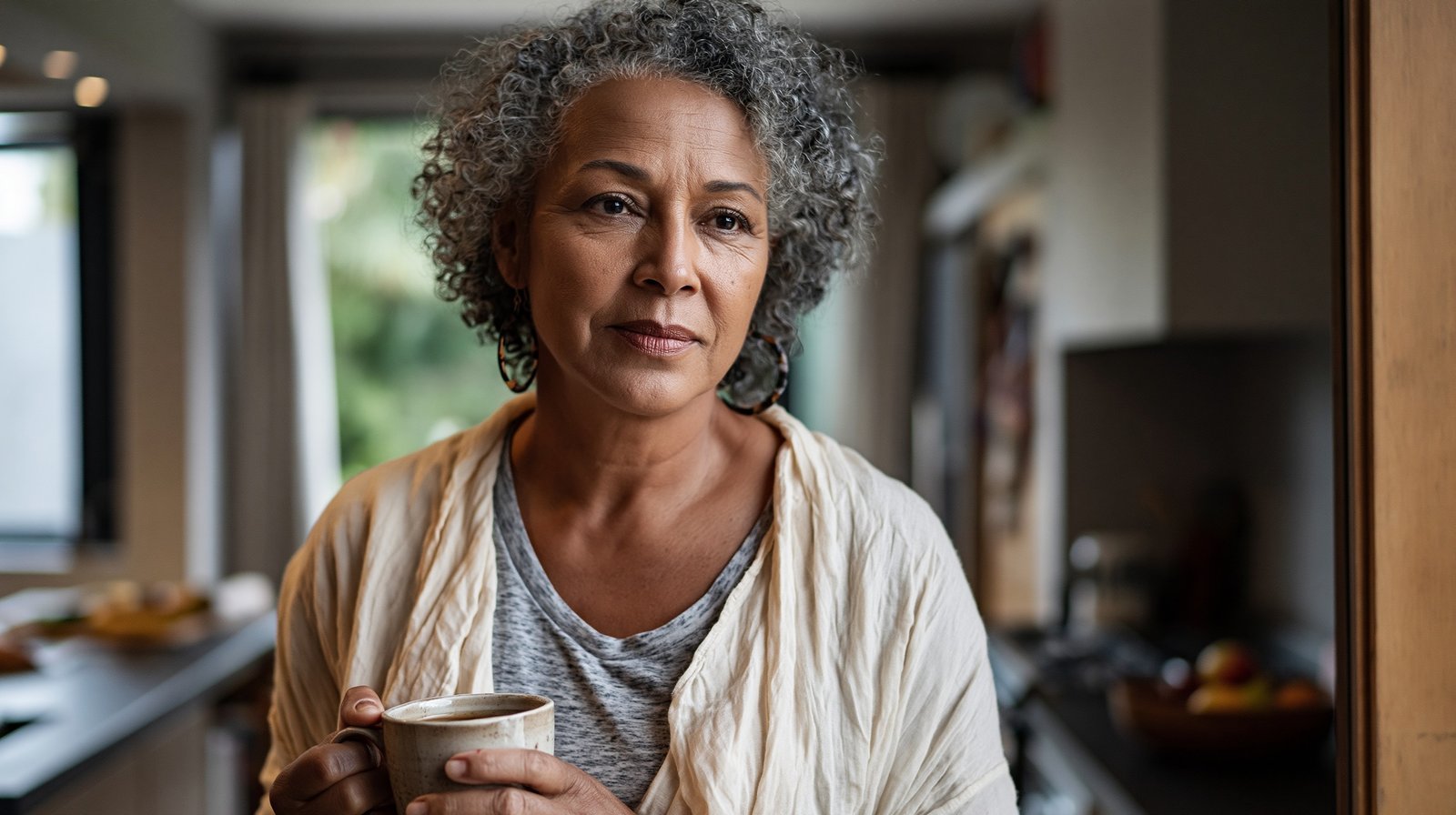
    A warm knee wrap and tea by a winter window, knowing when knee pain cold weather exercise tips need a doctor

    Most cold-weather knee aches are the ordinary stiffness this post has been about, the kind that eases once you warm up and get moving. Some signs, though, deserve a professional’s eyes rather than a warm-up and a walk. If your knee swells or locks up, if it gives way under you, or if the pain is sharp rather than stiff, that is worth a call. The same goes for pain that lingers and worsens over days instead of easing with gentle movement and warmth.

    A good rule of thumb: stiffness that improves as you move is usually fine to work with, while pain that movement makes worse is worth a conversation. Trust what your knee is telling you over any blanket advice, including these knee pain cold weather exercise tips. Speak with your physician before starting a new exercise routine if you have any doubts about what your knee can handle. Getting that cleared up early is what lets you keep moving with confidence the rest of the season.

    Wrap-up: knee pain cold weather exercise tips

    So what changed for Vincent? He stopped treating the first cold snap as the end of his walking season. Instead of arguing about whether the weather was to blame, he warmed up indoors, dressed for the joint, and kept his walks going in a smaller form when the cold bit hardest. By spring, he was not starting over. He was right where he left off.

    Three honest things are worth carrying. The cold-pain link is real for many people but modest, and the science is not settled, so you do not have to win that argument. The bigger risk is the movement that quietly disappears in winter, not the ache itself. And the win on a hard day is simply moving a little, because that keeps the habit alive.

    The goal underneath it has not changed: a comfortable 30-minute walk you finish without cutting it short, in any season. These knee pain cold weather exercise tips are about protecting it, so the cold does not take it from you. The complete guide to knee pain relief for adults over 55 brings the full approach together in one place. Vincent walks year-round now. The season stopped getting a vote.

    Ready to Find Out What Your Body Can Do?

    It takes less than 3 minutes. No gym. No equipment. Just a simple test that shows you if your body can do more than it’s been telling you.

    Take the 3-Minute Walk Test

    M3 is a behavioral wellness coaching program. It is not medical treatment and does not replace advice from your physician. Consult your doctor before beginning any new movement or nutrition program.

    Frequently Asked Questions

    Why do knees feel stiffer in cold weather?

    Cold tends to tighten the muscles and tissues around the joint, which can make the knee feel stiffer and harder to move. Some researchers also believe the fluid inside the joint gets a little thicker in the cold, adding to that creaky feeling. On top of that, people move less when it is cold, and less movement means more stiffness. Gentle activity and keeping the joint warm usually loosen it back up.

    Is it better to use heat or ice for knee pain in winter?

    Heat is usually the better choice for the stiff, achy knees that come with cold weather, because warmth relaxes tight muscles and improves blood flow before activity. A warm shower, a heating pad, or a warm wrap can ease that stiffness. Ice is more useful after an activity if a knee is swollen or inflamed. A simple rule: warmth to loosen up beforehand, cold to calm swelling afterward.

    What indoor exercises are good for knee pain in winter?

    Plenty of joint-friendly options keep you moving without going outside. Walking laps indoors, marching in place, gentle seated leg lifts, and a stationary bike are all easy on the knees. Many people also do well with water walking at an indoor pool, since the water takes pressure off the joint. The goal is steady, comfortable movement most days, not intensity, so pick whatever you will actually keep doing.

    Should you exercise outside in the cold with knee arthritis?

    Yes, many people with knee arthritis can exercise outdoors in the cold safely, as long as they warm up first and dress warmly. The bigger concerns are slippery surfaces and going too hard, too fast on a stiff joint. Warming up indoors before heading out and wearing good traction helps a lot. On icy or bitterly cold days, moving indoors instead is the smarter, safer choice.

    Does cold weather cause permanent damage to knees?

    No, cold weather does not damage the knee joint or cause arthritis to progress. It can make existing stiffness and pain feel worse temporarily, but that discomfort passes as you warm up and move. The lasting harm in winter comes indirectly, from becoming inactive, which weakens the muscles that support the knee. Staying gently active through the cold months protects the joint far more than hiding from the weather does.

    Why are knees stiffer in the morning during winter?

    Knees often feel stiffest in the morning because the joint has been still for hours, and cold overnight temperatures can make that worse. Staying put lets fluid settle, and muscles tighten, so the first movements of the day feel creaky. A warm shower and a few gentle movements before you get going can ease it. The stiffness usually loosens within a few minutes of moving around.

    References

    Ferreira, M. L., Zhang, Y., Metcalf, B., Makovey, J., Bennell, K. L., March, L., & Hunter, D. J. (2016). The influence of weather on the risk of pain exacerbation in patients with knee osteoarthritis: A case-crossover study. Osteoarthritis and Cartilage, 24(12), 2042–2047. https://doi.org/10.1016/j.joca.2016.07.016

    Iconaru, E. I., Ciucurel, M. M., Tudor, M., & Ciucurel, C. (2024). The influence of weather conditions on the diurnal variation in range of motion in older adults with knee osteoarthritis. Journal of Clinical Medicine, 13(1), 254. https://doi.org/10.3390/jcm13010254

    Jones, G. R., Brandon, C., & Gill, D. P. (2017). Physical activity levels of community-dwelling older adults are influenced by winter weather variables. Archives of Gerontology and Geriatrics, 71, 28–33. https://doi.org/10.1016/j.archger.2017.02.012

    Kimura, T., Kobayashi, H., Nakayama, E., & Kakihana, W. (2015). Seasonality in physical activity and walking of healthy older adults. Journal of Physiological Anthropology, 34(1), 33. https://doi.org/10.1186/s40101-015-0071-5

    McAlindon, T., Formica, M., Schmid, C. H., & Fletcher, J. (2007). Changes in barometric pressure and ambient temperature influence osteoarthritis pain. The American Journal of Medicine, 120(5), 429–434. https://doi.org/10.1016/j.amjmed.2006.07.036

    Wang, L., Xu, Q., Chen, Y., Zhu, Z., & Cao, Y. (2023). Associations between weather conditions and osteoarthritis pain: A systematic review and meta-analysis. Annals of Medicine, 55(1), 2196439. https://doi.org/10.1080/07853890.2023.2196439
  • How to Keep Moving With Knee Pain Over 55 Without Harder Workouts

    How to Keep Moving With Knee Pain Over 55 Without Harder Workouts

    Donna was doing everything she thought she was supposed to, all on the belief that pushing harder was the way through. Her knees kept sending the bill the next morning. By the time she came to me, she had half decided that staying active just was not in the cards anymore.

    She had the question backward, and a lot of people do. It is not how hard you can push. It is how to keep moving with knee pain over 55 in a way your body can sustain. The answer turned out gentler than she expected, and it came in three parts rather than one. When researchers tested diet and movement together against either alone in older adults with knee osteoarthritis, the combination gave the best results for function and staying active (Messier et al., 2013).

    Key Takeaway

    Staying active with sore knees is not about working harder. In a study of 454 older adults with knee osteoarthritis, combining diet and exercise improved function and mobility more than either one alone (Messier et al., 2013). That same combination did the most to build people’s confidence in their own walking (Mihalko et al., 2019. Three pieces together beat one hard push.

    Here is what the rest of this post covers. You will see why harder workouts backfire, then how movement, the foods you eat, and the mental side each help you keep moving with knee pain over 55, and why they work best together.

    If you want to know how to keep moving with knee pain over 55 without the setbacks, here is the whole picture.

    Ready to Find Out What Your Body Can Do?

    It takes less than 3 minutes. No gym. No equipment. Just a simple test that shows you if your body can do more than it’s been telling you.

    Take the 3-Minute Walk Test

    M3 is a behavioral wellness coaching program. It is not medical treatment and does not replace advice from your physician. Consult your doctor before beginning any new movement or nutrition program.

    Why do harder workouts often make knee pain over 55 worse, not better?

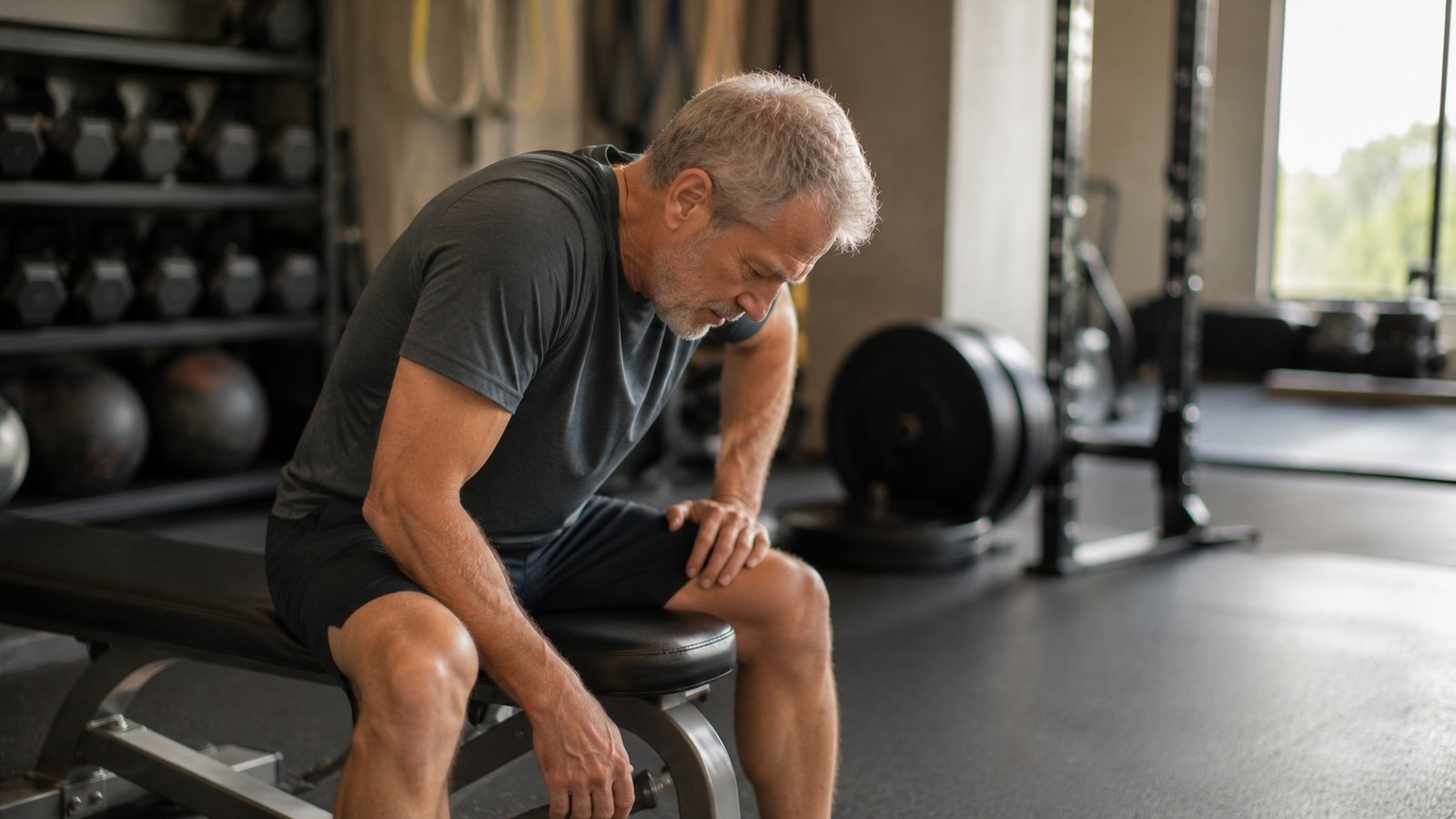
    Man over 55 worn out by harder workouts, learning how to keep moving with knee pain over 55 a gentler way

    Because intensity is not the ingredient your knees are missing. When a joint is already sore, piling on heavier loads and longer sessions tends to inflame it, and the soreness that follows feels like a verdict: see, moving hurts, so I should stop. That is the trap. The problem was the intensity, not the moving. Pushing harder and quitting are two sides of the same mistake, treating effort as the only dial you can turn. And it is the dial most likely to set you back.

    There is a gentler path that works better. A low-intensity, self-managed approach to staying active tends to work better than grinding through hard sessions, without the punishing aftermath. Learning how to keep moving with knee pain over 55 is less about forcing your body and more about giving it the right mix: steady movement, the food that supports your joints, and the confidence to keep showing up. Each of those gets its own section ahead.

    How does gentle movement help you keep moving with knee pain over 55?

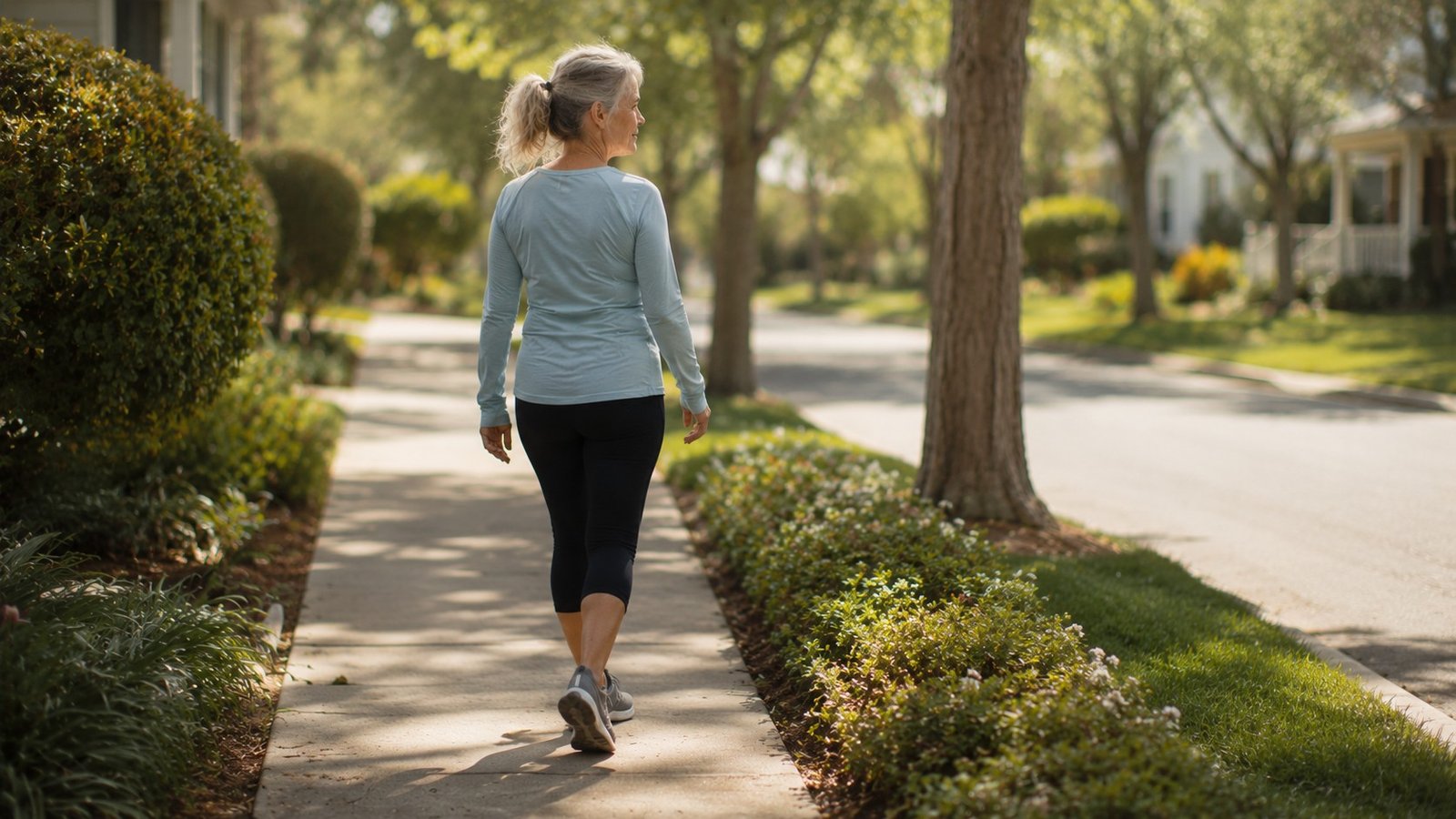
    A gentle walking path showing how to keep moving with knee pain over 55 through steady movement

    Movement is what your knees ask for most, and they do not need it to be hard. A joint stays healthier when it is used, because motion moves fluid through the cartilage and keeps the muscles around the knee strong enough to take the load off the joint itself. That is why “motion is medicine” is more than a slogan. In the research on older adults with knee osteoarthritis, the people who kept exercising held onto better function and mobility over time, even at gentle, manageable doses (Messier et al., 2013).

    The trick is matching the movement to where you are, not where a fitness class assumes you should be. Walking is the workhorse here, and a short, steady walk most days does more for staying active than a punishing session you pay for later. If you want the full picture of how to build that up sensibly, a walking program for knee arthritis over 55 lays out the gradual path. For now, the point is simple. Gentle and regular is how to keep moving with knee pain over 55, not hard and occasional.

    What role do the foods you eat play in keeping you moving with knee pain over 55?

    Woman over 55 preparing supportive foods, part of how to keep moving with knee pain over 55

    More than most people expect. What is on your plate affects two things your knees feel directly: the inflammation in the joint and the weight it carries with every step. In the research on older adults with knee osteoarthritis, changing how people ate, alongside movement, led to better function and easier mobility than movement on its own (Messier et al., 2013). A 2024 review of the field reached the same conclusion: that pairing supportive eating with activity beats either piece by itself (Huffman et al., 2024).

    This does not mean a strict diet or dropping a lot of weight overnight. It means steady, doable changes. Leaning toward the foods that calm inflammation while easing off the ones that feed it does double duty, and over time, it also lightens the daily load on the joint. One useful place to start is what the research says about omega-3 for joint health over 55. Eating well is a real part of how to keep moving with knee pain over 55, working quietly alongside the walking.

    Nutritional guidance in this post is educational. Before making significant dietary changes, particularly if you are managing other health conditions, consult your physician.

    How does the mental side help you keep moving with knee pain over 55?

    Man over 55 heading out despite a rough morning, the mental side of how to keep moving with knee pain over 55

    It is the part that decides whether the other two last. You can know the right way to move and eat and still stop on the mornings your knees feel rough, and that is where confidence does its quiet work. The belief that you can handle a walk, even a short one, is what gets you out the door on the hard days. In that same study of older adults with knee osteoarthritis, the people whose confidence in their own walking grew the most were the ones who stayed the most active, and that confidence helped drive their gains in function (Mihalko et al., 2019).

    The research keeps pointing in the same direction. Among older adults, a stronger belief in one’s ability to exercise lines up with staying more active and feeling more in control on the hard days. Confidence is not a personality you are born with; it is built one promise at a time. Watching your own small wins add up is a big part of that, which is where tracking knee pain progress over 55 earns its place. The mental side is quietly how to keep moving with knee pain over 55 when motivation runs thin.

    Why do these three pieces work better together than any one alone?

    Walking shoes, whole foods, and a notebook together showing how to keep moving with knee pain over 55

    Because each one covers a gap the others leave open. Movement keeps the joint working. What you eat changes the load it carries, and the inflammation it sits in, and your confidence is what keeps you doing both on the days you would rather not. Pull any one out, and the other two get harder to sustain. This is not a hunch. When researchers compared changing diet and exercise together against either one by itself in older adults with knee osteoarthritis, the combination came out ahead on function and mobility, more than the sum of its parts (Messier et al., 2013).

    A larger community trial found the same approach worked outside the lab, too. In everyday settings, the people who combined the pieces were more likely to reach a meaningful improvement in how they felt and functioned (Messier et al., 2022).

    That is the whole idea behind how to keep moving with knee pain over 55. Not one heroic effort, but a few modest ones that hold each other up. Your walking gives you something to track, and watching it add up builds the confidence that gets you out the door again tomorrow, while good food keeps the joint ready for all of it. Stack them, and the goal stops feeling out of reach: a comfortable 30-minute walk you finish without cutting it short. That is what these pieces, working together, are quietly building toward.

    Wrap-up: how to keep moving with knee pain over 55

    So what changed for Donna? She stopped trying to out-muscle her knees and started working with them. The harder workouts went away. In their place came shorter walks she could repeat, a few steady changes to what she ate, and a simple way to see her own progress, so she kept going. Nothing heroic, just three modest pieces pulling in the same direction.

    Three honest things are worth taking with you. Harder is not the answer, and pushing through usually sets you back. No single piece carries the load by itself. Movement needs the support of good food, and both need the confidence to keep showing up. And the win is not a number on a pain scale; it is staying on your feet and doing what your day asks of you.

    The goal underneath it is plain: a comfortable 30-minute walk you finish without cutting it short. Knowing how to keep moving with knee pain over 55 comes down to these pieces working together, not one harder effort. The complete guide to knee pain relief for adults over 55 puts the full approach in one place. Donna walks most days now, no grand push, just three quiet habits she finally let work together.

    Ready to Find Out What Your Body Can Do?

    It takes less than 3 minutes. No gym. No equipment. Just a simple test that shows you if your body can do more than it’s been telling you.

    Take the 3-Minute Walk Test

    M3 is a behavioral wellness coaching program. It is not medical treatment and does not replace advice from your physician. Consult your doctor before beginning any new movement or nutrition program.

    Frequently asked questions

    Can you stay active with knee pain without making it worse?

    Yes, most people can, as long as the activity matches where their knees are right now. The trouble usually comes from intensity, not movement itself, so heavy or high-impact sessions are what tend to backfire. Gentle, regular activity like short walks, done at a pace you can recover from, generally supports the joint rather than harming it. If a particular activity causes sharp or lasting pain, that is the signal to ease off, not to stop moving altogether.

    Does losing weight help knee pain over 55?

    For people carrying extra weight, even a modest reduction can ease the load on the knees, since the joint absorbs several times your body weight with each step. Research in older adults with knee osteoarthritis found that combining gradual weight change with activity improved function more than either did alone. It does not require dramatic dieting. Steady, sustainable changes tend to help the most and are easier to keep.

    How much walking is enough to help knee pain?

    Less than most people assume, especially at the start. A few minutes of comfortable walking most days is a reasonable beginning, and consistency matters far more than distance early on. From there, slowly adding a minute or two as it feels manageable is what builds capacity over weeks. The amount that helps is the amount you can do regularly without paying for it the next day.

    What foods make knee pain worse?

    No single food causes knee pain, but diets heavy in highly processed items, added sugars, and excess refined carbohydrates are linked to more inflammation in the body, which joints can feel. The flip side is more useful: leaning toward whole foods, vegetables, and sources of healthy fats tends to support a calmer inflammatory state. Small, steady shifts in that direction usually serve your knees better than any strict elimination.

    How long does it take to feel better when you start moving more?

    Many people notice small improvements within a few weeks of consistent, gentle activity, such as moving a little easier or recovering faster after a walk. Larger gains in comfort and capability tend to build over two to three months. Progress is rarely a straight line, so a rough week does not mean it is failing. Steady repetition over time is what produces the lasting change.

    Should you rest or stay active when your knees hurt?

    Gentle movement is usually better than full rest for ongoing knee pain, because joints need motion to stay lubricated and supporting muscles need use to stay strong. That said, a sharp flare or a new injury may call for a short, easier stretch or a brief rest. The goal is to keep moving in a scaled-back way rather than stopping entirely, then build back up as it settles.

    References

    Huffman, K. F., Ambrose, K. R., Nelson, A. E., Allen, K. D., Golightly, Y. M., & Callahan, L. F. (2024). The critical role of physical activity and weight management in knee and hip osteoarthritis: A narrative review. The Journal of Rheumatology, 51(3), 224–233. https://doi.org/10.3899/jrheum.2023-0819
    Messier, S. P., Beavers, D. P., Queen, K., Mihalko, S. L., Miller, G. D., Losina, E., Katz, J. N., Loeser, R. F., DeVita, P., Hunter, D. J., Newman, J. J., Quandt, S. A., Lyles, M. F., Jordan, J. M., & Callahan, L. F. (2022). Effect of diet and exercise on knee pain in patients with osteoarthritis and overweight or obesity: A randomized clinical trial. JAMA, 328(22), 2242–2251. https://doi.org/10.1001/jama.2022.21893

    Messier, S. P., Mihalko, S. L., Legault, C., Miller, G. D., Nicklas, B. J., DeVita, P., Beavers, D. P., Hunter, D. J., Lyles, M. F., Eckstein, F., Williamson, J. D., Carr, J. J., Guermazi, A., & Loeser, R. F. (2013). Effects of intensive diet and exercise on knee joint loads, inflammation, and clinical outcomes among overweight and obese adults with knee osteoarthritis: The IDEA randomized clinical trial. JAMA, 310(12), 1263–1273. https://doi.org/10.1001/jama.2013.277669

    Mihalko, S. L., Cox, P., Beavers, D. P., Miller, G. D., Nicklas, B. J., Lyles, M., Hunter, D. J., Eckstein, F., Guermazi, A., Loeser, R. F., DeVita, P., & Messier, S. P. (2019). Effect of intensive diet and exercise on self-efficacy in overweight and obese adults with knee osteoarthritis: The IDEA randomized clinical trial. Translational Behavioral Medicine, 9(2), 227–235. https://doi.org/10.1093/tbm/iby037

  • Tracking Knee Pain Progress Over 55: Why It Changes Everything

    Tracking Knee Pain Progress Over 55: Why It Changes Everything

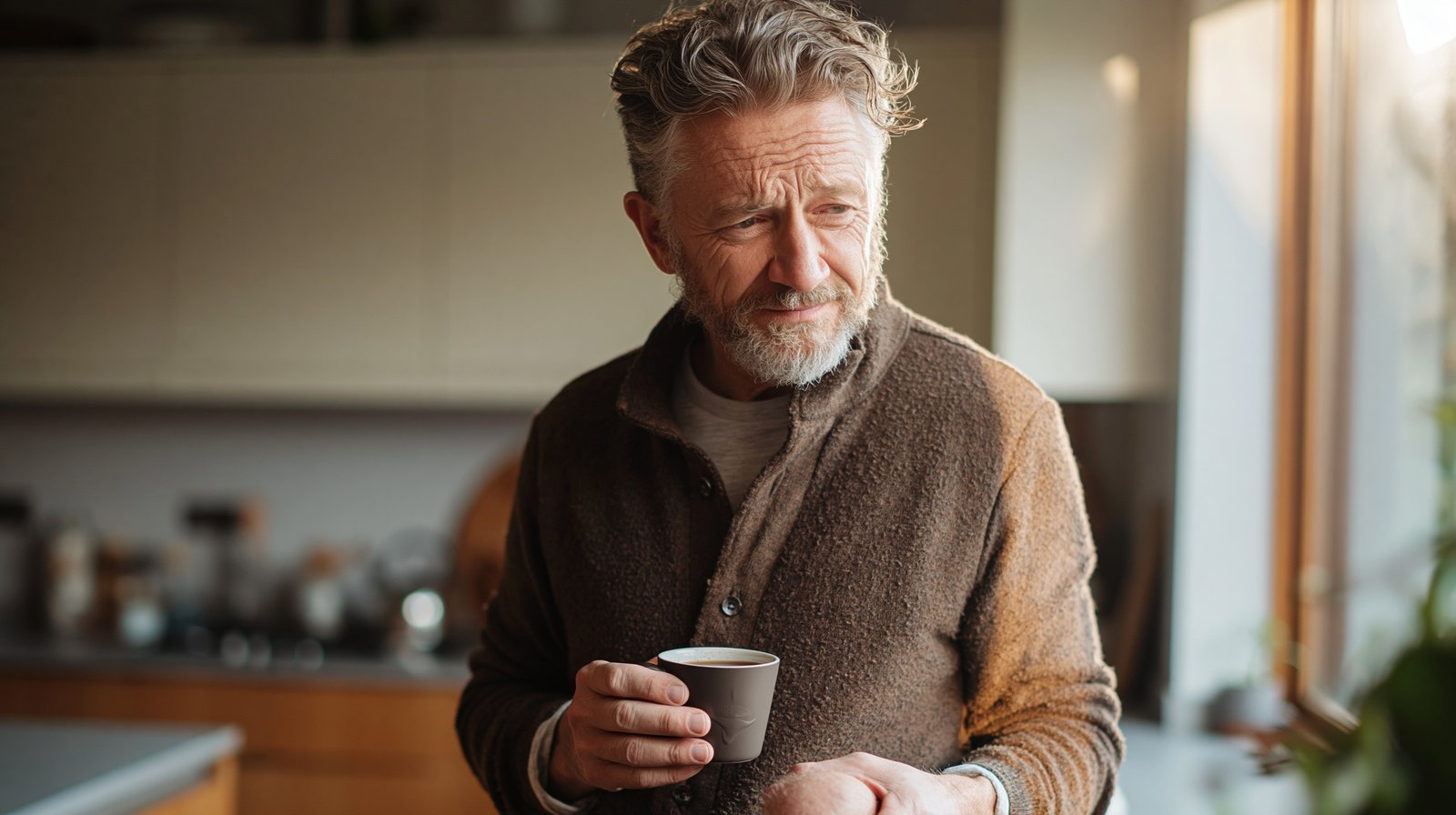
    Curtis was ready to quit. Three weeks into walking and his knees still ached most mornings, so as far as he could tell, nothing was working. He felt the same as the day he started. That feeling, that you are pouring in effort and getting nowhere, is one of the most common reasons people stop.

    Then I asked him to look back at the notes he had been keeping. Week one, he managed four minutes before he wanted to sit down. By week three, he was up to nine, and he had not even noticed. The ache was still there, but his body was doing more. He just could not feel it day to day, because day to day, progress is invisible. That is the quiet power of tracking knee pain progress over 55: it shows you the movement you cannot feel.

    Key Takeaway

    You often cannot feel slow progress, which is why so many people quit too soon. For older adults living with ongoing joint pain, self-monitoring and goal-setting are among the strongest tools for staying with a routine (Söderlund & von Heideken Wågert, 2021). Simple activity tracking helps older adults stay engaged and motivated over time (Estorff et al., 2026). And seeing your own progress builds the belief that keeps you going, the self-efficacy that drives whether people stay active.

    Here is what the rest of the post covers. You will see why your own progress is so hard to see, how tracking knee pain progress over 55 keeps you moving, what is worth tracking, what a no-zero days approach looks like, and how to keep it up.

    Ready to Find Out What Your Body Can Do?

    It takes less than 3 minutes. No gym. No equipment. Just a simple test that shows you if your body can do more than it’s been telling you.

    Take the 3-Minute Walk Test

    M3 is a behavioral wellness coaching program. It is not medical treatment and does not replace advice from your physician. Consult your doctor before beginning any new movement or nutrition program.

    Why is it so hard to see your own progress with knee pain over 55?

    Woman over 55 reflecting on why tracking knee pain progress over 55 is hard to see day to day

    Because the thing you feel every day and the thing that is actually changing are not the same. Pain is loud, and it swings around. A bad night’s sleep, the weather, how much you did yesterday, all of it moves the dial, so on any given morning, your knees might feel worse even while your body is getting stronger underneath. You are reading a noisy signal and calling it the score.

    Real progress, on the other hand, is slow and quiet. You do not feel yourself going from four minutes to nine the way Curtis did. It happens in increments too small to notice from inside your own day. That is exactly why tracking knee pain progress over 55 works so well: a written record holds the slow, true signal that your memory and your mood keep drowning out. Memory is a terrible measuring tool here. It remembers this morning’s ache, not last month’s starting line.

    How does tracking knee pain progress over 55 keep you moving?

    A notebook and walking shoes showing how tracking knee pain progress over 55 keeps you moving

    It keeps you moving by turning effort you cannot feel into proof you can see, and proof is what fuels motivation. When the record shows you walked a little longer this week than last, your brain gets the reward the aching knees were hiding. That visible win makes you more likely to lace up tomorrow. In older adults living with ongoing joint pain, self-monitoring and goal-setting are consistently among the most effective tools for sticking with a routine over the long haul (Söderlund & von Heideken Wågert, 2021).

    There is a second thing happening underneath. Every time you log a walk and see the line move, you build a little more belief that you can do this, and that belief is the engine of staying active (Estorff et al., 2026). Tracking knee pain progress over 55 is really a confidence machine in disguise. The mental side carries more weight than most people expect, which is why the right mindset for walking with knee pain and a simple record work so well together.

    What should you track, and what should you leave alone?

    Man over 55 noting his walk while tracking knee pain progress over 55 by behavior not pain score

    Track what you did and what you can do, not how much it hurt. The most useful things to write down are simple: did you take your walk, how long it lasted, and how the movement felt on a rough scale like easy, okay, or tough. Those tell you whether your capability is growing. This is the heart of tracking knee pain progress over 55: you are measuring the thing you can actually change. A walking study found that people who set small, concrete step goals and tracked them made real gains in what they could do day to day (Ho et al., 2024).

    Here is what to leave alone: a daily pain score. It feels like the obvious number to chase, but it is the worst one to live by. Pain bounces around for reasons that have nothing to do with your progress, so a single rough morning can read like failure and send you backward.

    Watch what your body can do over weeks instead. Can you walk a few minutes longer than last month? Can you manage the stairs with less hesitation? That is the scoreboard that tells the truth.

    What is a “no zero days” approach to tracking knee pain progress over 55?

    Woman over 55 heading out for a short walk, a no zero days habit for tracking knee pain progress over 55

    A zero day is a day you did nothing toward your goal. The no-zero days idea is simple: try not to let two of them stack up in a row. It is not about a perfect streak or punishing yourself when life gets in the way. It is about keeping the thread from breaking, because once a day off becomes a week off, getting started again is the hardest part.

    On a rough day, the bar drops as low as it needs to. A two-minute walk to the mailbox counts, and so does a few gentle stretches or just standing up and moving through the kitchen. The point is that you did something and you wrote it down, which keeps your identity as someone who is still in this.

    Research on older adults pairs this kind of small, trackable action with personal coaching and finds it helps people stay with a routine (Larsen et al., 2021). Tracking knee pain progress over 55 with a no-zero days mindset works because it makes the daily decision tiny. Not “do I do my whole walk,” just “do I do one small thing.” That is a question almost anyone can say yes to.

    How do you keep tracking knee pain progress over 55 without burning out on it?

    A simple notebook and walking shoes showing a light daily habit for tracking knee pain progress over 55

    Keep it small enough that you never dread it. The most common way tracking fails is that people turn it into a project: charts, columns, a daily pain diary they grow to resent. Then they quit the tracking, and soon after, the walking. A tracker or a log only helps for as long as the habit of using it survives, and the research is honest that logging on its own tends to fade unless something keeps it meaningful (Estorff et al., 2026).

    So strip it down. One or two things, ten seconds a day, is plenty: the walk you did and how it felt. Pair the record with a reason that matters to you, like being able to get down on the floor with a grandchild and back up again, so the log points at something bigger than itself. When tracking knee pain progress over 55 stays light and tied to a real why, it stops being a chore and becomes a quiet daily nudge. The goal was never to become a record keeper. It was to keep walking, and to have proof on the hard days that you are.

    Wrap-up: tracking knee pain progress over 55

    So what changed for Curtis? Nothing about his knees, at first. What changed was that he could finally see the progress his body was making, and that kept him from quitting. The notes did what his memory could not.

    Three honest things are worth carrying. You usually cannot feel slow progress, so without a record, you may sell yourself short and stop too soon. Track what you can do, not how much it hurts, because capability tells the truth a daily pain score hides. And keep it small, because a ten-second log you actually keep beats a detailed system you abandon.

    The goal was never to become a record keeper. It was to walk 30 minutes comfortably and get through your day without dreading the next step. Tracking knee pain progress over 55 is one part of the mental side of staying active, and it works best when movement and meals move with it. The complete guide to knee pain relief for adults over 55 puts all three together. Curtis still keeps his notes. Nine minutes became twenty without him ever feeling the climb.

    Ready to Find Out What Your Body Can Do?

    It takes less than 3 minutes. No gym. No equipment. Just a simple test that shows you if your body can do more than it’s been telling you.

    Take the 3-Minute Walk Test

    M3 is a behavioral wellness coaching program. It is not medical treatment and does not replace advice from your physician. Consult your doctor before beginning any new movement or nutrition program.

    Frequently Asked Questions

    Should you keep a pain diary if you have knee arthritis?

    A daily pain diary is usually not the most helpful thing to track. Pain naturally swings from day to day based on sleep, weather, and activity, so a daily score can make a good stretch look like failure and discourage you. Tracking what you can do, like how long you walked and how it felt, gives a truer picture of progress. Save detailed pain notes for spotting big patterns or sharing with your doctor.

    How often should you track your walking progress?

    Once a day, right after your walk, is plenty for most people, and it only needs to take a few seconds. The point is to capture what you did while it is fresh, not to build a detailed log. If daily feels like too much, a few times a week still shows the trend over time. Consistency matters more than detail, so pick a rhythm light enough that you will actually keep it.

    Do you need an app or fitness tracker to track knee pain progress over 55?

    No, you do not need any device. A simple notebook or the notes app on your phone works just as well, and for many people, it is easier to stick with. What matters is that you record a couple of basics consistently, like the time you walked and how it felt. A fitness tracker can help if you enjoy the step count, but the tool is far less important than the habit.

    How long does it take to see progress with knee pain over 55?

    Most people start to see small, encouraging changes within two to three weeks of consistent walking, such as going a little longer or recovering faster afterward. Bigger gains build over a couple of months. Progress is rarely a straight line, so a flat or rough week does not mean it stopped. A written record is what lets you spot the slow upward trend you cannot feel day to day.

    What should you do when your tracking shows no progress?

    First, look at the right time frame. A few days tell you almost nothing, so compare this month to last month instead. If there is still no movement after several weeks, the plan may need a small adjustment, like shorter and more frequent walks, more rest between them, or a gentler pace. No progress is information, not failure. It points you toward what to change rather than telling you to quit.

    Is it normal to feel like you are not improving even when you are?

    Yes, this is very common, and it is one of the main reasons people give up too early. Slow progress happens in increments too small to feel from inside your own day, while pain stays loud and grabs your attention. So it can feel like nothing is changing even as your body grows stronger. That gap between how you feel and what is real is exactly why a written record helps so much.

    References

    Estorff, I., Ebert, B., Fischer, F. L., Ratzlaff, L., Wagner, P., & Schoene, D. (2026). Efficacy of activity tracker-based interventions and their behavioral components in promoting physical activity and reducing sedentary behavior in older adults: A systematic review of randomized controlled trials. European Review of Aging and Physical Activity, 23, 1. https://doi.org/10.1186/s11556-025-00396-5

    Ho, M.-H., Peng, C.-Y., Liao, Y., & Yen, H.-Y. (2024). Efficacy of a wearable activity tracker with step-by-step goal-setting on older adults’ physical activity and sarcopenia indicators: Clustered trial. Journal of Medical Internet Research, 26, e60183. https://doi.org/10.2196/60183

    Larsen, R. T., Christensen, J., Juhl, C. B., Andersen, H. B., & Langberg, H. (2021). The MIPAM trial: Motivational interviewing and physical activity monitoring to enhance the daily level of physical activity among older adults: A randomized controlled trial. European Review of Aging and Physical Activity, 18, 14. https://doi.org/10.1186/s11556-021-00269-7

    Söderlund, A., & von Heideken Wågert, P. (2021). Adherence to and the maintenance of self-management behaviour in older people with musculoskeletal pain: A scoping review and theoretical models. Journal of Clinical Medicine, 10(2), 303. https://doi.org/10.3390/jcm10020303

    Kononova, A., Li, L., Kamp, K., Bowen, M., Rikard, R., Cotten, S., & Peng, W. (2019). The Use of Wearable Activity Trackers Among Older Adults: Focus Group Study of Tracker Perceptions, Motivators, and Barriers in the Maintenance Stage of Behavior Change. JMIR MHealth and UHealth, 7(4), e9832. https://doi.org/10.2196/mhealth.9832

  • How to Get Up From a Chair With Knee Pain After 55

    How to Get Up From a Chair With Knee Pain After 55

    James had been grabbing the armrest, leaning back, and holding his breath every time he stood up. It worked most of the time. But the walk that followed was always harder than it should have been. He assumed the chair rise was unavoidable. What he did not know was that his technique was working against the joint rather than with it.

    A systematic review and meta-analysis of 14 studies found that adults with knee OA show significantly higher peak external knee flexion torque during sit-to-stand than age-matched healthy controls. The review also confirmed that increased trunk flexion is the documented compensatory strategy the body uses to reduce that demand (Sonoo et al., 2019). James’s backward lean was the opposite of what the research supports.

    Key Takeaway

    A systematic review of 14 studies found that adults with knee OA show significantly higher peak knee flexion torque during sit-to-stand than healthy controls and adopt increased trunk flexion as a compensatory strategy (Sonoo et al., 2019). In community-dwelling older adults, five-time sit-to-stand performance correlates significantly with gait speed (de Abreu et al., 2022).

    This post covers why how to get up from a chair with knee pain is harder in knee OA, what the usual technique gets wrong, 5 steps grounded in research, and how chair rise connects to walking.

    Ready to Find Out What Your Body Can Do?

    It takes less than 3 minutes. No gym. No equipment. Just a simple test that shows you if your body can do more than it’s been telling you.

    Take the 3-Minute Walk Test

    M3 is a behavioral wellness coaching program. It is not medical treatment and does not replace advice from your physician. Consult your doctor before beginning any new movement or nutrition program.

    Why is getting up from a chair hard with knee pain?

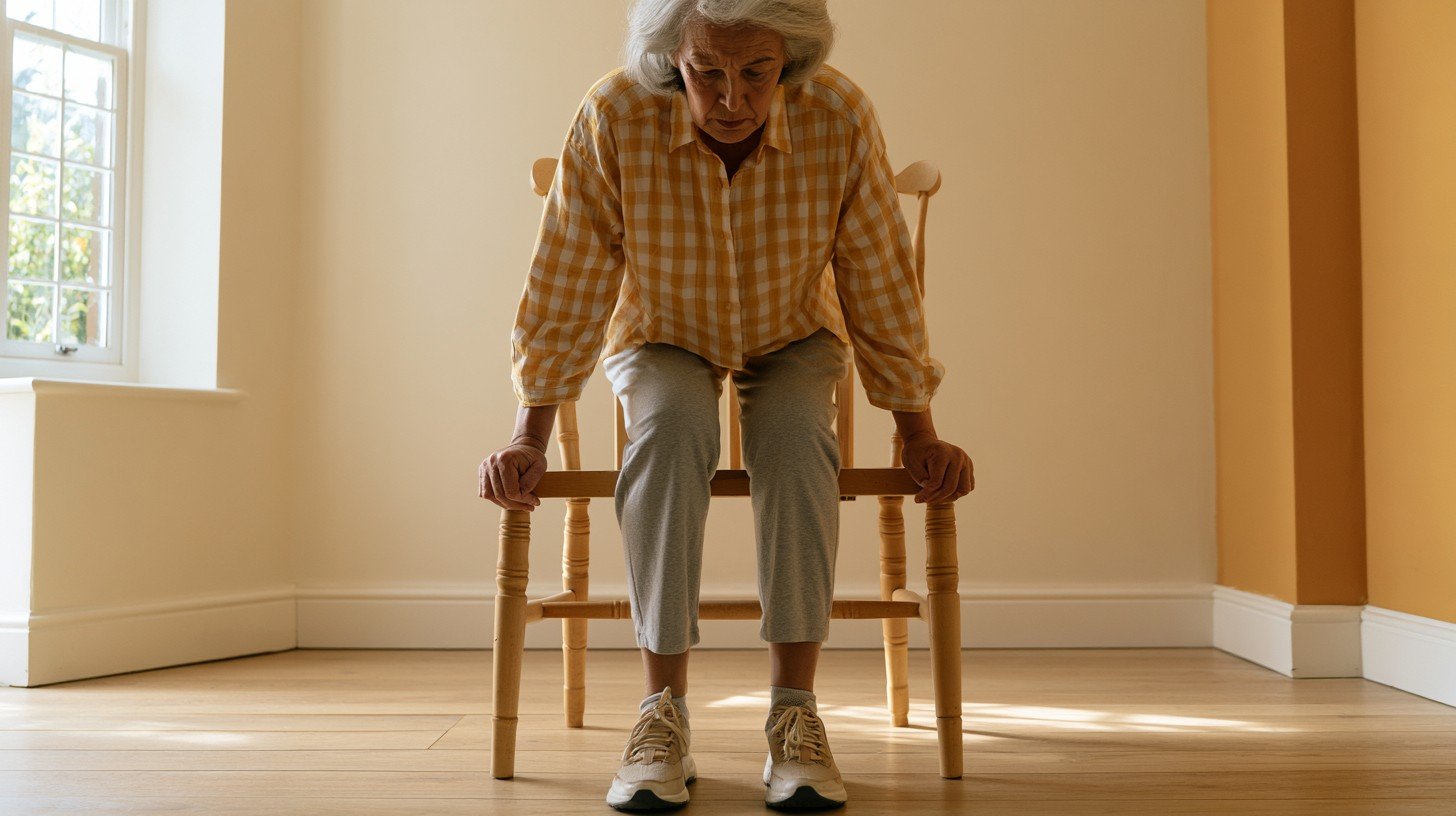
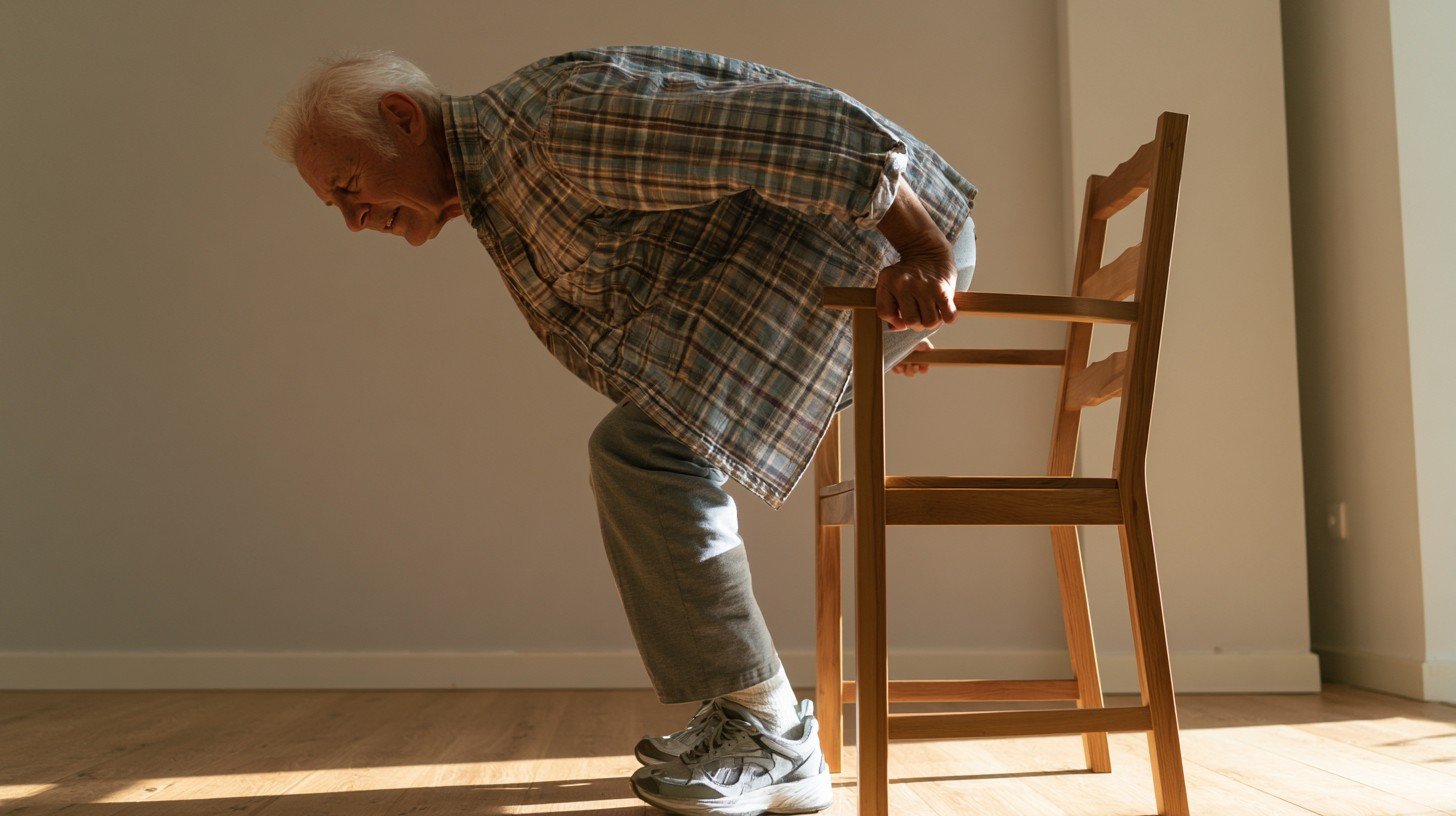
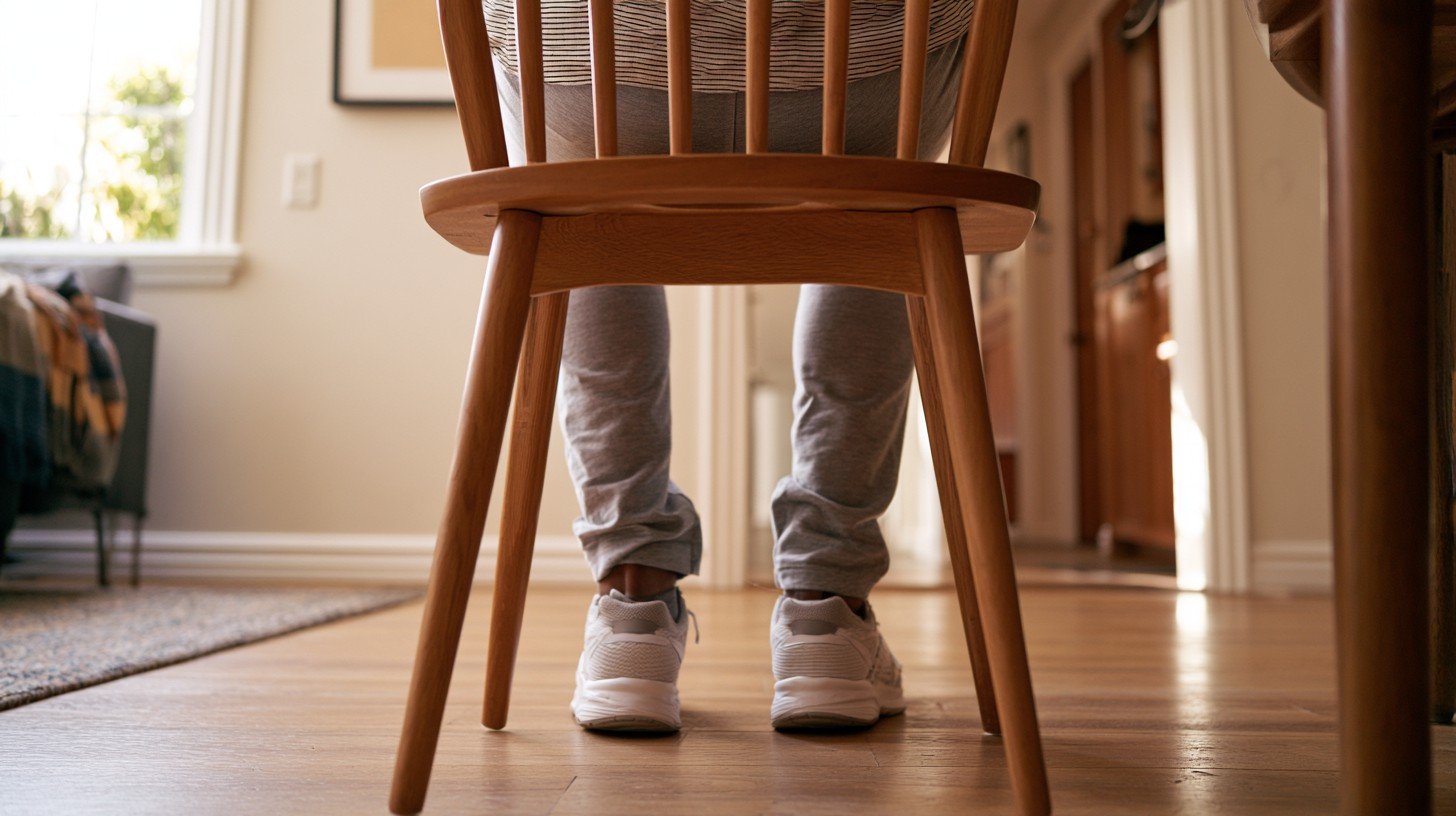
    Adult man over 55 struggling to rise from a chair showing why how to get up from a chair with knee pain places higher biomechanical demand on the knee than walking.

    Because the knee works harder during those first two seconds of standing than during most of the walk that follows.

    A systematic review and meta-analysis of 14 studies compared sit-to-stand biomechanics in adults with knee OA against age-matched healthy controls. The knee OA group showed significantly higher peak external knee flexion torque during the rise. Sit-to-stand is identified as a more sensitive movement for detecting biomechanical differences in knee OA than gait, because the knee reaches a greater range of flexion and higher torque during chair rising than during level walking (Sonoo et al., 2019).

    For adults who notice that how to get up from a chair with knee pain feels harder than the walk itself, that observation is biomechanically accurate. The chair rise asks more of the knee per second than walking does, and asks it all at once before the joint has had time to warm up.

    That same structural sensitivity explains why morning knee stiffness is most pronounced in the first movements after rest. The chair rise is the morning’s hardest task compressed into two seconds.

    What goes wrong with the usual way of standing up?

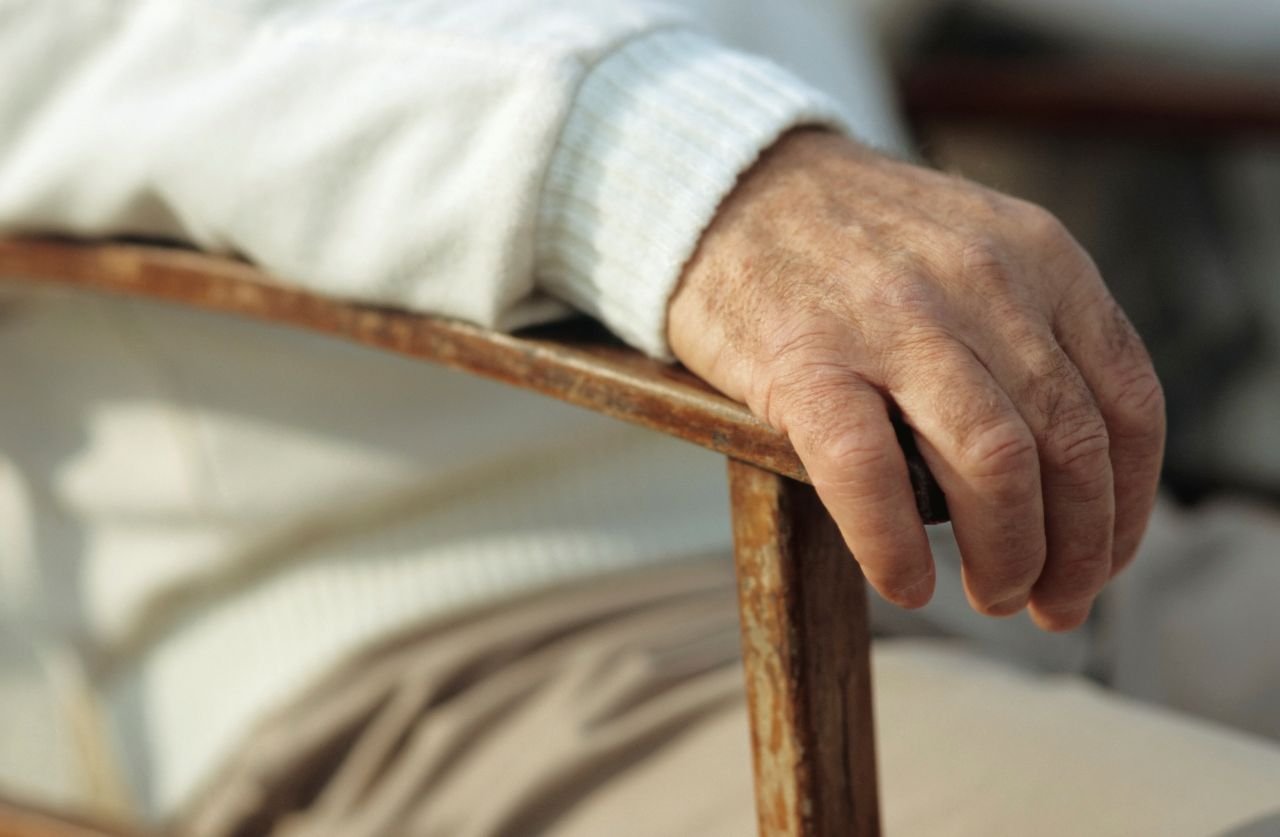
    Close view of hands gripping chair armrests showing the common technique error that increases knee demand when getting up from a chair with knee pain.

    The weight stays in the wrong place for too long.

    Most adults rise by pressing back into the chair, pushing straight up from there, and relying on the quadriceps to lift their full body weight. The quadriceps are the primary knee extensor group. In a joint managing knee OA, asking them to carry the majority of a high-torque movement produces the familiar sharp sensation at lift-off.

    Research on sit-to-stand in knee OA confirms what the body already tries to do. Adults with knee OA adopt increased trunk flexion as a compensatory strategy, shifting the center of mass forward over the feet to reduce demand on the knee extensors. The backward lean overrides that strategy before it can work.

    Understanding how to get up from a chair with knee pain starts with recognizing that moment. The weight-over-feet principle that makes walking with bad knees more manageable applies in the two seconds before the first step is taken.

    How to get up from a chair with knee pain: 5 steps

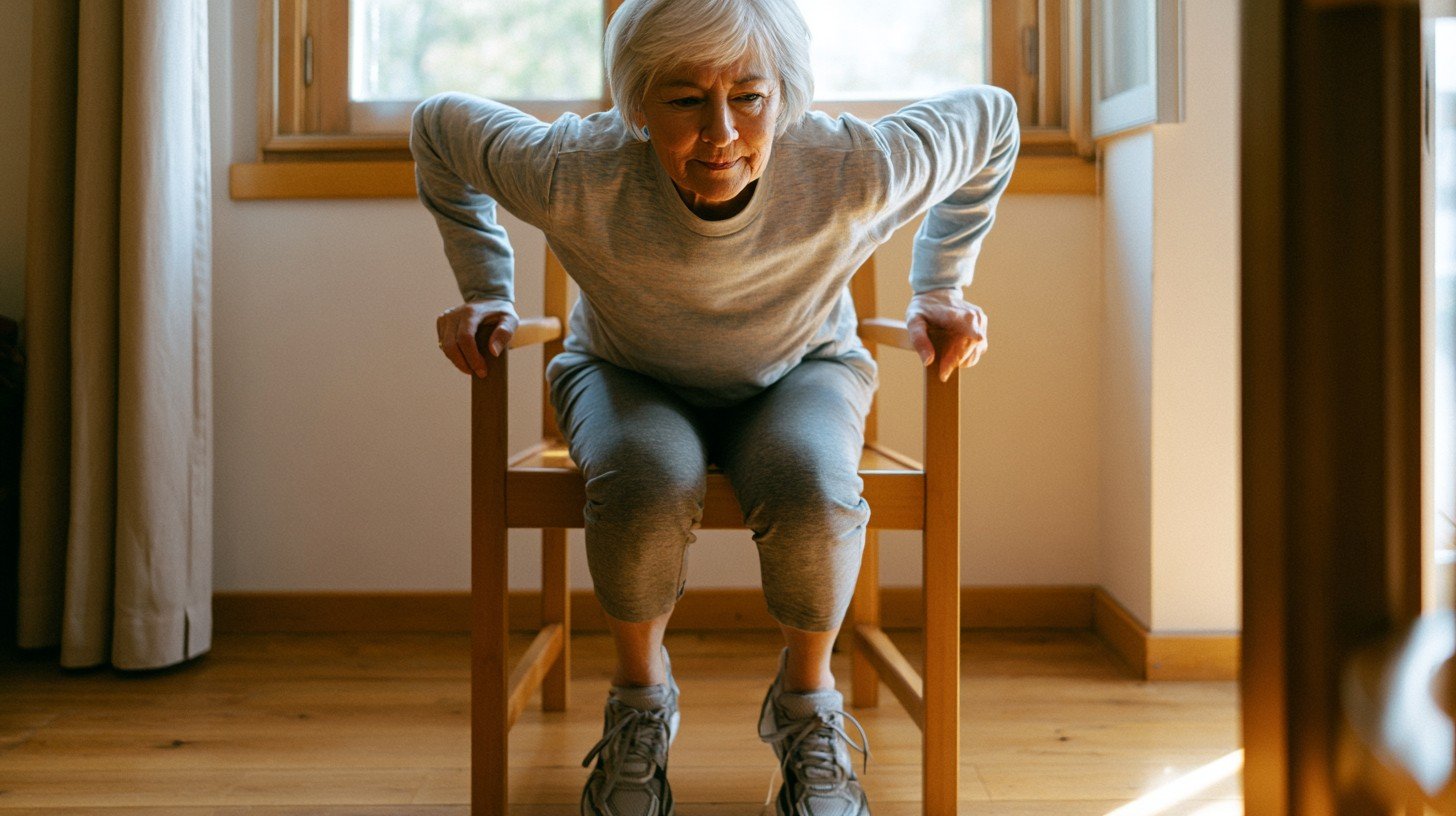
    Adult woman over 55 demonstrating the nose-over-toes lean technique as one of five steps for how to get up from a chair with knee pain more easily.

    Five steps. The sequence matters because each one sets up the next. This is how to get up from a chair with knee pain using the weight-over-feet approach, which the research supports.

    Step 1. Scoot to the front edge of the seat

    Move forward until you are sitting on the front third of the seat. Most adults sit too deeply in the chair to rise efficiently. Getting your hips closer to the edge shortens the mechanical distance your weight needs to travel to get over your feet, which makes every step that follows easier.

    Step 2. Position your feet

    Place feet hip-width apart, slightly tucked back under the chair. A toe-in angle of roughly 10 degrees significantly reduces the knee adduction moment during sit-to-stand in adults with knee OA (Faroughi et al., 2023). Feet extended forward of the knees is the most common setup error.

    Lean forward, nose over your toes

    Tilt your upper body forward until your nose is approximately over your toes before rising. This trunk flexion shifts your center of mass over your feet, reduces quadriceps demand, and converts the rise from a knee-dominant effort into a whole-body movement.

    Step 4. Push through your heels and let your hips lead

    Press through your heels as you rise. Think about driving your hips forward rather than straightening your knees. This activates the glutes and reduces how much the quadriceps and the knee joint need to contribute.

    Step 5. Pause at the top before your first step

    Once standing, take a full breath before walking. This pause lets the knee joints settle under load, prevents the rushed first step that often produces the sharpest post-rise pain, and gives the nervous system a moment to register stable standing.

    Why chair height makes a bigger difference than most adults realize

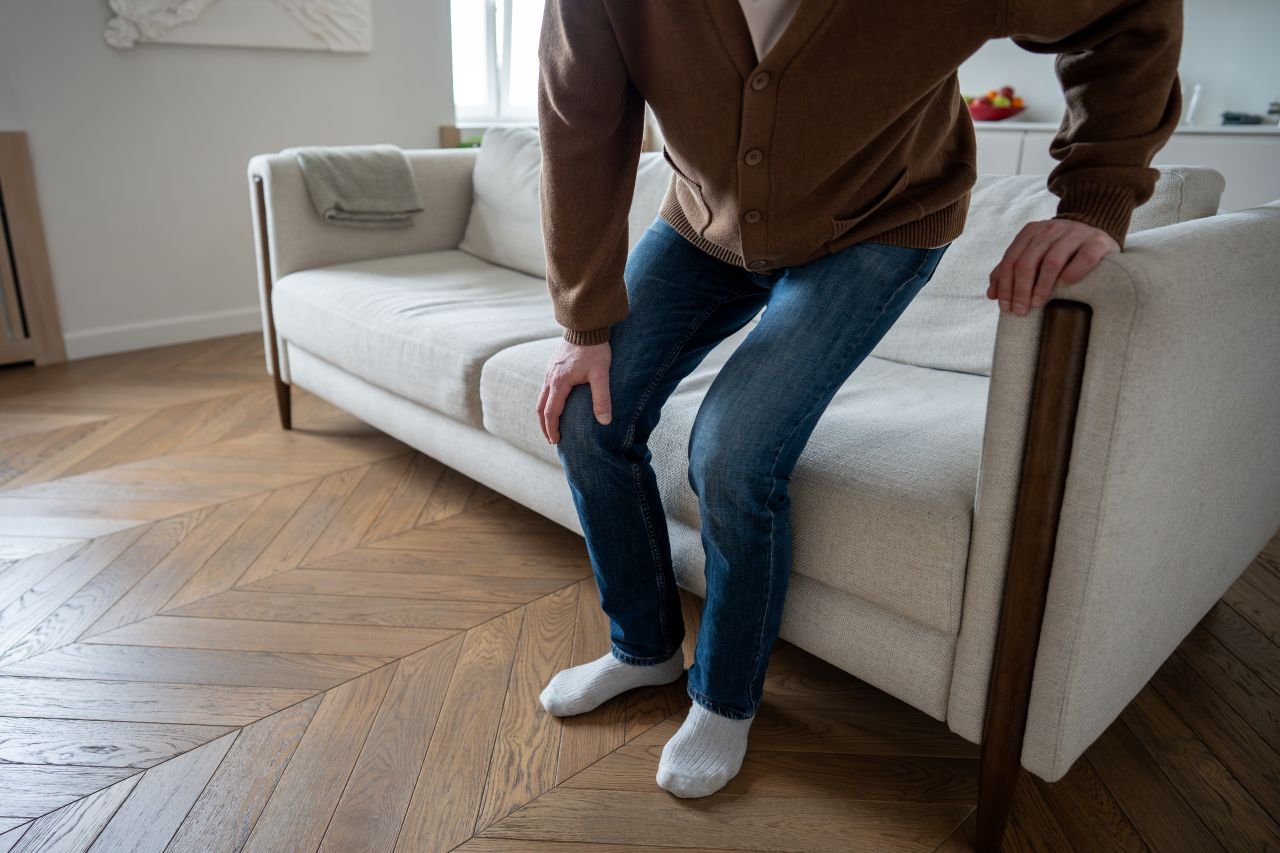
    Adult man over 55 sitting in a low deep sofa showing how low seat height increases knee demand when getting up from a chair with knee pain.

    The technique matters most when the chair is not working against you. Chair height is the variable most adults never adjust.

    Research consistently confirms that lower seat heights require greater peak hip and knee joint moments during sit-to-stand. The lower the seat, the further the hips must travel before the weight gets over the feet, and the more the knee extensors have to contribute. The difference between a standard dining chair at 17 to 18 inches and a deep sofa at 12 to 14 inches is not minor. The knee does measurably more work from the sofa.

    A firm cushion that raises a low seat two to three inches is one of the simplest modifications available. Chairs with armrests allow the upper body to share the load on high-pain days. Choosing the taller chair at the dinner table is applied biomechanics, not a concession.

    This is also part of why knee pain is often worse at night. Evening hours typically mean the lowest furniture in the house. How to get up from a chair with knee pain is harder from the couch than anywhere else in most homes.

    How getting up from a chair connects to daily walking

    Figure rising from a chair at home in the nose-over-toes position with an open hallway ahead showing how chair rise technique connects to daily walking ability.

    More directly than most adults expect.

    In community-dwelling older adults, five-time sit-to-stand performance correlates significantly with gait speed, and poorer chair rise performance consistently predicts reduced walking speed. The World Health Organization recognizes sit-to-stand ability as a measure of locomotor capacity, placing it in the same category as walking (de Abreu et al., 2022).

    Every walk begins with a chair rise. The joint that absorbs the highest torque demand of the day in the first two seconds of standing then carries that load into the first steps of the walk. James’s pattern of a hard rise followed by a hard walk was not coincidental. The chair was the first obstacle in every walking session.

    Improving how to get up from a chair with knee pain changes the starting point. A joint that completes the rise with less demand arrives at the first step with more reserve.

    The goal is walking 30 minutes. Getting up from a chair is where that goal gets easier or harder, several times a day, before a single step is taken.

    Wrap-up: How to get up from a chair with knee pain

    James stopped leaning back. He stopped holding his breath. The walks that followed got easier. Not because his knee changed, but because the first two seconds of each walk did.

    Three findings worth keeping: sit-to-stand places higher biomechanical demand on the knee than walking, foot position and trunk lean measurably reduce that demand, and chair rise ability and gait speed move together in older adults.

    The goal is walking 30 minutes. How to get up from a chair with knee pain is where that goal starts each time, before the first step is taken.

    How to get up from a chair with knee pain is one piece of a larger picture. The complete guide to knee pain relief for adults over 55 covers the full approach.

    Ready to Find Out What Your Body Can Do?

    It takes less than 3 minutes. No gym. No equipment. Just a simple test that shows you if your body can do more than it’s been telling you.

    Take the 3-Minute Walk Test

    M3 is a behavioral wellness coaching program. It is not medical treatment and does not replace advice from your physician. Consult your doctor before beginning any new movement or nutrition program.

    Frequently Asked Questions

    What type of chair is easiest to stand from with knee pain?

    A firm, straight-backed chair at 17 to 18 inches seat height with armrests that reach the front edge of the seat is the most biomechanically favorable option. Firmness prevents hips from sinking below knees, height reduces the torque required to rise, and front armrests allow the upper body to assist on difficult days. Knowing how to get up from a chair with knee pain starts with selecting the right chair.

    Should you use armrests when getting up from a chair with knee pain?

    Yes, on high-pain days, armrests are a biomechanically sound option. Using the arms reduces the load transferred to the quadriceps and knee joint during the rise. The five-step technique still applies with armrests. Scooting forward, positioning feet, and the nose-over-toes lean all reduce knee demand on top of what the armrests provide. How to get up from a chair with knee pain using armrests is a smart adaptation, not a shortcut.

    How many times a day should you practice the five-step technique?

    Every time you stand up. The technique becomes efficient through repetition in real situations, not dedicated practice sessions. Most adults over 55 rise from a chair 30 to 40 times per day across meals, rest periods, and daily activity. Each rise is an opportunity to reinforce the correct movement pattern. Within two to three weeks of consistent use, the sequence typically becomes the default rather than the deliberate choice.

    What exercises help make getting up from a chair easier with knee pain?

    Exercises that strengthen the gluteal muscles and improve hip extension are among the most effective. Seated leg lifts, standing hip extensions, holding a counter, and partial wall sits build the muscle groups the five-step technique activates. Stronger glutes reduce the quadriceps demand during the rise, which reduces the force transferred to the knee at lift-off. A physiotherapist can prescribe a program specific to your current strength level and pain pattern.

    Can the wrong technique for getting up from a chair make knee pain worse over time?

    Yes. Rising repeatedly with weight behind the feet and maximum quadriceps demand adds cumulative load to a joint already managing structural change. The effect is not dramatic in any single sit-to-stand, but over 30 to 40 rises per day across months, the pattern compounds. Learning how to get up from a chair with knee pain correctly reduces that cumulative load at a movement most adults perform more frequently than they walk.

    How do you get up from a low couch or toilet with knee pain?

    The same five steps apply to low surfaces, with one modification: place both hands on the seat surface beside your hips and push your weight forward before applying the nose-over-toes lean. For toilets, grab bars on the wall serve the same function as armrests. How to get up from a chair with knee pain on low surfaces requires more preparation than usual, not less.

    References

    de Abreu, D. C. C., Porto, J. M., Tofani, P. S., Braghin, R. M. B., & Freire Junior, R. C. (2022). Prediction of reduced gait speed using the 5-time sit-to-stand test in healthy older adults. Journal of the American Medical Directors Association, 23(5), 889–892. https://doi.org/10.1016/j.jamda.2021.11.002

    Faroughi, F., Gholami, S., & Torkaman, G. (2023). Toe-in during sit-to-stand reduces knee adduction moment in people with moderate knee osteoarthritis. Muscles, Ligaments and Tendons Journal, 13(3). https://doi.org/10.32098/mltj.03.2023.06

    Sonoo, M., Iijima, H., & Kanemura, N. (2019). Altered sagittal plane kinematics and kinetics during sit-to-stand in individuals with knee osteoarthritis: A systematic review and meta-analysis. Journal of Biomechanics, 96, 109331. https://doi.org/10.1016/j.jbiomech.2019.109331

  • Walking Poles for Knee Pain Over 60: What Adults Should Know

    Walking Poles for Knee Pain Over 60: What Adults Should Know

    Most adults who start looking into walking poles for knee pain over 60 have already formed a theory about how they work. A friend of mine, Linda, had done her research before she even asked me about it. She had a list of reasons poles would help, and every article she had read came back to the same claim: poles take pressure off the knee.

    What the research shows is more specific than that, and more useful. A systematic review of 14 randomized controlled trials found that Nordic walking produced beneficial effects on pain in 6 of 9 studies that examined pain outcomes across chronic pain and fatigue conditions (González-Devesa et al., 2024). The benefit is real. The mechanism behind it is not quite what most people expect.

    Key Takeaway

    A systematic review of 14 RCTs found Nordic walking produced beneficial pain effects in 6 of 9 studies of chronic pain and fatigue (González-Devesa et al., 2024). Older adults with knee OA show significantly compromised balance during level walking compared to healthy adults, a documented gap that walking poles directly address (Lee et al., 2021).

    This post covers whether walking poles for knee pain over 60 help, what the research shows about how they work, the balance of evidence, and how poles connect to walking more consistently.

    Ready to Find Out What Your Body Can Do?

    It takes less than 3 minutes. No gym. No equipment. Just a simple test that shows you if your body can do more than it’s been telling you.

    Take the 3-Minute Walk Test

    M3 is a behavioral wellness coaching program. It is not medical treatment and does not replace advice from your physician. Consult your doctor before beginning any new movement or nutrition program.

    Do walking poles help with knee pain?

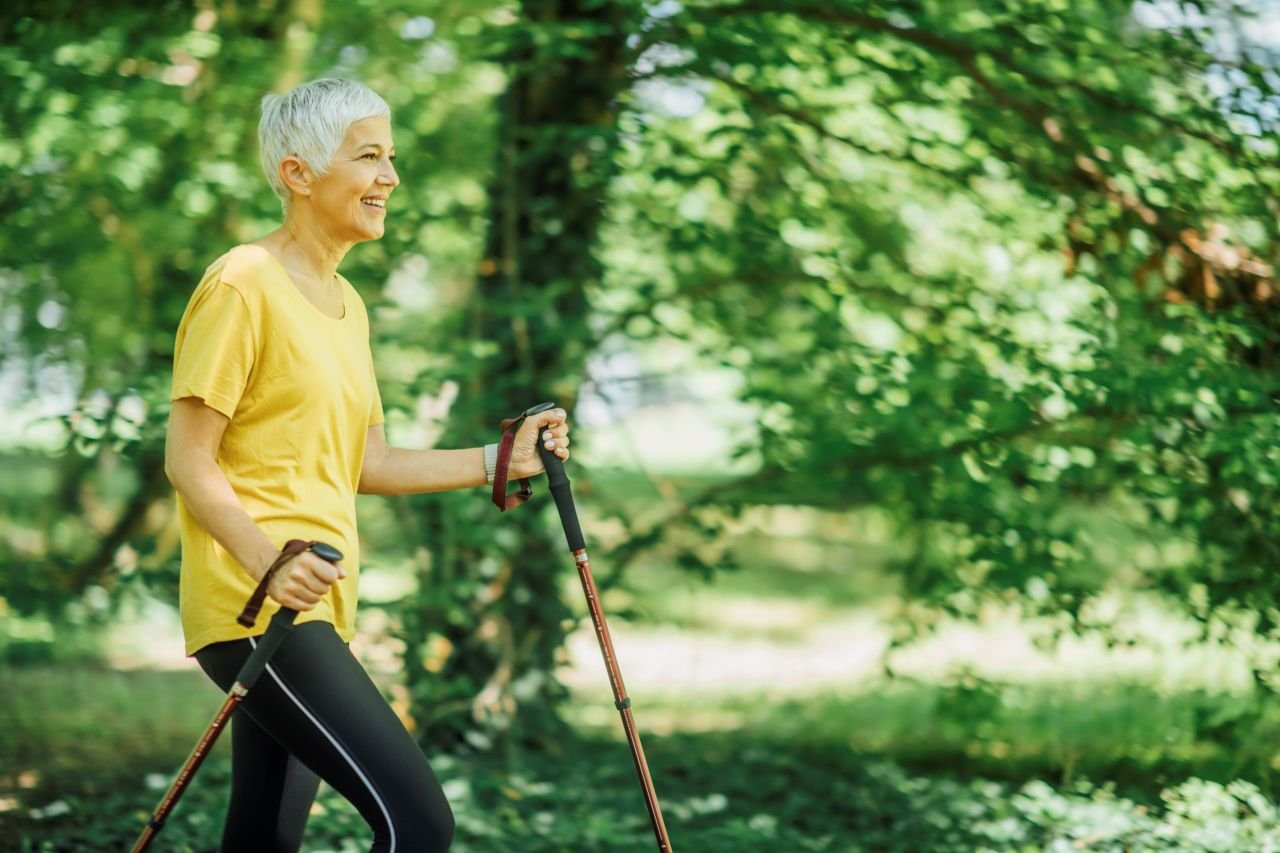
    Adult woman over 60 walking on a park path with poles illustrating how walking poles for knee pain over 60 support movement and balance.

    For many adults, yes. The research supports that conclusion.

    A 2024 systematic review of 14 randomized controlled trials on Nordic walking found beneficial effects on pain in 6 of 9 studies that measured it. Supervised programs of 6 to 24 weeks produced the most consistent results. The study populations were not exclusively knee OA, but the pain outcomes were broadly positive (González-Devesa et al., 2024).

    Where the evidence gets complicated is the mechanism. Most adults assume the benefit comes from poles redistributing weight off the knee. The research on whether poles reduce knee joint loading is genuinely mixed — some studies show modest reductions, others found no change or a slight increase in joint loading when bilateral poles were used in knee OA patients.

    The benefit of walking poles for knee pain over 60 is real. It just comes from somewhere other than pressure reduction. The knee brace evidence tells a similar story: the assumed mechanism is often not the confirmed one.

    Why do most people think poles reduce knee pressure?

    Walking poles planted at an angle on a paved path illustrating why the assumed pressure-reduction mechanism of poles for knee pain is more complicated than it seems.

    Because the logic feels right.

    A walking cane held in the hand opposite the affected knee does reduce knee joint loading. That is well established. The brain applies the same reasoning to walking poles: two poles, both hands, double the support, less load on the knee. It is a reasonable assumption.

    The biomechanics are more complicated. Poles make contact with the ground at an angle, which means much of the force they generate propels the walker forward rather than unloading the knee. Studies in adults with medial compartment knee OA found no consistent reduction in knee compressive force with bilateral pole use — and some found a slight increase in the knee adduction moment.

    This does not mean walking poles for knee pain over 60 are unhelpful. It means the benefit comes from something the research supports more clearly than pressure redistribution.

    What do walking poles do for knee OA?

    Adult woman over 60 using walking poles on an uneven path showing how poles address the balance deficit that knee OA creates during walking.

    They address the balance problem that knee OA creates.

    Adults with bilateral medial knee OA show significantly compromised gait balance control during level walking compared to healthy adults, across both double-limb and single-limb support phases of the gait cycle (Lee et al., 2021). A knee managing OA is less stable during walking than a healthy knee, and that instability compounds with every step.

    Walking poles provide two additional contact points that directly compensate for this documented deficit. They encourage upright posture, reduce fear of falling, and allow the upper body to share some of the demand of each stride. None of this requires poles to reduce joint pressure to be genuinely useful.

    For adults already thinking about walking shoes for knee pain, poles, and footwear address the same problem from different angles. One handles grip and shock absorption. The other handles stability and confidence. That is the honest value case for walking poles for knee pain over 60.

    What does the research show about walking distance with poles?

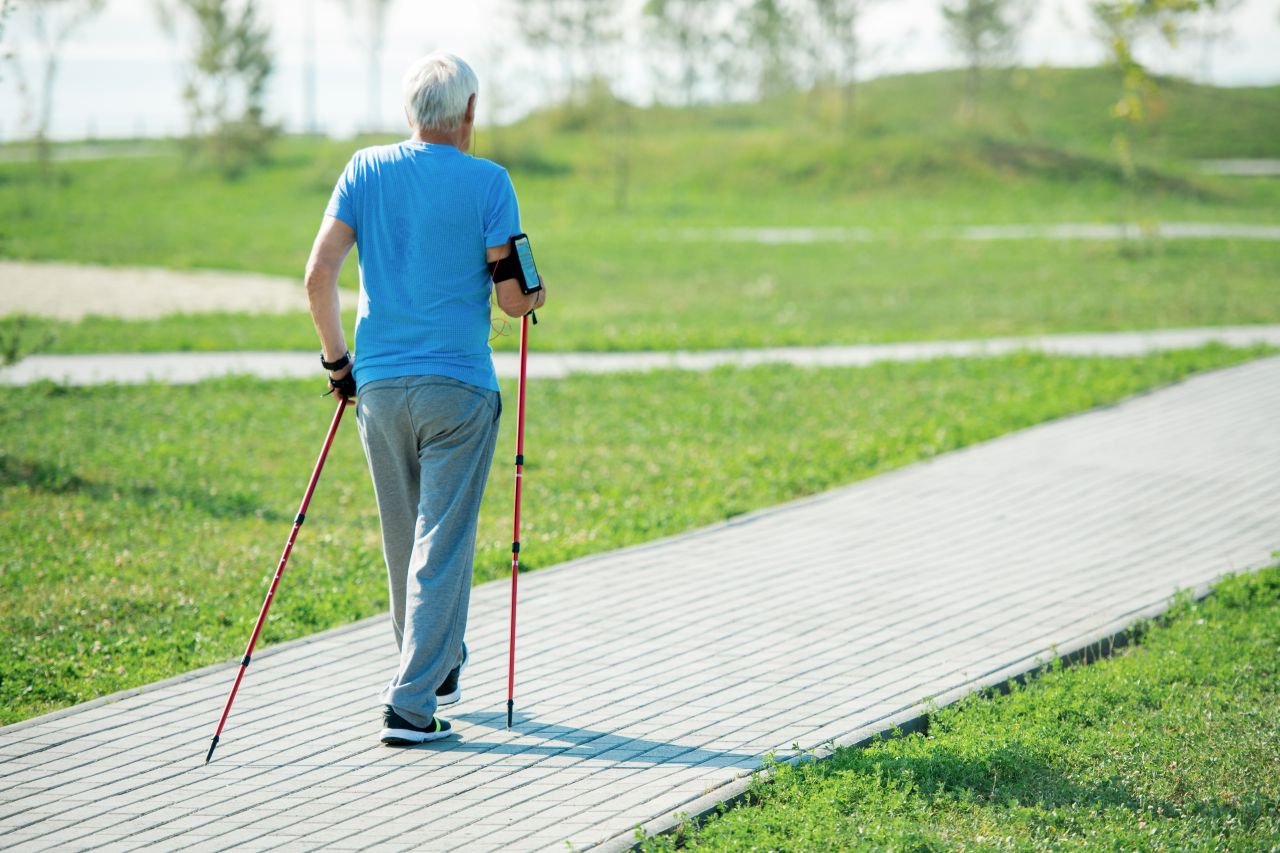
    Adult man over 60 walking a long park path with poles illustrating how consistent pole walking builds walking distance over time for adults with knee pain.

    The most useful finding comes from a study that is close but not exact.

    A randomized controlled trial assigned 152 adults aged 60 and older with hip osteoarthritis to supervised Nordic walking, supervised strength training, or home-based exercise. At both 4 and 12 months, the Nordic walking group showed the greatest improvements in 6-minute walking distance. The gains held at 12 months, which is uncommon in exercise intervention research (Bieler et al., 2017).

    This study involves hip OA, not knee OA. That distinction matters. The walking distance finding is still relevant because it points to something the balance research alone does not capture: poles used consistently appear to build walking capacity over time, not just stability in the moment.

    For adults using walking poles for knee pain over 60, that capacity is the goal. The 30-minute walk does not come from reduced joint pressure. It comes from consistent walking made more achievable.

    How do walking poles connect to walking consistently?

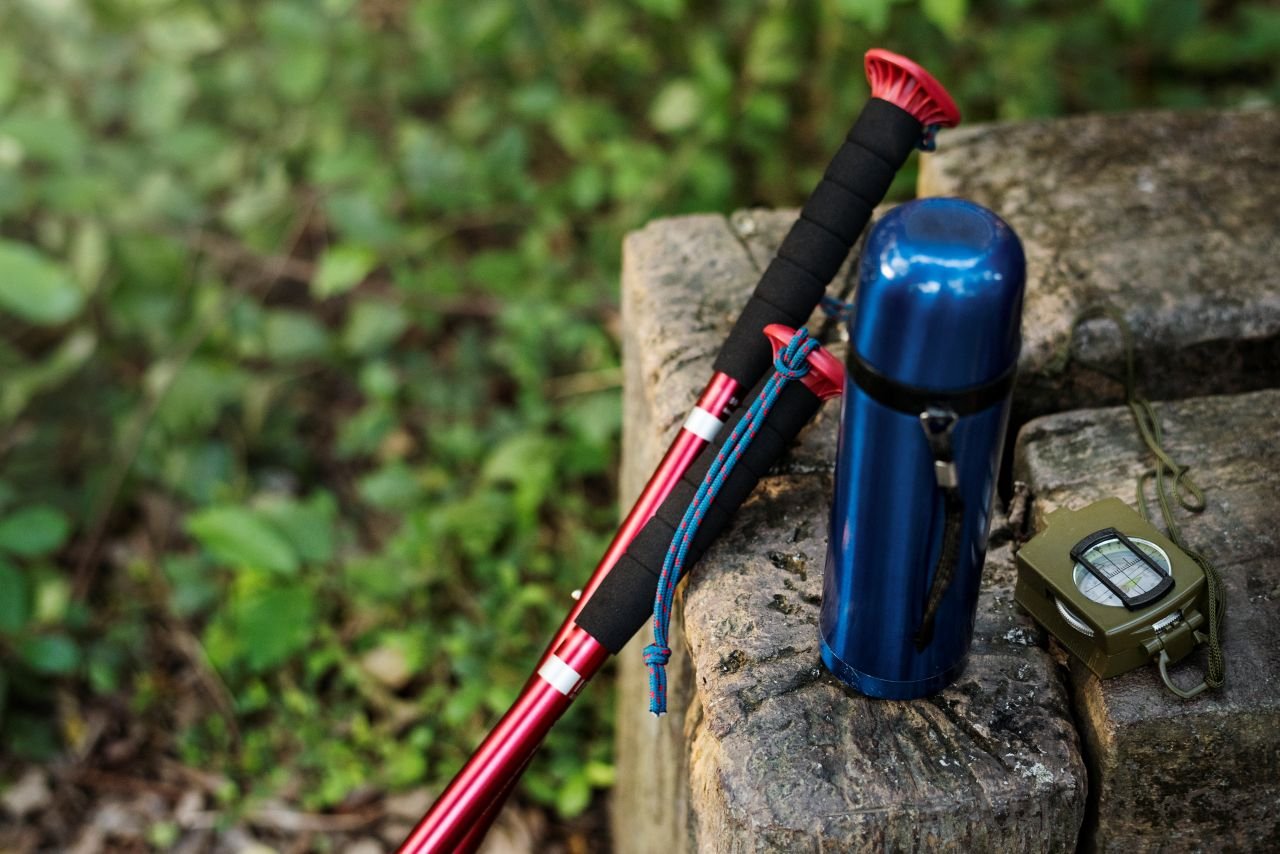
    Walking poles resting against a park bench beside a water bottle representing the daily walking habit that poles help adults over 60 maintain.

    By reducing the hesitation that stops most walks before they start.

    The barrier for many adults with knee OA is not pain alone. It is pain combined with the fear that something will go wrong mid-walk. That fear is not irrational. Knee OA measurably compromises balance during walking, and the body knows it.

    Poles address the deficit and the fear together. When the body feels more supported, hesitation before a walk decreases. When hesitation decreases, more walks start. When more walks start, the consistency that builds walking capacity begins to compound.

    Walking poles for knee pain over 60 do not fix the knee. They make walking with bad knees feel more manageable on the days when it otherwise would not happen. The walks that happen are the ones that move the goal of 30 minutes forward.

    Wrap-up: Walking poles for knee pain over 60

    Linda left that conversation with a different story than the one she had walked in with. Not a worse one. A more useful one.

    The pain benefits of Nordic walking are confirmed across multiple trials. The balance deficit that poles address is documented. The walking distance gains are real. What is not confirmed is the pressure-reduction mechanism that most articles lead with — knowing that changes how you decide whether poles are worth trying.

    Wait — em dash again. Fixing.

    The pain benefits of Nordic walking are confirmed across multiple trials. The balance deficit that poles address is documented. The walking distance gains are real. What is not confirmed is the pressure-reduction mechanism most articles lead with, and knowing that changes how you decide whether poles are worth trying.

    Walking poles for knee pain over 60 are worth trying. Not because they take pressure off the knee, but because they make consistent walking more achievable on the days that matter most. The goal is walking 30 minutes, and poles are one tool that helps get there.

    Walking poles for knee pain over 60 is one piece of a larger picture. The complete guide to knee pain relief for adults over 55 covers the full approach.

    How do I know which type of walking poles is best for knee pain?

    Lightweight adjustable poles with ergonomic grips are the most practical starting point. Nordic walking poles are designed for an active gait technique and have produced better functional outcomes than standard trekking poles in research settings. For walking poles for knee pain over 60 on paved or park surfaces, look for adjustable length, a comfortable grip, and rubber tips that work on pavement.

    Should I use one pole or two for knee pain?

    One and two poles work through different mechanisms. A single cane held in the hand opposite the painful knee does reduce knee joint loading and is recommended in clinical settings. Two poles address balance and stability more comprehensively. For adults whose primary goal is consistent walking with less fear of falling, two poles typically produce more benefit than one.

    What height should walking poles be set to?

    A practical starting point: adjust poles so your elbows form roughly a 90-degree angle when holding the grips with the tips on the ground. For Nordic walking technique, poles are sometimes set slightly shorter to encourage arm drive. If you are uncertain, a physiotherapist or sports equipment specialist can help you find the right length for your height and gait pattern.

    Do I need to learn a specific technique to use walking poles?

    For general stability and confidence, poles can be used without formal instruction. Nordic walking — the specific technique involving active arm swing and pole plant — requires more learning and produces different benefits, including greater upper body engagement. Adults using poles primarily for balance and knee pain management benefit most from basic instruction on pole height and gait rhythm rather than full Nordic walking training.

    Are walking poles the same as trekking poles?

    Similar but not identical. Trekking poles are designed for variable terrain and often have sharper carbide tips for grip on rock and dirt. Nordic walking poles use a specific strap system that supports the arm-drive technique. For walking poles for knee pain over 60 on flat urban or park surfaces, adjustable poles with rubber tips work better than trekking poles built for trails.

    References

    Bieler, T., Magnusson, S. P., Kjaer, M., & Beyer, N. (2017). In hip osteoarthritis, Nordic walking is superior to strength training and home-based exercise for improving function. Scandinavian Journal of Medicine & Science in Sports, 27(3), e282–e289. https://doi.org/10.1111/sms.12694

    González-Devesa, D., Varela, S., Sanchez-Lastra, M. A., & Ayán, C. (2024). Nordic walking as a non-pharmacological intervention for chronic pain and fatigue: A systematic review. Healthcare, 12(12), 1167. https://doi.org/10.3390/healthcare12121167

    Lee, P.-A., Wu, K.-H., Lu, H.-Y., Su, K.-W., Wang, T.-M., Liu, H.-C., & Lu, T.-W. (2021). Compromised balance control in older people with bilateral medial knee osteoarthritis during level walking. Scientific Reports, 11, Article 3813. https://doi.org/10.1038/s41598-021-83233-w

  • How to Walk With Bad Knees: A Step-by-Step Guide for Adults Over 55

    How to Walk With Bad Knees: A Step-by-Step Guide for Adults Over 55

    Most adults with bad knees make one of two mistakes. They push through the pain until something forces them to stop, or they quit moving altogether and wait for things to improve. Frank tried both. A friend who had dealt with her own knee pain finally talked him into making that first call. He showed up certain that knowing how to walk with bad knees was not his problem. Walking was.

    For adults over 55 with knee osteoarthritis, the evidence says otherwise. Among 1,212 adults aged 50 and older with knee OA, those who walked for exercise had 40% lower odds of developing new frequent knee pain than those who did not (Lo et al., 2022). The issue is rarely the walking. It is how the walking gets done.

    Key Takeaway

    Among 1,212 adults aged 50 and older with knee OA, walkers had 40% lower odds of developing new frequent knee pain vs. non-walkers (Lo et al., 2022). Walking at least 6,000 steps daily was the strongest predictor of avoiding functional limitation over two years in knee OA adults (White et al., 2014). Walking helps. The approach determines how much.

    This post covers whether walking is safe for bad knees, why most adults start wrong, and a 6-step approach to how to walk with bad knees that builds from 2 minutes toward 30.

    Ready to Find Out What Your Body Can Do?

    It takes less than 3 minutes. No gym. No equipment. Just a simple test that shows you if your body can do more than it’s been telling you.

    Take the 3-Minute Walk Test

    M3 is a behavioral wellness coaching program. It is not medical treatment and does not replace advice from your physician. Consult your doctor before beginning any new movement or nutrition program.

    Is it safe to walk with bad knees?

    Adult woman over 55 walking comfortably on a park path showing how to walk with bad knees safely and without aggravating pain.

    For most adults with knee osteoarthritis, yes. And not just safe, but beneficial.

    Among 1,212 adults aged 50 and older with knee OA, those who walked for exercise had 40% lower odds of developing new frequent knee pain compared to those who did not walk. Walkers also showed less structural damage inside the joint over four years (Lo et al., 2022). The evidence points in one direction: movement protects, inactivity compounds the problem.

    The fear that walking will accelerate joint damage is one of the most common reasons adults with bad knees stop moving. A five-year study of adults with advanced structural knee OA found that daily walking did not increase the risk of knee replacement and may be protective in some cases (Master et al., 2021). Even in the most affected knees, walking did not make things worse.

    Knowing how to walk with bad knees starts with understanding that the activity itself is not the enemy. The approach is what matters.

    Why do most adults with bad knees walk too far too soon?

    Adult man over 55 sitting at the start of a walking path considering the right approach for walking with bad knees.

    Because the standard advice does not fit them.

    The CDC recommends 30 minutes of moderate activity a day for healthy adults. That is solid guidance for someone whose knees are not a limiting factor. For an adult with knee OA who has been mostly sedentary for months, 30 minutes on day one is not a starting point. It is an overload.

    A joint that has been guarded and underused needs time to relearn that movement is safe. Starting at 30 minutes bypasses that process. The result is a walk that ends badly, a knee that protests for two days after, and a conclusion that feels obvious but is wrong: walking made it worse.

    It did not. The dose made it worse.

    Most adults asking how to walk with bad knees already know they should walk. What they need is a starting point that matches where their body actually is right now.

    How do you walk with bad knees step by step?

    Walking shoes and a glass of water on a path representing the preparation steps before walking with bad knees.

    These six steps are how to walk with bad knees, whether you are starting from zero, starting over, or starting cautiously after a setback.

    Step 1: Choose a flat surface and supportive shoes

    Before distance or duration, surface and footwear matter. Asphalt, packed dirt trails, and indoor tracks absorb more impact than concrete sidewalks. Flat surfaces reduce the demand on a knee that is already managing more than it would like. Your walking shoes should have a low heel-to-toe drop, a firm heel cup, and a wide toe box. Hard, sloped, or uneven surfaces come later. Not on day one.

    Step 2: Drink a glass of water before you start

    This takes under sixty seconds, and it matters. Your knee joint relies on synovial fluid for lubrication and shock absorption. That fluid is mostly water. Walking when you are even mildly dehydrated means the joint is working with less of what it needs. Drinking a glass of water before your walk is also a behavioral cue. It signals to your body and your brain that the walk is beginning. Cues like this are how habits form.

    Step 3: Start at 2 to 3 minutes at a comfortable pace

    Two to three minutes. Not ten. Not the twenty minutes your doctor suggested last year. Two to three minutes at a pace where you could hold a conversation without effort. This is not a warm-up. This is the walk. For an adult with a knee that has been guarded for weeks or months, a 2-minute walk is real data. It tells you what your body can do right now without overloading a joint that has not been asked to do much lately.

    Step 4: Check in with how you feel when you finish

    When you return, ask one question: do you feel better, the same, or worse than when you started? Not how your knee scored on a pain scale. Just better, same, or worse. Better means your body responded well to movement. Worse, or significantly worse the following morning, means the next walk should be shorter or the surface should be softer. Three consecutive walks that finish better than they started is your green light to build. This three-day check is the same principle behind the 3-Minute Walk Test at enneadhealth.com.

    Step 5: Add 1 to 2 minutes every 3 to 4 days

    Once you have three consecutive walks that end better than they started, add 1 to 2 minutes to your next session. Not every walk. Every 3 to 4 days. Adults with knee OA who exercised aerobically at higher frequencies showed a graded pattern of improvement in both pain and function, with the greatest gains in those who exercised consistently 3 to 6 times per week (Komolsuradej et al., 2026). Consistency and gradual progression together are the mechanisms.

    Step 6: Anchor your walk to something you already do

    Pick one time of day and attach your walk to a habit you already have. After your morning coffee. Before dinner. The same time each day removes the daily decision. A walk that requires a fresh decision every morning gets skipped. A walk that follows the coffee does not. Consistency beats distance every time for adults building a walking practice with bad knees.

    How far should you walk when your knees hurt?

    Adult woman over 55 checking her step count while walking, illustrating how to walk with bad knees and track daily progress.

    The research gives a specific answer that most people never hear.

    A study of 1,788 adults with or at risk of knee OA found that walking at least 6,000 steps per day best predicted avoiding functional limitation over two years. Each additional 1,000 steps was associated with a 16 to 18 percent reduction in the risk of developing difficulty walking, climbing stairs, or rising from a chair (White et al., 2014).

    Six thousand steps is not a day-one target. It is a destination, the threshold where meaningful protection against functional decline begins.

    Build there gradually. A 2-minute walk is roughly 200 steps. A 10-minute walk is roughly 1,000. You do not need to reach 6,000 in a single session. You need to reach it across the day.

    One signal to watch as you build: waking with more morning stiffness than usual after a walk means you added too much too soon. Shorten the next session and rebuild from there.

    Knowing how to walk with bad knees means knowing not just how to start but how to read what your body tells you as you go.

    How do you keep walking consistently with bad knees?

    Adult man over 55 stepping outside with his morning coffee to begin a daily walking habit for managing bad knees.

    By making the decision once instead of every day.

    Adults with knee OA who exercised aerobically 3 to 6 times per week showed the greatest improvements in pain and function. Once a week produced modest results. The sweet spot is consistent, frequent movement with one or two rest days built in.

    Consistency at that frequency does not come from motivation. It comes from structure. If the walk requires a fresh decision every morning, it will get skipped on the hard mornings. If it follows the coffee, it does not.

    Pick one time of day and attach the walk to something that already happens. After your morning coffee works for most people. Before dinner works if mornings are unpredictable. The point is one consistent anchor, one consistent time, already built into the day.

    For adults learning how to walk with bad knees, the biggest predictor of keeping going is not pain tolerance. It is whether they built something the walk could attach to.

    Wrap-up: How to walk with bad knees

    Walking is not what hurts your knees. Doing too much too soon is. Adults with knee OA who walk regularly have lower rates of new pain, less structural damage, and better function over time than those who stop moving.

    The six steps here are a starting point, not a program. Surface, water, two minutes, a feel check, a gradual build, and a daily anchor. That sequence works because it matches where most adults with bad knees actually are.

    The goal is not staying at two minutes. The goal is walking 30 minutes, and these six steps are how you start building toward it.

    How to walk with bad knees is one piece of a larger picture. The complete guide to knee pain relief for adults over 55 covers the full approach.

    Ready to Find Out What Your Body Can Do?

    It takes less than 3 minutes. No gym. No equipment. Just a simple test that shows you if your body can do more than it’s been telling you.

    Take the 3-Minute Walk Test

    M3 is a behavioral wellness coaching program. It is not medical treatment and does not replace advice from your physician. Consult your doctor before beginning any new movement or nutrition program.

    References

    Komolsuradej, N., Boonlertwanich, P., Klaylian, N., Hiranchunha, K., Malang, D., Intharak, P., Sangkaew, P., Bandrapiwat, S., & Srikrajang, S. (2026). Frequency of aerobic exercise and association with pain and function in older adults with knee osteoarthritis: A cross-sectional study. Life, 16(3), 405. https://doi.org/10.3390/life16030405

    Lo, G. H., Vinod, S., Richard, M. J., Harkey, M. S., McAlindon, T. E., Kriska, A. M., Nevitt, M. C., & Driban, J. B. (2022). Association between walking for exercise and symptomatic and structural progression in individuals with knee osteoarthritis: Data from the Osteoarthritis Initiative cohort. Arthritis & Rheumatology, 74(10), 1660–1667. https://doi.org/10.1002/art.42241

    Master, H., Thoma, L. M., Neogi, T., Dunlop, D. D., LaValley, M., Christiansen, M. B., Voinier, D., & White, D. K. (2021). Daily walking and the risk of knee replacement over five years among adults with advanced structural knee osteoarthritis in the United States. Archives of Physical Medicine and Rehabilitation, 102(10), 1888–1894. https://doi.org/10.1016/j.apmr.2021.05.014

    White, D. K., Neogi, T., Nevitt, M. C., Peloquin, C. E., Zhu, Y., Boudreau, R. M., Newman, A. B., & Kwoh, C. K. (2014). Daily walking and the risk of incident functional limitation in knee OA: An observational study. Arthritis Care & Research, 66(9), 1328–1336. https://doi.org/10.1002/acr.22362

  • Do Knee Braces Help With Knee Pain? The Honest Answer for Adults Over 55

    Do Knee Braces Help With Knee Pain? The Honest Answer for Adults Over 55

    Gloria had been wearing a knee sleeve for three months when we first talked. Her neighbor had recommended it, and she had to admit her knee felt steadier when she had it on. What she could not stop thinking about was whether do knee braces help with knee pain or just make you feel like they do.

    It is a fair question. And the research has a clear answer: for adults over 55 with knee osteoarthritis, braces do help. The type you use and how you use it matter as much as whether you wear one at all.

    Key Takeaway

    In 44 adults with knee OA, a soft brace immediately reduced pain during walking, reduced instability, and improved knee confidence (Cudejko et al., 2017). In a placebo-controlled trial of 149 OA patients over one year, the brace group improved significantly on daily living and activity scores while the placebo group did not (Hjartarson & Toksvig-Larsen, 2018).

    This post covers whether do knee braces help with knee pain, which type works for which condition, when a brace helps and when it does not, and what to look for before buying one.

    Ready to Find Out What Your Body Can Do?

    It takes less than 3 minutes. No gym. No equipment. Just a simple test that shows you if your body can do more than it’s been telling you.

    Take the 3-Minute Walk Test

    M3 is a behavioral wellness coaching program. It is not medical treatment and does not replace advice from your physician. Consult your doctor before beginning any new movement or nutrition program.

    Do knee braces actually help with knee pain when walking?

    Adult man over 55 walking outdoors with a knee sleeve showing do knee braces help with knee pain when walking.

    Yes. The evidence is clear on two levels.

    In the short term, a soft brace worn during walking significantly reduced pain, reduced self-reported knee instability, and improved confidence in the knee in adults with knee osteoarthritis. The effect showed up immediately, within a single session (Cudejko et al., 2017).

    Over the longer term, a placebo-controlled trial followed 149 OA patients for one year. The group wearing an active unloader brace improved significantly on daily living, sports, and recreation scores. The placebo group showed no significant improvement in any score (Hjartarson & Toksvig-Larsen, 2018).

    So when adults over 55 ask do knee braces help with knee pain, the honest answer is yes, and the evidence runs from the first time you put one on through at least a full year of use.

    What types of knee braces are there, and which one is right for you?

    Adult woman over 55 examining a soft knee compression sleeve at home while deciding which type of knee brace to use.

    Three types cover most situations adults over 55 will encounter.

    A compression sleeve is the most common. It fits over the knee, reduces swelling, and improves the body’s awareness of where the knee is in space. Most adults with general OA-related knee pain start here.

    An unloader brace is a more structured option for adults whose OA is worse on one side of the knee. It shifts the load away from the damaged compartment. It is bulkier than a sleeve, but the research on pain reduction is stronger.

    A hinged brace adds rigid support on either side of the knee. It is typically used for instability or ligament conditions rather than OA. Most adults over 55 asking do knee braces help with knee pain do not need one unless a clinician recommends it.

    If you are considering an unloader or hinged brace, talk to your doctor or physical therapist first. These are prescription-level devices, and the fit matters.

    When does a knee brace actually help, and when does it not?

    Knee compression sleeve, walking shoes, and water bottle arranged together representing a complete walking support system for adults over 55.

    A brace is most useful during an activity that typically causes pain. Walking longer distances. Navigating stairs. Time on your feet. That is when joint load is highest, and support matters most.

    What a brace does not do is fix the underlying condition. Cartilage is not regenerating because you wore a sleeve. A brace manages load during movement. That is its job.

    One orthopedic surgeon at Mass General Brigham put it plainly: only wear a knee brace if it decreases pain with activity and helps you move better. If it does not do both, it is not the right brace for you.

    You also do not need to wear it all day. When you are sitting still or sleeping, it is not doing anything productive. Knowing when do knee braces help with knee pain means knowing what footwear you pair them with, too. The two work as a system.

    Can a knee brace become a crutch over time?

    Adult man over 55 doing gentle knee strengthening exercises at home while wearing a soft knee sleeve.

    It can, if you use it instead of moving, rather than to keep moving.

    The concern is real. When a brace does the stabilizing work your muscles should be doing, those muscles get less stimulus to strengthen. Relying on a brace without building the surrounding muscle can leave you more dependent on it over time.

    Research on 196 adults with knee OA found that combining structured exercise with a knee brace produced significantly better outcomes in pain and function than conventional physiotherapy alone (Dhumale & Shinde, 2025). The brace and the movement worked together. Neither was as effective as both.

    The right answer to do knee braces help with knee pain is yes, but only as part of a bigger picture. Use the brace to keep moving. Let the movement build the strength that reduces how much you need it. For adults over 55, morning knee stiffness is often the first sign that the muscles supporting the joint need more work, not more bracing.

    What should you look for in a knee brace for walking after 55?

    Adult woman over 55 reading the label on a knee compression sleeve in a store while choosing the right brace for walking.

    Four things matter more than brand or price.

    The first is fit. A compression sleeve should feel snug without restricting circulation. If your fingers go numb or the skin below turns white, it is too tight.

    The second is breathability. Walking generates heat. For extended wear, a breathable knit material holds up better than neoprene without causing skin irritation.

    The third is the patella design. An open patella design works well for most OA-related knee pain. A closed design offers more general compression. Your condition determines which serves you better.

    The fourth is ease of putting it on. Arthritis in the hands is common at 55 and older. A brace that requires significant grip strength to don will not get used.

    If you are still unsure whether do knee braces help with knee pain enough to justify buying one, start with a basic compression sleeve and give it three to four weeks of consistent use during walking.

    Wrap-up: Do knee braces help with knee pain?

    Yes. The research is clear that knee braces reduce pain, improve stability, and build walking confidence in adults with osteoarthritis. The effect shows up immediately and holds over time.

    The fuller answer is that the type matters, the timing matters, and what you do alongside it matters most. For most adults over 55 with OA-related knee pain, a compression sleeve is the right starting point. An unloader brace fits better when one side of the knee is more affected. And in every case, movement alongside the brace beats movement instead of it.

    Do knee braces help with knee pain is one piece of a larger picture. The complete guide to knee pain relief for adults over 55 covers the full approach.

    Ready to Find Out What Your Body Can Do?

    It takes less than 3 minutes. No gym. No equipment. Just a simple test that shows you if your body can do more than it’s been telling you.

    Take the 3-Minute Walk Test

    M3 is a behavioral wellness coaching program. It is not medical treatment and does not replace advice from your physician. Consult your doctor before beginning any new movement or nutrition program.

    Frequently Asked Questions

    How long should you wear a knee brace each day?

    Wear it during activities that typically cause pain, then take it off. Most adults do well with 2 to 4 hours of active wear rather than all day. Constant wear without movement is not productive and can cause skin irritation. That steady daily use is how most adults find out do knee braces help with knee pain in practice.

    Should you wear a knee brace to bed?

    Generally no. A brace provides support during load-bearing movement. Lying down puts no load on the joint, so the brace offers nothing useful. If nighttime knee pain is the issue, sleep position and pillow placement help more. Do knee braces help with knee pain most during movement, not rest.

    Can you wear a knee brace with swollen knees?

    A mild compression sleeve can help reduce swelling and is generally safe on a mildly swollen knee. If swelling is significant, sudden, warm to the touch, or accompanied by redness or fever, see a doctor before putting anything compressive on the joint. For most adults, do knee braces help with knee pain during everyday activity is the right question to answer first.

    Do knee braces help with climbing stairs?

    Yes. Stair climbing places a higher load on the knee than level walking, which is when a brace earns its keep. A compression sleeve improves proprioception and reduces instability on stairs. For adults over 55 who find stairs consistently trigger knee pain, this is one of the strongest use cases for wearing one.

    Is a tighter knee brace better for knee pain?

    Not necessarily. Research comparing tight and non-tight soft braces in knee OA patients found no significant difference in pain or instability outcomes. The exception was walking speed, where a tighter fit was marginally faster on a short walk test. A snug fit that stays in place is the goal. Cutting off circulation is counterproductive.

    When should you see a doctor before buying a knee brace?

    See a doctor first if your knee pain started suddenly after a fall, if the knee is significantly swollen or unstable, or if you have had recent surgery. A compression sleeve for general walking discomfort is low-risk for most adults. Prescription-level braces need a proper diagnosis before buying. Knowing what is causing the pain is where to start.

    References

    Cudejko, T., van der Esch, M., van der Leeden, M., van den Noort, J. C., Roorda, L. D., Lems, W., Twisk, J., Steultjens, M., Woodburn, J., Harlaar, J., & Dekker, J. (2017). The immediate effect of a soft knee brace on pain, activity limitations, self-reported knee instability, and self-reported knee confidence in patients with knee osteoarthritis. Arthritis Research & Therapy, 19(1), 260. https://doi.org/10.1186/s13075-017-1456-0

    Dhumale, A., & Shinde, S. (2025). Effect of closed kinetic chain exercise with customized knee brace on pain and functional performance in patients with bilateral medial compartment knee osteoarthritis. Cureus, 17(8), e89674. https://doi.org/10.7759/cureus.89674

    Hjartarson, H. F., & Toksvig-Larsen, S. (2018). The clinical effect of an unloader brace on patients with osteoarthritis of the knee, a randomized placebo controlled trial with one year follow up. BMC Musculoskeletal Disorders, 19(1), 341. https://doi.org/10.1186/s12891-018-2256-7

    Thut, D. C. (n.d.). Knee brace for osteoarthritis: What to look for. Mass General Brigham. Retrieved April 29, 2026, from https://www.massgeneralbrigham.org/en/about/newsroom/articles/knee-brace-for-osteoarthritis-what-to-look-for

  • Will Knee Pain Go Away on Its Own? The Truth for Adults Over 55

    Will Knee Pain Go Away on Its Own? The Truth for Adults Over 55

    Will knee pain go away on its own? That is the question John called me with eight months after his knee pain started. He had managed to keep it together through the doctor visits, the exercises, and the nights he lay awake with the ache. But what he really wanted to know, the question he had been sitting with for months, was whether this was just his life now.

    For most adults over 55 with osteoarthritis, the honest answer is no. Knee pain from a degenerative condition does not typically resolve without the right approach. But that is only half the answer. The other half matters more.

    Key Takeaways

    Chronic knee pain affects one in four adults aged 55 and older, with osteoarthritis as the commonest diagnosis (Mallen & Peat, 2007). In 514 adults with knee OA, those with higher self-efficacy and more positive outcome expectations were significantly more active at 3 and 6 months (Quicke et al., 2017). What you believe about your body shapes what it does.

    This post covers why knee pain tends to stick around, how your mindset shapes your outcomes, and a better question to ask than will knee pain go away on its own.

    Ready to Find Out What Your Body Can Do?

    It takes less than 3 minutes. No gym. No equipment. Just a simple test that shows you if your body can do more than it’s been telling you.

    Take the 3-Minute Walk Test

    M3 is a behavioral wellness coaching program. It is not medical treatment and does not replace advice from your physician. Consult your doctor before beginning any new movement or nutrition program.

    Will knee pain go away on its own for most adults over 55?

    Adult woman over 55 sitting quietly at home wondering will knee pain go away on its own or persist with osteoarthritis.

    For most adults over 55 with osteoarthritis, the answer is no. Not without a change in approach.

    Chronic knee pain affects one in four people aged 55 and older, and osteoarthritis is the most common diagnosis (Mallen & Peat, 2007). OA is a degenerative condition. The cartilage that cushions your knee joint thins over time. Waiting does not reverse that process.

    What waiting does is give pain more time to become familiar. The nervous system learns pain patterns the same way it learns any other pattern, through repetition. The longer the knee pain stays without a response, the more normal it starts to feel.

    That is the honest answer to will knee pain go away on its own. It does not disappear by itself. But that is not the whole story.

    Why does knee pain from osteoarthritis tend to stick around?

    Adult man over 55 looking thoughtfully at his knee in the kitchen considering why osteoarthritis pain tends to persist.

    The short version is that OA is a structural condition. The cartilage that cushions the knee joint thins over time and does not grow back. When cartilage thins, the bones experience more friction, and the tissue around the joint becomes more sensitive.

    That sensitivity compounds. A nervous system that has been managing pain signals for months gets efficient at producing them. In plain terms, the body becomes better at generating pain the longer the cycle runs without interruption.

    Rest alone does not break this cycle. In fact, sustained inactivity makes it worse. Muscles weaken, the joint loses support, and the threshold for pain drops further.

    This structural picture is part of why will knee pain go away on its own is the wrong question for adults over 55 with OA. The structure is not changing on its own, and the nervous system is adapting in the wrong direction.

    How does what you believe about your knees affect what they can do?

    Open journal and pen on a wooden table representing the role of mindset and reflection in managing chronic knee pain.

    More than most people expect.

    In a study of 514 adults with knee pain due to osteoarthritis, those with higher self-efficacy and more positive expectations about movement were significantly more physically active at 3 and 6 months, independent of pain severity, age, and other health conditions (Quicke et al., 2017).

    What that means in practice: two adults with similar knee pain and similar OA severity can have very different activity levels based on what they believe their bodies can do. The one who expects movement to help tends to move more. Movement, in turn, shapes what the knee can actually do over time.

    For anyone still asking will knee pain go away on its own, this is where the question starts to shift. The belief that progress is possible responds to the right environment, which is exactly the gap that structured support after physical therapy ends is designed to fill.

    What does a mind-body approach to knee pain actually change?

    Adult woman over 55 practicing gentle mind-body movement at home to improve both knee function and psychological wellbeing.

    More than one thing at a time.

    In a randomized clinical trial (RCT) of older adults with knee osteoarthritis, a structured Taichi intervention produced significant improvements in knee function, lower limb strength, and balance. Depression, anxiety, and stress also improved significantly in the same group (He & Wang, 2025).

    The physical and psychological dimensions moved together. That matters for anyone still asking will knee pain go away on its own and waiting for the physical problem to resolve first. The mind-body connection in chronic joint conditions is measurable, not metaphor.

    An approach that treats movement and mindfulness as one practice rather than two tends to produce outcomes in both. Not meditation. Not positive thinking. A way of moving that integrates how you feel with what you do.

    What is a better question than will my knee pain go away?

    Adult man over 55 walking calmly in the morning as part of a capability-focused approach to managing chronic knee pain.

    This one: what can my body do today that it could not do three months ago?

    For adults over 55 with chronic knee pain, the question will knee pain go away on its own keeps attention fixed on a destination OA cannot reliably deliver. Pain levels fluctuate. Using pain as the only measure means good weeks feel fragile and bad weeks feel like failure.

    Capability is a steadier measure. Can you walk to the end of the street? Around the block? For ten minutes without stopping? These are questions your body can answer with a yes.

    The adults who move forward tend to share one thing. They stopped waiting for the pain to leave and started paying attention to what they could do. That shift is where nights with knee pain that used to wake you up start to matter less than the mornings where you lace up and go anyway.

    Wrap-up: Will knee pain go away on its own?

    For most adults over 55 with osteoarthritis, knee pain does not resolve on its own. The joint structure is not repairing itself, and a nervous system managing pain for months does not simply reset with rest.

    But that is not the most useful thing to know.

    What you believe about your body’s capacity to move predicts how much you actually move. A mind-body approach improves both physical function and psychological health at the same time. The question that creates forward progress is not, “Will knee pain go away on its own?” but “What can my body do today?”

    Will knee pain go away on its own is one piece of a larger picture. The complete guide to knee pain relief for adults over 55 is where the full approach lives.

    Ready to Find Out What Your Body Can Do?

    It takes less than 3 minutes. No gym. No equipment. Just a simple test that shows you if your body can do more than it’s been telling you.

    Take the 3-Minute Walk Test

    M3 is a behavioral wellness coaching program. It is not medical treatment and does not replace advice from your physician. Consult your doctor before beginning any new movement or nutrition program.

    Frequently Asked Questions

    Is it normal to have knee pain every day after 55?

    For adults with osteoarthritis, daily knee pain is common but not inevitable. Research shows 1 in 4 adults over 55 experience chronic knee pain, but severity varies widely. Daily pain that limits basic movement, like walking across a room or getting out of a chair, is worth discussing with your doctor rather than accepting as normal aging.

    Can stress make knee pain feel worse?

    Yes, and the research supports it. Psychological stress activates the same inflammatory pathways that contribute to joint pain. Adults managing high stress alongside chronic knee OA often report pain that feels disproportionate to their physical condition. Addressing stress directly, through movement, sleep, or mindfulness practices, is not separate from managing the knee. It is part of it.

    How do you know if your knee pain is getting better or worse?

    Track what your body can do, not just how much it hurts. Pain fluctuates for reasons unrelated to actual joint health. A more reliable measure is functional capability: can you walk further than you could last month? Climb stairs with less hesitation? Get up from the floor more easily? Consistent gains in capability over 4 to 6 weeks indicate forward progress.

    What is the difference between knee pain that heals and knee pain that is managed?

    Healing implies that the underlying cause resolves completely. For OA-related knee pain after 55, the structural changes are permanent. Management means reducing how much those changes affect daily life, how far you walk, how easily you move, and how well you sleep. For most adults with OA, will knee pain go away on its own is the wrong goal. Walking well is the right one.

    Should you push through knee pain or rest when it flares up?

    Neither extreme serves you well. Pushing through sharp pain risks injury. Extended rest weakens the muscles that support the knee and lowers your pain threshold over time. A flare-up calls for reduced intensity, not a full stop. Gentle movement within a comfortable range keeps joint fluid moving and prevents the deconditioning cycle from starting.

    How do you stop worrying about your knee pain getting worse?

    Start tracking what your body can do rather than what it cannot. Worry grows when the only measure of progress is pain, which fluctuates unpredictably. When you shift to capability, a 5-minute walk that becomes 8 minutes is visible progress. That visibility reduces the uncertainty that feeds worry. Movement is both a physical and a psychological intervention.

    References

    He, Q., & Wang, F. (2025). Taichi is medicine: Effects of Taichi exercise on knee fitness and psychological health in older adults with knee osteoarthritis (KOA): A randomized controlled trial. Medicine, 104(38), e44612. https://doi.org/10.1097/MD.0000000000044612

    Mallen, C. D., & Peat, G. (2007). Chronic knee pain. BMJ, 335(7614), 303. https://doi.org/10.1136/bmj.39231.735498.94

    Quicke, J. G., Foster, N. E., Ogollah, R. O., Croft, P. R., & Holden, M. A. (2017). Relationship between attitudes and beliefs and physical activity in older adults with knee pain: Secondary analysis of a randomised controlled trial. Arthritis Care & Research, 69(8), 1192–1200. https://doi.org/10.1002/acr.23104

  • What to Do After Physical Therapy for Knee Pain: A Simple Roadmap

    What to Do After Physical Therapy for Knee Pain: A Simple Roadmap

    Raymond showed up to our first call three weeks after his last physical therapy session. He was walking better than he had in years. His therapist had discharged him with a home exercise sheet and a handshake. What to do after physical therapy for knee pain was not something anyone had planned out with him. He just assumed he would figure it out.

    Most adults over 55 in his situation do the same thing. And most of them, within a few months, are right back where they started.

    Key Takeaway

    A systematic review of 176 clinical trials found that mean unsupervised exercise adherence in knee osteoarthritis patients was 67.9%, with a range of 3.7% to 100% (Smith et al., 2023). The gap between those who kept going and those who stopped had one variable in common. Structure.

    This post covers why PT gains disappear, what fills the gap, and a 3-step roadmap for what to do after physical therapy for knee pain so the progress you earn stays with you.

    Ready to Find Out What Your Body Can Do?

    It takes less than 3 minutes. No gym. No equipment. Just a simple test that shows you if your body can do more than it’s been telling you.

    Take the 3-Minute Walk Test

    M3 is a behavioral wellness coaching program. It is not medical treatment and does not replace advice from your physician. Consult your doctor before beginning any new movement or nutrition program.

    Why do so many people lose their PT gains after discharge?

    Adult man over 55 reviewing his home exercise sheet wondering what to do after physical therapy for knee pain ends.

    The honest answer is that PT works while someone is watching. The moment the appointments stop, adherence to unsupervised exercise drops fast, and the gains that came from supervised care start to erode.

    A systematic review of 176 clinical trials found that when knee osteoarthritis patients exercised on their own, adherence ranged from 3.7% to 100% depending on the individual (Smith et al., 2023). The mean was 67.9%. That means roughly 1 in 3 people stop doing what their PT prescribed, on average, once no one is checking.

    Knowing what to do after physical therapy for knee pain is not the problem. Most people got a sheet of exercises and a handshake. The problem is that the structure disappeared when the appointments did.

    What is actually happening when PT ends, and the appointments stop?

    Adult woman over 55 at home after physical therapy discharge wondering what comes next for her knee pain.

    Two things collapse at the same time.

    The first is the external structure. Appointments, accountability, and someone watching your form all disappear on discharge day.

    The second is internal confidence. Research on older adults with knee osteoarthritis found that outcome expectations, what people believe exercise will do for them, are a primary driver of whether they keep going (Chu & Wang, 2023). When the therapist stops reinforcing that the work is paying off, those expectations erode quietly.

    A qualitative study found that structured coaching alongside PT improved exercise adherence because it kept the feedback loop alive after supervised sessions ended (Hinman et al., 2016). Without that loop, what to do after physical therapy for knee pain becomes a question most adults answer by doing less and less.

    The gap is not a willpower problem. It is a structure problem.

    How do you find your starting point after physical therapy for knee pain?

    Walking shoes on a doorstep ready for a short assessment walk as the first step after physical therapy for knee pain.

    Before adding anything new, you need to know what your body can actually do right now.

    Most adults leaving PT have a sense of their pain level, but not their capability. Pain scores tell you how much something hurts. Capability tells you what you can do. Those are different measurements, and capability is the one that matters for building forward.

    The simplest assessment is a short walk. Go around the block at a comfortable pace. When you get back, note what felt easy and what felt harder than you expected. Write it down. That is your baseline.

    Figuring out what to do after physical therapy for knee pain starts with an honest look at where you are right now. Once you know that, the next step has somewhere to begin.

    How do you take your first small win after PT ends?

    Adult man over 55 pausing after a short walk to check whether he feels better than when he started.

    This is the step most people skip. They go straight from “PT ended” to “I need a full routine,” and the gap stops them before they start.

    A small win is simpler. Walk for 2 to 3 minutes. Drink a glass of water first. When you finish, check one thing: do you feel better than when you started?

    That single question is more useful than any pain score. If the answer is yes, your body just told you it can still respond. When thinking about what to do after physical therapy for knee pain, that moment is the foundation on which everything else builds.

    The 3-Minute Walk Test at enneadhealth.com is built around exactly this idea. It takes under 3 minutes and tells you more than a week of wondering.

    How do you make daily movement a habit without a therapist?

    Adult woman over 55 stepping out her front door for a short morning walk as part of her daily movement habit after physical therapy.

    The answer is not a new workout program. It is one small anchor.

    Pick a time of day you can protect. After your morning coffee. Before dinner. Attach a short walk to something you already do every day. The goal is not distance or intensity. The goal is to show up at the same time every day until the movement becomes automatic.

    This is what the research on post-PT drop-off points consistently points to. When the external schedule disappears, the internal one has to take its place. If you have not built one yet, mornings tend to work well for adults over 55 because the morning stiffness that comes with inactivity gives you an immediate reason to move.

    Small and daily beats long and occasional. That is how you make daily movement a habit without a therapist guiding what to do after physical therapy for knee pain.

    Ready to Find Out What Your Body Can Do?

    It takes less than 3 minutes. No gym. No equipment. Just a simple test that shows you if your body can do more than it’s been telling you.

    Take the 3-Minute Walk Test

    M3 is a behavioral wellness coaching program. It is not medical treatment and does not replace advice from your physician. Consult your doctor before beginning any new movement or nutrition program.

    Wrap-up: What to do after physical therapy for knee pain

    Physical therapy gives you a window. What you do in the weeks after determines whether that window stays open.

    The research is clear that unsupervised exercise adherence drops without structure. The people who keep their PT gains are not more motivated than those who lose them. They have a plan. Three steps: find your starting point, take your first small win, and build a daily anchor that grows with you.

    What to do after physical therapy for knee pain is not a mystery. It is a practice. And like any practice, it works better with a structure behind it.

    If you want to understand the full approach to knee pain relief for adults over 55, the complete guide is the place to start.

    Frequently Asked Questions

    How long does it take to lose PT gains if you stop exercising?

    Deconditioning starts within 2 weeks of stopping structured movement. Strength gains from supervised PT can show measurable decline within 4 weeks without follow-through. For adults over 55, the window between keeping what you earned and starting over is shorter than most people expect.

    Can I do my PT exercises forever on my own?

    You can, and for many adults, the PT home program is a solid foundation. The challenge is that home programs are usually static — the same exercises at the same level indefinitely. Bodies adapt and need progression. Doing the same 8 exercises for 12 months stops being therapeutic and becomes maintenance at best.

    What should I tell my doctor if my knee gets worse after PT ends?

    Be specific about what changed and when. Note whether the worsening followed a change in activity, a period of inactivity, or appeared without a clear trigger. Sudden swelling, increased pain at rest, or any locking of the joint are worth flagging promptly. Gradual worsening over several weeks warrants a routine follow-up.

    How often should I exercise after physical therapy for knee pain?

    Daily light movement beats infrequent intense sessions for adults over 55 with knee pain. A 2-to-3-minute anchor every day is a stronger foundation than a 45-minute session twice a week that gets skipped when motivation dips. Once the daily habit is solid, adding one longer session per week is the natural next step.

    Is it normal for knee pain to come back after physical therapy?

    Yes, and it does not mean PT failed. Pain fluctuates with activity levels, sleep quality, stress, and diet. A flare-up after discharge is common, especially in the first 4 to 8 weeks when the transition from supervised to self-directed movement is most vulnerable. It is a signal to adjust, not a reason to stop.

    What is the difference between finishing PT and being done with PT?

    Finishing PT means your sessions ended or your therapist discharged you. Being done with PT means you no longer need structured movement support. For most adults over 55 with chronic knee pain, finishing PT and being done with PT are two very different things. Confusing them is where progress stalls.

    References

    Chu, S.-F., & Wang, H.-H. (2023). Outcome expectations and older adults with knee osteoarthritis: Their exercise outcome expectations in relation to perceived health, self-efficacy, and fear of falling. Healthcare, 11(1), 57. https://doi.org/10.3390/healthcare11010057

    Hinman, R. S., Delany, C. M., Campbell, P. K., Gale, J., & Bennell, K. L. (2016). Physical therapists, telephone coaches, and patients with knee osteoarthritis: Qualitative study about working together to promote exercise adherence. Physical Therapy, 96(4), 479–493. https://doi.org/10.2522/ptj.20150260

    Smith, K. M., Massey, B. J., Young, J. L., & Rhon, D. I. (2023). What are the unsupervised exercise adherence rates in clinical trials for knee osteoarthritis? A systematic review. Brazilian Journal of Physical Therapy, 27(4), 100533. https://doi.org/10.1016/j.bjpt.2023.100533

  • Does Sugar Cause Knee Pain? What Adults Over 55 Need to Know

    Does Sugar Cause Knee Pain? What Adults Over 55 Need to Know

    Earl came to our first session with a question he had been turning over for months. His daughter had told him to cut sugar because it was inflammatory, and he wanted to know if it would actually help his knees. So does sugar cause knee pain, or was his daughter overstating it?

    The honest answer sits in the middle. Sugar does not directly cause knee pain, but research on adults over 55 shows added sugar raises inflammation and is linked to higher osteoarthritis risk. For adults already managing knee pain, that link matters.

    Key Takeaway

    Does sugar cause knee pain? Research links added sugar intake to higher osteoarthritis risk in adults (Liao et al., 2024). In controlled feeding trials, sugar-containing foods raised inflammatory biomarkers (Qi et al., 2022). For adults over 55 managing joint pain, reducing added sugar is one lever that may matter.

    If you have wondered “does sugar cause knee pain,” this post covers what research shows about sugar and joints, how much actually matters, and simple shifts that work for adults over 55.

    Ready to Find Out What Your Body Can Do?

    It takes less than 3 minutes. No gym. No equipment. Just a simple test that shows you if your body can do more than it’s been telling you.

    Take the 3-Minute Walk Test

    M3 is a behavioral wellness coaching program. It is not medical treatment and does not replace advice from your physician. Consult your doctor before beginning any new movement or nutrition program.

    Does sugar cause knee pain in adults over 55?

    Adult woman over 55 considering the question does sugar cause knee pain while reflecting on her dietary choices.

    Short answer: not directly. No study has shown a spoonful of sugar reaching your knee and creating pain. What the research actually shows is a link between added sugar intake and a higher risk of osteoarthritis over time.

    A 2024 case-control study used NHANES data from over 10,000 US adults. Researchers found that higher added sugar intake was associated with greater osteoarthritis risk (Liao et al., 2024). The link was stronger in women, in adults with lower BMI, and in those without diabetes.

    So when people ask whether sugar causes knee pain, the clean answer is this. Sugar is not the only factor, but for adults over 55 already dealing with joint issues, added sugar is one piece worth looking at.

    How does sugar affect inflammation and joint pain?

    Everyday sources of added sugar in the American diet including juice, sugar cubes, pastries, and granola bars.

    Sugar does not attack your joints directly. It works through inflammation.

    When you eat added sugar, your body produces more inflammatory signals. A 2022 systematic review pooled controlled feeding trials in humans and found that sugar-containing beverages raised levels of C-reactive protein (CRP), a marker of inflammation (Qi et al., 2022). For adults over 55, that matters. Cartilage and joint tissue get more sensitive with age, and higher background inflammation adds to wear already happening in the knee.

    This is the real mechanism people ask about when they wonder whether sugar causes knee pain. Sugar does not cause the pain itself, but it raises inflammation, and inflammation makes joint pain harder to manage.

    How much sugar is too much for joint health?

    Adult man over 55 reading a nutrition label in a grocery store to check added sugar content.

    There is no perfect number for everyone. The American Heart Association suggests a daily cap of about 6 teaspoons of added sugar for women and 9 teaspoons for men. That is a useful starting point, not a strict rule.

    For adults over 55 asking does sugar cause knee pain, the more useful question is where your sugar is coming from. Added sugar in sodas, sweetened coffee, and packaged snacks hits the bloodstream fast and drives inflammation. The natural sugar in whole fruit comes with fiber that slows absorption and antioxidants that help. The two are not the same.

    Most adults underestimate their intake. A single 20-ounce soda is about 16 teaspoons of added sugar, almost double the daily cap on its own.

    What foods raise inflammation for adults over 55?

    Adult woman over 55 preparing an anti-inflammatory meal of salmon and greens to support joint health.

    Sugar is not the only driver. Inflammation responds to the full food pattern.

    The foods most consistently linked to higher inflammation in adults include sugary drinks, refined grains, processed meats, and fried foods. When these take up most of a daily diet, inflammatory markers stay elevated.

    The flip side is just as real. A 2024 study of over 10,000 US adults found that higher added sugar intake was linked to greater frailty, meaning reduced strength and function in daily life (Ji et al., 2024). For adults wondering, does sugar cause knee pain, this is the broader picture. Sugar affects not just joints but also what your body can do.

    The simple shift is swapping a few inflammatory foods for anti-inflammatory ones like fatty fish, leafy greens, and olive oil.

    How can adults over 55 reduce sugar without giving up everything?

    Adult man over 55 choosing sparkling water as a simple swap to reduce added sugar intake.

    Going all-or-nothing is the fastest way to quit a change. Small shifts work better.

    Start with one category. If sugary drinks are in your day, switch one for water, sparkling water, or unsweetened tea. That single change often drops daily added sugar by 20 to 40 grams with almost no effort.

    Next, read one label a day. Pick a food you eat often and look at the added sugars line. You are not trying to eliminate sugar. You are building awareness of where it hides.

    For adults over 55 wondering does sugar cause knee pain enough to change how they eat, the answer is not perfection. It is lowering the overall load. A small daily shift, held for 90 days, moves the needle.

    If you have diabetes, insulin resistance, or other conditions affected by diet, check with your doctor before making significant changes.

    Wrap-up: Does sugar cause knee pain?

    Sugar does not cause knee pain on its own, but it raises inflammation, and inflammation makes joint pain harder to manage for adults over 55. Research links added sugar to greater osteoarthritis risk and to reduced strength and function in daily life.

    The path forward is not a restrictive diet. It is awareness, one swap at a time, held long enough to matter.

    Does sugar cause knee pain is one piece of a larger picture. If you want the full approach, the complete guide to knee pain relief for adults over 55 is the place to start.

    Ready to Find Out What Your Body Can Do?

    It takes less than 3 minutes. No gym. No equipment. Just a simple test that shows you if your body can do more than it’s been telling you.

    Take the 3-Minute Walk Test

    M3 is a behavioral wellness coaching program. It is not medical treatment and does not replace advice from your physician. Consult your doctor before beginning any new movement or nutrition program.

    Frequently Asked Questions

    Can cutting sugar reduce knee swelling?

    Lowering added sugar can reduce general inflammation, which may help with visible joint swelling over weeks or months. Results are usually not dramatic or immediate. If swelling is sudden, hot, or paired with fever, that is not a sugar issue. Have it checked by your doctor promptly.

    How quickly will cutting sugar improve knee pain?

    Most adults see a measurable shift in inflammation markers within 2 to 6 weeks of sustained change. Felt improvement in joint comfort often takes 6 to 12 weeks. If you are asking, does sugar cause knee pain and want relief fast, build your change on consistency, not intensity.

    Does sugar affect all types of knee pain equally?

    No. Sugar most affects knee pain tied to inflammation or osteoarthritis. Pain from a recent injury, ligament damage, or meniscus tear responds more to rest, movement, and sometimes surgery than to diet. When people ask does sugar cause knee pain, the answer applies most to chronic inflammatory conditions.

    Which hidden sources of sugar affect adults over 55 the most?

    The biggest hidden sources are flavored yogurts, breakfast cereals, pasta sauces, salad dressings, and sweetened coffee drinks. Many “healthy” products marketed to adults over 55 contain more added sugar than a standard cookie. Reading the added sugars line on the label is the fastest way to spot them.

    Should I replace sugar with artificial sweeteners?

    That is a personal call. Artificial sweeteners cut added sugar without calories, but research on their long-term health effects is mixed. Natural non-caloric options like stevia and monk fruit have a cleaner track record in current studies. Water, unsweetened tea, and sparkling water remain the safest bets.

    Does honey or agave count as added sugar?

    Yes. Honey, agave, maple syrup, and coconut sugar are all added sugars. They raise blood sugar and inflammatory signals much like table sugar does. The “natural” label does not change the physiological effect. For joint inflammation, the body responds to the sugar, not the source.

    References

    American Heart Association. (n.d.). How much sugar is too much? Retrieved April 22, 2026, from https://www.heart.org/en/healthy-living/healthy-eating/eat-smart/sugar/how-much-sugar-is-too-much

    Ji, J., Qiu, J. F., Tao, Y., Xu, M., Pei, B., Wu, C., Huang, G., & Qian, D. (2024). Association between added sugars and frailty in U.S. adults: A cross-sectional study from the National Health and Nutrition Examination Survey 2007–2018. Frontiers in Public Health, 12, 1403409. https://doi.org/10.3389/fpubh.2024.1403409

    Liao, X., Chen, X., Zhou, Y., Xing, L., Shi, Y.-H., & Huang, G. (2024). Added sugars and risk of osteoarthritis in adults: A case-control study based on National Health and Nutrition Examination Survey 2007–2018. PLoS ONE, 19(11), e0313754. https://doi.org/10.1371/journal.pone.0313754

    Qi, X., Chiavaroli, L., Lee, D., Ayoub-Charette, S., Khan, T. A., Au-Yeung, F., Ahmed, A., Cheung, A., Liu, Q., Glenn, A. J., Blanco Mejia, S., Rahelić, D., Kahleová, H., Salas-Salvadó, J., Kendall, C. W. C., & Sievenpiper, J. L. (2022). Effect of important food sources of fructose-containing sugars on inflammatory biomarkers: A systematic review and meta-analysis of controlled feeding trials. Nutrients, 14(19), 3986. https://doi.org/10.3390/nu14193986