
Patricia had been reading about anti-inflammatory eating for months before our first session. She had a notebook full of individual foods, supplements, and ingredients, but no clear picture of how they connected or what belonged in her cart. She was focused on single items when the more useful question was what the whole cart should look like.
In a review of 33 studies with more than 3,000 adults, people eating a Mediterranean-style diet had significantly lower levels of two inflammation markers in their blood, called hs-CRP and IL-6, compared to people eating differently. Both markers are linked to joint pain (Keshani et al., 2025). The grocery list for joint health, the research points to, is not a collection of miracle foods. It is a consistent pattern of what goes in the cart.
Key Takeaways
In a review of 33 studies with 3,476 adults, a Mediterranean-style diet significantly lowered hs-CRP and IL-6, two inflammation markers in the blood (Keshani et al., 2025). Adults with knee OA who ate more omega-3 foods reported less pain and better movement (Stanfar et al., 2024). Across 24 studies, a blood marker called CRP was consistently higher in people who ate more ultra-processed foods (Ciaffi et al., 2025).
This post covers why food affects joint health, what to add to your grocery list for joint health, what to limit, and how your cart connects to daily walking.
Ready to Find Out What Your Body Can Do?
It takes less than 3 minutes. No gym. No equipment. Just a simple test that shows you if your body can do more than it’s been telling you.
M3 is a behavioral wellness coaching program. It is not medical treatment and does not replace advice from your physician. Consult your doctor before beginning any new movement or nutrition program.
Table of Contents
Why does food affect joint health in adults over 55?

Because what you eat every day either turns down the body’s background inflammation or turns it up.
After 55, the body naturally produces more inflammation than it did at younger ages, even when nothing is wrong. Food does not reverse this. But it does influence how high that background level runs from day to day.
In a review of 33 studies with more than 3,000 adults, people eating a Mediterranean-style diet had significantly lower levels of hs-CRP and IL-6, two inflammation markers in the blood. These are the two markers most closely linked to chronic joint discomfort. The effect was not found for every inflammation marker tested (Keshani et al., 2025).
hs-CRP is a marker that picks up the kind of low, slow inflammation that builds quietly with age. This is the level a grocery list for joint health works on, one meal at a time.
The anti-inflammatory foods for knee pain research points to the same food categories every time: fish and plant oils with omega-3, colorful plants, and fiber that keeps the gut healthy.
What goes on the grocery list for joint health?
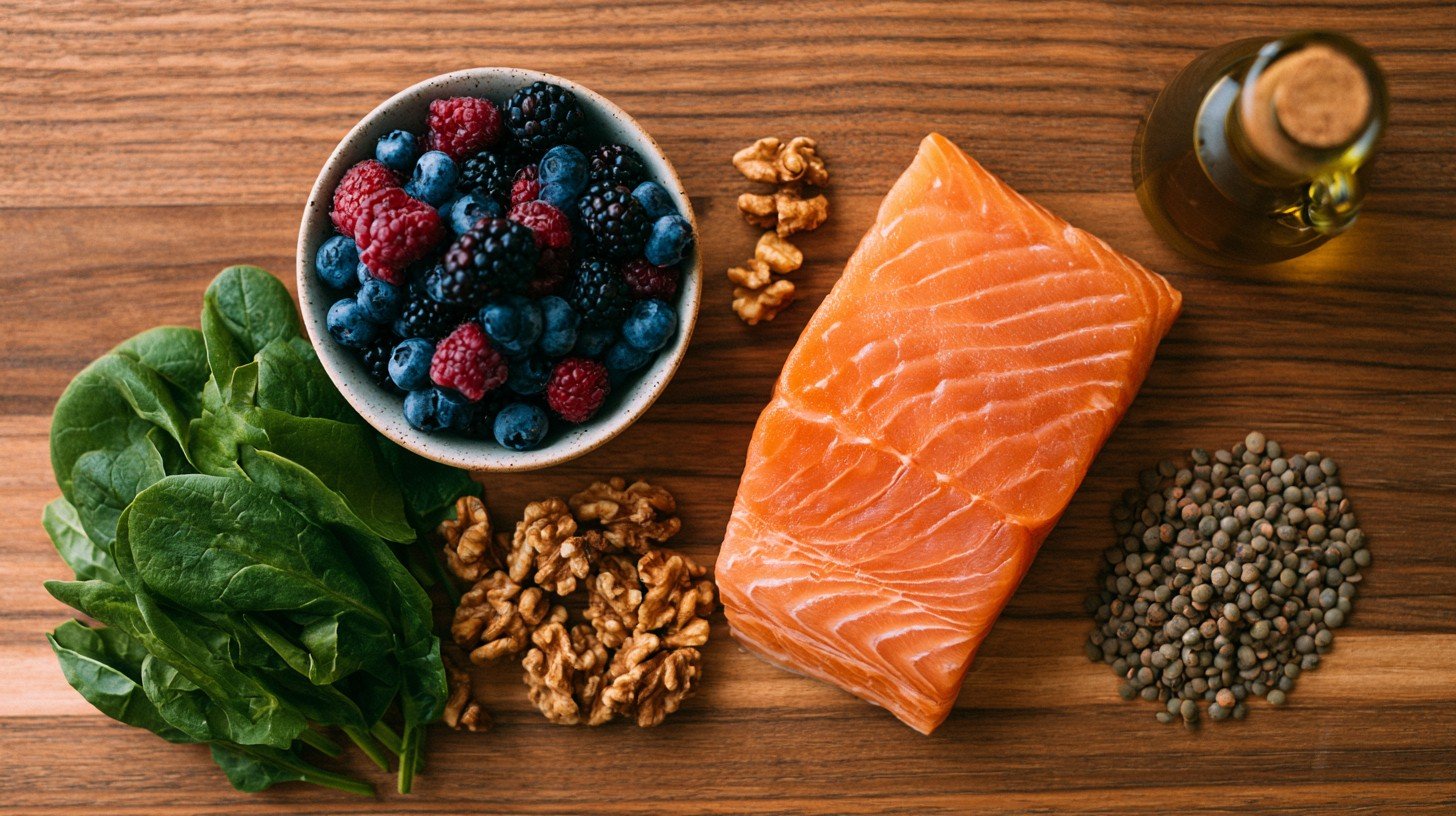
Six categories are organized in the way you move through the store.
Proteins
Fatty fish (salmon, sardines, mackerel) — The best food source of omega-3 fats, which research links to lower inflammation and less joint pain. Aim for two to three servings per week.
Legumes (lentils, chickpeas, black beans) — Plant protein with lots of fiber that helps keep the gut healthy, which in turn helps keep overall inflammation lower. Cheap, shelf-stable, and easy to use across many meals.
Produce
Berries (blueberries, strawberries, raspberries) — Natural compounds in berries have been directly linked to lower levels of joint inflammation in clinical studies. One of the most studied food groups in knee pain research.
Leafy greens (spinach, kale, arugula) — Packed with vitamin K and natural plant compounds that help fight inflammation. These appear in almost every anti-inflammatory eating plan backed by research.
Pantry
Extra virgin olive oil — The main fat in the Mediterranean diet and one of the foods most consistently linked to lower inflammation markers. It contains a natural compound called oleocanthal that fights inflammation in a way similar to how ibuprofen works.
Walnuts and flaxseed — A plant-based source of omega-3 fats. Not as potent as fish, but a useful addition on days when salmon is not on the menu.
For a deeper look at the evidence behind these categories, foods for knee health over 55 covers the research in detail.
Why omega-3-rich foods and berries earn the top of the list

Because these are the two categories with the most specific clinical evidence in knee Osteoarthritis Arthritis (OA) populations.
A systematic review of eight clinical trials found that adults with OA who consumed the highest proportion of omega-3 fatty acids reported the greatest improvements in pain and physical function. Of all dietary variables examined, high omega-3 intake produced the most consistent benefit (Stanfar et al., 2024).
For berries, the research gets more specific. In one study, 17 adults with knee OA who were overweight drank a strawberry beverage daily for 12 weeks. By the end, their joint inflammation markers and pain scores had both dropped significantly compared to a control period (Schell et al., 2017). The group was small, and all participants were overweight, so the results do not apply to everyone. But this is the most direct research connecting a single food to lower knee pain and inflammation.
Both findings point in the same direction as the broader pattern research. A grocery list for joint health anchored by fatty fish, walnuts, and berries follows the most granular clinical evidence in the OA dietary literature.
What to limit on a grocery list for joint health
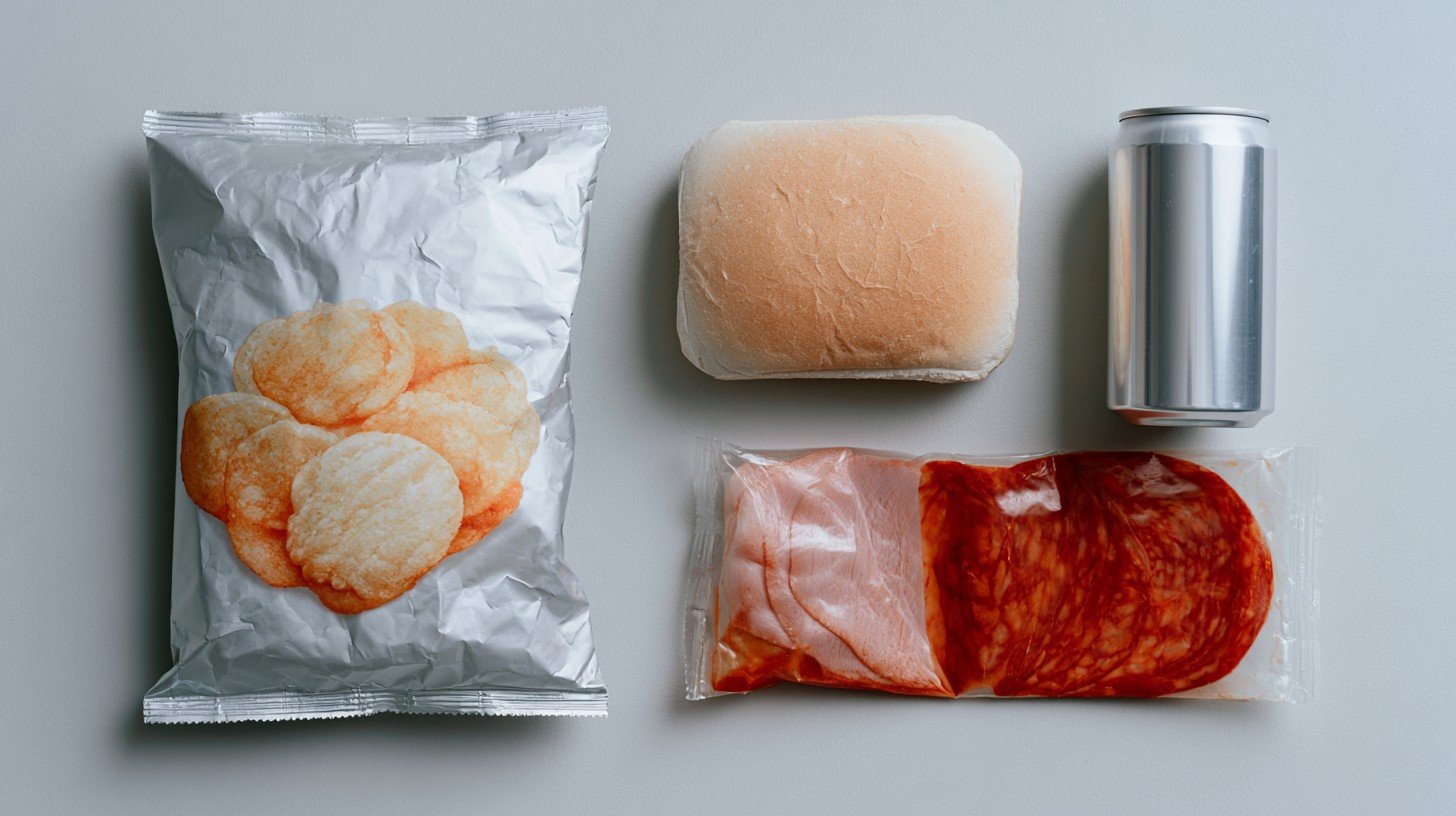
Four categories to cut back on. Not cut out entirely, just cut back.
Ultra-processed packaged snacks (chips, crackers, packaged cookies). In a review of 24 studies, CRP, a blood marker for inflammation, was most consistently elevated in people who ate more ultra-processed foods (Ciaffi et al., 2025). This is the category where reducing intake has the clearest research support.
Refined grains and white bread. These break down into sugar quickly in the body, which can trigger an inflammatory response. Whole grains digest more slowly and have much less of this effect.
Added sugars and sugary drinks. Sugar directly triggers compounds in the body that drive inflammation. Sodas, sweetened coffees, and fruit juices with added sugar are among the most concentrated sources.
Processed meats (deli meat, sausage, bacon). High in saturated fat and compounds formed during processing, both are linked to higher inflammation markers across multiple studies.
The same CRP marker that rises with ultra-processed food intake is also at the center of the link between inflammation and sleep quality over 55. The grocery cart and the bedroom are connected by the same pathway.
How your grocery list connects to walking

The cart does not replace a walking program. But it does change the conditions every walk starts from.
When the body carries lower levels of CRP and IL-6 over time, joints have more reserve for consistent movement. When those markers run high, the same walk costs more. Food does not eliminate that reality. It shifts the starting point.
Think of it this way. Two adults with similar knee pain take the same 30-minute walk. One has been eating in a way that keeps background inflammation lower. Their knees do the same mechanical work, but one starts from a calmer baseline. Over weeks and months, that difference adds up.
A grocery list for joint health is the Meals pillar doing its job. Not a treatment. A daily habit that makes movement more achievable, one shopping trip at a time. The goal is walking 30 minutes. What is in the cart each week shapes how realistic that goal stays.
Wrap-up: Grocery list for joint health
Patricia eventually stopped tracking individual superfoods and started thinking about the whole cart instead. That shift made things simpler, and the research backs it up.
Three things worth keeping: eating a Mediterranean-style pattern consistently lowers key inflammation markers. Omega-3 foods and berries have the most direct clinical evidence for knee pain specifically. Ultra-processed foods are the most consistently documented driver of elevated CRP in the research.
The goal is walking 30 minutes. A grocery list for joint health is one part of what makes that goal more realistic each week. It is not a cure. It is a daily habit that either lowers background inflammation or raises it, depending on what goes in the cart.
A grocery list for joint health is one piece of a larger picture. The complete guide to knee pain relief for adults over 55 covers the full three-pillar approach.
Ready to Find Out What Your Body Can Do?
It takes less than 3 minutes. No gym. No equipment. Just a simple test that shows you if your body can do more than it’s been telling you.
M3 is a behavioral wellness coaching program. It is not medical treatment and does not replace advice from your physician. Consult your doctor before beginning any new movement or nutrition program.
Frequently Asked Questions
What is the single most important food to add for joint health after 55?
If one category stands out in the research, it is fatty fish. Adults with knee OA who ate the most omega-3 fats reported the greatest improvements in pain and function across clinical trials. Two to three servings of salmon, sardines, or mackerel per week is the best starting point for a grocery list for joint health.
Do I need omega-3 supplements, or is food enough?
Food is the preferred approach for most adults. Fatty fish provides EPA and DHA, the specific omega-3 fats the body uses most directly. Supplements can help on weeks when fish is not practical, but they are not a substitute for consistent dietary change. If you do take a supplement, look for one with both EPA and DHA listed on the label.
How long does it take for dietary changes to affect joint inflammation?
Research suggests meaningful changes in blood inflammation markers can appear within 4 to 12 weeks of consistent dietary change. The key word is consistent. One week of eating more fish and berries is not enough. But 8 to 12 weeks of building a better grocery list for joint health can produce measurable differences in the markers most linked to joint discomfort.
Is the Mediterranean diet the best diet for joint health?
It is the most studied. A review of 33 studies found it consistently lowered key inflammation markers in the blood. Other eating patterns, including plant-based and anti-inflammatory diets, show similar promise. The common thread across all of them is the same: more whole foods, more omega-3 fats, less processed food. The label matters less than the daily pattern.
Can I build a grocery list for joint health on a budget?
Yes. Several of the most research-supported items are among the least expensive foods on the shelf. Canned sardines and canned salmon cost less than most meats and are high in omega-3 fats. Lentils and chickpeas are among the cheapest proteins available. Frozen berries are as nutrient-rich as fresh at a fraction of the cost. A grocery list for joint health does not have to be expensive.
What should I eat before a walk if my knees hurt?
A small snack with protein and some slow-digesting carbs about an hour before a walk helps keep energy steady. A handful of walnuts and fruit or a small bowl of oatmeal are both practical options. Drinking water beforehand matters too. Even mild dehydration can make joint discomfort feel sharper than it normally would.
References
Ciaffi, J., Mancarella, L., Ripamonti, C., Brusi, V., Pignatti, F., Lisi, L., & Ursini, F. (2025). Ultra-processed food consumption and systemic inflammatory biomarkers: A scoping review. Nutrients, 17(18), 3012. https://doi.org/10.3390/nu17183012
Keshani, M., Rafiee, S., Heidari, H., Rouhani, M. H., Sharma, M., & Bagherniya, M. (2025). Mediterranean diet reduces inflammation in adults: A systematic review and meta-analysis of randomized controlled trials. Nutrition Reviews. Advance online publication. https://doi.org/10.1093/nutrit/nuaf213
Schell, J., Scofield, R., Barrett, J., Kurien, B., Betts, N., Lyons, T., Zhao, Y., & Basu, A. (2017). Strawberries improve pain and inflammation in obese adults with radiographic evidence of knee osteoarthritis. Nutrients, 9(9), 949. https://doi.org/10.3390/nu9090949
Stanfar, K., Hawes, C., Ghajar, M., Byham-Gray, L., & Radler, D. R. (2024). Diet modification reduces pain and improves function in adults with osteoarthritis: A systematic review. Journal of Human Nutrition and Dietetics, 37(4), 847–884. https://doi.org/10.1111/jhn.13317
Leave a Reply