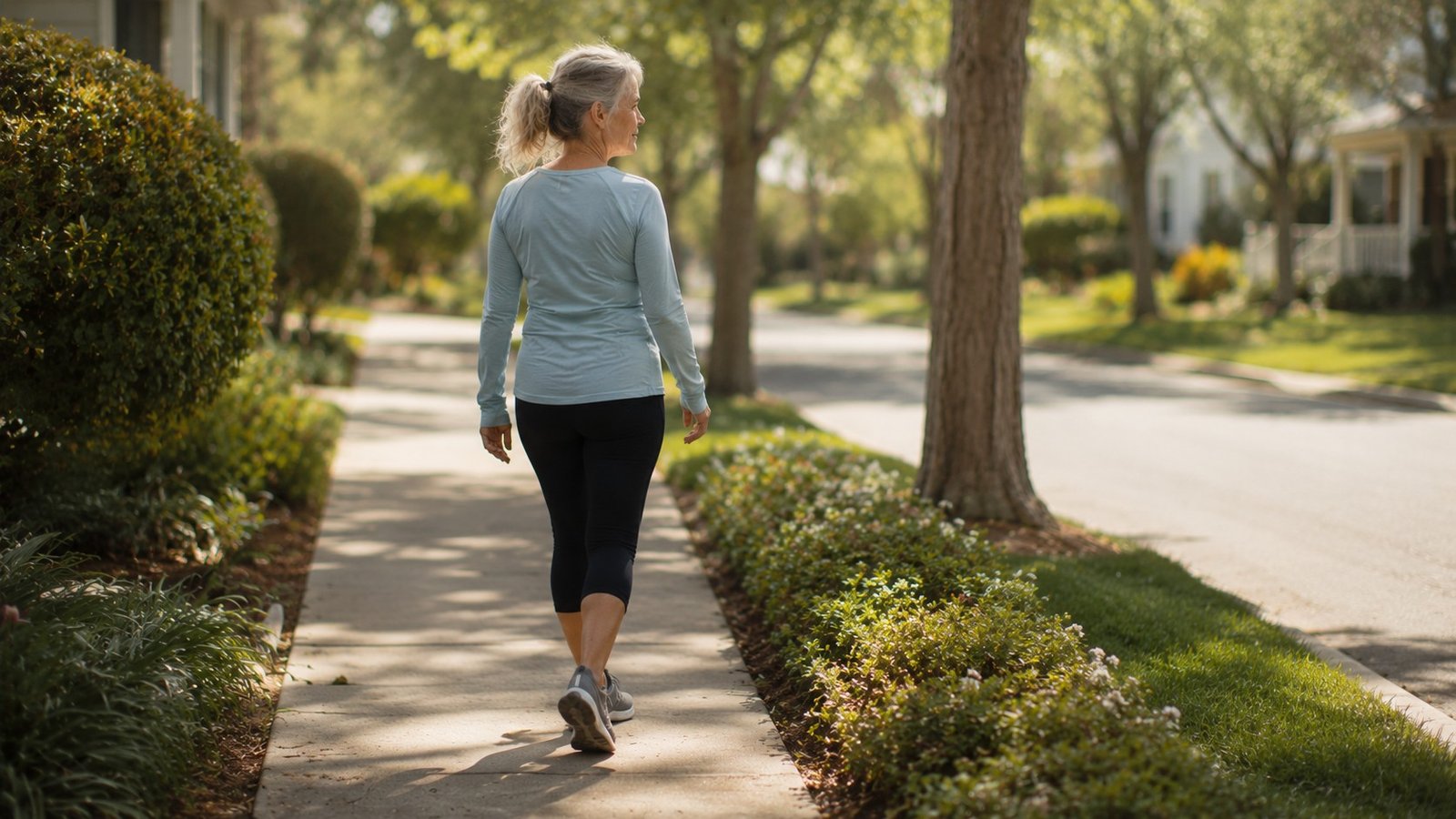
Donna was doing everything she thought she was supposed to, all on the belief that pushing harder was the way through. Her knees kept sending the bill the next morning. By the time she came to me, she had half decided that staying active just was not in the cards anymore.
She had the question backward, and a lot of people do. It is not how hard you can push. It is how to keep moving with knee pain over 55 in a way your body can sustain. The answer turned out gentler than she expected, and it came in three parts rather than one. When researchers tested diet and movement together against either alone in older adults with knee osteoarthritis, the combination gave the best results for function and staying active (Messier et al., 2013).
Key Takeaway
Staying active with sore knees is not about working harder. In a study of 454 older adults with knee osteoarthritis, combining diet and exercise improved function and mobility more than either one alone (Messier et al., 2013). That same combination did the most to build people’s confidence in their own walking (Mihalko et al., 2019. Three pieces together beat one hard push.
Here is what the rest of this post covers. You will see why harder workouts backfire, then how movement, the foods you eat, and the mental side each help you keep moving with knee pain over 55, and why they work best together.
If you want to know how to keep moving with knee pain over 55 without the setbacks, here is the whole picture.
Ready to Find Out What Your Body Can Do?
It takes less than 3 minutes. No gym. No equipment. Just a simple test that shows you if your body can do more than it’s been telling you.
M3 is a behavioral wellness coaching program. It is not medical treatment and does not replace advice from your physician. Consult your doctor before beginning any new movement or nutrition program.
Table of Contents
Why do harder workouts often make knee pain over 55 worse, not better?
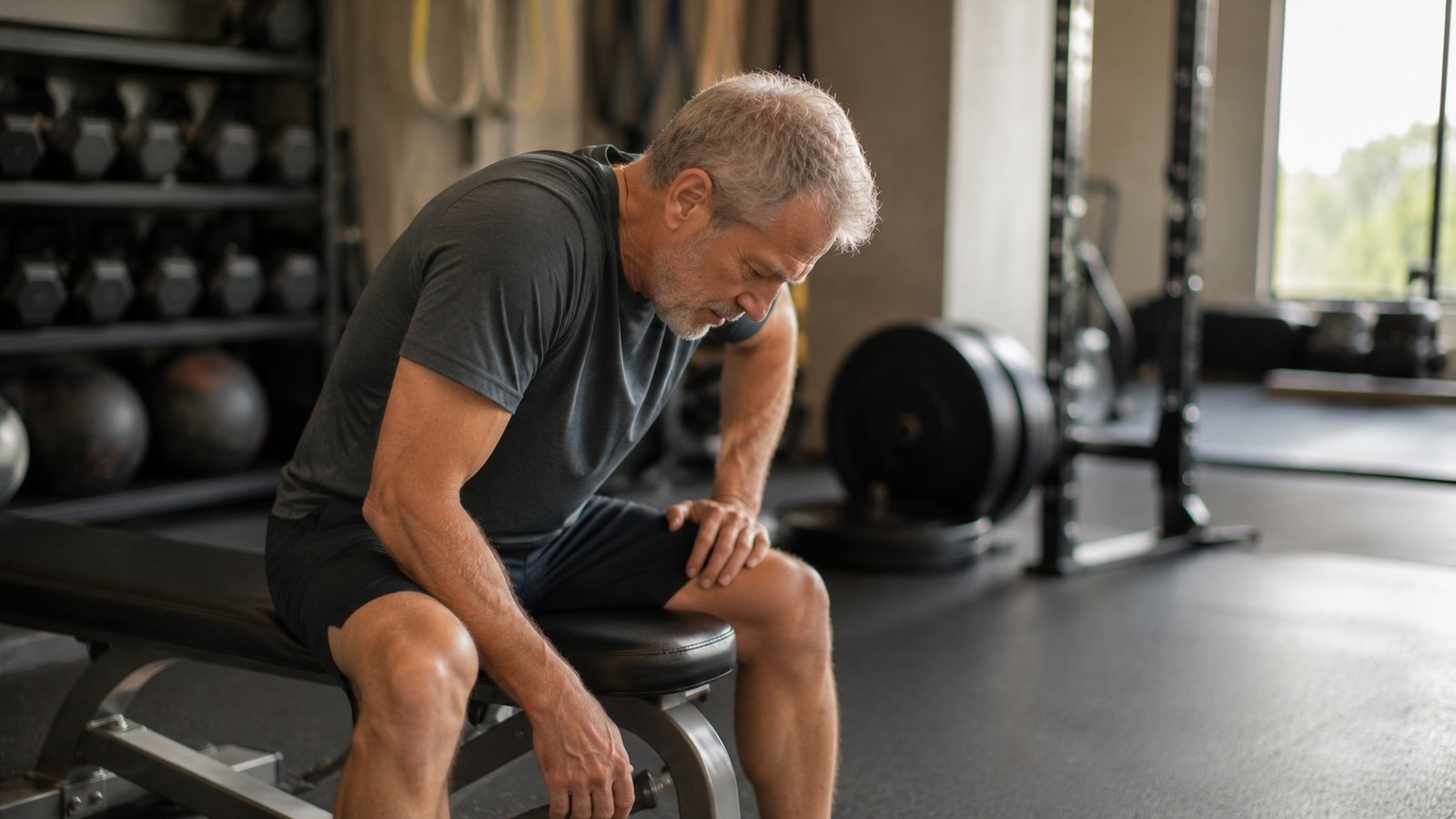
Because intensity is not the ingredient your knees are missing. When a joint is already sore, piling on heavier loads and longer sessions tends to inflame it, and the soreness that follows feels like a verdict: see, moving hurts, so I should stop. That is the trap. The problem was the intensity, not the moving. Pushing harder and quitting are two sides of the same mistake, treating effort as the only dial you can turn. And it is the dial most likely to set you back.
There is a gentler path that works better. A low-intensity, self-managed approach to staying active tends to work better than grinding through hard sessions, without the punishing aftermath. Learning how to keep moving with knee pain over 55 is less about forcing your body and more about giving it the right mix: steady movement, the food that supports your joints, and the confidence to keep showing up. Each of those gets its own section ahead.
How does gentle movement help you keep moving with knee pain over 55?

Movement is what your knees ask for most, and they do not need it to be hard. A joint stays healthier when it is used, because motion moves fluid through the cartilage and keeps the muscles around the knee strong enough to take the load off the joint itself. That is why “motion is medicine” is more than a slogan. In the research on older adults with knee osteoarthritis, the people who kept exercising held onto better function and mobility over time, even at gentle, manageable doses (Messier et al., 2013).
The trick is matching the movement to where you are, not where a fitness class assumes you should be. Walking is the workhorse here, and a short, steady walk most days does more for staying active than a punishing session you pay for later. If you want the full picture of how to build that up sensibly, a walking program for knee arthritis over 55 lays out the gradual path. For now, the point is simple. Gentle and regular is how to keep moving with knee pain over 55, not hard and occasional.
What role do the foods you eat play in keeping you moving with knee pain over 55?

More than most people expect. What is on your plate affects two things your knees feel directly: the inflammation in the joint and the weight it carries with every step. In the research on older adults with knee osteoarthritis, changing how people ate, alongside movement, led to better function and easier mobility than movement on its own (Messier et al., 2013). A 2024 review of the field reached the same conclusion: that pairing supportive eating with activity beats either piece by itself (Huffman et al., 2024).
This does not mean a strict diet or dropping a lot of weight overnight. It means steady, doable changes. Leaning toward the foods that calm inflammation while easing off the ones that feed it does double duty, and over time, it also lightens the daily load on the joint. One useful place to start is what the research says about omega-3 for joint health over 55. Eating well is a real part of how to keep moving with knee pain over 55, working quietly alongside the walking.
Nutritional guidance in this post is educational. Before making significant dietary changes, particularly if you are managing other health conditions, consult your physician.
How does the mental side help you keep moving with knee pain over 55?
It is the part that decides whether the other two last. You can know the right way to move and eat and still stop on the mornings your knees feel rough, and that is where confidence does its quiet work. The belief that you can handle a walk, even a short one, is what gets you out the door on the hard days. In that same study of older adults with knee osteoarthritis, the people whose confidence in their own walking grew the most were the ones who stayed the most active, and that confidence helped drive their gains in function (Mihalko et al., 2019).
The research keeps pointing in the same direction. Among older adults, a stronger belief in one’s ability to exercise lines up with staying more active and feeling more in control on the hard days. Confidence is not a personality you are born with; it is built one promise at a time. Watching your own small wins add up is a big part of that, which is where tracking knee pain progress over 55 earns its place. The mental side is quietly how to keep moving with knee pain over 55 when motivation runs thin.
Why do these three pieces work better together than any one alone?

Because each one covers a gap the others leave open. Movement keeps the joint working. What you eat changes the load it carries, and the inflammation it sits in, and your confidence is what keeps you doing both on the days you would rather not. Pull any one out, and the other two get harder to sustain. This is not a hunch. When researchers compared changing diet and exercise together against either one by itself in older adults with knee osteoarthritis, the combination came out ahead on function and mobility, more than the sum of its parts (Messier et al., 2013).
A larger community trial found the same approach worked outside the lab, too. In everyday settings, the people who combined the pieces were more likely to reach a meaningful improvement in how they felt and functioned (Messier et al., 2022).
That is the whole idea behind how to keep moving with knee pain over 55. Not one heroic effort, but a few modest ones that hold each other up. Your walking gives you something to track, and watching it add up builds the confidence that gets you out the door again tomorrow, while good food keeps the joint ready for all of it. Stack them, and the goal stops feeling out of reach: a comfortable 30-minute walk you finish without cutting it short. That is what these pieces, working together, are quietly building toward.
Wrap-up: how to keep moving with knee pain over 55
So what changed for Donna? She stopped trying to out-muscle her knees and started working with them. The harder workouts went away. In their place came shorter walks she could repeat, a few steady changes to what she ate, and a simple way to see her own progress, so she kept going. Nothing heroic, just three modest pieces pulling in the same direction.
Three honest things are worth taking with you. Harder is not the answer, and pushing through usually sets you back. No single piece carries the load by itself. Movement needs the support of good food, and both need the confidence to keep showing up. And the win is not a number on a pain scale; it is staying on your feet and doing what your day asks of you.
The goal underneath it is plain: a comfortable 30-minute walk you finish without cutting it short. Knowing how to keep moving with knee pain over 55 comes down to these pieces working together, not one harder effort. The complete guide to knee pain relief for adults over 55 puts the full approach in one place. Donna walks most days now, no grand push, just three quiet habits she finally let work together.
Ready to Find Out What Your Body Can Do?
It takes less than 3 minutes. No gym. No equipment. Just a simple test that shows you if your body can do more than it’s been telling you.
M3 is a behavioral wellness coaching program. It is not medical treatment and does not replace advice from your physician. Consult your doctor before beginning any new movement or nutrition program.
Frequently asked questions
Can you stay active with knee pain without making it worse?
Yes, most people can, as long as the activity matches where their knees are right now. The trouble usually comes from intensity, not movement itself, so heavy or high-impact sessions are what tend to backfire. Gentle, regular activity like short walks, done at a pace you can recover from, generally supports the joint rather than harming it. If a particular activity causes sharp or lasting pain, that is the signal to ease off, not to stop moving altogether.
Does losing weight help knee pain over 55?
For people carrying extra weight, even a modest reduction can ease the load on the knees, since the joint absorbs several times your body weight with each step. Research in older adults with knee osteoarthritis found that combining gradual weight change with activity improved function more than either did alone. It does not require dramatic dieting. Steady, sustainable changes tend to help the most and are easier to keep.
How much walking is enough to help knee pain?
Less than most people assume, especially at the start. A few minutes of comfortable walking most days is a reasonable beginning, and consistency matters far more than distance early on. From there, slowly adding a minute or two as it feels manageable is what builds capacity over weeks. The amount that helps is the amount you can do regularly without paying for it the next day.
What foods make knee pain worse?
No single food causes knee pain, but diets heavy in highly processed items, added sugars, and excess refined carbohydrates are linked to more inflammation in the body, which joints can feel. The flip side is more useful: leaning toward whole foods, vegetables, and sources of healthy fats tends to support a calmer inflammatory state. Small, steady shifts in that direction usually serve your knees better than any strict elimination.
How long does it take to feel better when you start moving more?
Many people notice small improvements within a few weeks of consistent, gentle activity, such as moving a little easier or recovering faster after a walk. Larger gains in comfort and capability tend to build over two to three months. Progress is rarely a straight line, so a rough week does not mean it is failing. Steady repetition over time is what produces the lasting change.
Should you rest or stay active when your knees hurt?
Gentle movement is usually better than full rest for ongoing knee pain, because joints need motion to stay lubricated and supporting muscles need use to stay strong. That said, a sharp flare or a new injury may call for a short, easier stretch or a brief rest. The goal is to keep moving in a scaled-back way rather than stopping entirely, then build back up as it settles.
References
Huffman, K. F., Ambrose, K. R., Nelson, A. E., Allen, K. D., Golightly, Y. M., & Callahan, L. F. (2024). The critical role of physical activity and weight management in knee and hip osteoarthritis: A narrative review. The Journal of Rheumatology, 51(3), 224–233. https://doi.org/10.3899/jrheum.2023-0819
Messier, S. P., Beavers, D. P., Queen, K., Mihalko, S. L., Miller, G. D., Losina, E., Katz, J. N., Loeser, R. F., DeVita, P., Hunter, D. J., Newman, J. J., Quandt, S. A., Lyles, M. F., Jordan, J. M., & Callahan, L. F. (2022). Effect of diet and exercise on knee pain in patients with osteoarthritis and overweight or obesity: A randomized clinical trial. JAMA, 328(22), 2242–2251. https://doi.org/10.1001/jama.2022.21893
Messier, S. P., Mihalko, S. L., Legault, C., Miller, G. D., Nicklas, B. J., DeVita, P., Beavers, D. P., Hunter, D. J., Lyles, M. F., Eckstein, F., Williamson, J. D., Carr, J. J., Guermazi, A., & Loeser, R. F. (2013). Effects of intensive diet and exercise on knee joint loads, inflammation, and clinical outcomes among overweight and obese adults with knee osteoarthritis: The IDEA randomized clinical trial. JAMA, 310(12), 1263–1273. https://doi.org/10.1001/jama.2013.277669
Mihalko, S. L., Cox, P., Beavers, D. P., Miller, G. D., Nicklas, B. J., Lyles, M., Hunter, D. J., Eckstein, F., Guermazi, A., Loeser, R. F., DeVita, P., & Messier, S. P. (2019). Effect of intensive diet and exercise on self-efficacy in overweight and obese adults with knee osteoarthritis: The IDEA randomized clinical trial. Translational Behavioral Medicine, 9(2), 227–235. https://doi.org/10.1093/tbm/iby037
Leave a Reply