Tag: sleep and knee pain

  • How to Build an Evening Routine for Better Sleep with Joint Pain

    How to Build an Evening Routine for Better Sleep with Joint Pain

    Arthur had been going to bed at different times each night depending on how much his knees hurt. On bad nights, he stayed up later, hoping the pain would ease. The nights he went to bed earlier were not better. What he had not tried was building the hour before bed around his joints rather than around his pain level.

    A review of behavioral sleep interventions in middle-aged and older adults with chronic pain found that structured approaches targeting sleep disrupt the negative cycle of pain and insomnia, improving both (Koffel et al., 2019). An evening routine for better sleep with joint pain does not begin at bedtime. It begins about an hour before.

    Key Takeaways

    Behavioral sleep interventions in middle-aged and older adults with chronic pain disrupt the negative pain-sleep cycle, improving both outcomes (Koffel et al., 2019). In 1,094 older adults, hot-water bathing before bedtime was significantly associated with shorter time to fall asleep, strongest 1 to 2 hours before bed (Tai et al., 2021). Evening screen light delays sleep onset and suppresses melatonin in a dose-dependent way (Schöllhorn et al., 2023).

    This post covers why joint pain disrupts sleep in the evening, why a structured routine helps break that cycle, five steps to build an evening routine for better sleep with joint pain, and how the night before shapes the walk the next morning.

    Ready to Find Out What Your Body Can Do?

    It takes less than 3 minutes. No gym. No equipment. Just a simple test that shows you if your body can do more than it’s been telling you.

    Take the 3-Minute Walk Test

    M3 is a behavioral wellness coaching program. It is not medical treatment and does not replace advice from your physician. Consult your doctor before beginning any new movement or nutrition program.

    Why does joint pain make it harder to sleep at night?
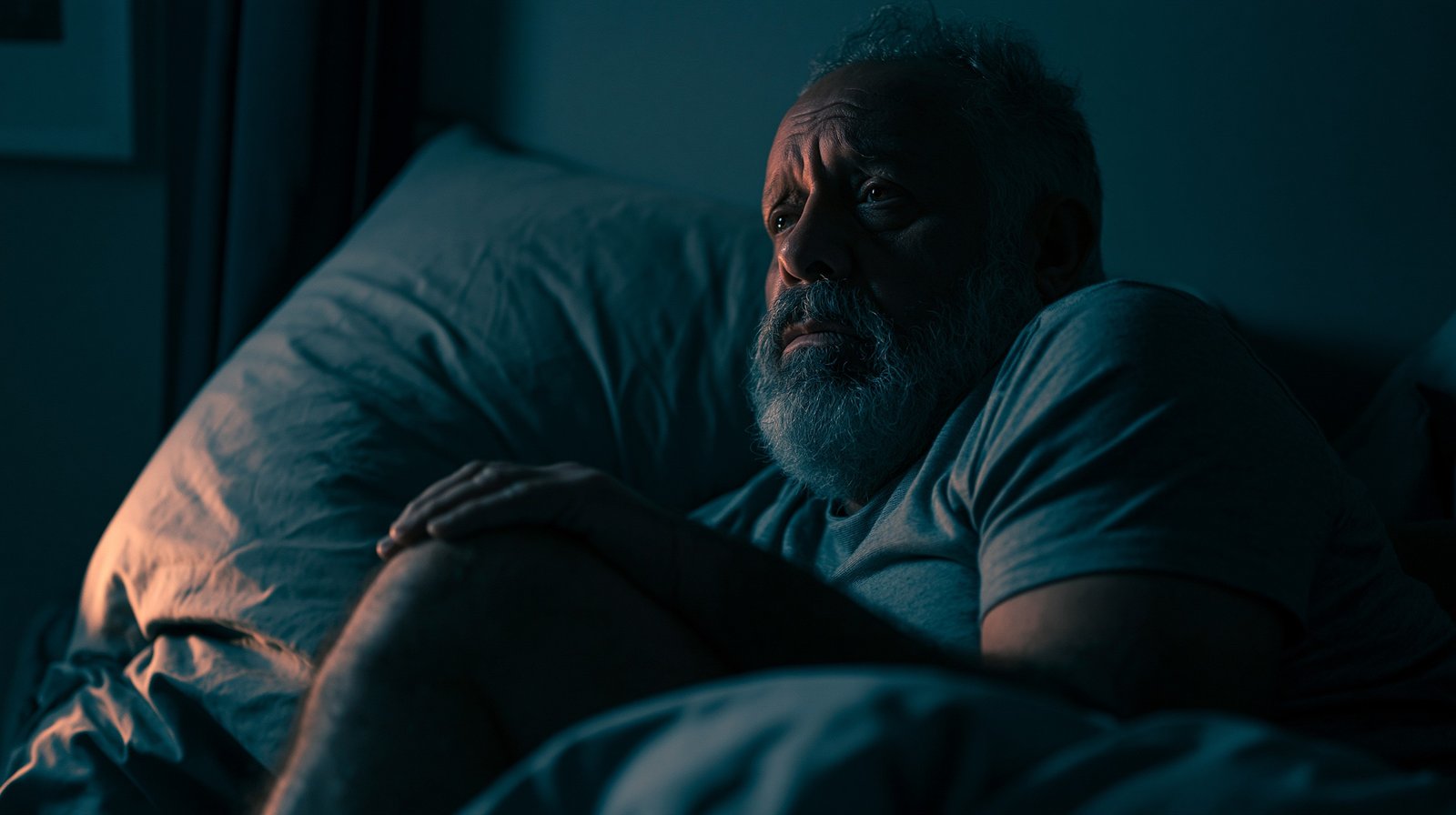
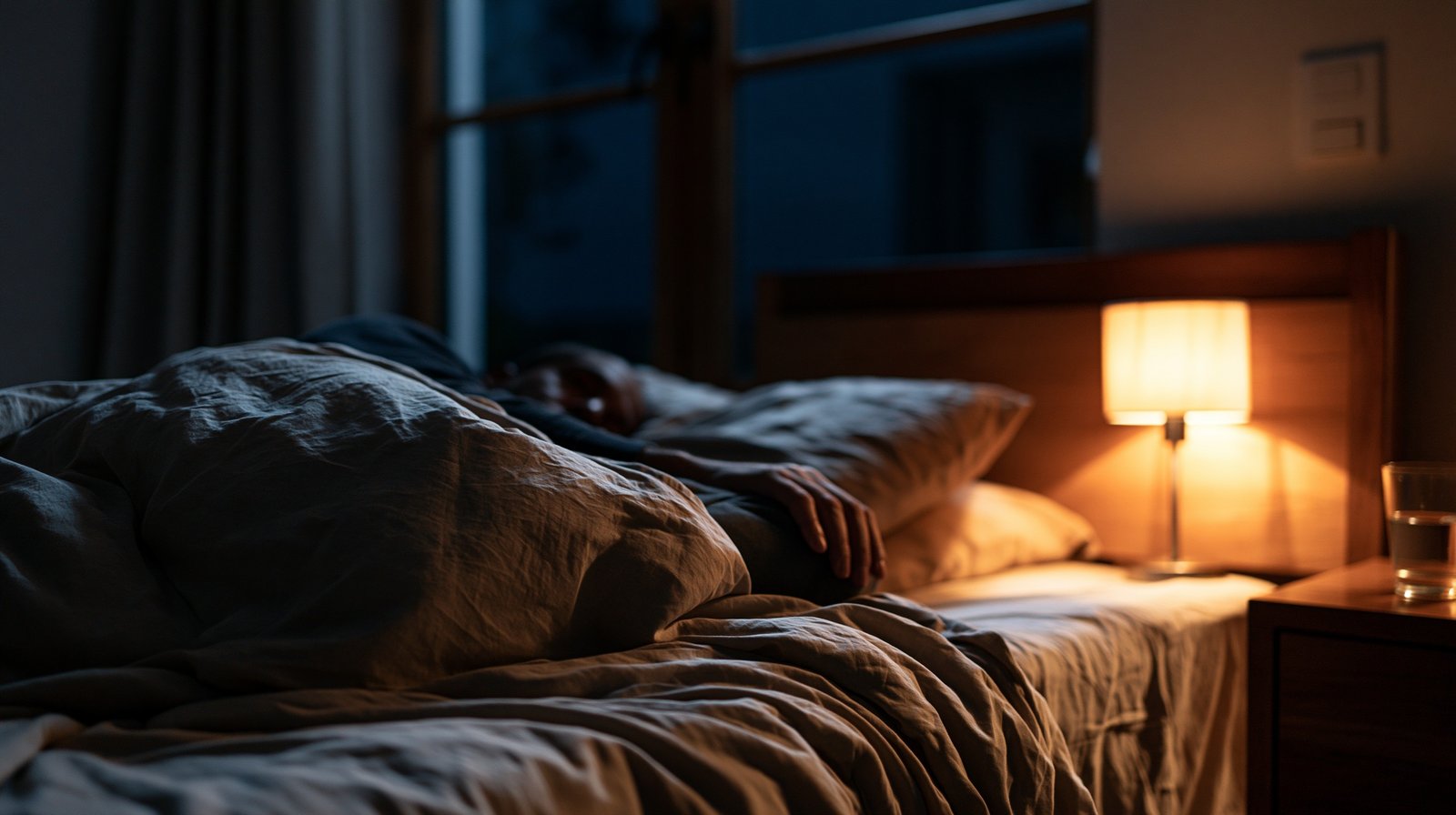
    Adult man over 55 lying awake in bed at night showing how joint pain disrupts sleep and why building an evening routine for better sleep with joint pain can break the cycle.

    Because pain and sleep feed each other in both directions, and the evening is where that cycle gets started.

    When sleep is poor, the body becomes more sensitive to pain the next day. When pain is worse, sleep is harder to start and easier to interrupt. In adults with OA, this loop can run for weeks. The evening is where it typically begins. The joint has been managing the load all day. As bedtime approaches, the body’s natural anti-inflammatory signals ease off. The quiet of the room removes the distractions that kept pain in the background during the day.

    Research in middle-aged and older adults with chronic pain confirms that behavioral sleep interventions directly disrupt this cycle, improving both sleep and pain outcomes when applied consistently (Koffel et al., 2019).

    Understanding why the cycle starts in the evening is what makes an evening routine for better sleep with joint pain worth building. The reason knee pain is often worse at night runs through the same mechanisms.

    Why does a structured evening routine help?
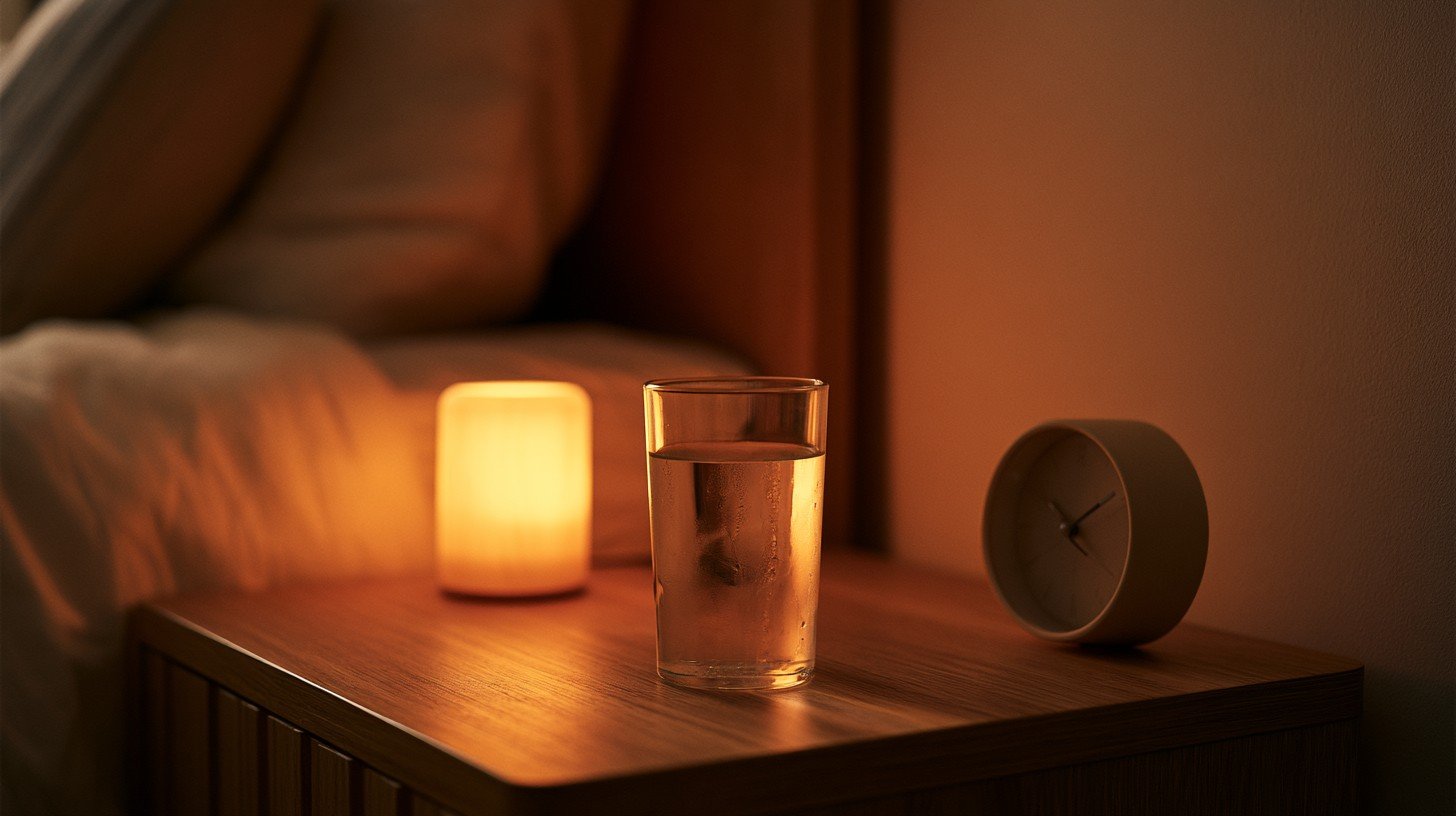
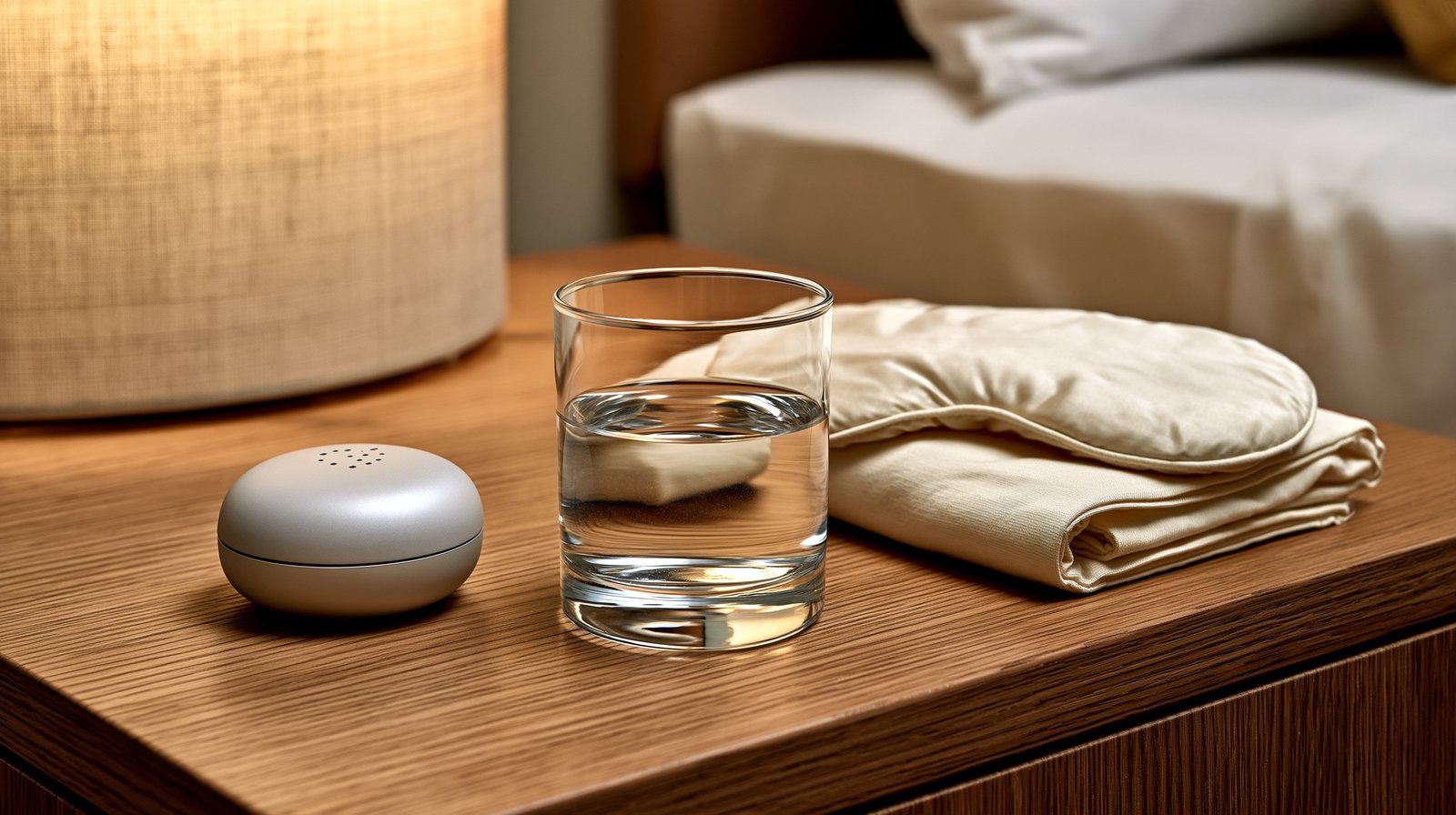
    Softly lit bedside table with a glass of water and a dim lamp but no screen showing the calm wind-down environment that supports an evening routine for better sleep with joint pain.

    Because the body responds to predictable signals, and pain-disrupted sleep removes most of them.

    When bedtime is variable, later on bad nights and earlier on good ones, the nervous system does not get a consistent cue that sleep is coming. It stays ready instead of winding down. Arthur was caught in this pattern. Each night, the body had to figure out from scratch whether it was time to sleep.

    A structured routine gives the body the same sequence of signals at the same time each night. These are not treatments for joint pain. They are cues that tell the nervous system the day is ending. Over time, the body begins to associate those cues with falling asleep, and the transition gets easier even on nights when the joint is still uncomfortable.

    Research in middle-aged and older adults with chronic pain confirms that behavioral approaches targeting sleep reduce time to fall asleep and improve sleep duration, independent of changes in pain (Koffel et al., 2019).

    For adults who know the relationship between sleep and knee pain, an evening routine for better sleep with joint pain is where that relationship can be interrupted.

    How to build an evening routine for better sleep with joint pain: 5 steps

    Adult woman over 55 after an evening bath showing step two of the evening routine for better sleep with joint pain, warm bathing 1 to 2 hours before bed.

    Five steps. Same sequence, same time, every night. That consistency is what builds the sleep signal.

    Step 1. Set a consistent bedtime target

    Pick a target bedtime and stay within 30 minutes of it every night, including weekends. This is the anchor the whole routine builds backward from. Consistency matters more than the specific time. Arthur’s variable bedtimes were removing the body’s most reliable sleep cue.

    Step 2. Take a warm bath or shower 1 to 2 hours before your target bedtime

    In a study of 1,094 older adults, hot-water bathing before bedtime was significantly associated with shorter time to fall asleep. The strongest effect came when bathing occurred 1 to 2 hours before bed (Tai et al., 2021). Warm water raises body temperature. The drop that follows signals sleep onset.

    Step 3. Do 5 to 10 minutes of gentle joint movement

    Slow ankle circles, seated knee bends, a few minutes of supported standing. This keeps synovial fluid moving and reduces the stiffness that builds during stillness. Not exercise. Gentle enough that the joint finishes calmer than it started.

    Step 4. Reduce screen brightness or stop screens 1 hour before bed

    Research in healthy adults shows evening screen light suppresses melatonin and delays sleep onset in a dose-dependent way (Schöllhorn et al., 2023). Dimming the screen or switching to a book reduces this effect meaningfully.

    Step 5. Position the joint with a supportive pillow before lying down

    A pillow under the knee for back sleepers. A pillow between the knees for side sleepers. Finding a supported position before settling in rather than adjusting after reduces arousal and speeds sleep onset.

    When should the evening routine start?
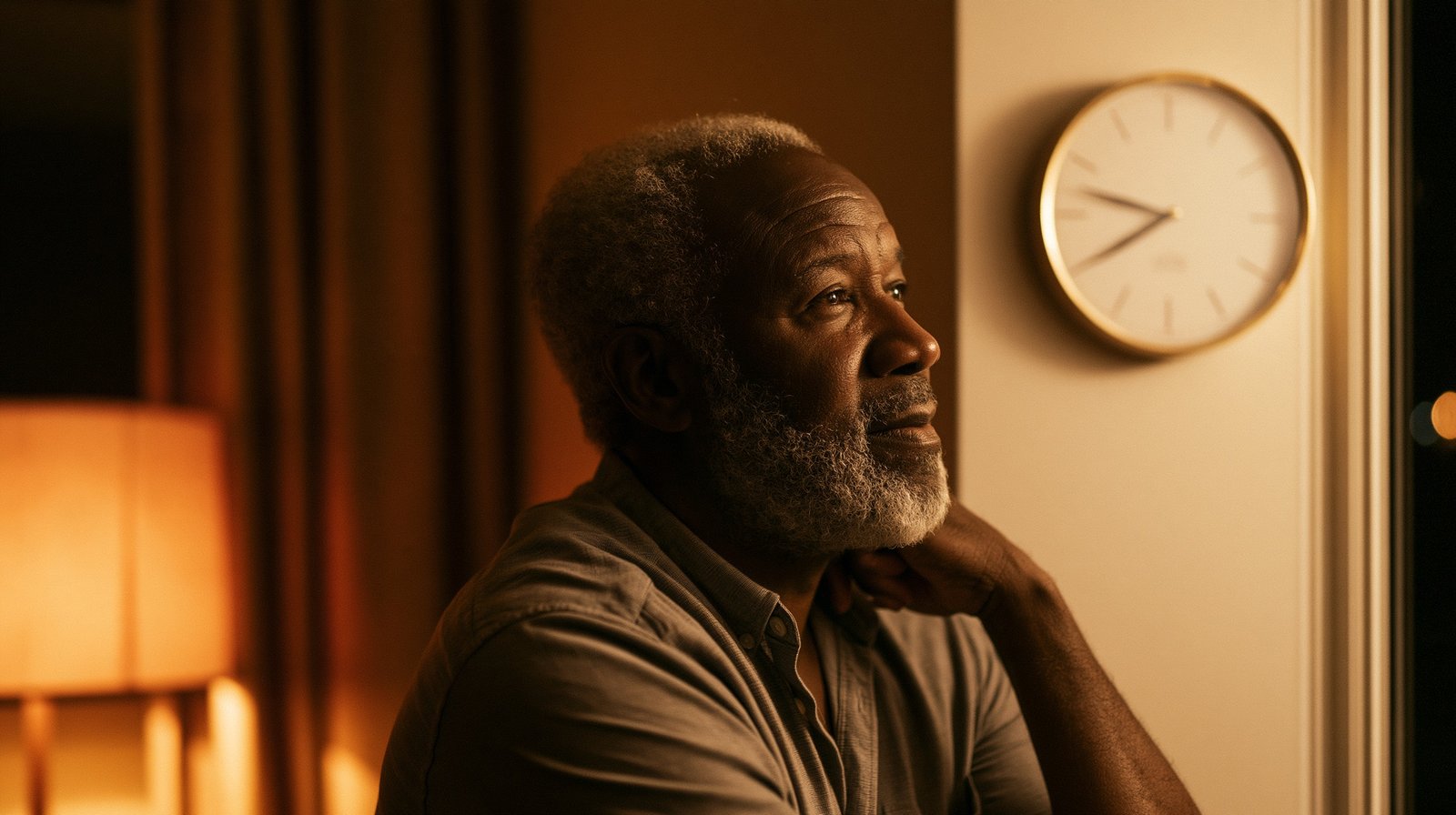
    Adult man over 55 checking the time in a softly lit living room showing the importance of consistent timing when building an evening routine for better sleep with joint pain.

    About 90 minutes before the target bedtime. That window is set by Step 2.

    The warm bath research found the strongest effect on sleep onset when bathing occurred 1 to 2 hours before bed (Tai et al., 2021). Starting the bath 90 minutes before the target lets everything else follow in sequence.

    The timing matters as much as the steps. If the target bedtime shifts by two hours depending on pain level, the bath cannot happen at the right window, and the body never gets a consistent wind-down signal. Arthur’s variable bedtimes made consistent timing impossible.

    Pick a target bedtime. Count back 90 minutes. That is when the routine starts.

    The link between inflammation and sleep quality over 55 explains why consistent sleep timing is a meaningful lever for adults managing joint pain. An evening routine for better sleep with joint pain works partly through the biology of regular timing, not just through the individual steps.

    How the evening routine connects to the next morning’s walk

    Figure walking steadily along a morning path showing how a consistent evening routine for better sleep with joint pain creates better conditions for daily walking.

    More directly than most adults expect.

    What happens the night before determines what the joint has to work with the next morning. Better sleep means less inflammatory load carried overnight. Less stiffness in the first movement. More reserve for the first few steps. A joint that slept well starts the day differently from one that was awake and uncomfortable for hours.

    Arthur noticed this before he understood it. The mornings after consistent nights were more usable. Not pain-free. More usable. The joint was willing to move earlier and farther.

    The evening routine for better sleep with joint pain is not a separate goal from walking. It is one of the inputs that makes consistent walking possible over 90 days. Consistent sleep timing reduces morning inflammation. Consistent mornings produce consistent walks. Consistent walks build the capacity for longer ones.

    The goal is walking 30 minutes. The evening routine is where that goal either gets easier or harder to reach each week, one night at a time.

    Wrap-up: Evening routine for better sleep with joint pain

    Arthur eventually stopped letting pain decide his bedtime. He picked a target, counted back 90 minutes, and built five consistent steps into that window. The mornings did not become pain-free. They became more usable.

    Three things the research supports: behavioral sleep routines break the pain-sleep cycle in middle-aged and older adults, a warm bath 1 to 2 hours before bed shortens time to fall asleep in older adults specifically, and dimming evening screens reduces how long it takes to fall asleep.

    The goal is walking 30 minutes. An evening routine for better sleep with joint pain is one of the inputs that makes that goal more reachable each week.

    An evening routine for better sleep with joint pain is one piece of a larger picture. The complete guide to knee pain relief for adults over 55 covers the full three-pillar approach.

    Ready to Find Out What Your Body Can Do?

    It takes less than 3 minutes. No gym. No equipment. Just a simple test that shows you if your body can do more than it’s been telling you.

    Take the 3-Minute Walk Test

    M3 is a behavioral wellness coaching program. It is not medical treatment and does not replace advice from your physician. Consult your doctor before beginning any new movement or nutrition program.

    Frequently Asked Questions

    Can walking during the day improve sleep quality for adults with joint pain?

    Yes. Regular moderate physical activity is consistently associated with better sleep quality in older adults, including those with chronic joint conditions. Walking specifically supports sleep by reducing background inflammation, helping regulate the body’s daily rhythm, and reducing pain sensitivity the following night. Adults with knee OA who walk consistently report fewer high-pain nights over time compared to those who remain sedentary.

    Does drinking alcohol before bed make joint pain and sleep worse?

    Yes on both counts. Alcohol may feel like it helps sleep onset, but it disrupts the deeper, restorative stages of sleep that matter most for pain recovery. It also increases systemic inflammation overnight, which can worsen joint pain and stiffness the next morning. Adults managing OA who drink alcohol in the evening often find that their pain and morning stiffness are worse the following day than on nights they did not drink.

    Does room temperature affect how well adults with joint pain sleep?

    Yes. Research consistently links cooler bedroom temperatures, around 65 to 68 degrees Fahrenheit or 18 to 20 degrees Celsius, with better sleep quality in older adults. A cooler room supports the natural drop in body temperature that triggers deep sleep. For adults with joint pain, a room that is too warm can also increase nighttime inflammation and make the joint feel more uncomfortable. Keeping the bedroom cool is a simple, no-cost adjustment.

    Can an evening routine replace medication for joint pain at night?

    No. An evening routine for better sleep with joint pain is a behavioral approach that addresses the sleep side of the pain-sleep cycle. It does not treat the underlying joint condition. For adults who use medication for nighttime joint pain, a routine can complement that approach by improving sleep quality and reducing how long it takes to fall asleep. Speak with your physician before making any changes to medication.

    What is the best sleeping position for knee pain?

    For back sleepers, a pillow under the knees keeps them slightly bent and reduces load on the joint during sleep. For side sleepers, a pillow between the knees keeps hips and knees aligned and reduces pressure on the inner knee. Avoid sleeping with the knee fully extended or fully bent for long periods, as both positions increase stiffness in the morning.

    How long before I notice a difference from a consistent evening routine?

    Research on behavioral sleep interventions typically shows measurable improvements in sleep within 2 to 4 weeks of consistent practice. Consistency is the operative word; 5 or 6 nights per week produces results that 2 nights per week will not. Building an evening routine for better sleep with joint pain takes time to become automatic, but the body responds to repetition faster than most adults expect.

    References

    Koffel, E., McCurry, S. M., Smith, M. T., & Vitiello, M. V. (2019). Improving pain and sleep in middle-aged and older adults: The promise of behavioral sleep interventions. Pain, 160(3), 529–534. https://doi.org/10.1097/j.pain.0000000000001423

    Schöllhorn, I., Stefani, O., Lucas, R. J., Spitschan, M., Slawik, H. C., & Cajochen, C. (2023). Melanopic irradiance defines the impact of evening display light on sleep latency, melatonin and alertness. Communications Biology, 6, 228. https://doi.org/10.1038/s42003-023-04598-4

    Tai, Y., Obayashi, K., Yamagami, Y., Yoshimoto, K., Kurumatani, N., Nishio, K., & Saeki, K. (2021). Hot-water bathing before bedtime and shorter sleep onset latency are accompanied by a higher distal-proximal skin temperature gradient in older adults. Journal of Clinical Sleep Medicine, 17(6), 1257–1266. https://doi.org/10.5664/jcsm.9180

  • Sleep and Knee Pain Over 55: Why Poor Rest Makes It Harder to Walk

    Sleep and Knee Pain Over 55: Why Poor Rest Makes It Harder to Walk

    Carol had started keeping notes. Not formally, just a few words in her phone each morning about how her knees felt when she got up. After a few weeks, she noticed something. The bad knee mornings almost always followed the nights she had not slept well. She had not read anything about sleep and knee pain over 55. She had just paid attention.

    The pattern she noticed is real, and it runs in both directions. Poor sleep makes knee pain worse the next day. Knee pain makes it harder to sleep. Research has confirmed both sides of that relationship, and there is a specific sleep threshold where knee pain starts to meaningfully improve.

    Key Takeaway

    Among adults 45 and older, poor sleep predicted future pain (OR 1.74) and pain predicted future poor sleep (OR 1.87) — each making the other harder to manage (Duan et al., 2024). In adults with comorbid knee OA and insomnia, reaching approximately 6.5 hours of sleep predicted clinically significant pain reduction at 6 months (Salwen et al., 2017).

    This post covers whether sleep and knee pain over 55 are actually connected, why the relationship runs both ways, what the research says about improving sleep to reduce pain, and what this means for walking.

    Ready to Find Out What Your Body Can Do?

    It takes less than 3 minutes. No gym. No equipment. Just a simple test that shows you if your body can do more than it’s been telling you.

    Take the 3-Minute Walk Test

    M3 is a behavioral wellness coaching program. It is not medical treatment and does not replace advice from your physician. Consult your doctor before beginning any new movement or nutrition program.

    Does poor sleep actually make knee pain worse?

    Adult man over 55 sitting in the kitchen after a poor night showing how sleep and knee pain over 55 are connected in a documented cycle.

    Yes. And the evidence runs in both directions.

    In a study of 169 adults aged 71 to 80 with radiographic knee OA, higher knee pain scores significantly predicted poor sleep quality. Half of the women reported poor sleep, and knee pain was one of the clearest predictors (Kirkham-Wilson et al., 2025).

    The other direction is equally documented. A large longitudinal study found that poor sleep quality predicted future pain and pain predicted future poor sleep. Each condition made the other harder to manage (Duan et al., 2024). For adults who have noticed that their worst knee mornings follow their worst nights, this is not a coincidence. It is a documented pattern. If you want to understand why knee pain tends to feel worse at night, that post covers the nighttime mechanics specifically. What matters here is that sleep and knee pain over 55 are not separate problems. They are the same loop.

    Why does knee pain make it harder to sleep?

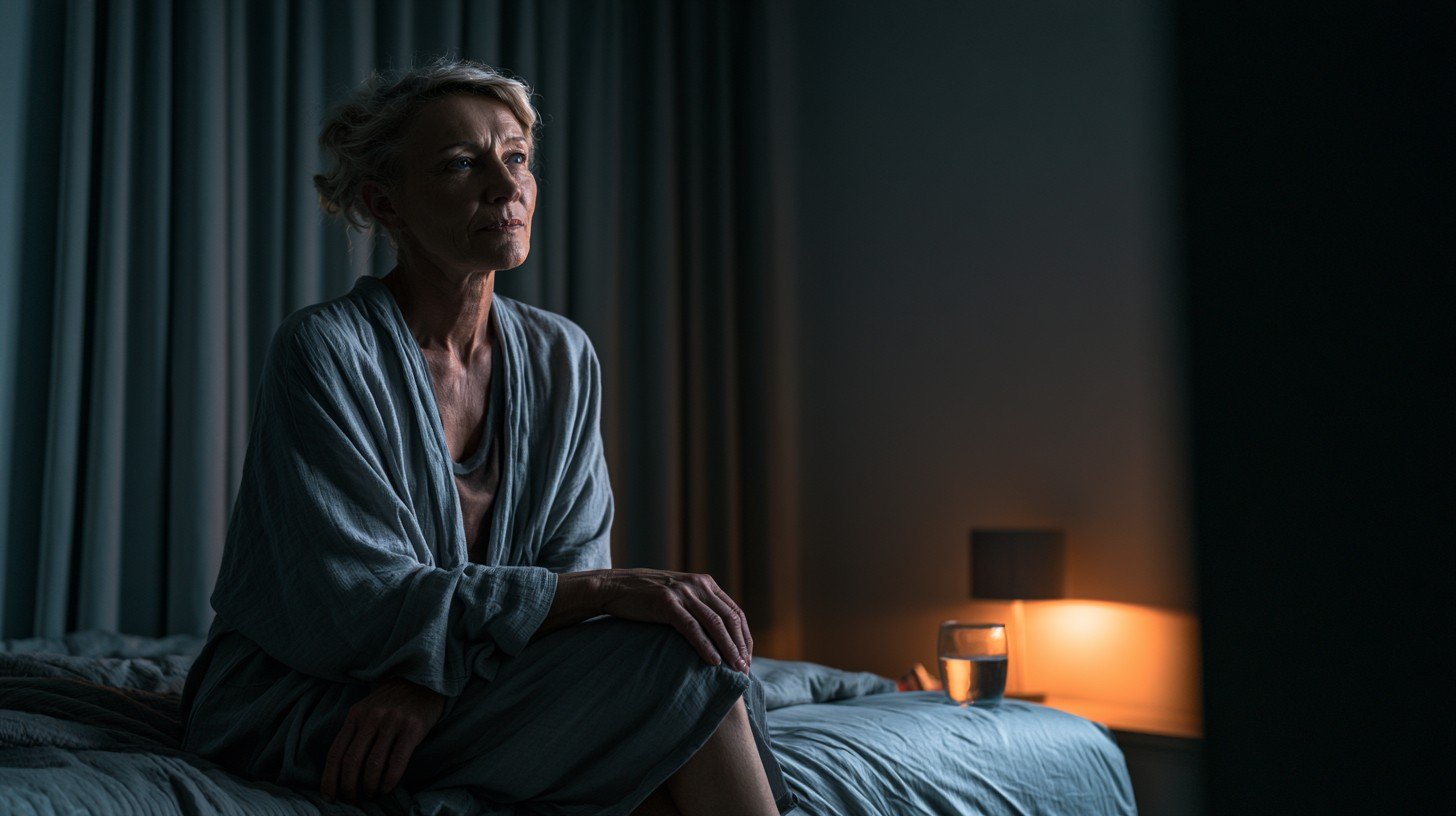
    Adult woman over 55 lying awake at night with knee pain, illustrating why sleep and knee pain over 55 disrupt each other.

    Three things happen when you try to sleep with a knee that has been managing pain all day.

    The first is position. A knee with OA is sensitive to sustained pressure and certain angles. Lying still long enough to reach deep sleep means holding a position that the joint may not tolerate. Small adjustments wake you up, and over time, sleep becomes lighter and more fragmented.

    The second is inflammation. OA is an inflammatory condition. Inflammatory signals do not stop at bedtime. Without the distraction of movement and activity, they are easier to notice.

    The third is the nervous system. Chronic pain trains the body to stay more alert. A nervous system managing persistent knee pain becomes more vigilant, more likely to register discomfort that would otherwise stay below the threshold of awareness during sleep.

    None of this means sleep is impossible with knee pain. It means sleep and knee pain over 55 interact in ways that require a specific approach rather than just trying harder to fall asleep.

    Can improving your sleep reduce knee pain?

    Bedroom nightstand with a glass of water, white noise device, and sleep mask representing intentional sleep preparation for adults managing knee pain.

    The research says yes, and it gives a specific threshold worth knowing.

    In a clinical trial of adults with comorbid knee OA and insomnia, reaching approximately 6.5 hours of sleep by mid-treatment was the strongest predictor of clinically significant knee pain reduction at six months (Salwen et al., 2017).

    A study of 327 adults aged 60 and older with chronic OA pain and insomnia found that those who improved their sleep in the first two months showed sustained reductions in pain, fatigue, and depression across 12 months (Vitiello et al., 2021). Six and a half hours is not an ambitious target. For many adults with knee pain, it simply does not happen. The morning knee stiffness that follows a poor night is one of the clearest signs that the body did not get enough restorative time. For adults managing sleep and knee pain over 55, improving sleep is not a workaround. It is one of the most direct routes toward less pain.

    What does sleep have to do with walking?

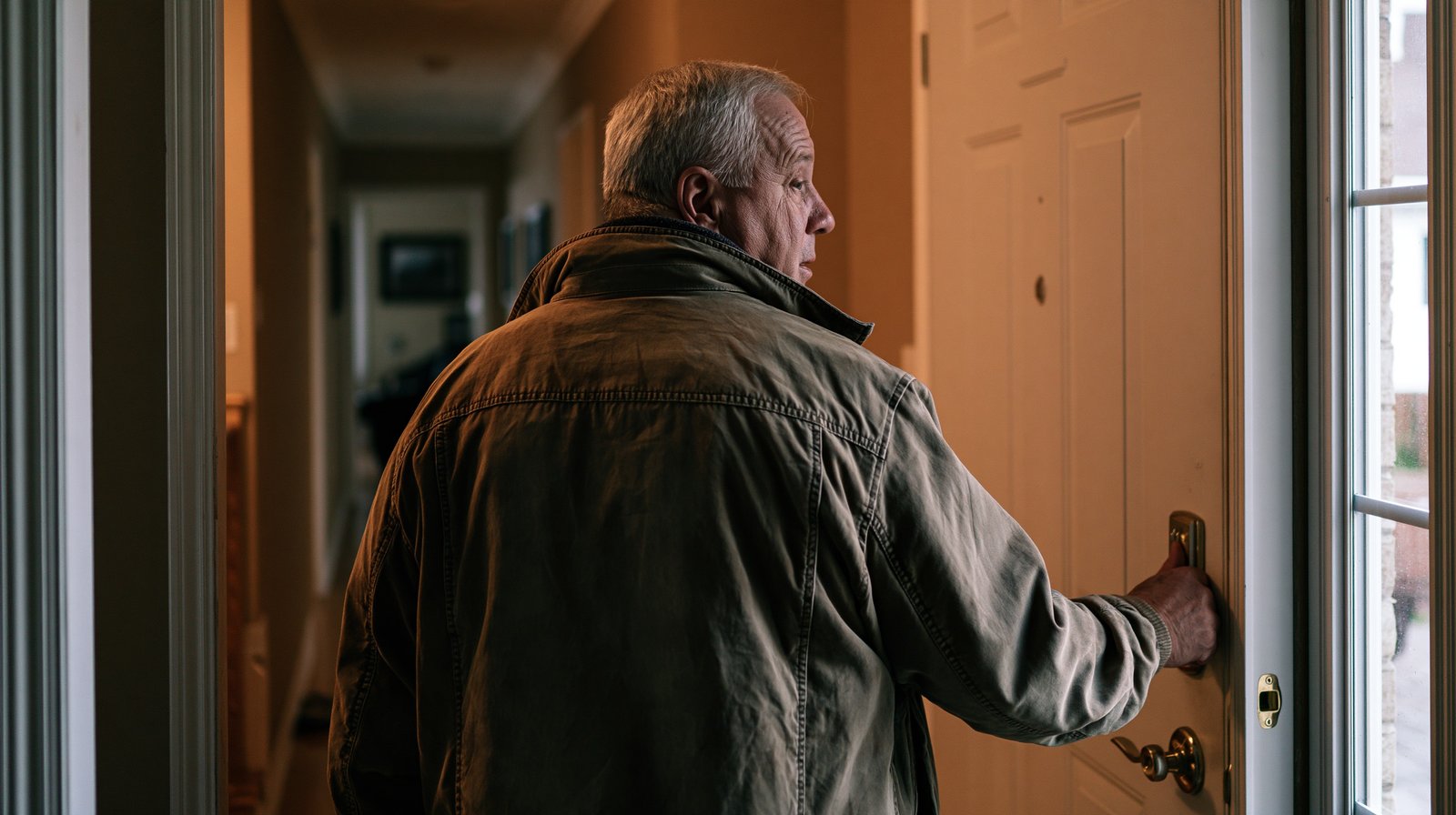
    Adult man over 55 viewed from behind at his front door about to begin a morning walk after a good night of sleep.

    Filename: sleep-and-knee-pain-over-55-walking-connection.jpg

    More than most adults with knee pain realize.

    Poor sleep amplifies pain signals the next morning. Fatigue compounds the effect. First steps that feel harder than they should are first steps that often do not happen. For adults building a walking practice, a bad night does not just affect how they feel. It affects whether they walk.

    This is not a motivation problem. A body without enough restorative sleep is managing more pain and less capacity for movement before the day has started.

    The good news is the relationship runs both ways. Better sleep means less morning pain and more consistent walks. Consistent walking supports better sleep. The loop that compounds the problem can also compound the solution.

    Protecting sleep and knee pain over 55 as a connected pair is one of the most reliable ways to keep walking days on track. Learning how to walk with bad knees covers the walking side. The goal is walking 30 minutes. Better nights are one of the clearest paths toward it.

    Wrap-up: Sleep and knee pain over 55

    The relationship Carol noticed in her morning notes is real. Poor sleep makes knee pain harder to manage the next day. Knee pain makes it harder to sleep. And improving sleep toward that 6.5-hour threshold is associated with meaningful pain reductions over time.

    Three honest facts from the research: the relationship runs both ways, the threshold is within reach, and better sleep nights produce better walking days.

    The goal is not just sleeping through the night. The goal is walking 30 minutes, and better sleep is one of the clearest paths toward it.

    Sleep and knee pain over 55 is one piece of a larger picture. The complete guide to knee pain relief for adults over 55 covers the full approach.

    Ready to Find Out What Your Body Can Do?

    It takes less than 3 minutes. No gym. No equipment. Just a simple test that shows you if your body can do more than it’s been telling you.

    Take the 3-Minute Walk Test

    M3 is a behavioral wellness coaching program. It is not medical treatment and does not replace advice from your physician. Consult your doctor before beginning any new movement or nutrition program.

    Frequently Asked Questions

    Why is knee pain often worse in the morning after a bad night?

    During sleep, joints that are not moving do not circulate synovial fluid, the lubricant that keeps knee cartilage working smoothly. A fragmented night compounds this. Less restorative sleep also means inflammatory signals have been active longer without the buffering effect of daytime movement. For adults managing sleep and knee pain over 55, the first steps of the day reflect the quality of the night before.

    How many hours of sleep should adults over 55 with knee pain aim for?

    Research on adults with comorbid knee OA and insomnia found that reaching approximately 6.5 hours of sleep predicted clinically significant pain reduction at six months. That is not a hard prescription, but it is a useful target. For adults where sleep and knee pain over 55 are both present, 6.5 hours is where the research suggests meaningful improvement begins.

    Does sleeping position affect knee pain?

    Yes. Side sleeping with a pillow placed between the knees reduces rotational stress on the hip and knee joint. Back sleeping with a pillow or rolled towel under the knees keeps them in a slightly flexed position, which many adults with OA find more comfortable. Stomach sleeping places the most strain on the knee and is worth avoiding if nighttime pain is a consistent problem.

    Can napping help with knee pain and fatigue?

    A short nap of 20 minutes or less can reduce afternoon fatigue without disrupting nighttime sleep. Longer naps, especially those over 45 minutes, can make it harder to fall asleep at night, which works against the sleep improvement goal. If fatigue from poor sleep is affecting daily activity, a brief early-afternoon rest is reasonable. Late-day or long naps are more likely to extend the problem than solve it.

    Does exercise help with sleep when you have knee pain?

    Yes, and this is one of the clearest examples of how sleep and knee pain over 55 respond to the same intervention. Regular walking and low-impact movement improve sleep quality in older adults by reducing inflammation, regulating the body’s internal clock, and reducing the nighttime anxiety that often accompanies chronic pain. Avoid vigorous exercise within two hours of bedtime, but gentle movement earlier in the day consistently supports better sleep.

    What should you do if knee pain keeps you awake at night?

    Start with a pillow between or under the knees, depending on sleep position. A light blanket over the knee can help with the temperature sensitivity that often increases at night with OA. If disrupted sleep and knee pain over 55 is a consistent nightly pattern rather than an occasional bad night, it is worth raising with your doctor before it compounds further.

    References

    Duan, Y., Yang, M., Luo, Q., Li, H., Kong, L., & Cheng, Q. (2024). Bidirectional relationship between pain and sleep disturbance in middle-aged and older adults: Evidence from the China Health and Retirement Longitudinal Study. Frontiers in Psychiatry, 15, 1485822. https://doi.org/10.3389/fpsyt.2024.1485822

    Kirkham-Wilson, F., Westbury, L., Bevilacqua, G., Laskou, F., Fuggle, N., & Dennison, E. (2025). Relationships between pain, physical activity and sleep quality among older adults with radiographic knee osteoarthritis: Findings from the Hertfordshire Cohort Study. Aging Clinical and Experimental Research, 37, 77. https://doi.org/10.1007/s40520-025-03238-7

    Salwen, J. K., Smith, M. T., & Finan, P. H. (2017). Mid-treatment sleep duration predicts clinically significant knee osteoarthritis pain reduction at 6 months: Effects from a behavioral sleep medicine clinical trial. Sleep, 40(2), zsw064. https://doi.org/10.1093/sleep/zsw064

    Vitiello, M. V., Zhu, W., Von Korff, M., Wellman, R., Morin, C. M., & Yeung, K. (2021). Long-term improvements in sleep, pain, depression, and fatigue in older adults with comorbid osteoarthritis pain and insomnia. Sleep, 44(10), zsab231. https://doi.org/10.1093/sleep/zsab231