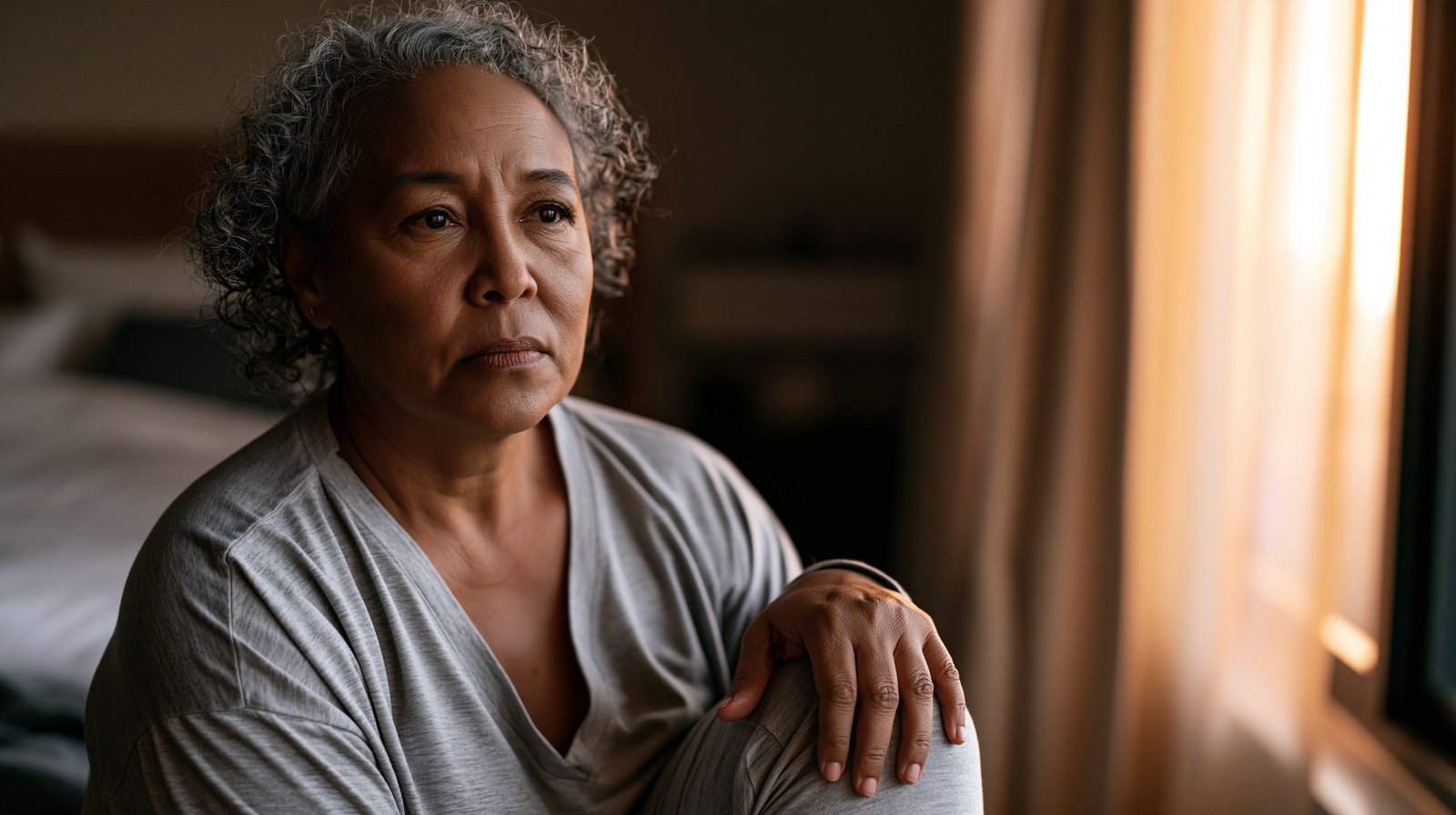
Carol had started keeping notes. Not formally, just a few words in her phone each morning about how her knees felt when she got up. After a few weeks, she noticed something. The bad knee mornings almost always followed the nights she had not slept well. She had not read anything about sleep and knee pain over 55. She had just paid attention.
The pattern she noticed is real, and it runs in both directions. Poor sleep makes knee pain worse the next day. Knee pain makes it harder to sleep. Research has confirmed both sides of that relationship, and there is a specific sleep threshold where knee pain starts to meaningfully improve.
Key Takeaway
Among adults 45 and older, poor sleep predicted future pain (OR 1.74) and pain predicted future poor sleep (OR 1.87) — each making the other harder to manage (Duan et al., 2024). In adults with comorbid knee OA and insomnia, reaching approximately 6.5 hours of sleep predicted clinically significant pain reduction at 6 months (Salwen et al., 2017).
This post covers whether sleep and knee pain over 55 are actually connected, why the relationship runs both ways, what the research says about improving sleep to reduce pain, and what this means for walking.
Ready to Find Out What Your Body Can Do?
It takes less than 3 minutes. No gym. No equipment. Just a simple test that shows you if your body can do more than it’s been telling you.
M3 is a behavioral wellness coaching program. It is not medical treatment and does not replace advice from your physician. Consult your doctor before beginning any new movement or nutrition program.
Table of Contents
Does poor sleep actually make knee pain worse?

Yes. And the evidence runs in both directions.
In a study of 169 adults aged 71 to 80 with radiographic knee OA, higher knee pain scores significantly predicted poor sleep quality. Half of the women reported poor sleep, and knee pain was one of the clearest predictors (Kirkham-Wilson et al., 2025).
The other direction is equally documented. A large longitudinal study found that poor sleep quality predicted future pain and pain predicted future poor sleep. Each condition made the other harder to manage (Duan et al., 2024). For adults who have noticed that their worst knee mornings follow their worst nights, this is not a coincidence. It is a documented pattern. If you want to understand why knee pain tends to feel worse at night, that post covers the nighttime mechanics specifically. What matters here is that sleep and knee pain over 55 are not separate problems. They are the same loop.
Why does knee pain make it harder to sleep?
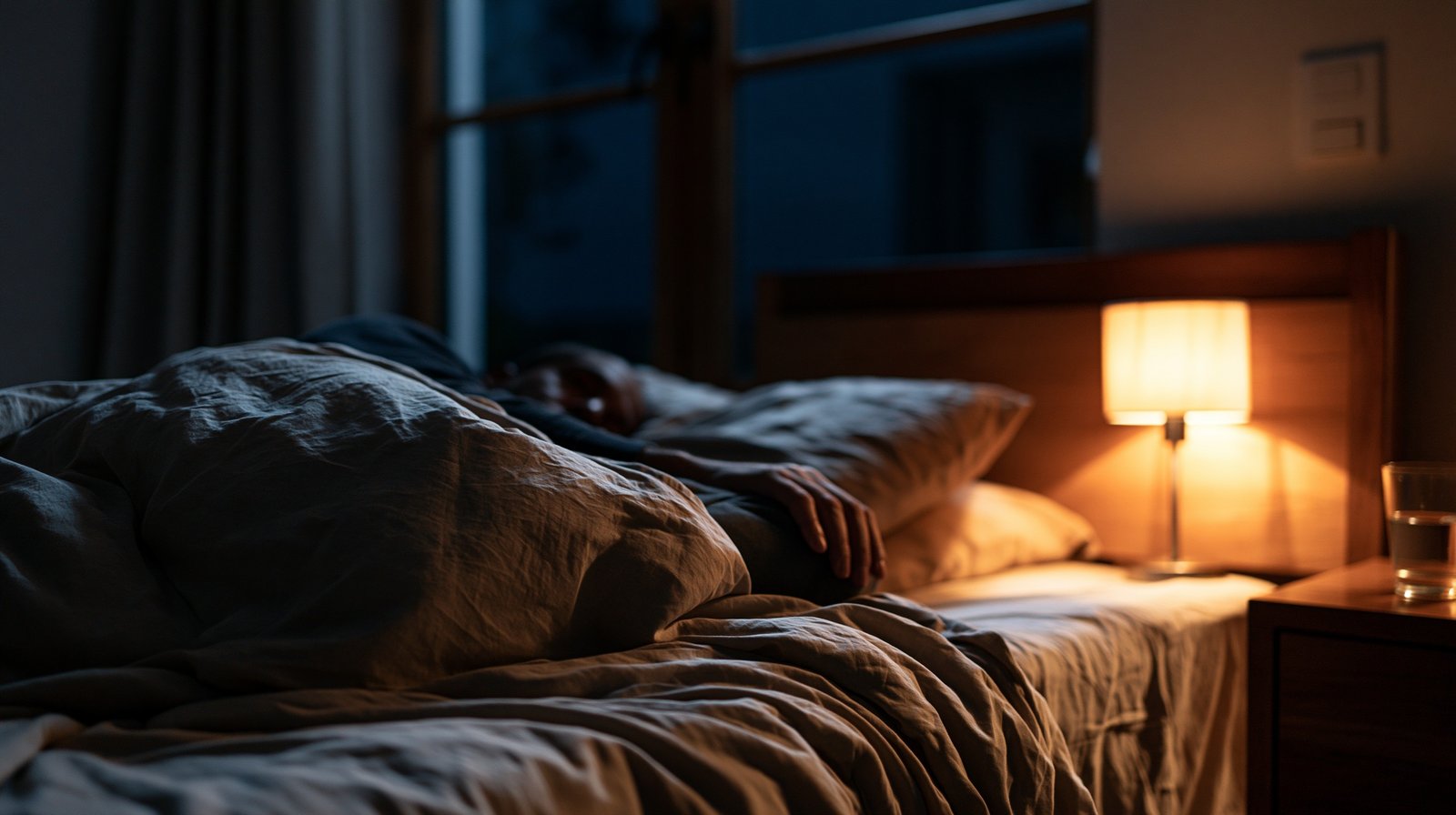
Three things happen when you try to sleep with a knee that has been managing pain all day.
The first is position. A knee with OA is sensitive to sustained pressure and certain angles. Lying still long enough to reach deep sleep means holding a position that the joint may not tolerate. Small adjustments wake you up, and over time, sleep becomes lighter and more fragmented.
The second is inflammation. OA is an inflammatory condition. Inflammatory signals do not stop at bedtime. Without the distraction of movement and activity, they are easier to notice.
The third is the nervous system. Chronic pain trains the body to stay more alert. A nervous system managing persistent knee pain becomes more vigilant, more likely to register discomfort that would otherwise stay below the threshold of awareness during sleep.
None of this means sleep is impossible with knee pain. It means sleep and knee pain over 55 interact in ways that require a specific approach rather than just trying harder to fall asleep.
Can improving your sleep reduce knee pain?
The research says yes, and it gives a specific threshold worth knowing.
In a clinical trial of adults with comorbid knee OA and insomnia, reaching approximately 6.5 hours of sleep by mid-treatment was the strongest predictor of clinically significant knee pain reduction at six months (Salwen et al., 2017).
A study of 327 adults aged 60 and older with chronic OA pain and insomnia found that those who improved their sleep in the first two months showed sustained reductions in pain, fatigue, and depression across 12 months (Vitiello et al., 2021). Six and a half hours is not an ambitious target. For many adults with knee pain, it simply does not happen. The morning knee stiffness that follows a poor night is one of the clearest signs that the body did not get enough restorative time. For adults managing sleep and knee pain over 55, improving sleep is not a workaround. It is one of the most direct routes toward less pain.
What does sleep have to do with walking?
Filename: sleep-and-knee-pain-over-55-walking-connection.jpg
More than most adults with knee pain realize.
Poor sleep amplifies pain signals the next morning. Fatigue compounds the effect. First steps that feel harder than they should are first steps that often do not happen. For adults building a walking practice, a bad night does not just affect how they feel. It affects whether they walk.
This is not a motivation problem. A body without enough restorative sleep is managing more pain and less capacity for movement before the day has started.
The good news is the relationship runs both ways. Better sleep means less morning pain and more consistent walks. Consistent walking supports better sleep. The loop that compounds the problem can also compound the solution.
Protecting sleep and knee pain over 55 as a connected pair is one of the most reliable ways to keep walking days on track. Learning how to walk with bad knees covers the walking side. The goal is walking 30 minutes. Better nights are one of the clearest paths toward it.
Wrap-up: Sleep and knee pain over 55
The relationship Carol noticed in her morning notes is real. Poor sleep makes knee pain harder to manage the next day. Knee pain makes it harder to sleep. And improving sleep toward that 6.5-hour threshold is associated with meaningful pain reductions over time.
Three honest facts from the research: the relationship runs both ways, the threshold is within reach, and better sleep nights produce better walking days.
The goal is not just sleeping through the night. The goal is walking 30 minutes, and better sleep is one of the clearest paths toward it.
Sleep and knee pain over 55 is one piece of a larger picture. The complete guide to knee pain relief for adults over 55 covers the full approach.
Ready to Find Out What Your Body Can Do?
It takes less than 3 minutes. No gym. No equipment. Just a simple test that shows you if your body can do more than it’s been telling you.
M3 is a behavioral wellness coaching program. It is not medical treatment and does not replace advice from your physician. Consult your doctor before beginning any new movement or nutrition program.
Frequently Asked Questions
Why is knee pain often worse in the morning after a bad night?
During sleep, joints that are not moving do not circulate synovial fluid, the lubricant that keeps knee cartilage working smoothly. A fragmented night compounds this. Less restorative sleep also means inflammatory signals have been active longer without the buffering effect of daytime movement. For adults managing sleep and knee pain over 55, the first steps of the day reflect the quality of the night before.
How many hours of sleep should adults over 55 with knee pain aim for?
Research on adults with comorbid knee OA and insomnia found that reaching approximately 6.5 hours of sleep predicted clinically significant pain reduction at six months. That is not a hard prescription, but it is a useful target. For adults where sleep and knee pain over 55 are both present, 6.5 hours is where the research suggests meaningful improvement begins.
Does sleeping position affect knee pain?
Yes. Side sleeping with a pillow placed between the knees reduces rotational stress on the hip and knee joint. Back sleeping with a pillow or rolled towel under the knees keeps them in a slightly flexed position, which many adults with OA find more comfortable. Stomach sleeping places the most strain on the knee and is worth avoiding if nighttime pain is a consistent problem.
Can napping help with knee pain and fatigue?
A short nap of 20 minutes or less can reduce afternoon fatigue without disrupting nighttime sleep. Longer naps, especially those over 45 minutes, can make it harder to fall asleep at night, which works against the sleep improvement goal. If fatigue from poor sleep is affecting daily activity, a brief early-afternoon rest is reasonable. Late-day or long naps are more likely to extend the problem than solve it.
Does exercise help with sleep when you have knee pain?
Yes, and this is one of the clearest examples of how sleep and knee pain over 55 respond to the same intervention. Regular walking and low-impact movement improve sleep quality in older adults by reducing inflammation, regulating the body’s internal clock, and reducing the nighttime anxiety that often accompanies chronic pain. Avoid vigorous exercise within two hours of bedtime, but gentle movement earlier in the day consistently supports better sleep.
What should you do if knee pain keeps you awake at night?
Start with a pillow between or under the knees, depending on sleep position. A light blanket over the knee can help with the temperature sensitivity that often increases at night with OA. If disrupted sleep and knee pain over 55 is a consistent nightly pattern rather than an occasional bad night, it is worth raising with your doctor before it compounds further.
References
Duan, Y., Yang, M., Luo, Q., Li, H., Kong, L., & Cheng, Q. (2024). Bidirectional relationship between pain and sleep disturbance in middle-aged and older adults: Evidence from the China Health and Retirement Longitudinal Study. Frontiers in Psychiatry, 15, 1485822. https://doi.org/10.3389/fpsyt.2024.1485822
Kirkham-Wilson, F., Westbury, L., Bevilacqua, G., Laskou, F., Fuggle, N., & Dennison, E. (2025). Relationships between pain, physical activity and sleep quality among older adults with radiographic knee osteoarthritis: Findings from the Hertfordshire Cohort Study. Aging Clinical and Experimental Research, 37, 77. https://doi.org/10.1007/s40520-025-03238-7
Salwen, J. K., Smith, M. T., & Finan, P. H. (2017). Mid-treatment sleep duration predicts clinically significant knee osteoarthritis pain reduction at 6 months: Effects from a behavioral sleep medicine clinical trial. Sleep, 40(2), zsw064. https://doi.org/10.1093/sleep/zsw064
Vitiello, M. V., Zhu, W., Von Korff, M., Wellman, R., Morin, C. M., & Yeung, K. (2021). Long-term improvements in sleep, pain, depression, and fatigue in older adults with comorbid osteoarthritis pain and insomnia. Sleep, 44(10), zsab231. https://doi.org/10.1093/sleep/zsab231
Leave a Reply