Tag: adults over 55

  • Why Is Knee Pain Worse at Night (And What Actually Helps)

    Why Is Knee Pain Worse at Night (And What Actually Helps)

    Maureen showed up to our first call exhausted. She told me her knees were fine most afternoons, and then 2 am would break her. Knee pain worse at night is common in adults over 55, and it has real physiological drivers.

    The ache would show up right when her body should have been at rest. She would end up staring at the ceiling for another forty-five minutes. If this sounds familiar, you are not alone.

    Research on older adults with knee osteoarthritis shows nighttime pain is genuinely higher than daytime pain. There are real reasons for this, and real things that help.

    Key Takeaway

    Most adults over 55 experience knee pain worse at night compared to during the day (van Berkel et al., 2023). In a study of 1,214 adults, nocturnal knee pain rose from 3.6% in those with no osteoarthritis to 75% in those with severe osteoarthritis (Sasaki et al., 2014). Behavioral changes reduce the disruption.

    This post covers why knee pain worsens at night, the sleep positions that reduce it, the evening habits that help, and what to do when pain wakes you up.

    Ready to Find Out What Your Body Can Do?

    It takes less than 3 minutes. No gym. No equipment. Just a simple test that shows you if your body can do more than it’s been telling you.

    Take the 3-Minute Walk Test

    M3 is a behavioral wellness coaching program. It is not medical treatment and does not replace advice from your physician. Consult your doctor before beginning any new movement or nutrition program.

    Is it normal for knee pain to get worse at night?

    Adult over 55 lying awake in bed at night experiencing knee pain that disrupts sleep.

    Short answer: yes, for most adults over 55 with osteoarthritis. In a large Japanese study of 1,214 adults with an average age of 58, researchers found that nocturnal knee pain showed up in about 1 in 5 people with mild osteoarthritis and in 3 out of 4 people with severe osteoarthritis (Sasaki et al., 2014).

    A Dutch study found the same pattern. Three out of four adults with hip or knee osteoarthritis reported pain at night, and they rated that pain higher than their daytime pain (van Berkel et al., 2023).

    If your knees wake you up when you are trying to sleep, you are not imagining it. This matches what a lot of us experience with knee pain worse at night.

    Why is knee pain worse at night after 55?
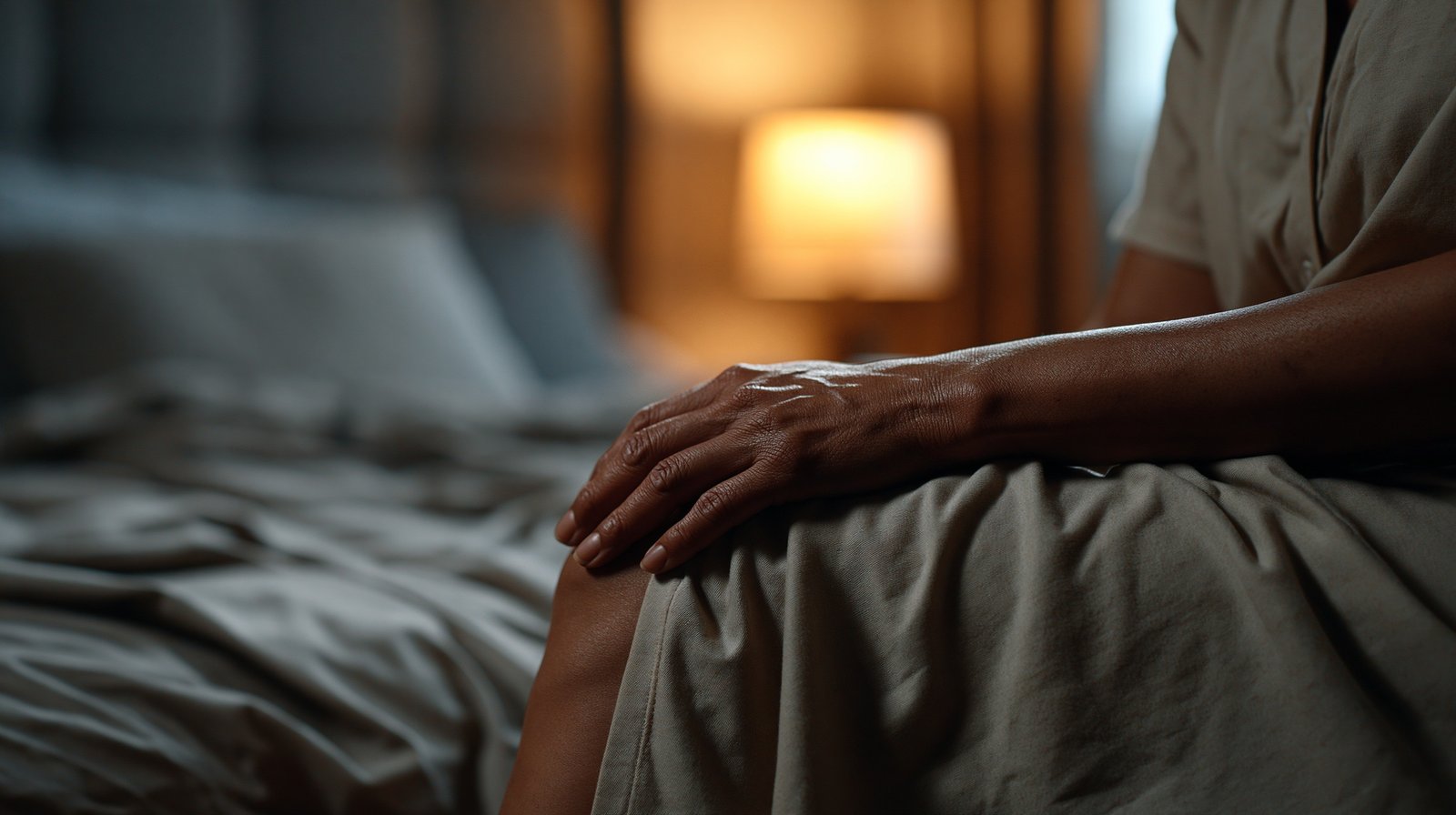
    Woman resting hand on knee at night illustrating nighttime knee pain after 55.

    Three factors stack up at night.

    The first is inflammation. A large study of 1,002 adults with early hip or knee pain found that higher blood markers of inflammation were linked to both the presence of nocturnal pain and its worsening over two years (van Berkel et al., 2022). Inflammation in the joint does not take a break when you do.

    The second is reduced daytime distraction. During the day, your attention is pulled in a dozen directions. At night, the house is quiet, and your knee has the floor.

    The third is joint wear that builds up after 55. Cartilage thins, and the tissue around the joint gets more sensitive. The same irritation you could ignore at 40 now keeps you awake. Knee pain worse at night tracks closely with how advanced the osteoarthritis is (Sasaki et al., 2014).

    What is the best sleeping position for knee pain?
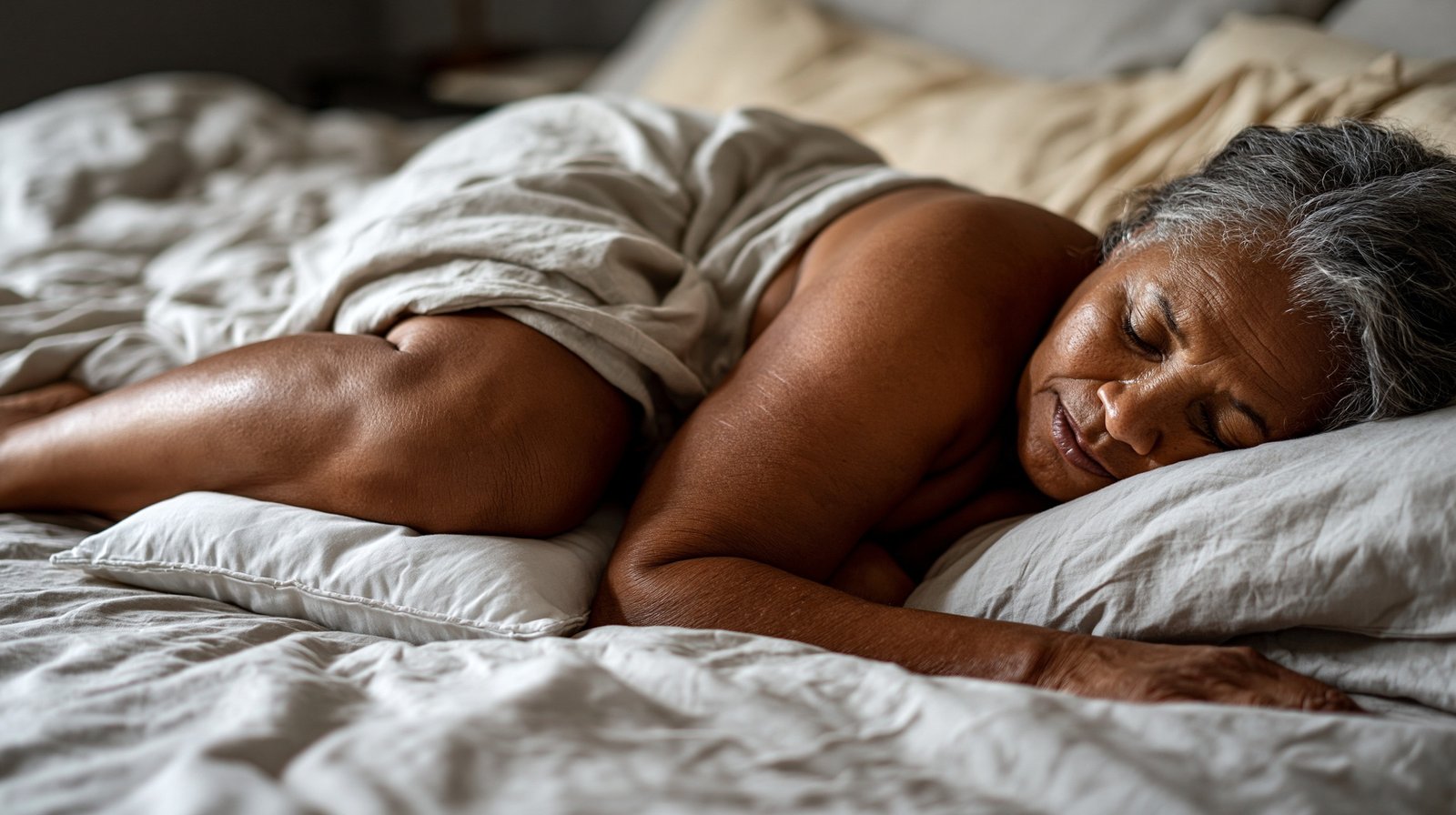
    Adult over 55 side sleeping with pillow between knees to reduce knee pain at night.

    For most adults over 55 with sore knees, side sleeping with a pillow between the knees is the most comfortable position. The pillow keeps your top knee from pressing down on your bottom knee and keeps your hips in a neutral line.

    If you sleep on your back, try a pillow under your knees. A small lift takes pressure off the joint and lets the muscles around the knee relax.

    Stomach sleeping is the one to avoid. It twists the knees outward and keeps them flat against the mattress all night. Most physical therapists will tell you the same thing.

    Your position at night is one of the simplest levers you have when knee pain is worse at night and is keeping you up. A supportive mattress matters too. One that is too soft lets your knees sag out of alignment.

    What evening habits help knee pain worse at night?

    Adult over 55 walking in the evening as part of a wind-down routine that helps knee pain at night.

    A few simple habits in the hour before bed make a real difference.

    The first is a gentle movement earlier in the evening. A short walk after dinner keeps the joint fluid moving and the muscles around the knee from stiffening up. The same pattern that helps with morning knee stiffness also helps at night.

    The second is warmth. A warm bath about an hour before bed relaxes the tissue around the joint.

    The third is a quiet wind-down. A research team followed 100 adults with knee osteoarthritis through a behavioral sleep program. Better sleep continuity, not pain reduction, shifted how they experienced pain (Lerman et al., 2017).

    Keep screens dim after 9 pm and the bedroom cool. Stacked together, these habits move the needle when knee pain is worse at night and keeps you up.

    What should you do when knee pain wakes you up?

    Adult over 55 sitting calmly on edge of bed during the night to shift position and ease knee pain.

    Pain at 3 am pulls you out of deep sleep fast. The more you lie there fighting it, the more wound up your nervous system gets.

    First, shift your position. If you are on your back, roll to your side with a pillow between your knees. If you are already on your side, flip to the other side. The joint has been loaded in one position for hours, and changing that often takes the edge off.

    If shifting does not work, get up for a few minutes. Walk slowly to the bathroom. A gentle 90 seconds of movement resets the joint without waking you fully.

    Skip the phone. Blue light will cost you another forty-five minutes. A calm position change handles knee pain worse at night better than powering through it.

    Wrap-up: Why knee pain gets worse at night (and what actually helps)

    Nighttime knee pain is real, and research points to why it happens. Inflammation does not clock out when you do, daytime distractions fall away, and the joint wear that builds up after 55 makes the whole system more sensitive.

    The good news is that what helps is also behavioral. A better sleep position. A pillow between the knees. Gentle evening movement. A calm wind-down hour. A quiet response when pain wakes you up at 3 am.

    Knee pain worse at night is one piece of a larger picture. If you want to understand the full approach, the complete guide to knee pain relief for adults over 55 is the place to start.

    Ready to Find Out What Your Body Can Do?

    It takes less than 3 minutes. No gym. No equipment. Just a simple test that shows you if your body can do more than it’s been telling you.

    Take the 3-Minute Walk Test

    M3 is a behavioral wellness coaching program. It is not medical treatment and does not replace advice from your physician. Consult your doctor before beginning any new movement or nutrition program.

    Frequently Asked Questions

    Is ice or heat better for knee pain before bed?

    Heat works better for most adults with nighttime knee pain. A warm compress or heating pad for 15 to 20 minutes before bed relaxes the muscles around the joint and helps you settle. Use ice only if the knee is visibly swollen or if you have had recent activity that flared it up.

    Can gentle stretching before bed help knee pain?

    Yes, short and easy stretches help. A 2-minute sequence of ankle circles, seated hamstring stretches, and slow knee bends eases the tissue around the joint before sleep. Keep the stretches light. Anything that sharpens the pain should stop. The point is to calm the area, not challenge it.

    Does nighttime knee pain mean my arthritis is getting worse?

    Not always. Pain intensity at night does track with osteoarthritis severity in population studies, but a rough night on its own does not mean your arthritis has progressed. Many adults with steady arthritis experience knee pain worse at night due to inflammation cycles. Talk to your doctor if the trend is one-way over weeks.

    How long before I see improvement in nighttime knee pain?

    Most adults notice some difference within 2 to 3 weeks of consistent changes. Sleep position and evening habits tend to show earlier. Broader shifts in knee pain, worse at night, usually take 6 to 12 weeks because tissue sensitivity and sleep patterns both need time to reset. Steady wins over dramatic.

    Why does knee pain sometimes feel different at night than during the day?

    Nighttime pain often has a deeper, steadier ache compared to the sharper mechanical pain of daytime use. Research on hip and knee osteoarthritis patients shows nighttime pain tends to be more constant, with higher worst-pain scores than daytime. The nervous system runs on different settings at night, which changes how pain is registered.

    When should you see a doctor about knee pain that wakes you up?

    See a doctor if knee pain is worse at night and is paired with visible swelling, redness, warmth, fever, sudden weakness, or pain that keeps intensifying over several weeks. A knee that locks or gives out is also worth a visit. Most nighttime knee pain is manageable with behavioral changes, but these specific signs need a clinical look.

    References

    Lerman, S. F., Finan, P. H., Smith, M. T., & Haythornthwaite, J. A. (2017). Psychological interventions that target sleep reduce pain catastrophizing in knee osteoarthritis. Pain, 158(11), 2189–2195. https://doi.org/10.1097/j.pain.0000000000001023

    Sasaki, E., Tsuda, E., Yamamoto, Y., Maeda, S., Inoue, R., Chiba, D., Okubo, N., Takahashi, I., Nakaji, S., & Ishibashi, Y. (2014). Nocturnal knee pain increases with the severity of knee osteoarthritis, disturbing patient sleep quality. Arthritis Care & Research, 66(7), 1027–1032. https://doi.org/10.1002/acr.22258

    van Berkel, A. C., Ringelenberg, R., Bindels, P. J. E., Bierma-Zeinstra, S. M. A., & Schiphof, D. (2023). Nocturnal pain, is the pain different compared with pain during the day? An exploratory cross-sectional study in patients with hip and knee osteoarthritis. Family Practice, 40(1), 75–82. https://doi.org/10.1093/fampra/cmac074

    van Berkel, A. C., van Spil, W. E., Schiphof, D., Runhaar, J., van Ochten, J. M., Bindels, P. J. E., & Bierma-Zeinstra, S. M. A. (2022). Associations between biomarkers of matrix metabolism and inflammation with pain and fatigue in participants suspected of early hip and or knee osteoarthritis: Data from the CHECK study. Osteoarthritis and Cartilage, 30(12), 1640–1646. https://doi.org/10.1016/j.joca.2022.08.013


  • Walking Shoes and Knee Pain After 55: The Honest Truth

    Walking Shoes and Knee Pain After 55: The Honest Truth

    A client told me last month she had bought three pairs of walking shoes in six months. Each time her knees felt better for a week, then worse again. The shoe was not the answer, and the research agrees.

    She was sure the fix was on a shelf somewhere. The right cushioning. The right brand. For her, walking shoes and knee pain were a shopping problem.

    I hear this every week. Adults over 55 trying to figure out walking shoes and knee pain almost always start with the shoe. It makes sense. The shoe is the part you can swap out today. Your body is not.

    What I see in clients’ lines up with what the studies show. Shoes matter less than most adults think.

    Key Takeaways

    Walking shoes affect how your knees feel during walking, but much less than most adults believe. A 2025 study found that walkers perceived clear differences between supportive and flexible footwear, while their actual movement showed no significant change (Katugam-Dechene et al., 2025). The honest truth on walking shoes and knee pain is that what you feel in a shoe and what your body does in it are often two different things.

    The rest of the post lays out the research, what walking shoes can and cannot do for knee pain, and a simple way to tell if your shoes or your body is driving the discomfort. discomfort.

    Ready to Find Out What Your Body Can Do?

    It takes less than 3 minutes. No gym. No equipment. Just a simple test that shows you if your body can do more than it’s been telling you.

    Take the 3-Minute Walk Test

    M3 is a behavioral wellness coaching program. It is not medical treatment and does not replace advice from your physician. Consult your doctor before beginning any new movement or nutrition program.

    Why do most adults blame their shoes first?

    Adult over 55 examining walking shoes in a store while considering options for knee pain.

    Because the shoe is the variable you can change today.

    You can swap out a shoe in an afternoon. You can read reviews and feel like you are doing something about the knee pain. The body underneath the shoe is harder to think about, and much harder to change.

    Marketing knows this. Every walking shoe ad tells you the right pair will change how you feel. And a new shoe does feel different for the first few walks.

    Here is where it gets interesting. In a 2025 study, adults completed walking tasks in two very different shoes: a supportive hiking boot and a flexible sneaker. Walkers reported clear differences between the two. Their actual movement data showed almost none (Katugam-Dechene et al., 2025).

    The shoe feels different. The body does what it was going to do anyway. This is the core of the research on walking shoes and knee pain. What you feel is not what your body does.

    What do walking shoes actually do for knee pain?

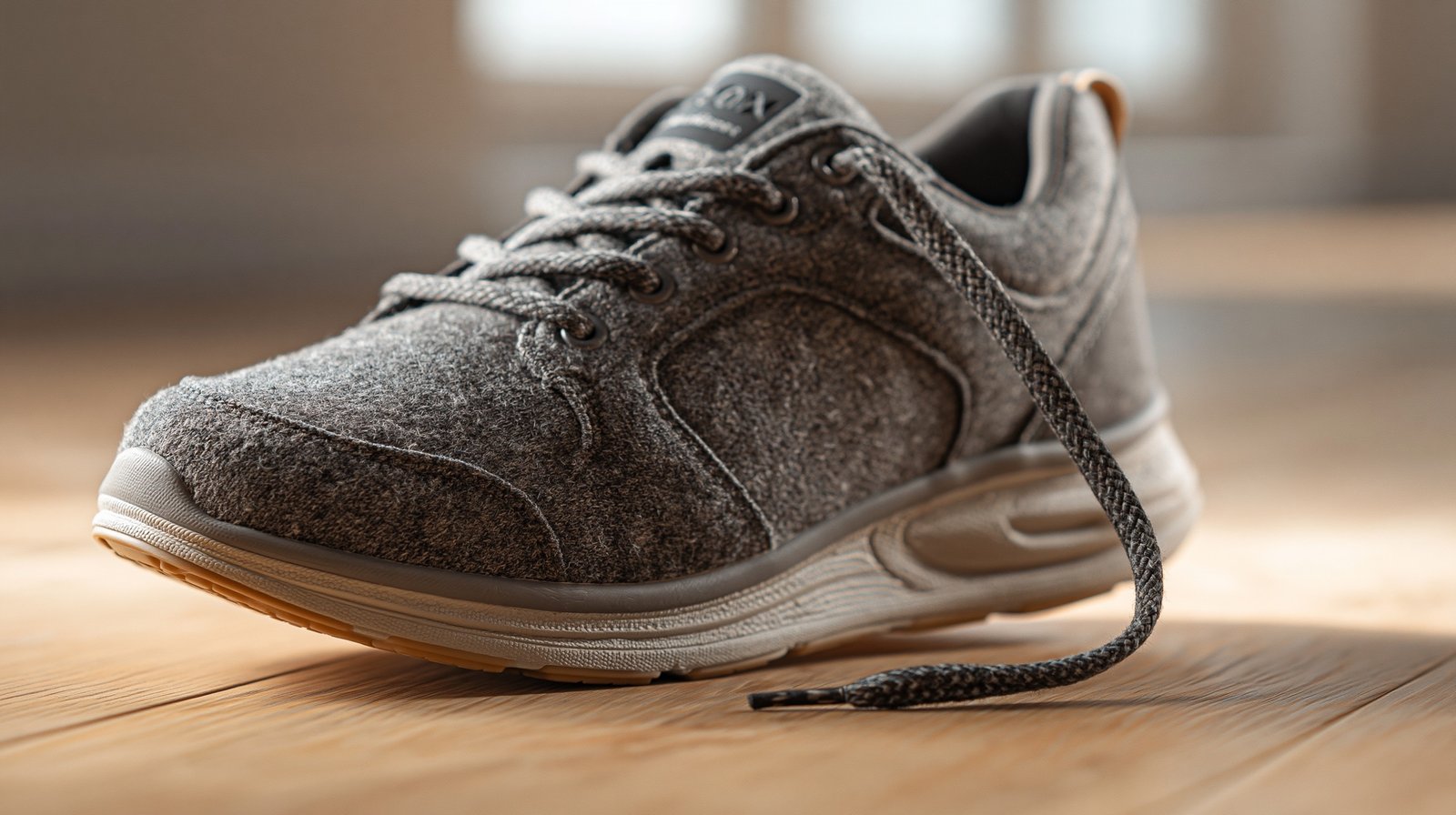
    Close-up of a modern walking shoe showing midsole cushioning, illustrating shoe construction features discussed in the article.

    Less than most adults hope. More than nothing. That is the summary on walking shoes and knee pain.

    Shoes change how force travels through your knee. They shift where the load lands and how your leg muscles respond. The right shoe nudges these things in a better direction. The effect is real, but small.

    One study shows the ceiling plainly. Researchers designed a variable-stiffness shoe for one purpose: to reduce knee load in adults with medial compartment knee osteoarthritis. Engineers who understood the biomechanics built it from the ground up. The result was a reduction in the knee adduction moment of about 7 percent (Jenkyn et al., 2011).

    A follow-up tracked the same shoes over six months in patients with knee pain. Pain scores and function improved, but the gains were modest, and the control group also saw some improvement (Erhart et al., 2010).

    That is the honest answer on walking shoes and knee pain. Shoes help a little. They do not fix what is happening underneath.

    Can the wrong walking shoes make knee pain worse?

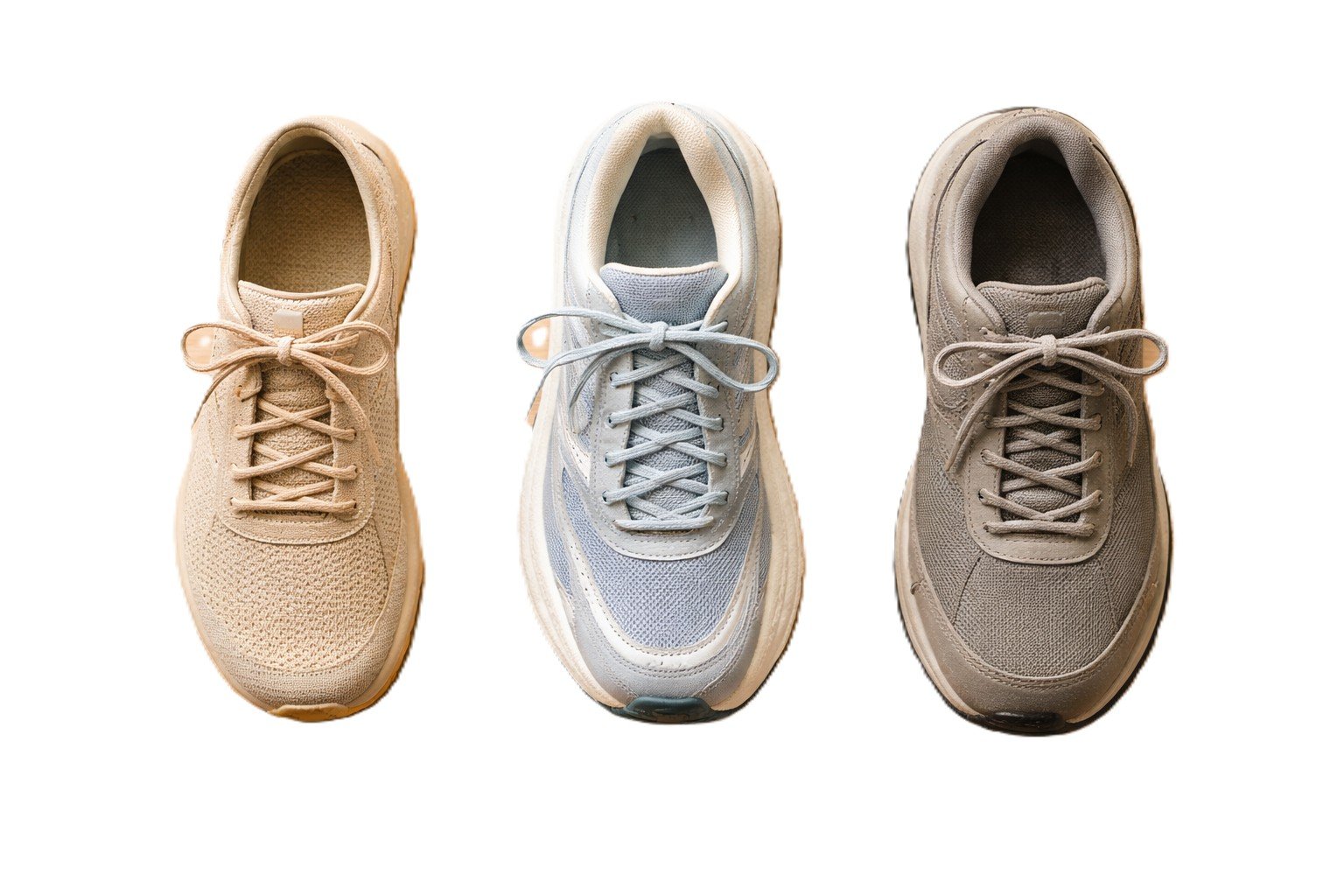
    Three walking shoes arranged together comparing minimalist, cushioned, and standard designs discussed in the article.

    Yes. This is the honest counterweight to walking shoes and knee pain.

    A 2021 study measured joint loads directly during walking using instrumented hip prostheses. Shoes with very stiff soles or elaborate cushioning increased hip joint loads compared to barefoot walking (Palmowski et al., 2021). Expensive and supportive does not automatically mean better for painful joints.

    Researchers tested shoe features for balance in adults. Their recommendation after comparing soft soles, elevated heels, raised collars, and tread patterns was simple: a standard laced shoe with a low collar and a standard sole hardness (Menant et al., 2008). The fancy features did not help. Several made the balance worse.

    Shoe wear matters too. Worn-out shoes change how your leg muscles stabilize your knee during walking (Jafarnezhadgero et al., 2020). If your knees hurt in an older pair, the answer may not be a fancier new pair. It may be any reasonable shoe that fits and is not broken down.

    When clients ask about walking shoes and knee pain, this is where the conversation lands. Less is often more.

    When should you actually replace your walking shoes?

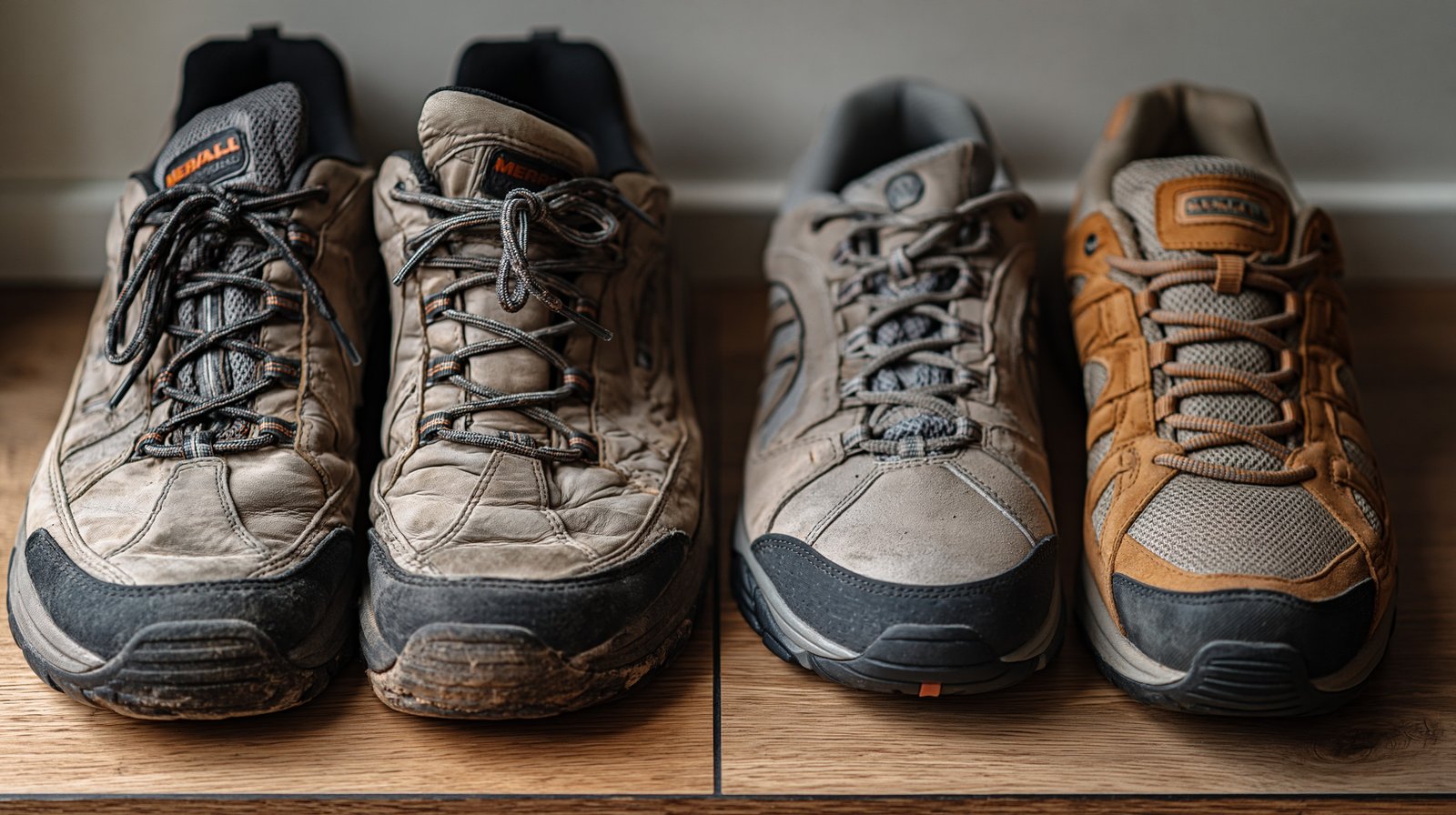
    Comparison of a worn walking shoe and a newer walking shoe showing signs of wear that indicate replacement time.

    Between 300 and 500 miles, or about every six months, for daily walkers. A worn shoe is often the real driver of walking shoes and knee pain troubles.

    The research gives a reason beyond the odometer. Studies tracking shoe use over six months show measurable changes in shoe stiffness and in the muscle co-contraction patterns your body uses to stabilize your knee and ankle during walking (Jafarnezhadgero et al., 2021). Your shoes are not the same at month six as they were at month one.

    Three quick checks if you are wondering whether your shoes are done. Look at the outsole for smooth, worn patches where the tread used to be. Press the midsole with your thumb. If it stays compressed, the cushioning is gone.

    Then check the flex point at the ball of the foot. A shoe that folds easily in the middle instead is past its life. That folding test alone catches a lot of worn shoes, and it can be one real reason adults over 55 struggle with walking shoes and knee pain in an older pair.

    How do you know if your shoes are the problem or your body is?

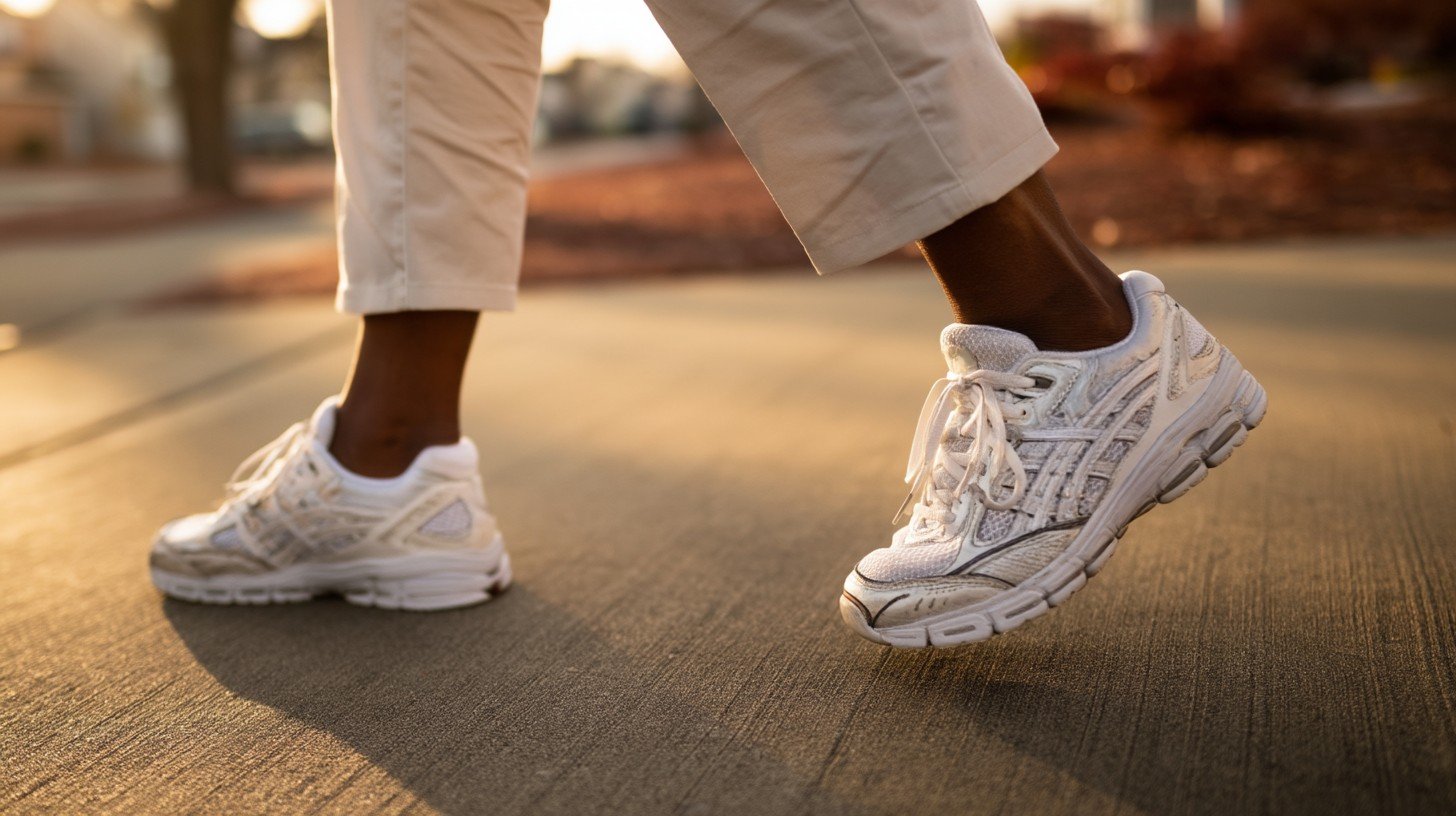
    Adult over 55 walking comfortably outdoors during a diagnostic walk test to evaluate knee comfort.

    You test it.

    If your shoes are driving the discomfort, changing shoes or changing how you walk should change how your knees feel. If your shoes are not the main factor, your knees will respond to how you walk, not to what you wear.

    That is what the Walk Test is for. It is a short three-day check that uses a simple walking pattern most adults over 55 can do in their own neighborhood. The test is not about your shoes. It is about what your body can do when you give it a specific kind of walk.

    Three days is long enough to see a pattern. Short enough that you will not give up on it.

    If your comfort changes across the three days, you have an answer. You have also learned something about walking shoes and knee pain that no shoe review can tell you. The answer to walking shoes and knee pain is about your body, not about your shoes. That is where any real solution starts.

    Wrap-up: Walking shoes and knee pain after 55

    The short version is this. Shoes matter, but less than most adults think. Even shoes engineered specifically to reduce knee load change joint forces by modest amounts. Too much cushioning or stiffness can work against you.

    A worn-out shoe changes how your body moves, which is a better reason to replace shoes than any brand recommendation. If you have been asking which walking shoe will solve your knee pain, the better question is what your body is doing when you walk. For the structural side, the post on why your knees hurt when you walk covers what is happening underneath.

    Walking shoes and knee pain are one piece of a larger picture. For the full approach to knee pain relief for adults over 55, the complete guide is the place to start.

    Ready to Find Out What Your Body Can Do?

    It takes less than 3 minutes. No gym. No equipment. Just a simple test that shows you if your body can do more than it’s been telling you.

    Take the 3-Minute Walk Test

    M3 is a behavioral wellness coaching program. It is not medical treatment and does not replace advice from your physician. Consult your doctor before beginning any new movement or nutrition program.

    Frequently Asked Questions

    Are cushioned shoes or supportive shoes better for knee pain after 55?

    The research is mixed, but newer evidence leans toward supportive over cushioned. A 2019 Australian trial of 164 adults over 50 with knee osteoarthritis found that 58 percent of participants wearing sturdy supportive shoes reported meaningful pain reduction, compared to 40 percent wearing flat flexible shoes (Paterson et al., 2019). For adults facing walking shoe and knee pain choices, support tends to outperform cushion alone.

    Are running shoes better than walking shoes for knee pain after 55?

    Not for most adults. Running shoes are built for repeated high-impact landings, which means stiffer heels and more aggressive forefoot geometry than your walking stride needs. A well-fitted walking shoe or a neutral athletic shoe usually feels better during long walks. Running shoes can work if they fit your foot and feel comfortable for your pace.

    Do rocker-bottom shoes help with knee pain when you walk?

    Sometimes. Rocker-bottom shoes shift how your foot rolls through each step, which can reduce load on the knee for some walkers. Research on specialized rocker designs found modest benefits similar to standard walking shoes. If a rocker bottom feels more comfortable during a full walk, it may be worth trying. If not, a standard walking shoe works fine.

    Why do your knees hurt more after walking on hard surfaces?

    Hard surfaces return more force to your joints with each step. Concrete and asphalt give you almost no give, so your shoes and your body absorb everything. Softer surfaces like grass, dirt paths, and rubberized tracks cushion the impact. If your usual walking route is all sidewalks, adding even one softer-surface walk per week can reduce cumulative strain.

    How do you break in new walking shoes if your knees already hurt?

    Start with short walks of 10 to 15 minutes for the first three or four days. New shoes change how force travels through your legs, and your muscles need time to adapt. If your knees feel worse after a new pair for more than two weeks of regular use, the fit may be wrong for your foot. A specialty walking store can help you check.

    How do you break in new walking shoes if your knees already hurt?

    Start with short walks of 10 to 15 minutes for the first three or four days. New shoes change how force travels through your legs, and your muscles need time to adapt. If your knees feel worse after two weeks of regular use, the fit may be wrong. A specialty walking store can help you check.

    References

    Erhart, J. C., Mündermann, A., Elspas, B., Giori, N. J., & Andriacchi, T. P. (2010). Changes in knee adduction moment, pain, and functionality with a variable-stiffness walking shoe after 6 months. Journal of Orthopaedic Research, 28(7), 873–879. https://doi.org/10.1002/jor.21077

    Jafarnezhadgero, A. A., Anvari, M., & Granacher, U. (2020). Long-term effects of shoe mileage on ground reaction forces and lower limb muscle activities during walking in individuals with genu varus. Clinical Biomechanics, 73, 55–62. https://doi.org/10.1016/j.clinbiomech.2020.01.006

    Jafarnezhadgero, A. A., Piran Hamlabadi, M., Anvari, M., & Zago, M. (2021). Long-term effects of shoe mileage on knee and ankle joints muscle co-contraction during walking in females with genu varus. Gait & Posture, 89, 74–79. https://doi.org/10.1016/j.gaitpost.2021.07.004

    Jenkyn, T. R., Erhart, J. C., & Andriacchi, T. P. (2011). An analysis of the mechanisms for reducing the knee adduction moment during walking using a variable stiffness shoe in subjects with knee osteoarthritis. Journal of Biomechanics, 44(7), 1271–1276. https://doi.org/10.1016/j.jbiomech.2011.02.013

    Katugam-Dechene, K., Cook, A., Nguyen, A., Smith, R., Shelton, A., & Franz, J. R. (2025). The effects of shoe structural features on agility and stability tasks during walking. PeerJ, 13. https://doi.org/10.7717/peerj.19930

    Menant, J. C., Perry, S. D., Steele, J. R., Menz, H. B., Munro, B. J., & Lord, S. R. (2008). Effects of shoe characteristics on dynamic stability when walking on even and uneven surfaces in young and older people. Archives of Physical Medicine and Rehabilitation, 89(10), 1970–1976. https://doi.org/10.1016/j.apmr.2008.02.031

    Palmowski, Y., Popović, S., Kosack, D., & Damm, P. (2021). Analysis of hip joint loading during walking with different shoe types using instrumented total hip prostheses. Scientific Reports, 11(1), 10073. https://doi.org/10.1038/s41598-021-89611-8

  • Knee Pain Relief for Adults Over 55: The Complete Guide

    Knee Pain Relief for Adults Over 55: The Complete Guide

    Knee pain relief for adults over 55 comes down to three factors working together: how you move, what you eat, and how you think about your body. Rest alone does not change the pattern. A Cochrane review of 54 trials found that exercise consistently improves function and reduces discomfort in adults with knee osteoarthritis (Fransen et al., 2015). This guide covers all three factors and links to the research behind each one.

    I spent years telling people that knee pain was something you managed, not something you changed. That was wrong. Not because I was trying to mislead anyone. Because nobody had shown me the full picture yet.

    The research on knee pain and adults over 55 is clearer than I expected. Movement done correctly does not make knee pain worse. What you eat affects how your joints feel every single day. And the way I think about my own knees, what I believed was possible after three surgeries, turned out to matter more than I ever would have guessed.

    None of those three factors works as well alone as all three do together. That is the idea behind everything on this page.

    The three factors that determine outcomes

    Most adults who find me have already tried to fix this. They pushed through the pain and paid for it the next day. They followed a walking program or a YouTube routine and ended up worse off than when they started. After a few rounds of that, stopping movement feels like the safe choice.

    It is not wrong to stop something that is hurting you. What was missing was not effort. It was a starting point that matched where they actually were, not where a generic program assumed they would be.

    Here is what the research points to when all three factors are addressed together.

    Movement is the factor most adults get backwards. The instinct when something hurts is to move less. For chronic knee pain in adults over 55, the opposite is true. Joints need movement to stay lubricated. The muscles around your knee need regular load to stay capable of absorbing the force each step produces (Doherty, 2003). A Cochrane review of 54 trials confirmed that exercise consistently improves function and reduces discomfort in adults with knee osteoarthritis (Fransen et al., 2015). The key is not how much you move. It is how you start.

    Meals affect the inflammatory environment your joints are operating in every single day. Chronic joint discomfort has an inflammatory component. Foods that drive systemic inflammation raise your baseline before you take a single step. Foods that lower it, fatty fish, leafy greens, olive oil, and berries, work in the other direction over weeks and months of consistent choices. No food reverses structural joint changes. But the environment your joints are working in matters more than most people expect.

    Mindfulness is the factor that gets dismissed most often. What you believe about your body shapes what you attempt. What you tell yourself during a difficult walk shapes whether you go again tomorrow. The behavioral side of chronic knee pain is real, measurable, and addressable. It does not fix the joint. It determines whether everything else you do actually sticks.

    None of those three factors works as well alone as all three do together. That is what M3 is built on.

    Ready to Find Out What Your Body Can Do?

    It takes less than 3 minutes. No gym. No equipment. Just a simple test that shows you if your body can do more than it’s been telling you.

    Take the 3-Minute Knee Test

    M3 is a behavioral wellness coaching program. It is not medical treatment and does not replace advice from your physician. Consult your doctor before beginning any new movement or nutrition program.

    What does a 90-day path to walking 30 minutes actually look like?

    Close-up of a mature adult's feet in supportive white sneakers taking a deliberate step on a flat suburban sidewalk, warm morning light casting a soft shadow
    What does a 90-day path to walking 30 minutes actually look like?

    Most programs hand you a schedule and assume you are starting from a reasonable baseline. A 20-minute walk three times a week. A set of exercises you do in the morning. For adults over 55 who have been avoiding movement because it hurts, that is not a starting point. That is week six of someone else’s program.

    A realistic 90-day path starts where you actually are.

    The first month is about one thing: showing your body that movement is safe. Sessions are short, often two to three minutes. The goal is not fitness. It is not progress in the traditional sense. It is proof. Proof that you can move without paying for it the next day. That proof is what makes everything after it possible.

    The second month builds on that foundation. Sessions get longer. Consistency becomes the focus. You are not just moving. You are building a pattern your body recognizes and expects. That shift from occasional effort to daily habit is where most programs fail people. It is also where the research is clearest about what works.

    The third month is when the goal becomes real. Thirty minutes of brisk walking, done comfortably, without cutting it short. Not because you pushed through. Because you built toward it correctly from the beginning.

    Nothing in this post substitutes for a conversation with your physician. If you are uncertain whether your knee pain is safe to work with, start there.

    Ready to Find Out What Your Body Can Do?

    It takes less than 3 minutes. No gym. No equipment. Just a simple test that shows you if your body can do more than it’s been telling you.

    Take the 3-Minute Knee Test

    M3 is a behavioral wellness coaching program. It is not medical treatment and does not replace advice from your physician. Consult your doctor before beginning any new movement or nutrition program.

    Walking and knee pain

    A man in his late 50s stretching his legs on a park bench before a morning walk, relaxed and prepared expression, dappled sunlight through trees, green foliage
    Walking and knee pain

    These posts cover the research on walking safely with knee pain, why movement helps rather than hurts, and how to build a walking habit that sticks.

    Food and joint health

    A wooden kitchen table with a flat lay arrangement of anti-inflammatory foods, wild salmon fillet, fresh blueberries, leafy spinach, olive oil bottle, sliced ginger root, warm natural light from a window
    Food and joint health

    These posts cover the connection between what you eat and how your joints feel, with specific foods backed by research.

    The mental side of knee pain

    A woman in her early 60s sitting quietly on a porch step in the early morning, eyes closed, hands relaxed in her lap, soft golden light
    The mental side of knee pain

    These posts cover the emotional and behavioral dimensions of living with chronic knee pain, and what actually helps.

    What you wear and use

    A close-up flat lay of a pair of supportive cushioned walking sneakers on a wooden floor beside a water bottle and a simple fitness tracker, warm natural light
    What you wear and use

    These posts cover footwear, surfaces, and gear choices that affect how your knees respond to walking.

    Rest and recovery

    A mature adult man sleeping peacefully in a softly lit bedroom, white bedding, early morning light through sheer curtains
    Rest and recovery

    These posts cover the relationship between sleep quality and joint health in adults over 55.

    Knees and everyday movement

    A woman in her late 50s descending a short flight of outdoor steps carefully and confidently, holding a light grocery bag, warm afternoon light, calm suburban setting
    Knees and everyday movement

    These posts cover the moments between walks: stairs, chairs, cars, and the daily habits that add up.

    Walking in every season

    A split composition showing the same suburban walking path across four seasons, spring blossoms, summer green, autumn leaves, light winter frost
    Walking in every season

    These posts cover how temperature, humidity, and seasonal changes affect knee pain and walking habits.

    Ready to Find Out What Your Body Can Do?

    It takes less than 3 minutes. No gym. No equipment. Just a simple test that shows you if your body can do more than it’s been telling you.

    Take the 3-Minute Knee Test

    M3 is a behavioral wellness coaching program. It is not medical treatment and does not replace advice from your physician. Consult your doctor before beginning any new movement or nutrition program.

    Wrap-up: knee pain relief for adults over 55

    Knee pain after 55 is not a verdict. It is a pattern. And patterns respond to the right approach applied consistently over time.

    Everything on this page points in the same direction. Move correctly. Eat in a way that lowers your baseline inflammation. Address the mental side of living with chronic joint concerns. None of those three works as well alone as all three do together.

    The posts in each section above go deeper into every piece of this. Start wherever the question is most urgent for you right now. The 3-Minute Knee Test is the place to begin if you are not sure where that is.

    References

    Doherty, T. J. (2003). Invited review: Aging and sarcopenia. Journal of Applied Physiology, 95(4), 1717–1727. https://doi.org/10.1152/japplphysiol.00347.2003

    Fransen, M., McConnell, S., Harmer, A. R., Van der Esch, M., Simic, M., & Bennell, K. L. (2015). Exercise for osteoarthritis of the knee: A Cochrane systematic review. British Journal of Sports Medicine, 49(24), 1554–1557. https://doi.org/10.1136/bjsports-2015-095424

    Calder, P. C. (2013). Omega-3 polyunsaturated fatty acids and inflammatory processes: Nutrition or pharmacology? British Journal of Clinical Pharmacology, 75(3), 645–662. https://doi.org/10.1111/j.1365-2125.2012.04374.x

    Urquhart, D. M., Phyomaung, P. P., Dubowitz, J., Fernando, S., Wluka, A. E., Raajmaakers, P., Wang, Y., & Cicuttini, F. M. (2015). Are cognitive and behavioural factors associated with knee pain? A systematic review. Seminars in Arthritis and Rheumatism, 44(4), 445–455. https://doi.org/10.1016/j.semarthrit.2014.07.005