
Maureen showed up to our first call exhausted. She told me her knees were fine most afternoons, and then 2 am would break her. Knee pain worse at night is common in adults over 55, and it has real physiological drivers.
The ache would show up right when her body should have been at rest. She would end up staring at the ceiling for another forty-five minutes. If this sounds familiar, you are not alone.
Research on older adults with knee osteoarthritis shows nighttime pain is genuinely higher than daytime pain. There are real reasons for this, and real things that help.
Key Takeaway
Most adults over 55 experience knee pain worse at night compared to during the day (van Berkel et al., 2023). In a study of 1,214 adults, nocturnal knee pain rose from 3.6% in those with no osteoarthritis to 75% in those with severe osteoarthritis (Sasaki et al., 2014). Behavioral changes reduce the disruption.
This post covers why knee pain worsens at night, the sleep positions that reduce it, the evening habits that help, and what to do when pain wakes you up.
Ready to Find Out What Your Body Can Do?
It takes less than 3 minutes. No gym. No equipment. Just a simple test that shows you if your body can do more than it’s been telling you.
M3 is a behavioral wellness coaching program. It is not medical treatment and does not replace advice from your physician. Consult your doctor before beginning any new movement or nutrition program.
Table of Contents
Is it normal for knee pain to get worse at night?
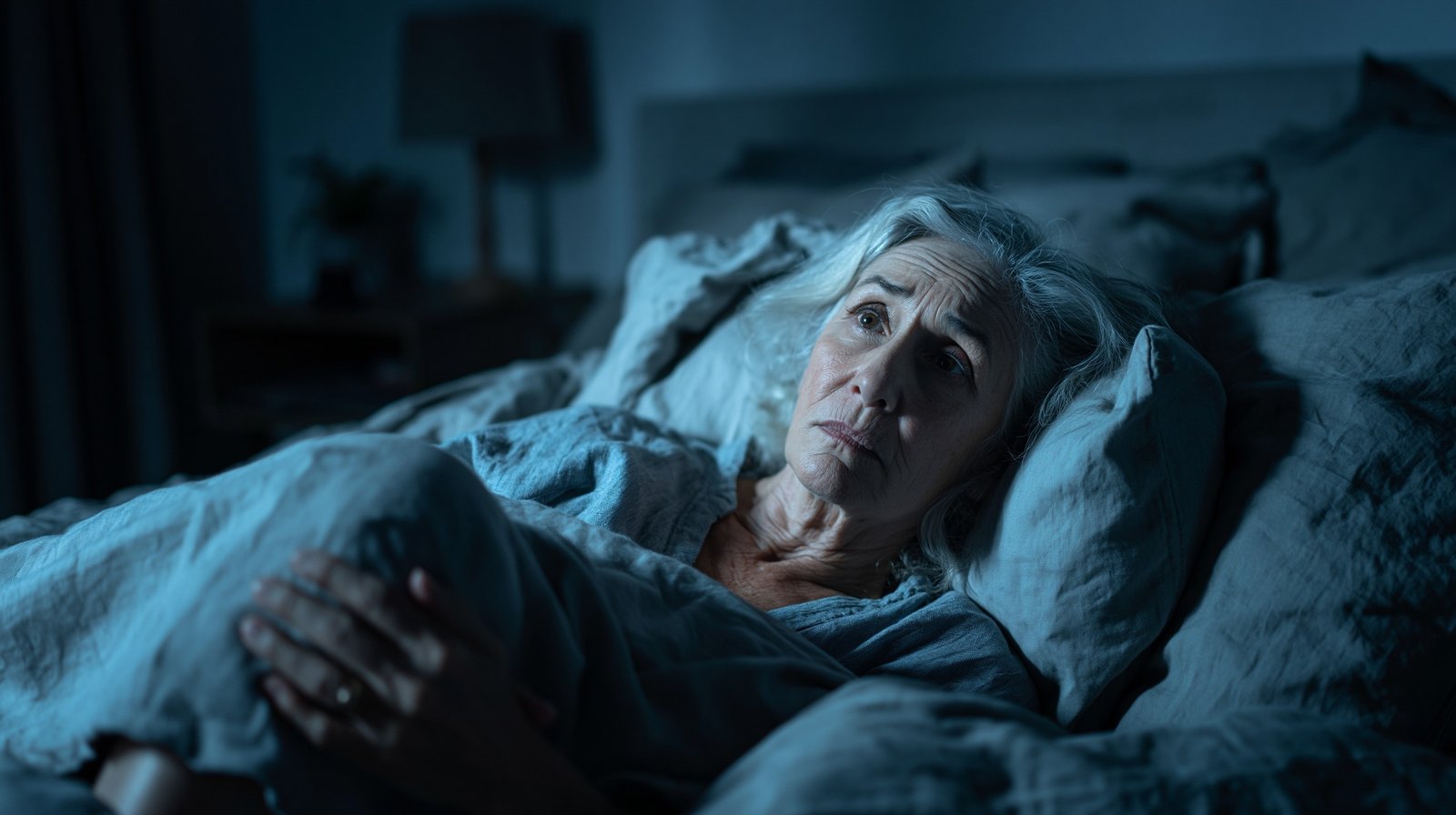
Short answer: yes, for most adults over 55 with osteoarthritis. In a large Japanese study of 1,214 adults with an average age of 58, researchers found that nocturnal knee pain showed up in about 1 in 5 people with mild osteoarthritis and in 3 out of 4 people with severe osteoarthritis (Sasaki et al., 2014).
A Dutch study found the same pattern. Three out of four adults with hip or knee osteoarthritis reported pain at night, and they rated that pain higher than their daytime pain (van Berkel et al., 2023).
If your knees wake you up when you are trying to sleep, you are not imagining it. This matches what a lot of us experience with knee pain worse at night.
Why is knee pain worse at night after 55?
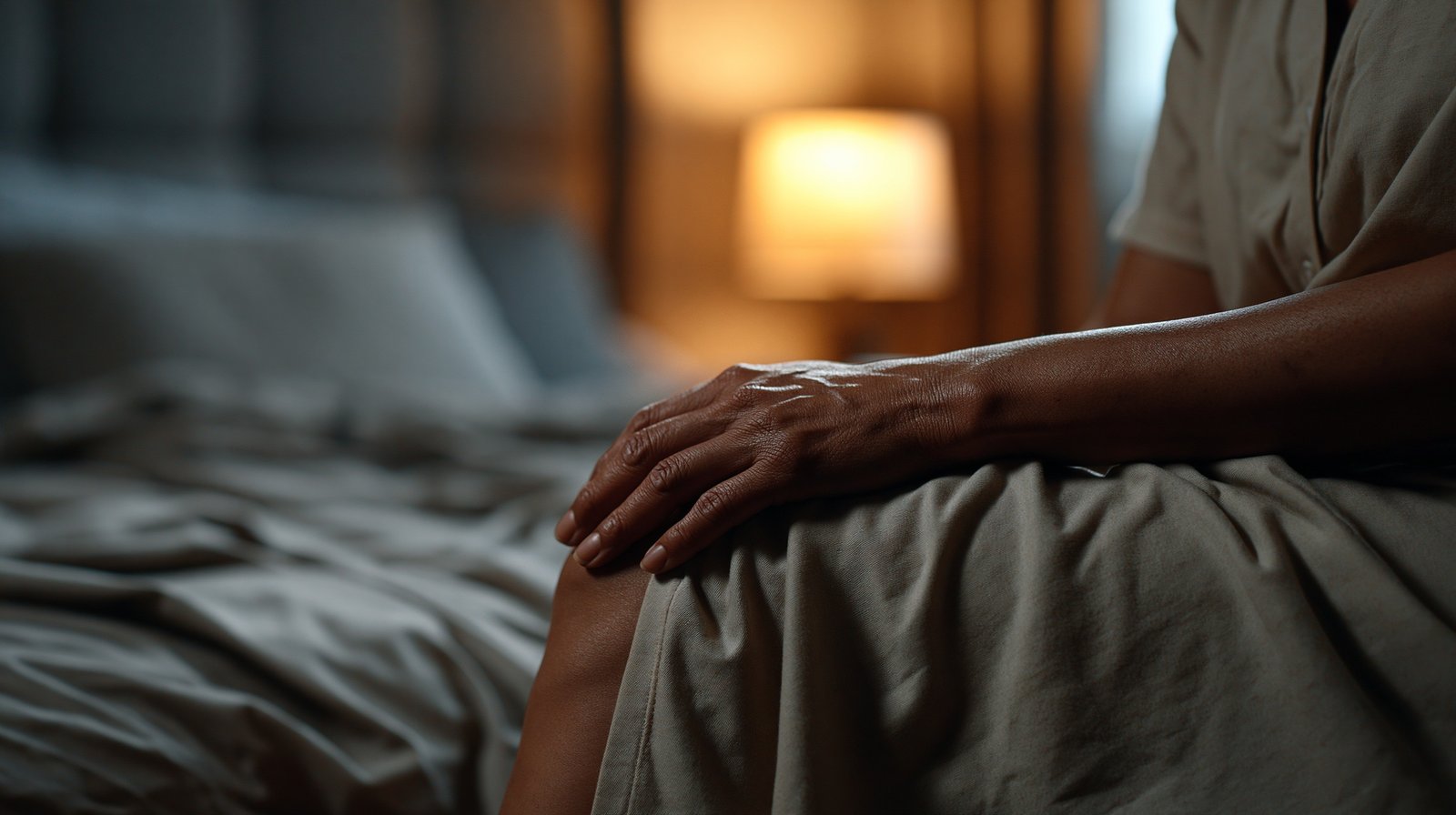
Three factors stack up at night.
The first is inflammation. A large study of 1,002 adults with early hip or knee pain found that higher blood markers of inflammation were linked to both the presence of nocturnal pain and its worsening over two years (van Berkel et al., 2022). Inflammation in the joint does not take a break when you do.
The second is reduced daytime distraction. During the day, your attention is pulled in a dozen directions. At night, the house is quiet, and your knee has the floor.
The third is joint wear that builds up after 55. Cartilage thins, and the tissue around the joint gets more sensitive. The same irritation you could ignore at 40 now keeps you awake. Knee pain worse at night tracks closely with how advanced the osteoarthritis is (Sasaki et al., 2014).
What is the best sleeping position for knee pain?

For most adults over 55 with sore knees, side sleeping with a pillow between the knees is the most comfortable position. The pillow keeps your top knee from pressing down on your bottom knee and keeps your hips in a neutral line.
If you sleep on your back, try a pillow under your knees. A small lift takes pressure off the joint and lets the muscles around the knee relax.
Stomach sleeping is the one to avoid. It twists the knees outward and keeps them flat against the mattress all night. Most physical therapists will tell you the same thing.
Your position at night is one of the simplest levers you have when knee pain is worse at night and is keeping you up. A supportive mattress matters too. One that is too soft lets your knees sag out of alignment.
What evening habits help knee pain worse at night?

A few simple habits in the hour before bed make a real difference.
The first is a gentle movement earlier in the evening. A short walk after dinner keeps the joint fluid moving and the muscles around the knee from stiffening up. The same pattern that helps with morning knee stiffness also helps at night.
The second is warmth. A warm bath about an hour before bed relaxes the tissue around the joint.
The third is a quiet wind-down. A research team followed 100 adults with knee osteoarthritis through a behavioral sleep program. Better sleep continuity, not pain reduction, shifted how they experienced pain (Lerman et al., 2017).
Keep screens dim after 9 pm and the bedroom cool. Stacked together, these habits move the needle when knee pain is worse at night and keeps you up.
What should you do when knee pain wakes you up?

Pain at 3 am pulls you out of deep sleep fast. The more you lie there fighting it, the more wound up your nervous system gets.
First, shift your position. If you are on your back, roll to your side with a pillow between your knees. If you are already on your side, flip to the other side. The joint has been loaded in one position for hours, and changing that often takes the edge off.
If shifting does not work, get up for a few minutes. Walk slowly to the bathroom. A gentle 90 seconds of movement resets the joint without waking you fully.
Skip the phone. Blue light will cost you another forty-five minutes. A calm position change handles knee pain worse at night better than powering through it.
Wrap-up: Why knee pain gets worse at night (and what actually helps)
Nighttime knee pain is real, and research points to why it happens. Inflammation does not clock out when you do, daytime distractions fall away, and the joint wear that builds up after 55 makes the whole system more sensitive.
The good news is that what helps is also behavioral. A better sleep position. A pillow between the knees. Gentle evening movement. A calm wind-down hour. A quiet response when pain wakes you up at 3 am.
Knee pain worse at night is one piece of a larger picture. If you want to understand the full approach, the complete guide to knee pain relief for adults over 55 is the place to start.
Ready to Find Out What Your Body Can Do?
It takes less than 3 minutes. No gym. No equipment. Just a simple test that shows you if your body can do more than it’s been telling you.
M3 is a behavioral wellness coaching program. It is not medical treatment and does not replace advice from your physician. Consult your doctor before beginning any new movement or nutrition program.
Frequently Asked Questions
Is ice or heat better for knee pain before bed?
Heat works better for most adults with nighttime knee pain. A warm compress or heating pad for 15 to 20 minutes before bed relaxes the muscles around the joint and helps you settle. Use ice only if the knee is visibly swollen or if you have had recent activity that flared it up.
Can gentle stretching before bed help knee pain?
Yes, short and easy stretches help. A 2-minute sequence of ankle circles, seated hamstring stretches, and slow knee bends eases the tissue around the joint before sleep. Keep the stretches light. Anything that sharpens the pain should stop. The point is to calm the area, not challenge it.
Does nighttime knee pain mean my arthritis is getting worse?
Not always. Pain intensity at night does track with osteoarthritis severity in population studies, but a rough night on its own does not mean your arthritis has progressed. Many adults with steady arthritis experience knee pain worse at night due to inflammation cycles. Talk to your doctor if the trend is one-way over weeks.
How long before I see improvement in nighttime knee pain?
Most adults notice some difference within 2 to 3 weeks of consistent changes. Sleep position and evening habits tend to show earlier. Broader shifts in knee pain, worse at night, usually take 6 to 12 weeks because tissue sensitivity and sleep patterns both need time to reset. Steady wins over dramatic.
Why does knee pain sometimes feel different at night than during the day?
Nighttime pain often has a deeper, steadier ache compared to the sharper mechanical pain of daytime use. Research on hip and knee osteoarthritis patients shows nighttime pain tends to be more constant, with higher worst-pain scores than daytime. The nervous system runs on different settings at night, which changes how pain is registered.
When should you see a doctor about knee pain that wakes you up?
See a doctor if knee pain is worse at night and is paired with visible swelling, redness, warmth, fever, sudden weakness, or pain that keeps intensifying over several weeks. A knee that locks or gives out is also worth a visit. Most nighttime knee pain is manageable with behavioral changes, but these specific signs need a clinical look.
References
Lerman, S. F., Finan, P. H., Smith, M. T., & Haythornthwaite, J. A. (2017). Psychological interventions that target sleep reduce pain catastrophizing in knee osteoarthritis. Pain, 158(11), 2189–2195. https://doi.org/10.1097/j.pain.0000000000001023
Sasaki, E., Tsuda, E., Yamamoto, Y., Maeda, S., Inoue, R., Chiba, D., Okubo, N., Takahashi, I., Nakaji, S., & Ishibashi, Y. (2014). Nocturnal knee pain increases with the severity of knee osteoarthritis, disturbing patient sleep quality. Arthritis Care & Research, 66(7), 1027–1032. https://doi.org/10.1002/acr.22258
van Berkel, A. C., Ringelenberg, R., Bindels, P. J. E., Bierma-Zeinstra, S. M. A., & Schiphof, D. (2023). Nocturnal pain, is the pain different compared with pain during the day? An exploratory cross-sectional study in patients with hip and knee osteoarthritis. Family Practice, 40(1), 75–82. https://doi.org/10.1093/fampra/cmac074
van Berkel, A. C., van Spil, W. E., Schiphof, D., Runhaar, J., van Ochten, J. M., Bindels, P. J. E., & Bierma-Zeinstra, S. M. A. (2022). Associations between biomarkers of matrix metabolism and inflammation with pain and fatigue in participants suspected of early hip and or knee osteoarthritis: Data from the CHECK study. Osteoarthritis and Cartilage, 30(12), 1640–1646. https://doi.org/10.1016/j.joca.2022.08.013
Leave a Reply