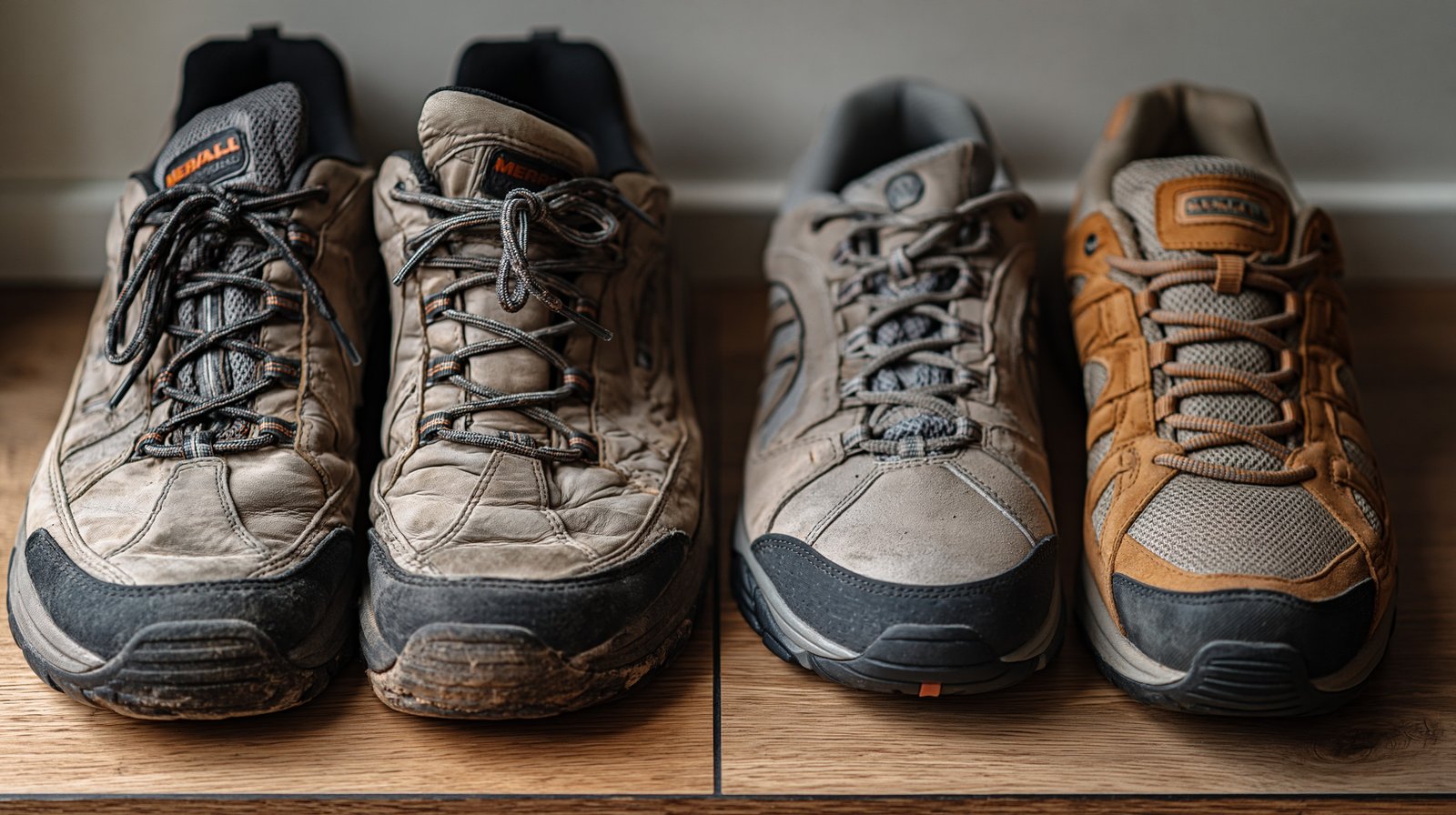
Margaret had bought two different pairs of insoles in the year before our first session. Neither made a noticeable difference. She assumed she had chosen the wrong type. When I asked what kind she had tried, she described the angled ones that the pharmacy had recommended for knee pain.
The research on insoles for knee pain has a clear and honest answer to Margaret’s experience. In a pooled analysis of 13 randomized controlled trials involving 1,086 adults with knee OA, researchers found that orthopedic insoles as a category do not reliably relieve pain or improve function. The issue was not Margaret’s choice. It was the category (Yu et al., 2021).
Key Takeaways
A meta-analysis of 13 RCTs in 1,086 adults with knee OA found orthopedic insoles do not relieve pain or improve function (Yu et al., 2021). A separate meta-analysis of 10 RCTs in 938 patients found lateral wedge insoles specifically ineffective (Zhang et al., 2018). A systematic review of 34 studies found the features with the most benefit were arch support, shock absorption, and full-length design (Zafar et al., 2020).
This post covers what the research shows about insoles for knee pain, why the most commonly marketed type has the weakest evidence, what features show the most consistent benefit, and how insoles fit into walking with knee pain.
Ready to Find Out What Your Body Can Do?
It takes less than 3 minutes. No gym. No equipment. Just a simple test that shows you if your body can do more than it’s been telling you.
M3 is a behavioral wellness coaching program. It is not medical treatment and does not replace advice from your physician. Consult your doctor before beginning any new movement or nutrition program.
Table of Contents
Do insoles help with knee pain?

Based on the best available pooled evidence, not reliably.
A meta-analysis of 13 randomized controlled trials with a combined total of 1,086 adults with knee OA found that orthopedic insoles do not provide relief of pain or improve functionality in patients with knee OA (Yu et al., 2021). This was a summary of 13 separate trials, not one outlier study.
The finding does not mean insoles are harmful or useless for every individual. It means that across the types of insoles most commonly studied and used, the evidence does not support the expectation that putting something in your shoe will meaningfully reduce knee pain or improve how far you can walk.
Margaret’s two pairs fit this pattern exactly. The research on whether knee braces help with knee pain follows a similar arc. Insoles for knee pain and knee braces share the same story: heavily marketed, commonly purchased, and consistently underwhelming in clinical trials.
Why do lateral wedge insoles get so much attention if they do not help?
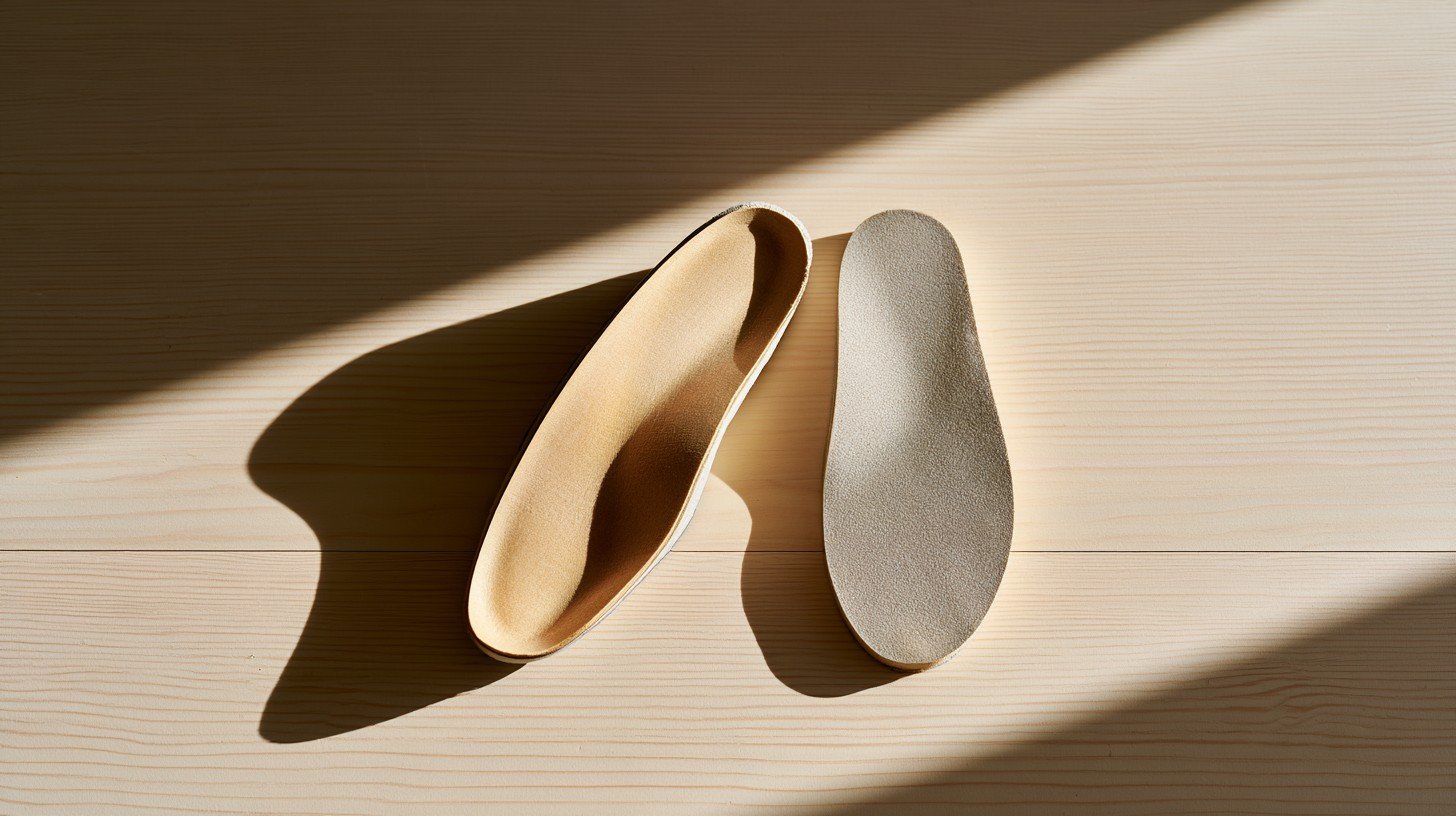
Because the theory behind them is logical. The execution is where it breaks down.
Most knee OA affects the inner side of the knee joint, where roughly 60 to 90 percent of body weight load travels during walking. Lateral wedge insoles tilt the foot outward, designed to shift some of that load away from the inner knee. The biomechanical idea made sense. Studies confirmed that a small shift in loading does occur.
But the shift does not translate to less pain or better function. A meta-analysis of 10 trials in 938 patients found lateral wedge insoles ineffective at improving pain and function in medial knee OA (Zhang et al., 2018). A follow-up trial customized lateral wedge insoles using individual biomechanical analysis for each patient and still found the results minimal and without clinical significance compared to neutral insoles (Ferreira et al., 2021).
The lateral wedge story is a useful lesson for insoles for knee pain broadly. A plausible mechanism and a measurable biomechanical shift are not the same as clinical benefit.
What insole features does the research support?

Three in particular, and they appear consistently across the evidence.
A systematic review of 34 studies looked at which insole features showed the most benefit for biomechanics, function, or pain in knee OA. The features that came up most consistently were arch support, shock absorption, and full-length design (Zafar et al., 2020).
Arch support: Stabilizes foot position and reduces the rotational stress that travels up through the ankle into the knee with each step.
Shock absorption: Cushions the impact of each step before it reaches the knee. Softer, denser material in the insole absorbs some of that force before the joint has to manage it.
Full-length design: Distributes load across the whole foot rather than concentrating it at the heel. Shorter heel-only insoles leave the forefoot unmanaged during the push-off phase of each step.
These are features to look for, not brand names. The same principles apply to walking shoes for knee pain, where insoles for knee pain and the full shoe structure work together.
What about custom orthotics for knee pain?

Custom orthotics are a different category from what is sold in a pharmacy, and the evidence around them is more nuanced.
A literature review of 42 studies on orthotic devices for medial knee OA found that while lateral wedge insoles did not support pain reduction, certain ankle-foot orthoses showed evidence for pain relief and load reduction (Mahmoodi et al., 2023). The picture is not the same for all orthotic types.
Custom orthotics are prescription devices. A podiatrist or physician assesses your specific foot structure, gait pattern, and joint loading before designing something built for your mechanics rather than the average foot. The rationale for this individual approach is stronger than for a generic OTC insole. Whether it translates to meaningfully better outcomes for knee OA pain specifically is still an area where the evidence is limited.
If you are considering custom orthotics for knee pain, speak with your physician or podiatrist before purchasing. Custom orthotics are medical devices that require professional assessment and fitting.
How do insoles fit into the bigger picture of walking with knee pain?

As one small supporting variable, not a solution on its own.
The research confirms that insoles for knee pain do not reliably reduce pain or improve walking distance. What the evidence does point toward is that arch support, shock absorption, and full-length design may make walking more comfortable over time, even without changing the underlying joint condition.
For adults who want to try them: look for those three features, skip the lateral wedge unless a podiatrist has a specific reason to recommend it, and be realistic about what an insole can do. It is inside the shoe. The joint is above it.
What carries more weight is how you walk, how consistently you walk, and whether the walking habit stays intact. The goal is walking 30 minutes. An insole that makes the first few steps more comfortable is a useful tool on the path to that. Learning how to walk with bad knees addresses the mechanics that insoles cannot change.
Wrap-up: Insoles for knee pain
Margaret stopped blaming her choices. The research explains what she experienced across two different pairs. Three findings worth keeping: orthopedic insoles as a category do not reliably relieve pain or improve function in clinical trials. Lateral wedge insoles specifically have been tested extensively across nearly 2,000 patients in multiple meta-analyses and found to be ineffective, even when customized by biomechanical analysis. The features with the most consistent research support are arch support, shock absorption, and full-length design.
The goal is walking 30 minutes. Insoles for knee pain are a supporting variable on that path, not the determining one. What goes inside the shoe matters less than how consistently you use the shoe.
Insoles for knee pain are one piece of a larger picture. The complete guide to knee pain relief for adults over 55 covers the full approach.
Ready to Find Out What Your Body Can Do?
It takes less than 3 minutes. No gym. No equipment. Just a simple test that shows you if your body can do more than it’s been telling you.
M3 is a behavioral wellness coaching program. It is not medical treatment and does not replace advice from your physician. Consult your doctor before beginning any new movement or nutrition program.
Frequently asked questions
What type of insoles are best for knee pain?
Based on the research, look for full-length insoles with clear arch support and good shock absorption. These are the features most consistently linked to benefit in studies of insoles for knee pain. Avoid insoles marketed specifically as lateral wedge or angled designs unless a podiatrist has prescribed them for a specific reason. Features matter more than price or brand.
Can insoles make knee pain worse?
It is uncommon but possible. An insole that creates an unusual foot angle or places pressure in the wrong location can change walking mechanics in a way that increases stress on the knee. This is one reason lateral wedge insoles do not work reliably for everyone despite a sound theory. If your knee pain increases after starting a new insole, stop using it and consult your physician.
How long should you try insoles before deciding if they help?
Most research trials testing insoles ran for 12 weeks or longer. If you are going to see a benefit, it will likely appear within the first 4 to 6 weeks of consistent daily use. A few days is not long enough. If there is no noticeable change after 6 to 8 weeks of regular use, the insole is unlikely to make a meaningful difference.
Is there a meaningful difference between OTC insoles and custom orthotics for knee pain?
The rationale for custom orthotics is stronger because they are designed for your specific foot mechanics. But the evidence that custom orthotics outperform OTC options for knee OA pain specifically is limited. The primary distinction is the professional assessment involved. Custom orthotics are prescribed and fitted by a podiatrist or physician, which changes both the device and the clinical context.
Do insoles help more with knee pain on hard floors than on softer surfaces?
Hard floors transmit more impact force through the foot with each step, making the shock absorption function of an insole more relevant. Insoles for knee pain with good cushioning reduce some of that force before it reaches the joint. This does not change the overall clinical evidence, but shock-absorbing insoles on hard floors are operating in the context where their most studied benefit applies.
Should you wear insoles in all your shoes or just walking shoes?
Starting with walking shoes makes the most sense because that is where the most step volume happens. If insoles for knee pain are helping in walking shoes, extending them to other shoes you wear for extended periods, such as work shoes or casual shoes worn throughout the day, is reasonable. There is no research benefit to wearing them in shoes you use briefly or infrequently.
References
Ferreira, V., Machado, L., Vilaça, A., Xará-Leite, F., & Roriz, P. (2021). Effects of tailored lateral wedge insoles on medial knee osteoarthritis based on biomechanical analysis: 12-week randomized controlled trial. Clinical Rehabilitation, 35(9), 1235–1246. https://doi.org/10.1177/0269215521997988
Mahmoodi, M., Arazpour, M., & Mousavi, M. E. (2023). Evaluation of the effect of knee unloader orthoses, lateral wedge insoles, and ankle foot orthoses on pain, function, and knee adduction moment in subjects with medial compartment knee osteoarthritis: A literature review. JPO: Journal of Prosthetics and Orthotics, 35(2). https://doi.org/10.1097/jpo.0000000000000459
Yu, L., Wang, Y., Yang, J., Wang, J., & Zhang, Y. (2021). Effects of orthopaedic insoles on patients with knee osteoarthritis: A meta-analysis and systematic review. Journal of Rehabilitation Medicine, 53(5), jrm00191. https://doi.org/10.2340/16501977-2836
Zafar, A. Q., Zamani, R., & Akrami, M. A. (2020). The effectiveness of foot orthoses in the treatment of medial knee osteoarthritis: A systematic review. Gait & Posture, 76, 238–251. https://doi.org/10.1016/j.gaitpost.2019.12.016
Zhang, J., Wang, Q., & Zhang, C. (2018). Ineffectiveness of lateral-wedge insoles on the improvement of pain and function for medial knee osteoarthritis: A meta-analysis of controlled randomized trials. Archives of Orthopaedic and Trauma Surgery, 138(10), 1453–1462. https://doi.org/10.1007/s00402-018-3004-z