Blog

  • The Link Between Inflammation and Sleep Quality Over 55

    The Link Between Inflammation and Sleep Quality Over 55

    Beverly tracked her sleep for three weeks before our first session. Nights she slept poorly were followed by days when her knees felt heavier and her walks felt harder. She assumed pain was keeping her awake. The research on inflammation and sleep quality over 55 shows the mechanism runs in the other direction too.

    A meta-analysis of 72 studies totaling more than 50,000 adults found that sleep disturbance was significantly associated with elevated CRP and IL-6, two well-established markers of systemic inflammation. The association held across cohort studies after controlling for age, weight, and health status (Irwin et al., 2016). Poor sleep does not just leave adults tired. It leaves them measurably more inflamed.

    Key Takeaway

    In a meta-analysis of 72 studies in more than 50,000 adults, sleep disturbance was associated with higher CRP and IL-6, both markers of systemic inflammation (Irwin et al., 2016). Among older adults with slow gait speed, elevated IL-6 and CRP independently predicted major mobility disability, defined as the inability to walk a quarter mile (Beavers et al., 2021).

    This post covers what the research shows about inflammation and sleep quality over 55, why the effect compounds with age, how elevated inflammation affects walking ability, and what the three-pillar approach offers in response.

    Ready to Find Out What Your Body Can Do?

    It takes less than 3 minutes. No gym. No equipment. Just a simple test that shows you if your body can do more than it’s been telling you.

    Take the 3-Minute Walk Test

    M3 is a behavioral wellness coaching program. It is not medical treatment and does not replace advice from your physician. Consult your doctor before beginning any new movement or nutrition program.

    What does research show about inflammation and sleep quality over 55?
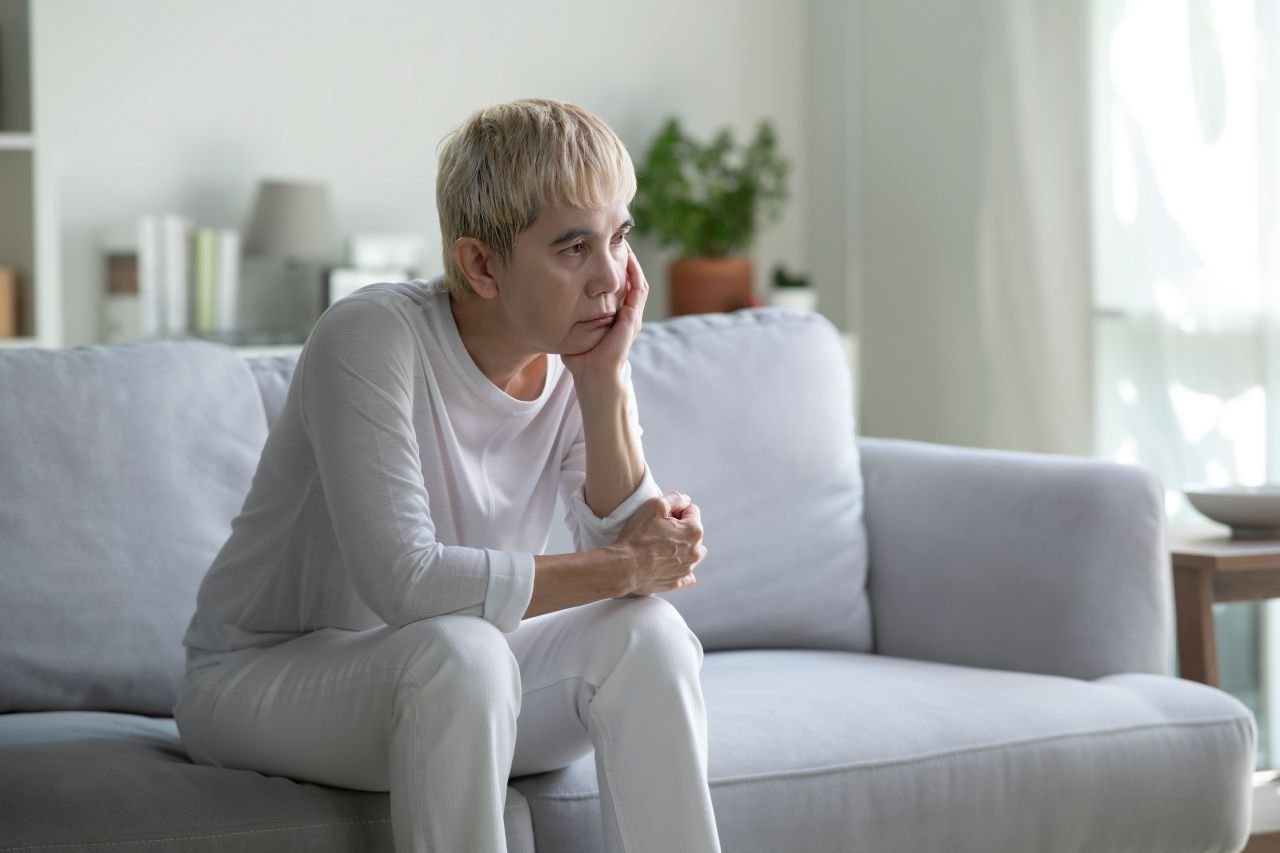
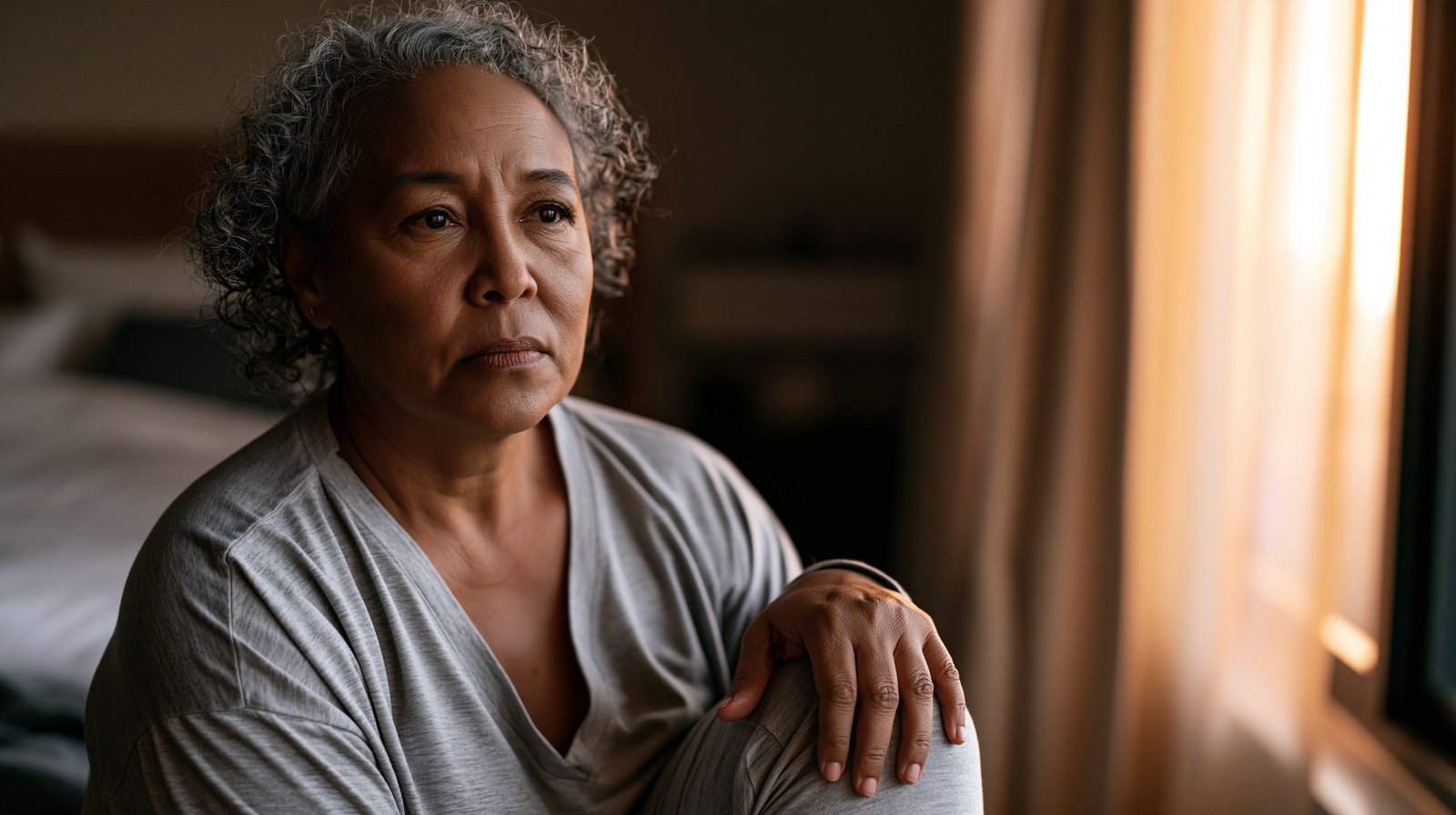
    Adult woman over 55 sitting in an armchair after poor sleep illustrating how inflammation and sleep quality over 55 affect morning energy and joint comfort.

    A consistent association, documented across more than 50,000 adults in multiple independent cohort studies.

    The meta-analysis analyzed 72 studies assessing CRP and IL-6 across participants with varying sleep profiles. Sleep disturbance was associated with higher CRP (effect size 0.12, 95% CI 0.05 to 0.19) and higher IL-6 (effect size 0.20, 95% CI 0.08 to 0.31). Both shorter and longer sleep durations were associated with elevated CRP. Long sleep duration was also associated with higher IL-6. The associations held after controlling for demographic and health variables (Irwin et al., 2016).

    Disrupted, inconsistent, or insufficient sleep across the normal range produces measurable inflammatory effects at the population scale. Not just extreme deprivation.

    For adults who have noticed that inflammation and sleep quality over 55 seem to move together, this research confirms that the observation is biologically grounded. The relationship between sleep and knee pain is well established at the behavioral level. The mechanism that drives it is what this research makes visible.

    What is inflammaging, and why does it matter after 55?

    Warm morning light on an empty kitchen table representing the daily biological rhythm that inflammaging disrupts in adults over 55 managing poor sleep and joint pain.

    Inflammaging is the term researchers use for the chronic low-grade systemic inflammation that increases with normal aging. Not inflammation triggered by infection or injury. The background level, the baseline inflammatory activity that rises gradually as the body ages, even in otherwise healthy adults.

    Adults over 55 are already carrying higher baseline inflammation than they did at 35. When poor sleep adds to that baseline, the starting point is higher, and the compound effect is larger. The threshold at which elevated inflammatory markers begin to affect physical function and walking capacity is reached sooner.

    This is not a disease. It is a documented feature of normal aging. What matters is that two of the most modifiable contributors to inflammaging are sleep quality and physical activity. Beverly’s pattern of poor nights followed by harder walks is not random. It is inflammation and sleep quality over 55, compounding each other on a weekly cycle.

    How does elevated inflammation affect the ability to walk?
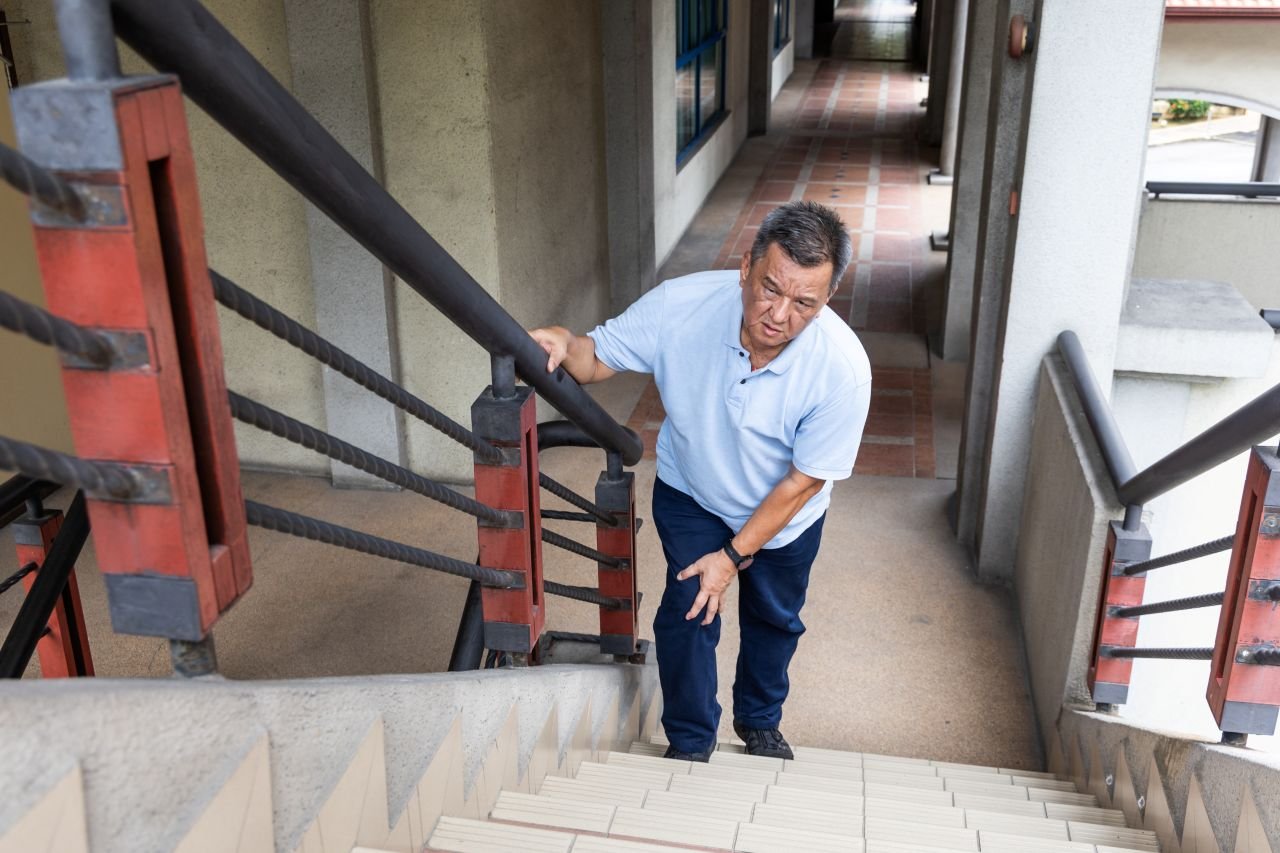
    Adult man over 55 at the bottom of outdoor stairs with a cautious posture showing how elevated inflammation affects walking capacity and mobility in older adults.

    By narrowing the margin the body has to sustain consistent movement.

    A pooled analysis of three independent cohorts of older adults aged 68 and older found that IL-6 levels above 2.5 pg/mL and CRP levels above 3.0 mg/L each independently predicted major mobility disability. When both markers were elevated together, the risk compounded (Beavers et al., 2021).

    Major mobility disability means the inability to walk a quarter mile. That is approximately 400 meters, about eight minutes of steady walking at a comfortable pace. For an adult working toward a 30-minute walk, that threshold is not abstract.

    Chronically elevated IL-6 and CRP reduce the system’s reserve capacity for consistent movement. The joint is already managing structural load. Add elevated inflammatory markers, and the margin for walking gets narrower with each poor night’s sleep.

    This is also part of why knee pain is often worse at night. Inflammation and sleep quality over 55 interact across the full daily cycle, not just during waking hours.

    What does the inflammation-sleep loop mean day to day?
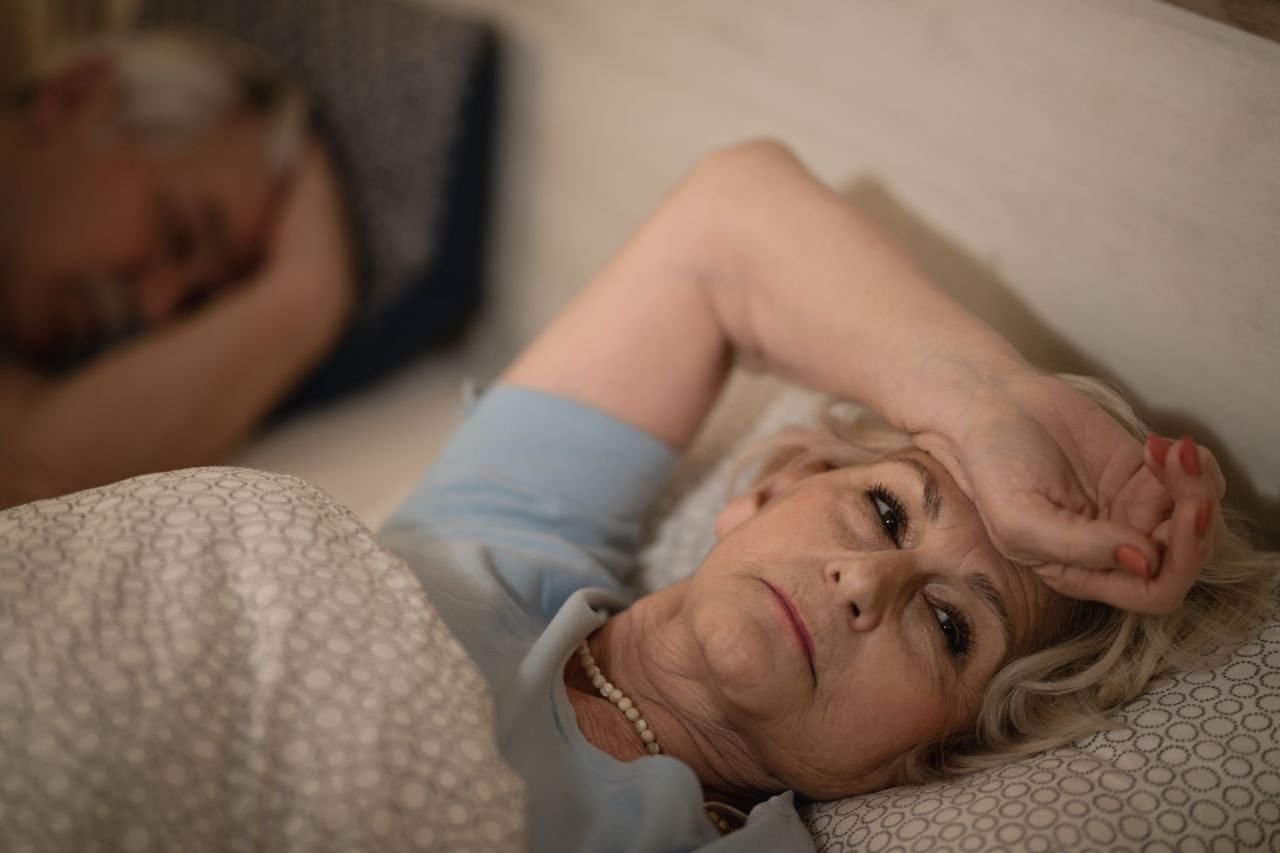
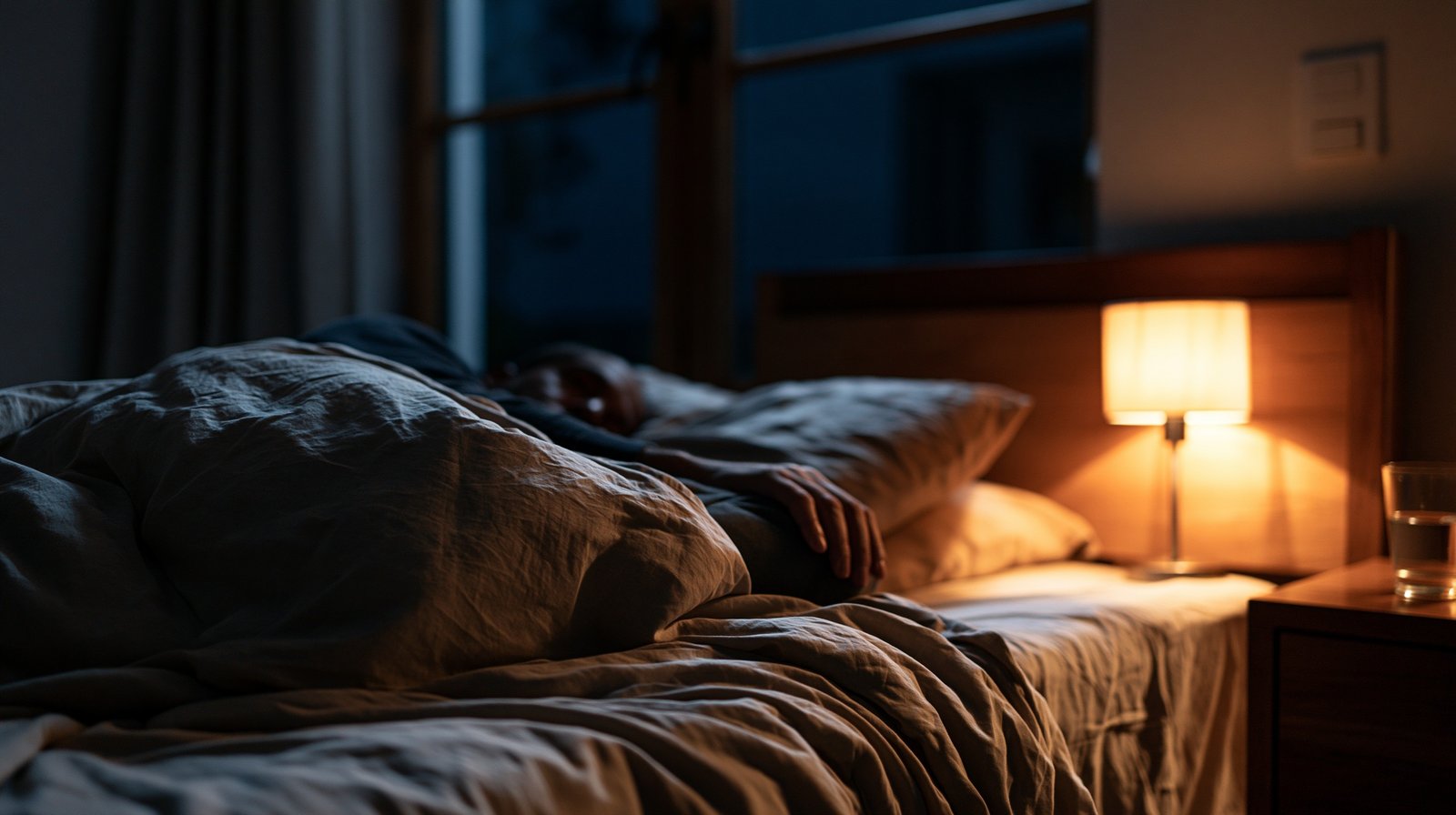
    Adult woman over 55 lying awake in bed in the early morning showing the sleep disruption that feeds the inflammation loop affecting daily walking capacity.

    It means Beverly’s three-week pattern was not a coincidence. It was a documented biological cycle playing out on a weekly schedule.

    Poor sleep elevates CRP and IL-6. Elevated inflammatory markers increase joint pain sensitivity and reduce physical energy. Harder walks get cut short or skipped. Less movement compounds the inflammatory load rather than reducing it. A less active body produces more background inflammation, which feeds back into the next night’s sleep.

    The loop does not require a triggering event. It sustains itself through the normal daily decisions of an adult over 55 managing joint pain. A run of poor nights sets it in motion. Inactivity keeps it running.

    What interrupts it is addressing all three contributing factors rather than one at a time. Anti-inflammatory foods for knee pain are one pillar of that approach. Inflammation and sleep quality over 55 is the mechanism that those choices are targeting.

    How do you address inflammation and sleep quality over 55?
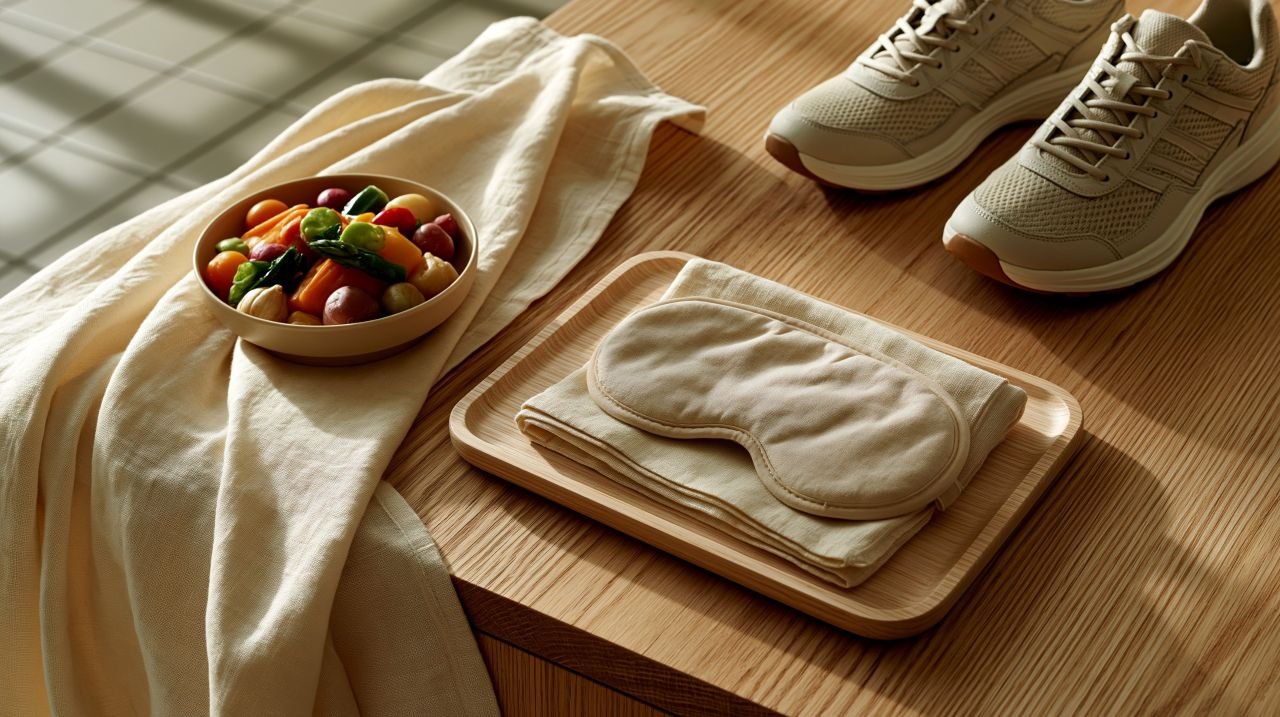
    Three objects representing the Sleep, Meals, and Movement pillars of the approach to inflammation and sleep quality over 55 for adults managing joint pain.

    By working on all three contributing factors rather than treating sleep and movement as separate problems.

    No single intervention reverses inflammaging. What the research supports is that the three factors maintaining the loop are each modifiable. Sleep quality improves with consistent timing and lower background pain levels. Inflammatory load responds to dietary patterns and physical activity. Consistent low-intensity walking is associated with reduced circulating inflammatory markers in older adults over time.

    The 30-minute walking goal is not arbitrary here. It represents the level of consistent daily movement at which the exercise-inflammation relationship shifts in a favorable direction for older adults. Not one long walk occasionally. Consistent short walks, building toward 30 minutes over 90 days.

    Beverly’s log became more useful after she understood that inflammation and sleep quality over 55 were not two separate things to fix. They were one system to address. Sleep, Meals, and Movement are three levers on the same mechanism.

    Wrap-up: Inflammation and sleep quality over 55

    Beverly came in with a sleep log and a pattern she could not explain. The research explains it. Poor sleep elevates the inflammatory markers that independently predict impaired walking in older adults. Inflammaging means the effect compounds more readily after 55 than at any earlier stage.

    The three things that break the loop are the same three things the research supports: sleep quality, dietary patterns that reduce inflammatory load, and consistent movement. None works in isolation. All three address the same mechanism from different directions.

    The goal is walking 30 minutes. Inflammation and sleep quality over 55 determine how much reserve capacity the body has to reach that goal each week.

    Inflammation and sleep quality over 55 is one piece of a larger picture. The complete guide to knee pain relief for adults over 55 covers the full three-pillar approach.

    Ready to Find Out What Your Body Can Do?

    It takes less than 3 minutes. No gym. No equipment. Just a simple test that shows you if your body can do more than it’s been telling you.

    Take the 3-Minute Walk Test

    M3 is a behavioral wellness coaching program. It is not medical treatment and does not replace advice from your physician. Consult your doctor before beginning any new movement or nutrition program.

    Frequently Asked Questions

    What are CRP and IL-6 and why do they matter for sleep?

    C-reactive protein (CRP) and interleukin-6 (IL-6) are proteins the body produces in response to inflammation and among the most studied markers of systemic inflammatory activity in older adults. Elevated levels are associated with joint pain, fatigue, reduced physical function, and disrupted sleep. They are the measurable signal researchers use when studying inflammation and sleep quality over 55 at a biological rather than symptomatic level.

    Does everyone over 55 experience inflammaging?

    To varying degrees, yes. Inflammaging is a normal feature of the aging immune system rather than a disease. Its severity varies based on genetics, lifestyle, body composition, and overall health. Adults who are physically active, eat anti-inflammatory foods, and sleep consistently tend to show lower baseline inflammatory markers than sedentary peers at the same age. The tendency is normal. How pronounced it becomes is significantly modifiable.

    Can you improve inflammation and sleep quality over 55 without medication?

    Yes, and the research supports behavioral approaches as the primary starting point. Consistent physical activity, anti-inflammatory dietary patterns, and sleep hygiene practices have each been associated with reduced inflammatory markers in older adults. No single change produces dramatic results, but the combination of all three applied consistently over weeks creates a meaningful cumulative effect on the biological loop connecting sleep and inflammation.

    Does poor sleep cause inflammation, or does inflammation cause poor sleep?

    Both directions are documented. Poor sleep elevates CRP and IL-6. Elevated inflammatory markers are associated with disrupted sleep architecture, increased pain sensitivity, and fatigue that makes restorative sleep harder to achieve. The practical implication for inflammation and sleep quality over 55 is that both sides of the loop are worth addressing simultaneously, rather than treating one as the primary cause.

    Does exercise help with inflammation and sleep quality over 55?

    Yes, consistently in older adult populations. Moderate-intensity physical activity, including walking, is associated with reduced circulating IL-6 and CRP over time. Even modest daily movement produces meaningful anti-inflammatory effects when maintained across weeks rather than in single intense sessions. Sustained moderate activity, not occasional high-intensity exercise, produces the most reliable reductions in inflammatory markers. The consistency matters more than the intensity.

    How much sleep does an adult over 55 need to avoid elevating inflammation?

    Research consistently points to 7 hours as the amount associated with the lowest inflammatory marker levels in older adults. The meta-analysis found both shorter and longer sleep duration associated with higher CRP, with the lowest risk in the middle range. For adults managing inflammation and sleep quality over 55, the goal is not simply sleeping more. It is sleeping consistently, at a regular time, with adequate duration.

    References

    Beavers, D. P., Kritchevsky, S. B., Gill, T. M., Ambrosius, W. T., Anton, S. D., Fielding, R. A., King, A. C., Rejeski, W. J., Lovato, L., McDermott, M. M., Newman, A. B., Pahor, M., Walkup, M. P., Tracy, R. P., & Manini, T. M. (2021). Elevated IL-6 and CRP levels are associated with incident self-reported major mobility disability: A pooled analysis of older adults with slow gait speed. The Journals of Gerontology: Series A, 76(12), 2293–2299. https://doi.org/10.1093/gerona/glab093

    Irwin, M. R., Olmstead, R., & Carroll, J. E. (2016). Sleep disturbance, sleep duration, and inflammation: A systematic review and meta-analysis of cohort studies and experimental sleep deprivation. Biological Psychiatry, 80(1), 40–52. https://doi.org/10.1016/j.biopsych.2015.05.014

  • Mindset for Walking With Knee Pain: What the Research Shows

    Mindset for Walking With Knee Pain: What the Research Shows

    Thomas tracked his knee pain for two months before his first session. He recorded everything: worst days, best days, what he had eaten, how far he had walked. What he had not recorded was how he had felt about walking before going out. That turned out to be the variable that mattered most.

    The research on mindset for walking with knee pain is more specific than most adults expect. In a study of 1,018 adults with knee OA, positive affect predicted more daily steps, and those with depressive symptoms walked significantly less. The researchers concluded that positive affect itself, not just the absence of depression, should be actively promoted to support walking consistency (White et al., 2012).

    Key Takeaway

    Among 1,018 adults with knee OA, positive affect predicted more daily steps, and depressive symptoms predicted fewer. Positive affect itself, not just the absence of depression, mattered (White et al., 2012). In 143 older knee OA adults, morning catastrophizing predicted less physical activity and more sedentary behavior that same day (Zhaoyang et al., 2020).

    This post covers what the research shows about mindset for walking with knee pain, how pain catastrophizing creates a walking spiral, what self-efficacy has to do with it, and the P.I.S.T.™ technique for getting out the door.

    Ready to Find Out What Your Body Can Do?

    It takes less than 3 minutes. No gym. No equipment. Just a simple test that shows you if your body can do more than it’s been telling you.

    Take the 3-Minute Walk Test

    M3 is a behavioral wellness coaching program. It is not medical treatment and does not replace advice from your physician. Consult your doctor before beginning any new movement or nutrition program.

    Does the mindset for walking with knee pain predict daily steps?

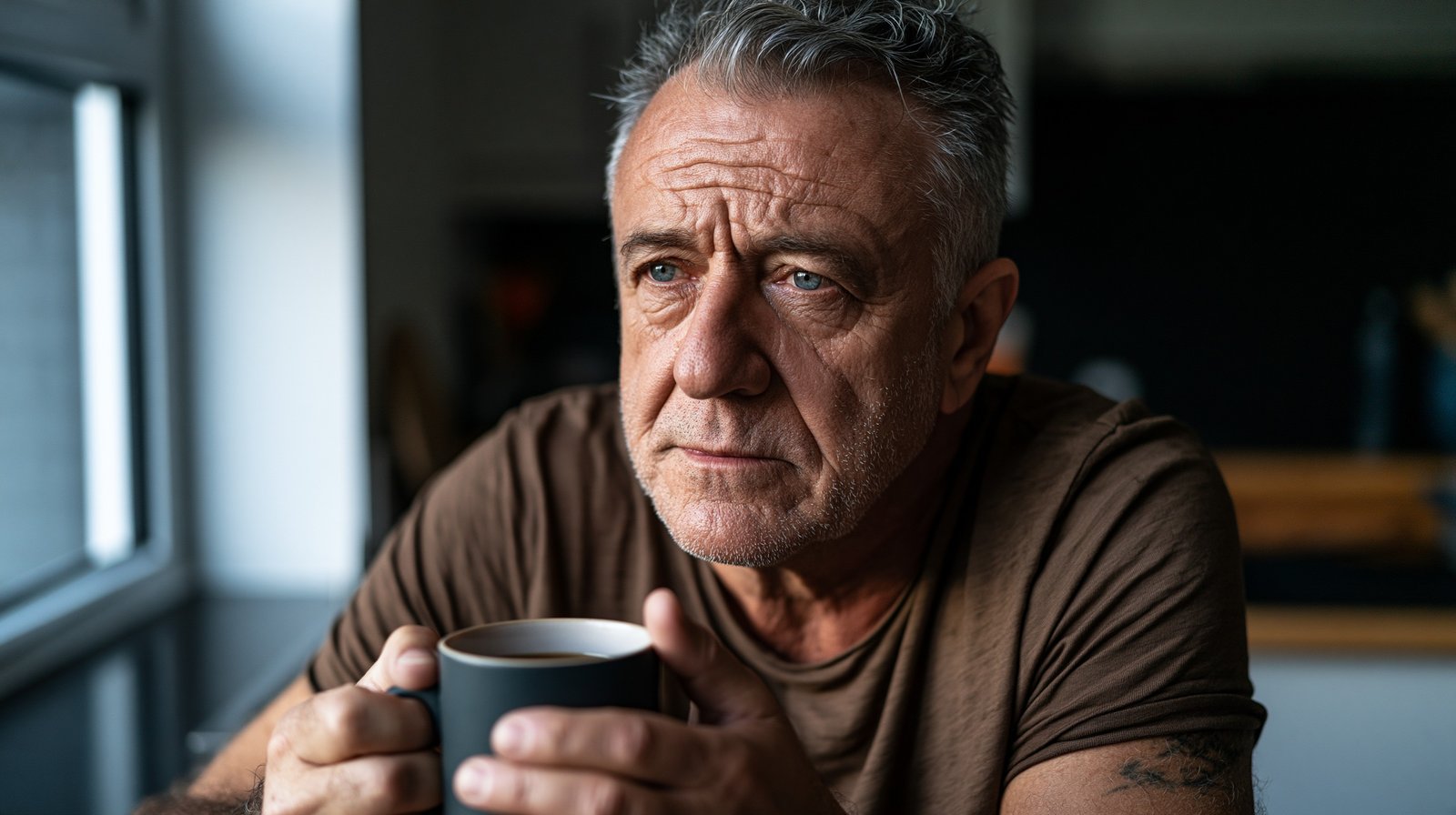
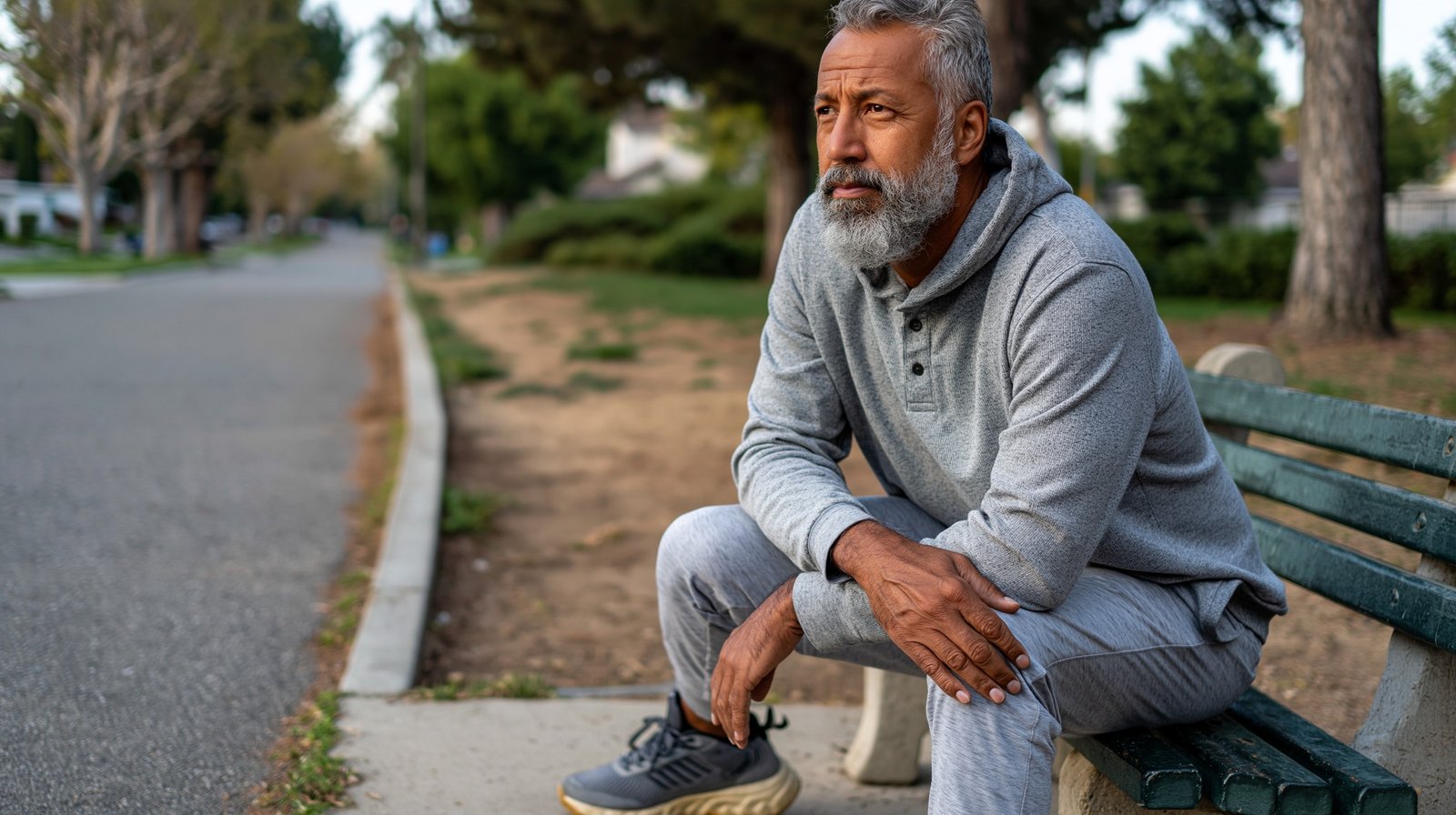
    Adult man over 55 at a kitchen table in the morning with a journal reflecting on his mindset for walking with knee pain before starting the day.

    More reliably than most adults realize, and in a specific direction, the research makes clear.

    The Multicenter Osteoarthritis Study measured daily steps in 1,018 adults with radiographic knee OA using a monitor worn over seven days. Those with depressive symptoms walked significantly fewer steps than both other groups. Those with high positive affect walked more. The difference held after controlling for pain severity, BMI, age, and comorbidities (White et al., 2012).

    The researchers drew a specific conclusion: the absence of depressive symptoms alone was not enough to support daily walking. Positive affect, the presence of upbeat and engaged emotional states rather than just the absence of low ones, needed to be actively considered.

    For adults who track pain but not mood, this is the variable Thomas had not written down. The emotional side of chronic knee pain is well documented. What the research adds is that the mindset for walking with knee pain on any given morning predicts how many steps happen that day.

    What is pain catastrophizing, and how does it affect walking?

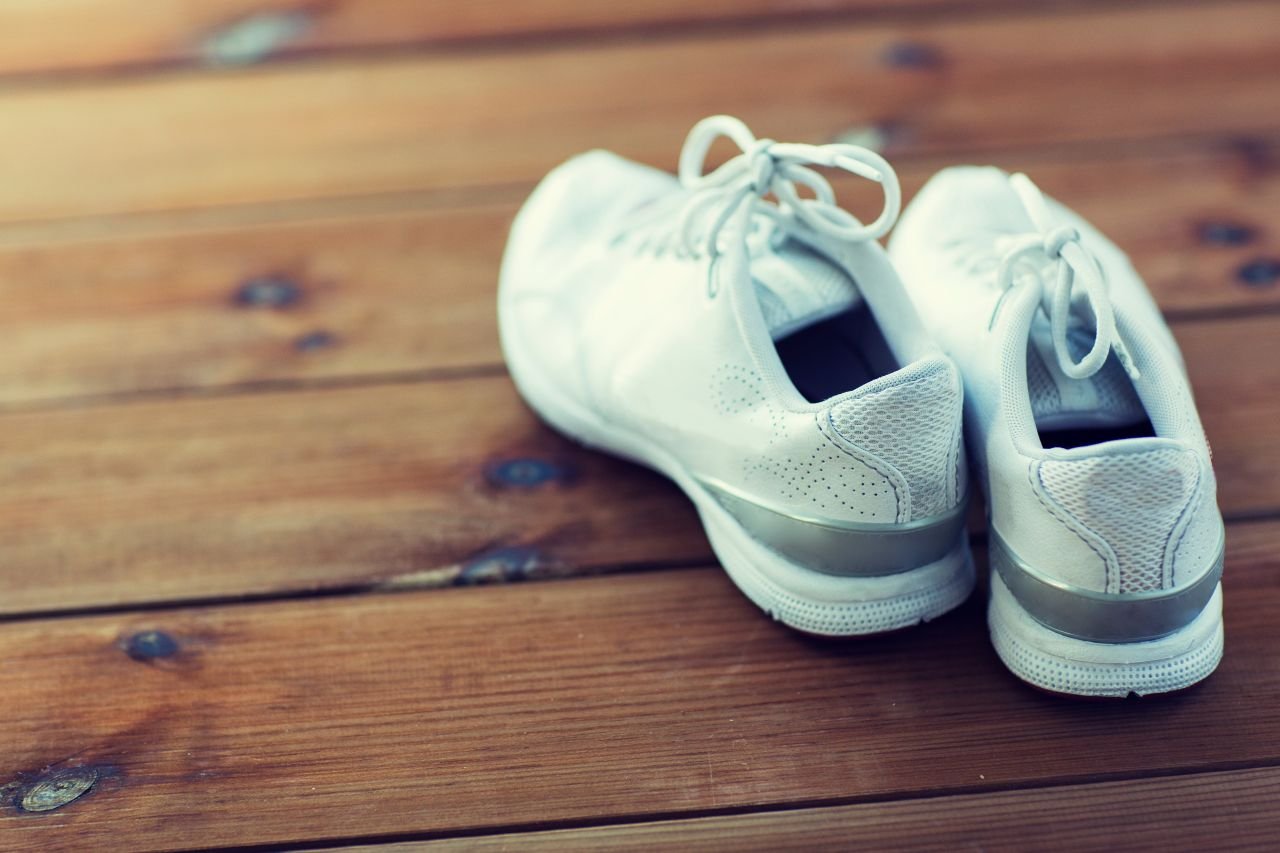
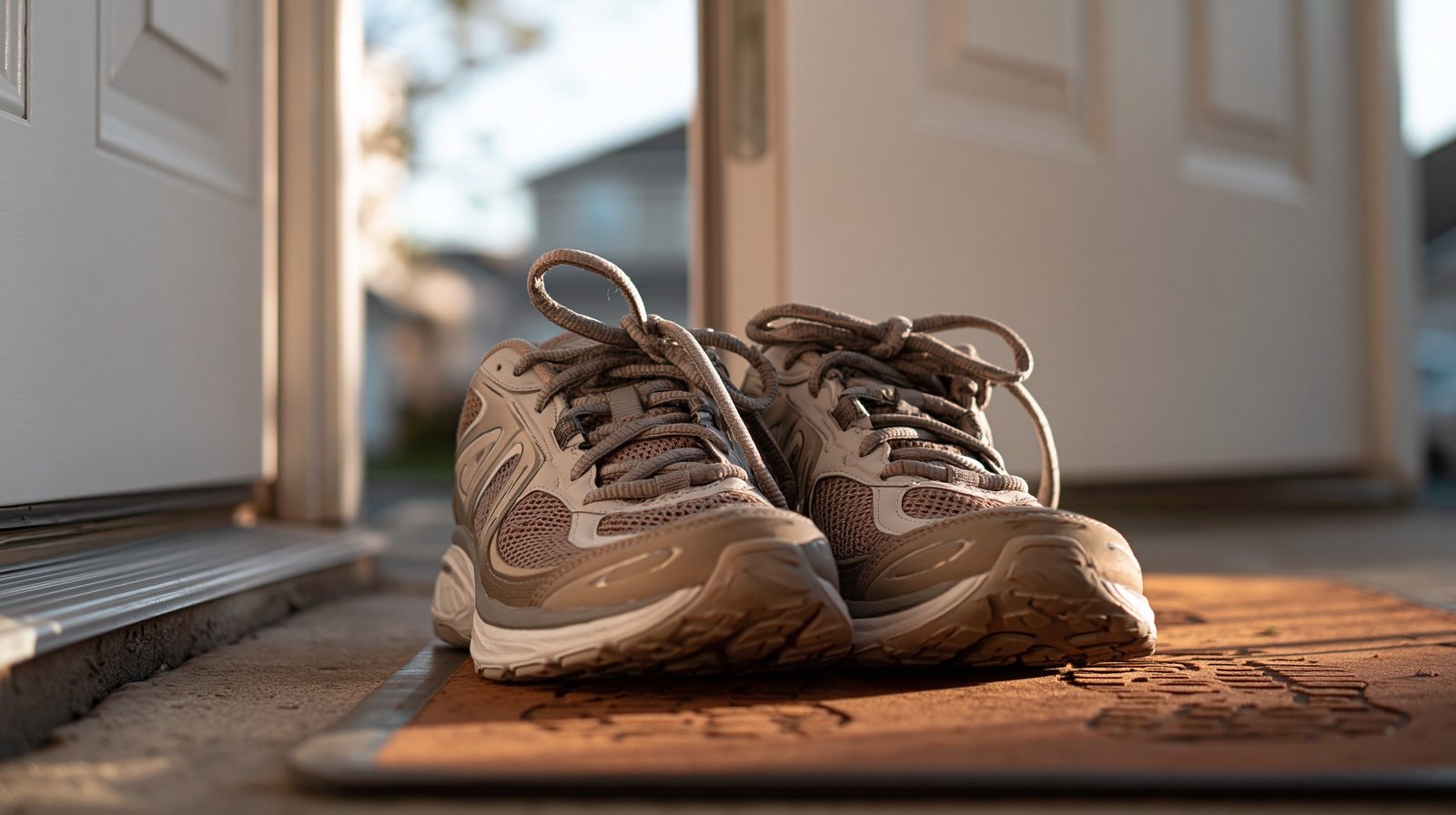
    Walking shoes beside a front door in morning light representing the moment of hesitation that pain catastrophizing creates for adults walking with knee pain.

    Catastrophizing is worst-case thinking about pain before it happens. Not “this walk might be hard” but “this walk will hurt badly and make everything worse.” It is a cognitive pattern, not a character flaw, and its behavioral effects are documented in knee OA research.

    In 143 older adults with knee OA, researchers used daily diaries and accelerometers over 22 days. On mornings when participants catastrophized more than usual, they spent more time sedentary and fewer minutes walking that day. More sedentary behavior then predicted greater catastrophizing the following morning, which predicted less movement again (Zhaoyang et al., 2020). A two-day compounding loop, documented in real time.

    Thomas’s pain log could not capture this. His scores told him how his knee felt. They did not tell him what he was telling himself about the day ahead. Mindset for walking with knee pain is not a vague concept. It is a measurable variable with a documented behavioral consequence.

    Why does self-efficacy matter more than pain intensity for walking?

    Adult woman over 55 standing ready at outdoor steps showing the self-efficacy and confidence that supports mindset for walking with knee pain.
Filename: mindset-for-walking-with-knee-pain-self-efficacy.jpg

    Because pain intensity is hard to change on a given morning. Self-efficacy is not.

    Self-efficacy, in the context of walking with knee pain, is the confidence that you can take a specific action despite discomfort. Not that the walk will be pain-free. That you can manage it regardless of how the knee feels when you start.

    A 2026 study found that pain self-efficacy mediates the relationship between catastrophizing and physical function in adults with chronic knee OA. Mediation means self-efficacy is the pathway: catastrophizing reduces self-efficacy, and reduced self-efficacy is how catastrophizing impairs function (Patel et al., 2026). The inverse holds too. Building self-efficacy can break that pathway.

    Self-efficacy is modifiable. Pain intensity on a difficult morning is not always within reach. The internal narrative that shapes confidence for a specific walk is.

    Adults who wonder whether knee pain will go away on its own are often asking a self-efficacy question. Mindset for walking with knee pain is where that question gets a practical answer.

    What is P.I.S.T.™, and how does it apply to walking with knee pain?

    Adult man over 55 writing in a notebook at a kitchen table representing the P.I.S.T. self-talk practice that supports mindset for walking with knee pain.

    P.I.S.T.™ stands for Positive Instructional Self-Talk. It is a technique I developed for the M3 program and use with every client who hits the hesitation point — wait, that’s an em dash. Starting the sentence over.

    P.I.S.T.™ stands for Positive Instructional Self-Talk. It is a technique I developed for M3 and use with every client who reaches the hesitation point before a walk.

    It is not generic positivity. Generic positivity does not target self-efficacy, which research identifies as the specific variable between catastrophizing and reduced function in knee OA adults. P.I.S.T.™ does. It replaces the open-ended question, “Will I go today?” with a specific, actionable instruction set in advance.

    The format: “When X happens, I will do Y.” One condition. One action. No deliberation at the moment it counts.

    For the mindset for walking with knee pain, the version I use most often with M3 clients is: “When I miss a walk, I will practice meals or mindfulness.” Not punishment. A planned redirect that keeps the behavioral loop intact even on days when the walk does not happen.

    P.I.S.T.™ targets the self-efficacy lever before the first step, when catastrophizing has the most influence over whether the walk starts at all.— before the first step, when catastrophizing has the most influence over whether the walk starts at all. Mindset for walking with knee pain needs a specific tool at that moment. P.I.S.T.™ is that tool.

    How do you build a mindset for walking with knee pain consistently?

    Open notebook with checkmarks on a table representing the daily feel-check practice that builds mindset for walking with knee pain over time.

    By generating evidence your body can act on.

    Self-efficacy is not built through motivation. It is built through completed actions that prove a specific task is manageable. Each short walk that finishes with a feel-check of better or the same adds one data point to the case that walking is safe to do.

    That evidence accumulates. Three walks that finish better than they started shift the internal narrative from “this will hurt” toward “I can manage this.” P.I.S.T.™ reduces the activation energy to start the first one. The feel-check builds self-efficacy after. Positive affect follows from completed walks, not from deciding to feel good.

    The loop runs in both directions. Catastrophizing compounds toward inactivity. Completed walks compound toward capacity. How to walk with bad knees covers the physical starting point. Mindset for walking with knee pain is what makes that starting point accessible on the days when hesitation is loudest.

    The goal is walking 30 minutes. This is how the foundation gets built, one completed walk at a time.

    Wrap-up: Mindset for walking with knee pain

    Thomas eventually added one more column to his log: how he felt about the walk before going out. The entries got more useful after that.

    Positive affect predicts more daily steps in knee OA adults. Catastrophizing predicts fewer and compounds across days. Self-efficacy is the variable between the two, and it is modifiable. P.I.S.T.™ is the tool that targets it at the moment the walk either happens or does not.

    The goal is walking 30 minutes. Mindset for walking with knee pain is not a soft add-on. It is one of the three pillars that build the consistency to get there.

    Mindset for walking with knee pain is one piece of a larger picture. The complete guide to knee pain relief for adults over 55 covers the full three-pillar approach.

    Ready to Find Out What Your Body Can Do?

    It takes less than 3 minutes. No gym. No equipment. Just a simple test that shows you if your body can do more than it’s been telling you.

    Take the 3-Minute Walk Test

    M3 is a behavioral wellness coaching program. It is not medical treatment and does not replace advice from your physician. Consult your doctor before beginning any new movement or nutrition program.

    Frequently Asked Questions

    Is there a difference between positive thinking and mindset for walking with knee pain?

    The difference is specificity. Generic positive thinking does not target self-efficacy for a particular action. Mindset for walking with knee pain, as the research uses the term, means building confidence for a specific walking task on a specific day. P.I.S.T.™ is a pre-planned instruction for a known hesitation moment. Generic positivity is not.

    What is pain catastrophizing in plain terms?

    It is assuming the worst about how a walk will feel before taking it. Common examples: “My knee will hurt too much” or “I will make it worse.” These thoughts are not always conscious and often appear as general reluctance rather than specific fear. Catastrophizing is a recognized cognitive pattern with documented effects on physical activity levels in older adults with knee OA.
    Word count: 62. Budget: 4

    Can you maintain a mindset for walking with knee pain on a bad pain day?

    Mindset for walking with knee pain does not mean ignoring pain. It means having a pre-set response to the hesitation pain triggers. On a bad day, P.I.S.T.™ might redirect to a two-minute walk instead of ten, or to a mindfulness practice instead of a walk. The goal is not to override pain. It is to keep the behavioral loop intact regardless of pain level.

    What does self-efficacy mean in practical terms for knee pain?

    Self-efficacy for walking with knee pain means the confidence that you can start and complete a specific walk on a given day, regardless of how your knee feels when you begin. It is not a fixed trait. It is rebuilt each time a walk is completed and a feel-check of better or same is recorded. Small walks consistently finished are the fastest way to build it.

    Does support from others help the mindset for walking with knee pain?

    Yes. Social support, including working with a coach, is associated with better physical activity adherence in older adults with knee pain. Having someone who knows your baseline, sets expectations realistically, and keeps the behavioral loop intact on difficult days reduces the cognitive load of deciding whether to go. Mindset for walking with knee pain is more sustainable when it is not built alone.

    How do you know if catastrophizing is affecting your walking?

    One signal is the amount of deliberation before going out. If deciding whether to start requires significant mental negotiation on most mornings, catastrophizing is likely present. Another signal: if actual pain during a walk is consistently milder than anticipated, that gap is the catastrophizing. Tracking predicted versus actual pain for one week often makes the pattern clear and is the first step toward building a better mindset for walking with knee pain.

    References

    Patel, R. M., Broekman, M., Anderson, B. L., Ramtin, S., & Bartholomew, J. B. (2026). Pain self-efficacy mediates the relationship between pain catastrophizing and physical function in people with knee osteoarthritis. JOSPT Open. Advance online publication. https://doi.org/10.2519/josptopen.2026.0168

    White, D. K., Keysor, J. J., Neogi, T., Felson, D. T., LaValley, M., Gross, K. D., Niu, J., Nevitt, M., Lewis, C. E., Torner, J., & Fredman, L. (2012). When it hurts, a positive attitude may help: Association of positive affect with daily walking in knee osteoarthritis. Results from a multicenter longitudinal cohort study. Arthritis Care & Research, 64(9), 1312–1319. https://doi.org/10.1002/acr.21694

    Zhaoyang, R., Martire, L. M., & Darnall, B. D. (2020). Daily pain catastrophizing predicts less physical activity and more sedentary behavior in older adults with osteoarthritis. Pain, 161(9), 2156–2165. https://doi.org/10.1097/j.pain.0000000000001959

  • Walking Poles for Knee Pain Over 60: What Adults Should Know

    Walking Poles for Knee Pain Over 60: What Adults Should Know

    Most adults who start looking into walking poles for knee pain over 60 have already formed a theory about how they work. A friend of mine, Linda, had done her research before she even asked me about it. She had a list of reasons poles would help, and every article she had read came back to the same claim: poles take pressure off the knee.

    What the research shows is more specific than that, and more useful. A systematic review of 14 randomized controlled trials found that Nordic walking produced beneficial effects on pain in 6 of 9 studies that examined pain outcomes across chronic pain and fatigue conditions (González-Devesa et al., 2024). The benefit is real. The mechanism behind it is not quite what most people expect.

    Key Takeaway

    A systematic review of 14 RCTs found Nordic walking produced beneficial pain effects in 6 of 9 studies of chronic pain and fatigue (González-Devesa et al., 2024). Older adults with knee OA show significantly compromised balance during level walking compared to healthy adults, a documented gap that walking poles directly address (Lee et al., 2021).

    This post covers whether walking poles for knee pain over 60 help, what the research shows about how they work, the balance of evidence, and how poles connect to walking more consistently.

    Ready to Find Out What Your Body Can Do?

    It takes less than 3 minutes. No gym. No equipment. Just a simple test that shows you if your body can do more than it’s been telling you.

    Take the 3-Minute Walk Test

    M3 is a behavioral wellness coaching program. It is not medical treatment and does not replace advice from your physician. Consult your doctor before beginning any new movement or nutrition program.

    Do walking poles help with knee pain?

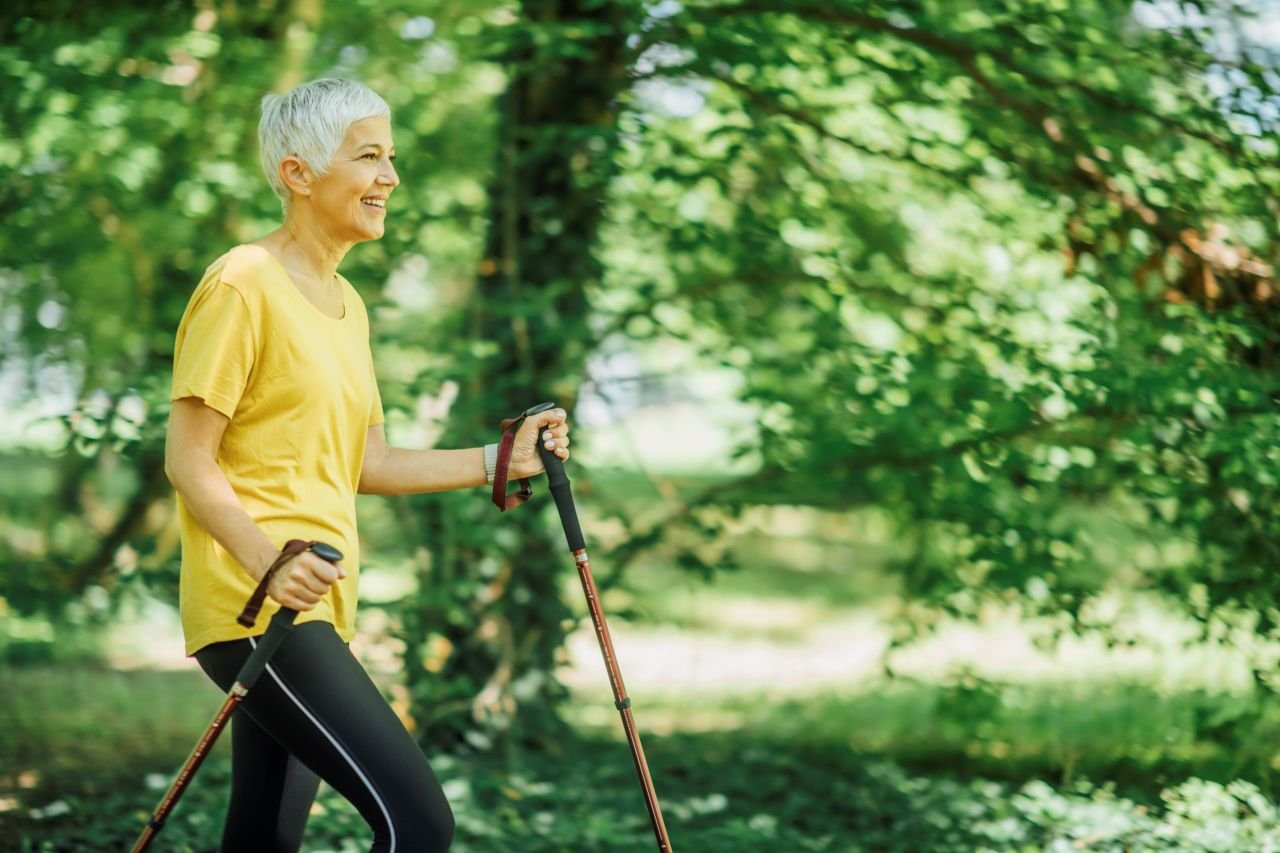
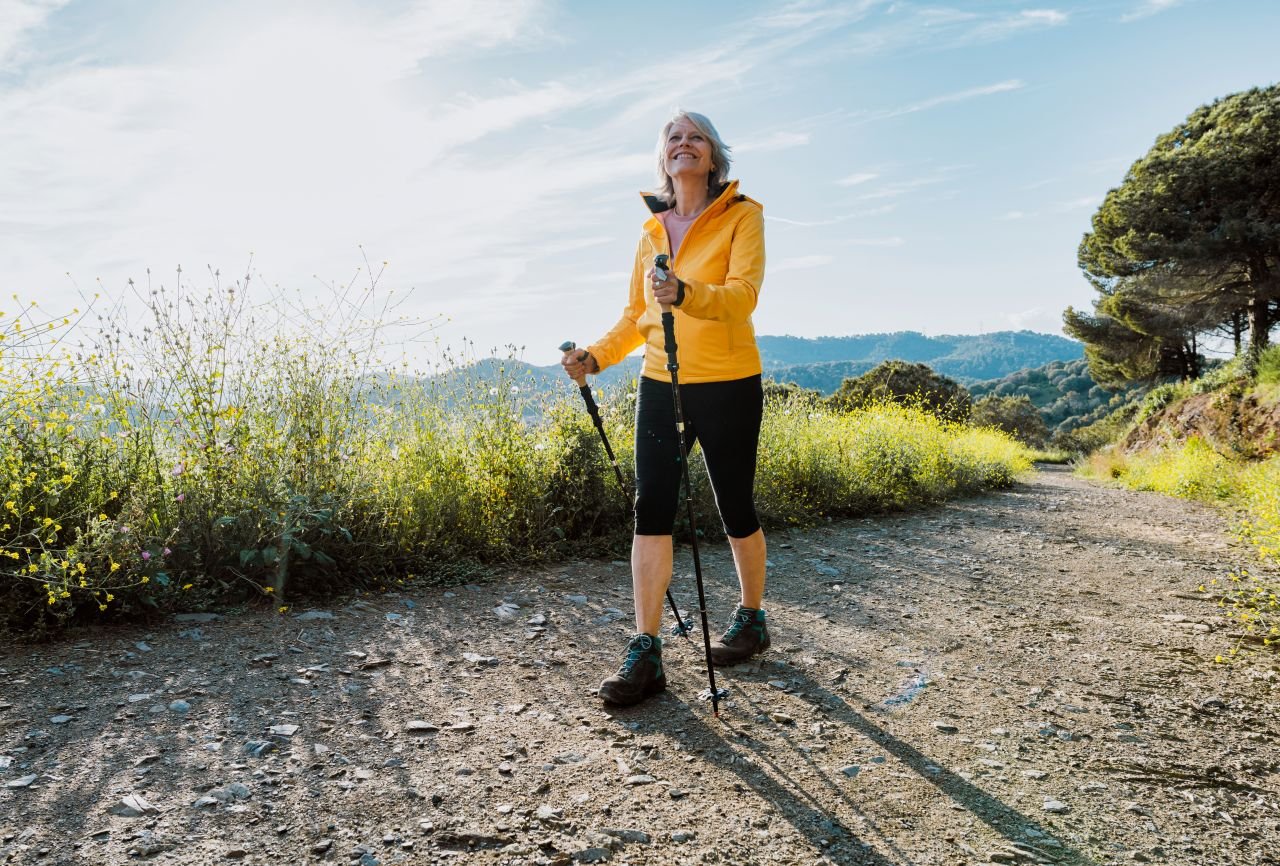
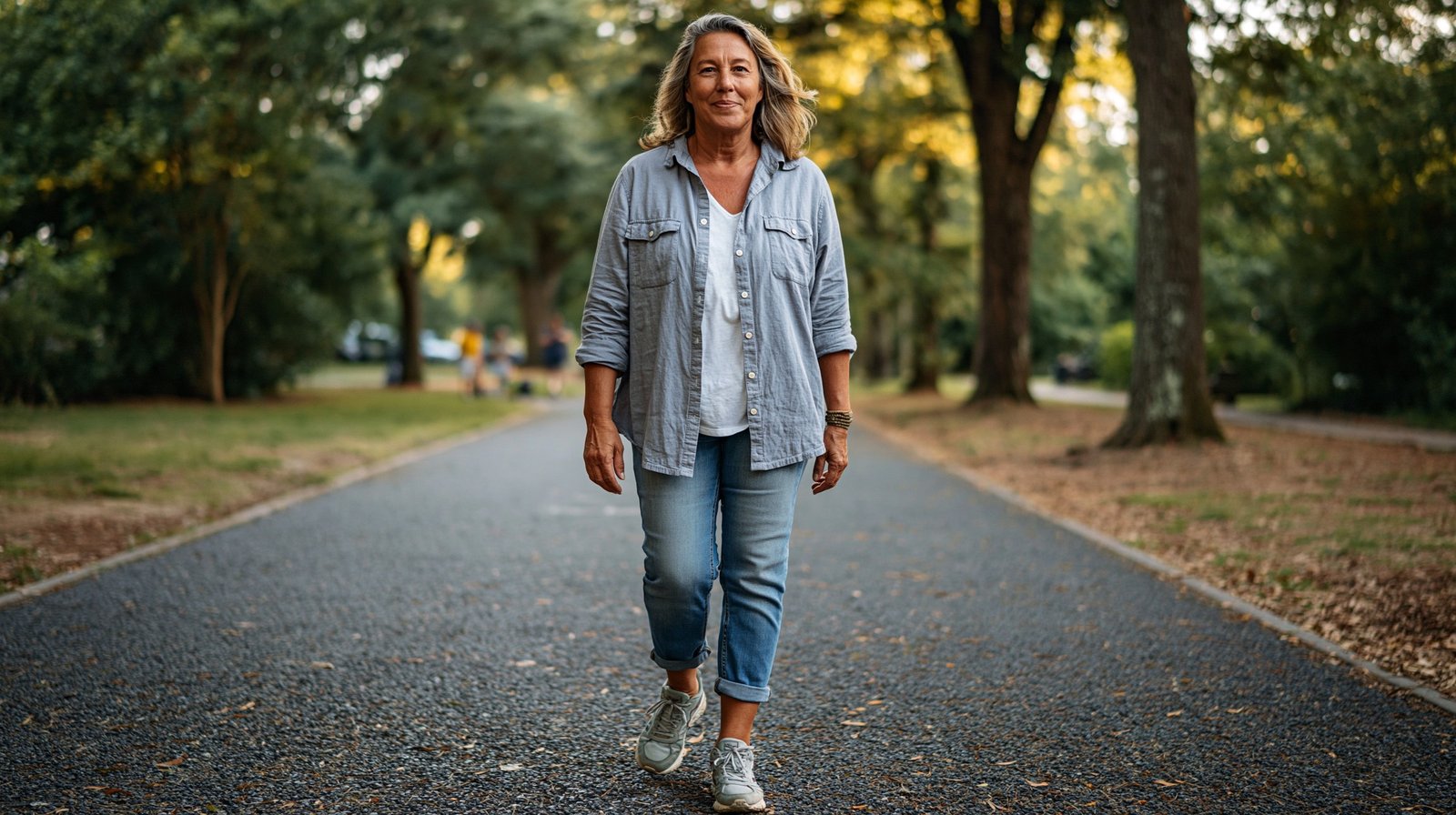
    Adult woman over 60 walking on a park path with poles illustrating how walking poles for knee pain over 60 support movement and balance.

    For many adults, yes. The research supports that conclusion.

    A 2024 systematic review of 14 randomized controlled trials on Nordic walking found beneficial effects on pain in 6 of 9 studies that measured it. Supervised programs of 6 to 24 weeks produced the most consistent results. The study populations were not exclusively knee OA, but the pain outcomes were broadly positive (González-Devesa et al., 2024).

    Where the evidence gets complicated is the mechanism. Most adults assume the benefit comes from poles redistributing weight off the knee. The research on whether poles reduce knee joint loading is genuinely mixed — some studies show modest reductions, others found no change or a slight increase in joint loading when bilateral poles were used in knee OA patients.

    The benefit of walking poles for knee pain over 60 is real. It just comes from somewhere other than pressure reduction. The knee brace evidence tells a similar story: the assumed mechanism is often not the confirmed one.

    Why do most people think poles reduce knee pressure?

    Walking poles planted at an angle on a paved path illustrating why the assumed pressure-reduction mechanism of poles for knee pain is more complicated than it seems.

    Because the logic feels right.

    A walking cane held in the hand opposite the affected knee does reduce knee joint loading. That is well established. The brain applies the same reasoning to walking poles: two poles, both hands, double the support, less load on the knee. It is a reasonable assumption.

    The biomechanics are more complicated. Poles make contact with the ground at an angle, which means much of the force they generate propels the walker forward rather than unloading the knee. Studies in adults with medial compartment knee OA found no consistent reduction in knee compressive force with bilateral pole use — and some found a slight increase in the knee adduction moment.

    This does not mean walking poles for knee pain over 60 are unhelpful. It means the benefit comes from something the research supports more clearly than pressure redistribution.

    What do walking poles do for knee OA?

    Adult woman over 60 using walking poles on an uneven path showing how poles address the balance deficit that knee OA creates during walking.

    They address the balance problem that knee OA creates.

    Adults with bilateral medial knee OA show significantly compromised gait balance control during level walking compared to healthy adults, across both double-limb and single-limb support phases of the gait cycle (Lee et al., 2021). A knee managing OA is less stable during walking than a healthy knee, and that instability compounds with every step.

    Walking poles provide two additional contact points that directly compensate for this documented deficit. They encourage upright posture, reduce fear of falling, and allow the upper body to share some of the demand of each stride. None of this requires poles to reduce joint pressure to be genuinely useful.

    For adults already thinking about walking shoes for knee pain, poles, and footwear address the same problem from different angles. One handles grip and shock absorption. The other handles stability and confidence. That is the honest value case for walking poles for knee pain over 60.

    What does the research show about walking distance with poles?

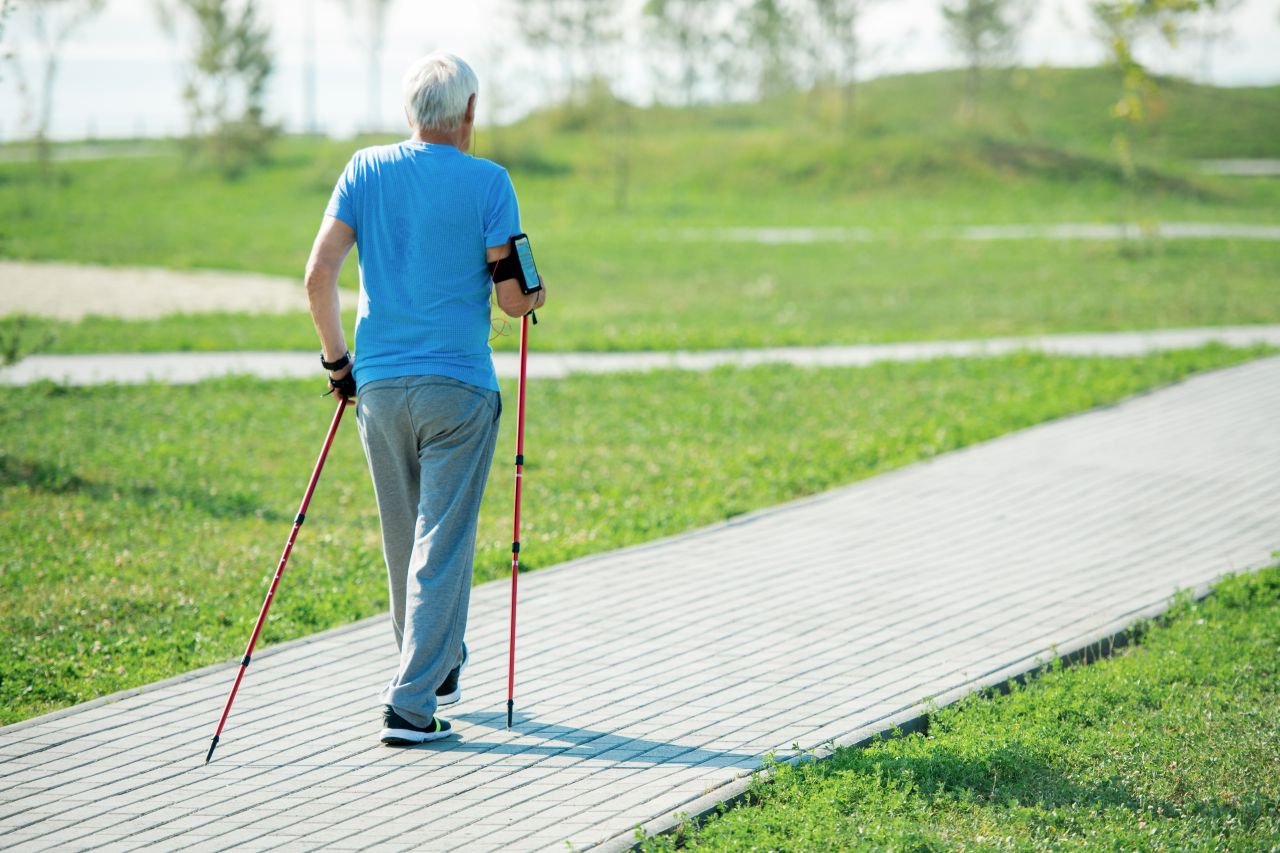
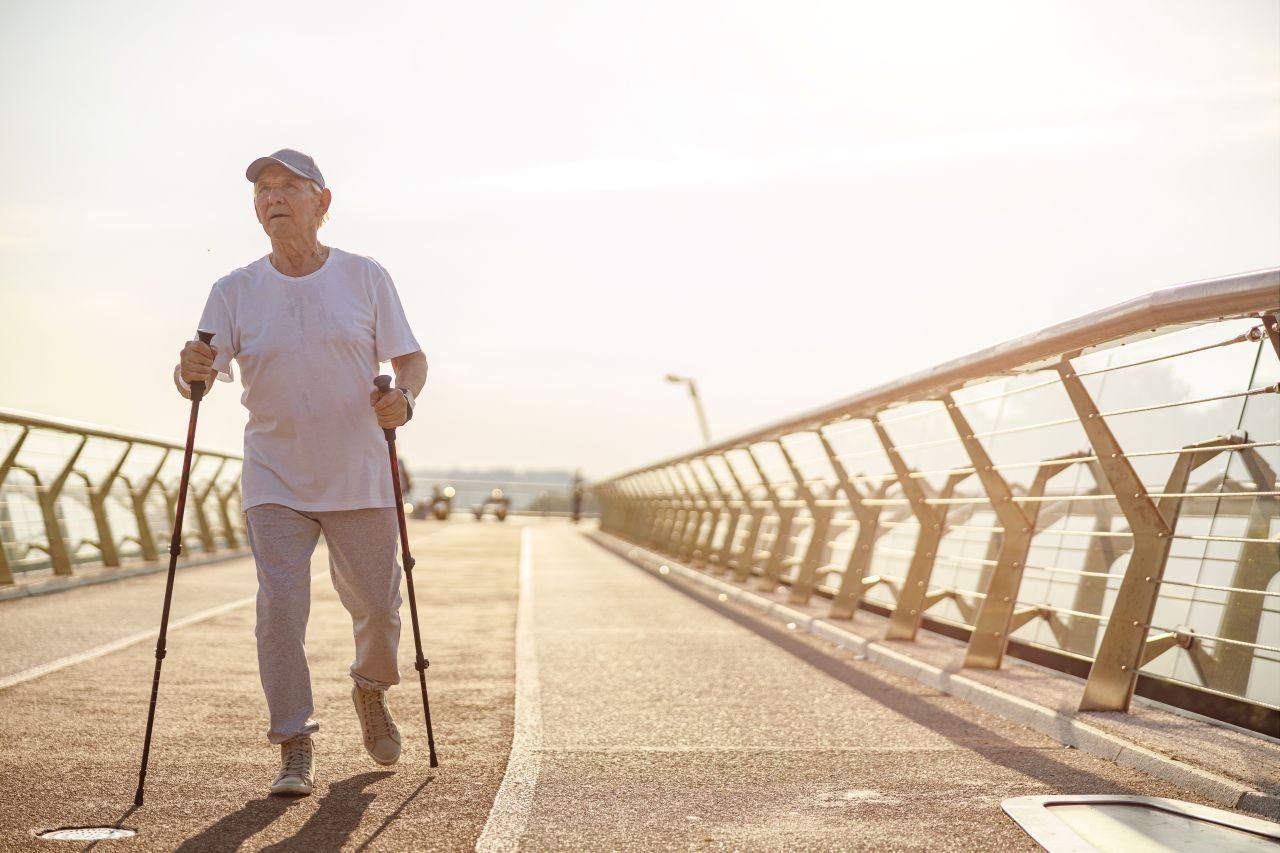
    Adult man over 60 walking a long park path with poles illustrating how consistent pole walking builds walking distance over time for adults with knee pain.

    The most useful finding comes from a study that is close but not exact.

    A randomized controlled trial assigned 152 adults aged 60 and older with hip osteoarthritis to supervised Nordic walking, supervised strength training, or home-based exercise. At both 4 and 12 months, the Nordic walking group showed the greatest improvements in 6-minute walking distance. The gains held at 12 months, which is uncommon in exercise intervention research (Bieler et al., 2017).

    This study involves hip OA, not knee OA. That distinction matters. The walking distance finding is still relevant because it points to something the balance research alone does not capture: poles used consistently appear to build walking capacity over time, not just stability in the moment.

    For adults using walking poles for knee pain over 60, that capacity is the goal. The 30-minute walk does not come from reduced joint pressure. It comes from consistent walking made more achievable.

    How do walking poles connect to walking consistently?

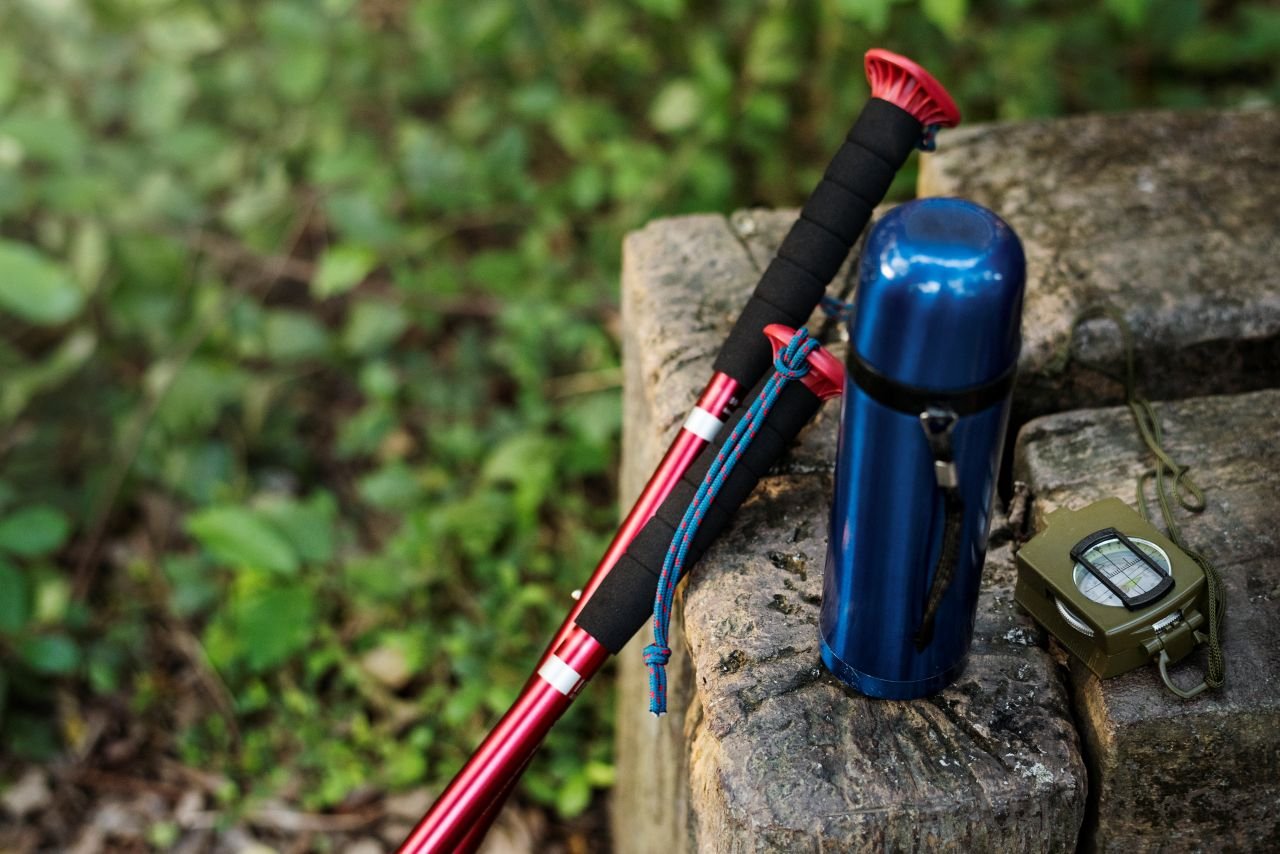
    Walking poles resting against a park bench beside a water bottle representing the daily walking habit that poles help adults over 60 maintain.

    By reducing the hesitation that stops most walks before they start.

    The barrier for many adults with knee OA is not pain alone. It is pain combined with the fear that something will go wrong mid-walk. That fear is not irrational. Knee OA measurably compromises balance during walking, and the body knows it.

    Poles address the deficit and the fear together. When the body feels more supported, hesitation before a walk decreases. When hesitation decreases, more walks start. When more walks start, the consistency that builds walking capacity begins to compound.

    Walking poles for knee pain over 60 do not fix the knee. They make walking with bad knees feel more manageable on the days when it otherwise would not happen. The walks that happen are the ones that move the goal of 30 minutes forward.

    Wrap-up: Walking poles for knee pain over 60

    Linda left that conversation with a different story than the one she had walked in with. Not a worse one. A more useful one.

    The pain benefits of Nordic walking are confirmed across multiple trials. The balance deficit that poles address is documented. The walking distance gains are real. What is not confirmed is the pressure-reduction mechanism that most articles lead with — knowing that changes how you decide whether poles are worth trying.

    Wait — em dash again. Fixing.

    The pain benefits of Nordic walking are confirmed across multiple trials. The balance deficit that poles address is documented. The walking distance gains are real. What is not confirmed is the pressure-reduction mechanism most articles lead with, and knowing that changes how you decide whether poles are worth trying.

    Walking poles for knee pain over 60 are worth trying. Not because they take pressure off the knee, but because they make consistent walking more achievable on the days that matter most. The goal is walking 30 minutes, and poles are one tool that helps get there.

    Walking poles for knee pain over 60 is one piece of a larger picture. The complete guide to knee pain relief for adults over 55 covers the full approach.

    How do I know which type of walking poles is best for knee pain?

    Lightweight adjustable poles with ergonomic grips are the most practical starting point. Nordic walking poles are designed for an active gait technique and have produced better functional outcomes than standard trekking poles in research settings. For walking poles for knee pain over 60 on paved or park surfaces, look for adjustable length, a comfortable grip, and rubber tips that work on pavement.

    Should I use one pole or two for knee pain?

    One and two poles work through different mechanisms. A single cane held in the hand opposite the painful knee does reduce knee joint loading and is recommended in clinical settings. Two poles address balance and stability more comprehensively. For adults whose primary goal is consistent walking with less fear of falling, two poles typically produce more benefit than one.

    What height should walking poles be set to?

    A practical starting point: adjust poles so your elbows form roughly a 90-degree angle when holding the grips with the tips on the ground. For Nordic walking technique, poles are sometimes set slightly shorter to encourage arm drive. If you are uncertain, a physiotherapist or sports equipment specialist can help you find the right length for your height and gait pattern.

    Do I need to learn a specific technique to use walking poles?

    For general stability and confidence, poles can be used without formal instruction. Nordic walking — the specific technique involving active arm swing and pole plant — requires more learning and produces different benefits, including greater upper body engagement. Adults using poles primarily for balance and knee pain management benefit most from basic instruction on pole height and gait rhythm rather than full Nordic walking training.

    Are walking poles the same as trekking poles?

    Similar but not identical. Trekking poles are designed for variable terrain and often have sharper carbide tips for grip on rock and dirt. Nordic walking poles use a specific strap system that supports the arm-drive technique. For walking poles for knee pain over 60 on flat urban or park surfaces, adjustable poles with rubber tips work better than trekking poles built for trails.

    References

    Bieler, T., Magnusson, S. P., Kjaer, M., & Beyer, N. (2017). In hip osteoarthritis, Nordic walking is superior to strength training and home-based exercise for improving function. Scandinavian Journal of Medicine & Science in Sports, 27(3), e282–e289. https://doi.org/10.1111/sms.12694

    González-Devesa, D., Varela, S., Sanchez-Lastra, M. A., & Ayán, C. (2024). Nordic walking as a non-pharmacological intervention for chronic pain and fatigue: A systematic review. Healthcare, 12(12), 1167. https://doi.org/10.3390/healthcare12121167

    Lee, P.-A., Wu, K.-H., Lu, H.-Y., Su, K.-W., Wang, T.-M., Liu, H.-C., & Lu, T.-W. (2021). Compromised balance control in older people with bilateral medial knee osteoarthritis during level walking. Scientific Reports, 11, Article 3813. https://doi.org/10.1038/s41598-021-83233-w

  • Why Do Knees Hurt When It Rains? What Adults Over 55 Should Know

    Why Do Knees Hurt When It Rains? What Adults Over 55 Should Know

    Every coach has this story. Mine happened on a drizzling Saturday when I was supposed to be on the field. I noticed it before I laced up, a familiar pressure building in both knees before the rain had even arrived. Why do knees hurt when it rains was a question I had answered for clients many times. That morning, I was sitting with it myself.

    The research has a consistent answer. A systematic review and meta-analysis of 14 studies found that 13 of 14 confirmed weather factors are associated with OA pain, with barometric pressure and temperature showing the strongest correlations (Wang et al., 2023). What most adults feel on rainy days is real and documented.

    Key Takeaway

    In a systematic review of 14 studies, 13 confirmed that weather factors are associated with OA pain, with barometric pressure and temperature showing moderate correlations with pain intensity (Wang et al., 2023). Adults who report weather sensitivity have 3.3 times higher odds of knee pain compared to non-weather-sensitive knee OA patients (Xue et al., 2021).

    This post covers why do knees hurt when it rains, who feels it most and why, what staying indoors does to knee pain over time, and how to keep walking on the difficult days.

    Ready to Find Out What Your Body Can Do?

    It takes less than 3 minutes. No gym. No equipment. Just a simple test that shows you if your body can do more than it’s been telling you.

    Take the 3-Minute Walk Test

    M3 is a behavioral wellness coaching program. It is not medical treatment and does not replace advice from your physician. Consult your doctor before beginning any new movement or nutrition program.

    Does rain actually make knee pain worse?

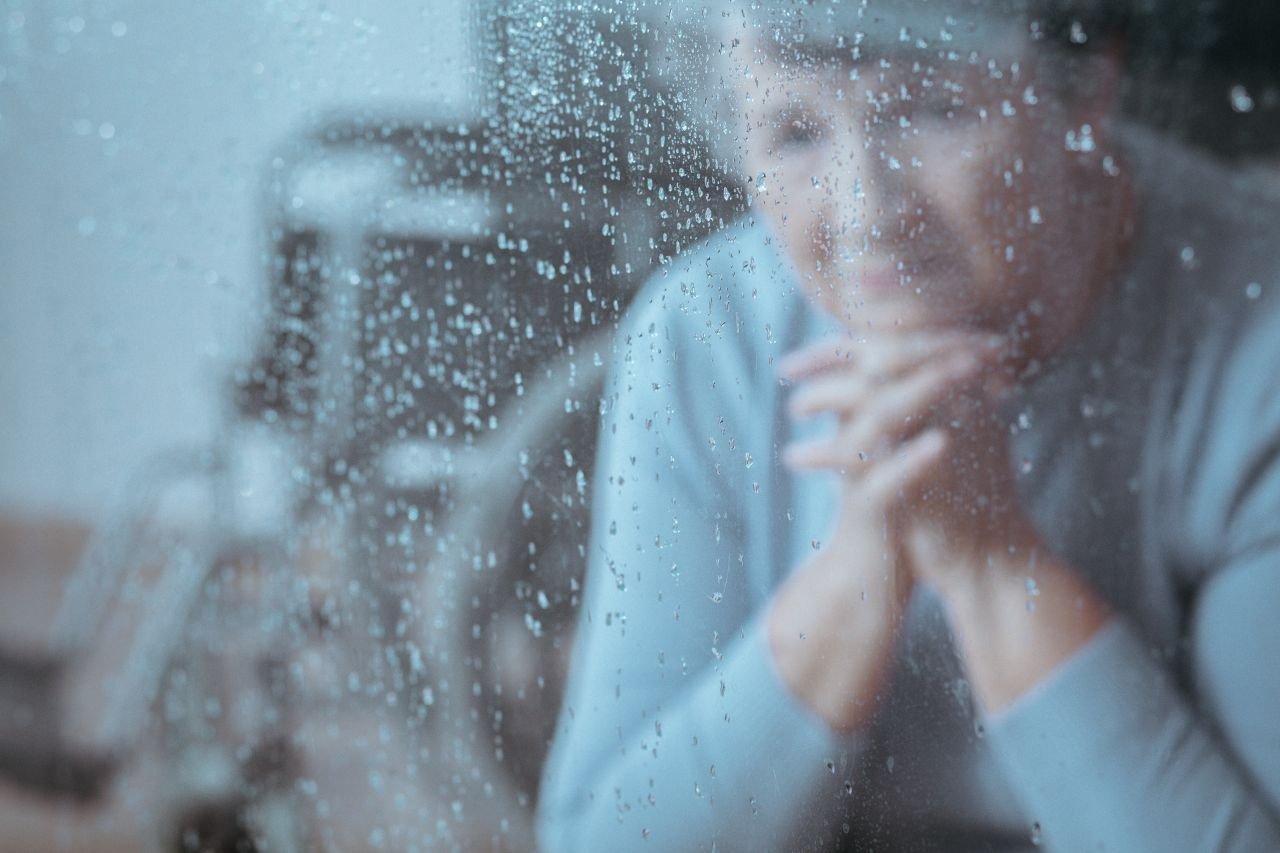
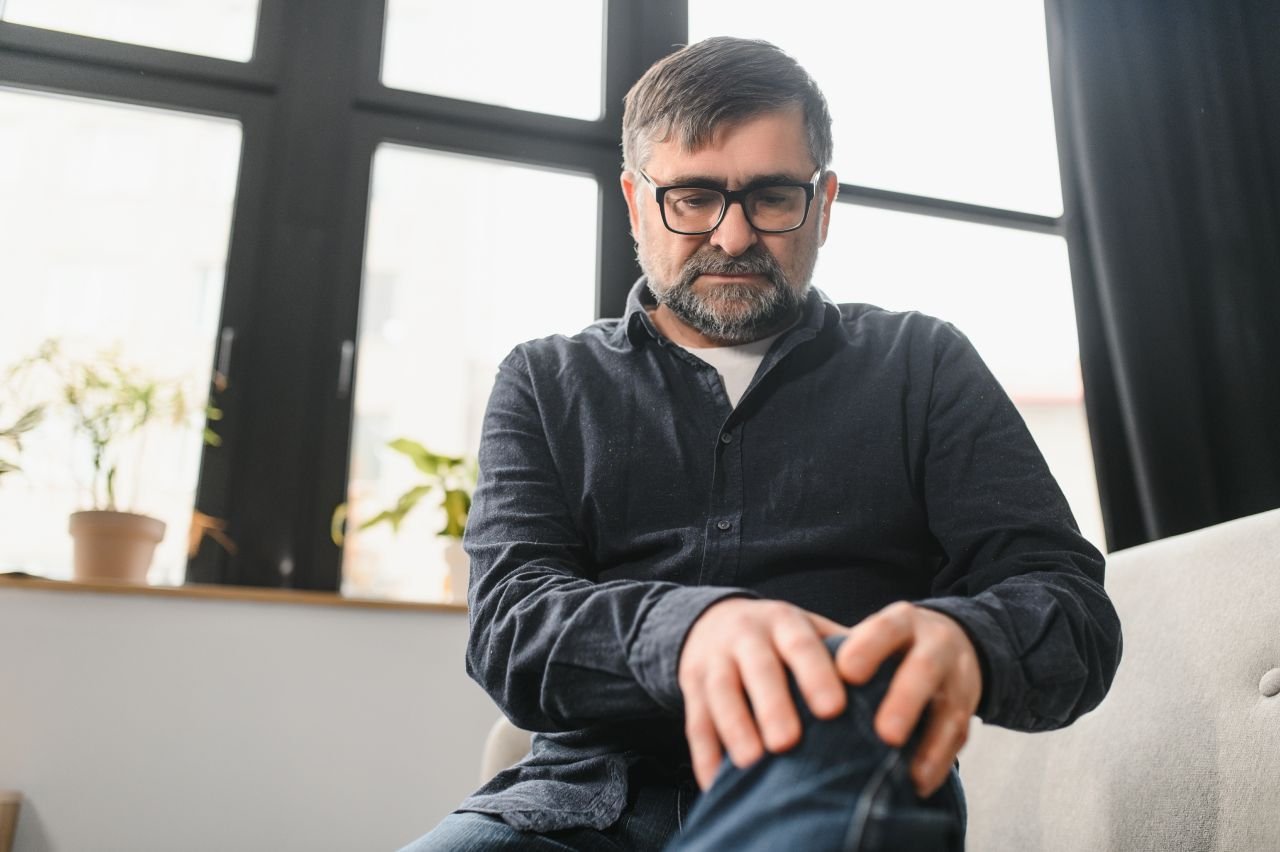
    Adult man over 55 seated near a rainy window with his hand on his knee illustrating why do knees hurt when it rains for adults with knee OA.

    For most adults with knee OA, yes. The research is consistent.

    A 2023 systematic review and meta-analysis included 14 observational studies on weather and OA pain. Thirteen of the 14 reported consistent findings that weather factors are associated with OA pain. Barometric pressure and temperature showed the strongest correlations, with lower temperatures and pressure changes linked to increased pain intensity (Wang et al., 2023).

    The research is correlational, not causal. It confirms the association without establishing that one directly causes the other. For adults wondering whether why do knees hurt when it rains is a real phenomenon or a perception, that distinction matters less than the main finding: 13 out of 14 studies say it is real.

    The same sensitivity explains why knee pain tends to be worse at night, when temperature and barometric conditions also shift.

    Why does barometric pressure affect knee joints?

    Rain running down a window pane representing the barometric pressure changes that explain why knees hurt when it rains for adults with OA.

    The short answer is that the joint has less room to absorb the change.

    When barometric pressure drops before and during rain, there is less air pressure pushing on the body from outside. Soft tissue surrounding the knee, including the synovial membrane and surrounding ligaments, can expand slightly in response. In a healthy knee with full cartilage, that expansion is barely noticeable. In a knee managing reduced cartilage, chronic inflammation, or structural change, the expansion has less room. The result is increased pressure on the nerve endings inside and around the joint.

    This is the most widely cited mechanism in clinical and research literature. It is a plausible explanation, though not yet confirmed in controlled trials. Why do knees hurt when it rains remains an active area of research — what is settled is not the exact mechanism but the consistent association the research has documented.

    Why do some adults feel weather changes more than others?

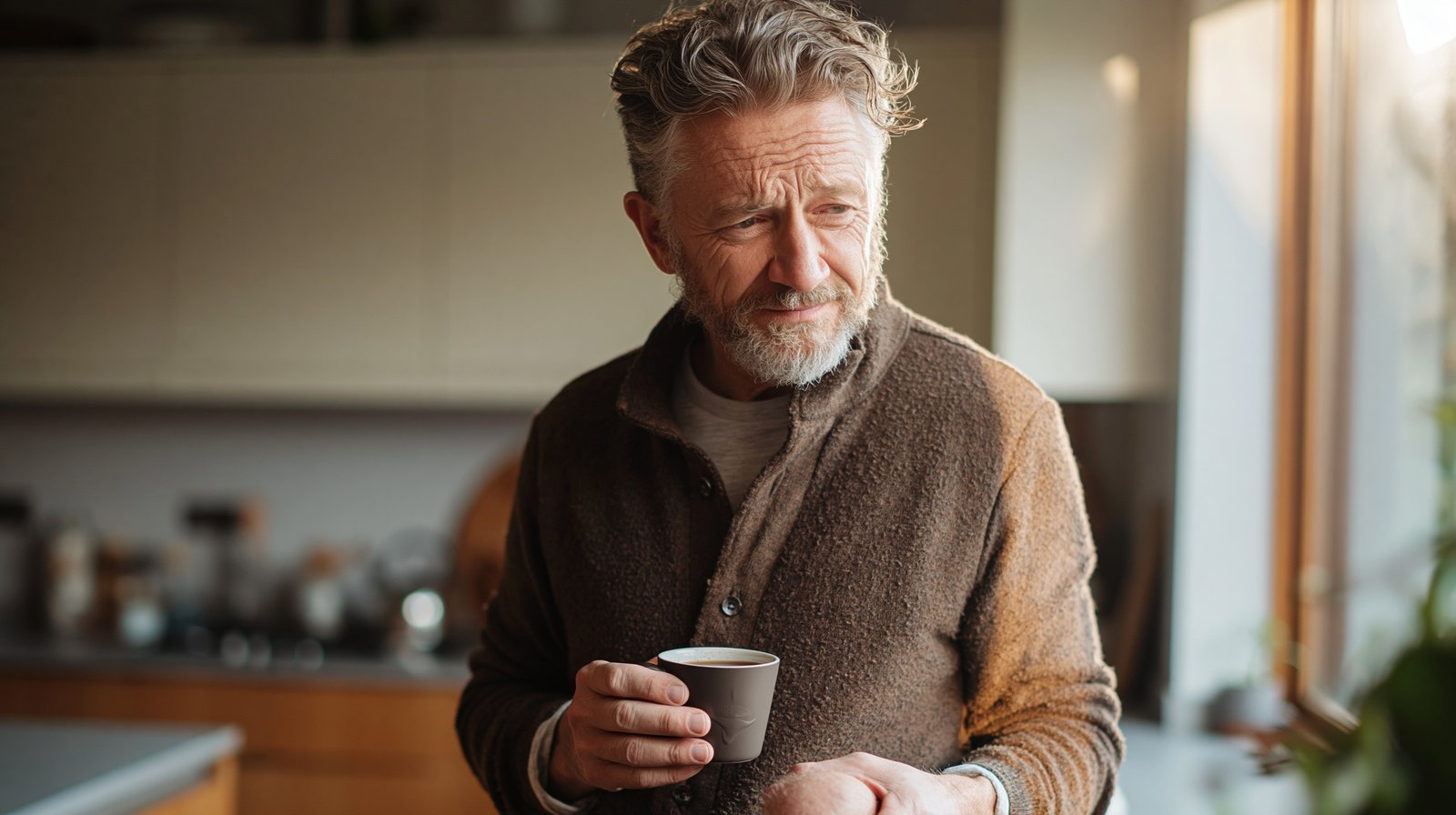
    Adult woman over 55 holding a warm mug on a rainy morning reflecting on why some adults feel weather-related knee pain more than others.

    Because the joint carrying more structural load registers the pressure shift more clearly.

    A cross-sectional study compared weather-sensitive and non-weather-sensitive knee OA patients. After adjusting for age, gender, and BMI, weather-sensitive patients had 3.3 times higher odds of knee pain, 5.5 times higher odds of functional limitation, and significantly higher rates of cartilage defects and bone marrow abnormalities on MRI (Xue et al., 2021).

    Feeling weather changes is not hypersensitivity. It is a signal that the joint is carrying more structural load. Adults who notice clearly why do knees hurt when it rains are, on average, dealing with more underlying joint change.

    That same structural sensitivity explains why morning knee stiffness is pronounced for some adults and barely present for others. The joint that registers the weather is the same one that needs more time to warm up after rest.

    What happens when you stay indoors on rainy days?

    Adult man over 55 sitting indoors on a rainy day in an armchair illustrating the inactivity spiral that compounds knee pain when movement stops.

    The pain compounds quietly.

    Rain gives permission to rest. The knee already hurts more than usual, the weather looks uninviting, and the rationale for skipping the walk feels reasonable. But the joint that stops moving stops circulating synovial fluid, builds stiffness, and starts the next walk from a harder baseline than the one before.

    Research on older adults with knee OA found that on mornings when pain felt more threatening than usual, adults spent significantly more time sedentary and significantly fewer minutes in moderate physical activity that day. The effect carried over: more sedentary behavior one day predicted greater pain anticipation the following morning, which predicted less movement again (Zhaoyang et al., 2020). The cycle feeds itself.

    Rainy days do not cause this spiral. They provide the trigger. The answer to why do knees hurt when it rains is not just barometric pressure. It is also what most adults do in response, and whether how to walk with bad knees gets practiced on the difficult days or only the easy ones.

    How do you keep walking when your knees hurt in wet weather?

    Figure walking indoors along a covered corridor on a rainy day showing how to keep moving when knees hurt in wet weather.

    Four things work on weather-sensitive days. Keep the walk shorter. Two to three minutes still keeps the joint moving and synovial fluid circulating. Move indoors if rain is heavy, a hallway, a mall, or slow movement through the house all count. Warm the joint before starting, ten minutes with a heating pad or a warm shower reduces the stiffness. Barometric pressure has been building. And do not let the permission to rest become a full day off. The joint that rests all day will be harder to move tomorrow.

    Why do knees hurt when it rains does not have to become why walking stops when it rains. The goal on a difficult weather day is not 30 minutes. The goal is not zero.

    Wrap-up: Why do knees hurt when it rains?

    That Saturday eventually became a better story. Not because rain stopped affecting my knees, but because I understood why and had a plan for what to do about it.

    Why do knees hurt when it rains is real, documented across 13 of 14 studies, and reflects structural joint load rather than exaggeration. What you do on those days, whether movement happens or the inactivity spiral takes over, is what determines how the next day feels.

    The goal is not avoiding rainy days. The goal is walking 30 minutes, and knowing why do knees hurt when it rains is one more piece of what makes that achievable year-round.

    Why do knees hurt when it rains is one piece of a larger picture. The complete guide to knee pain relief for adults over 55 covers the full approach.

    Ready to Find Out What Your Body Can Do?

    It takes less than 3 minutes. No gym. No equipment. Just a simple test that shows you if your body can do more than it’s been telling you.

    Take the 3-Minute Walk Test

    M3 is a behavioral wellness coaching program. It is not medical treatment and does not replace advice from your physician. Consult your doctor before beginning any new movement or nutrition program.

    References

    Wang, L., Xu, Q., Chen, Y., Zhu, Z., & Cao, Y. (2023). Associations between weather conditions and osteoarthritis pain: A systematic review and meta-analysis. Annals of Medicine, 55(1), 2196439. https://doi.org/10.1080/07853890.2023.2196439

    Xue, Y., Chen, Y., Jiang, D., et al. (2021). Self-reported weather sensitivity is associated with clinical symptoms and structural abnormalities in patients with knee osteoarthritis: A cross-sectional study. Rheumatology and Therapy, 8(3), 1405–1417. https://doi.org/10.1007/s40744-021-00340-w

    Zhaoyang, R., Martire, L. M., & Darnall, B. D. (2020). Daily pain catastrophizing predicts less physical activity and more sedentary behavior in older adults with osteoarthritis. Pain, 161(9), 2156–2165. https://doi.org/10.1097/j.pain.0000000000001959

  • Foods for Knee Health Over 55: What the Research Actually Shows

    Foods for Knee Health Over 55: What the Research Actually Shows

    Foods for knee health over 55 rarely come up in conversation until something shifts. For Dennis, the shift happened when his walking started getting harder on days after heavier meals. He mentioned it almost offhand in one of our early sessions. That comment opened a conversation about what the research on diet and knee pain actually shows.

    The research is more specific than most adults expect. A meta-analysis of 9 clinical trials involving nearly 900 participants found that dietary interventions significantly reduced OA-related pain across multiple diet types, with a medium effect size confirmed (Asadi et al., 2025). What you eat is not a workaround. For adults with knee OA, it is one of the most evidence-backed levers available.

    Key Takeaway

    Across 9 randomized clinical trials and 898 participants, dietary interventions significantly improved OA pain (SMD –0.67; 95% CI –1.01, –0.34; p<0.0001) (Asadi et al., 2025). Adults consuming the highest omega-3 fatty acid intake showed the greatest improvements in pain and physical function across 8 separate RCTs (Stanfar et al., 2024).

    This post covers whether foods for knee health over 55 actually make a measurable difference, which foods help most, what to cut back on, why the Mediterranean pattern stands out, and how what you eat connects to how far you can walk.

    Ready to Find Out What Your Body Can Do?

    It takes less than 3 minutes. No gym. No equipment. Just a simple test that shows you if your body can do more than it’s been telling you.

    Take the 3-Minute Walk Test

    M3 is a behavioral wellness coaching program. It is not medical treatment and does not replace advice from your physician. Consult your doctor before beginning any new movement or nutrition program.

    Does what you eat actually affect knee pain?

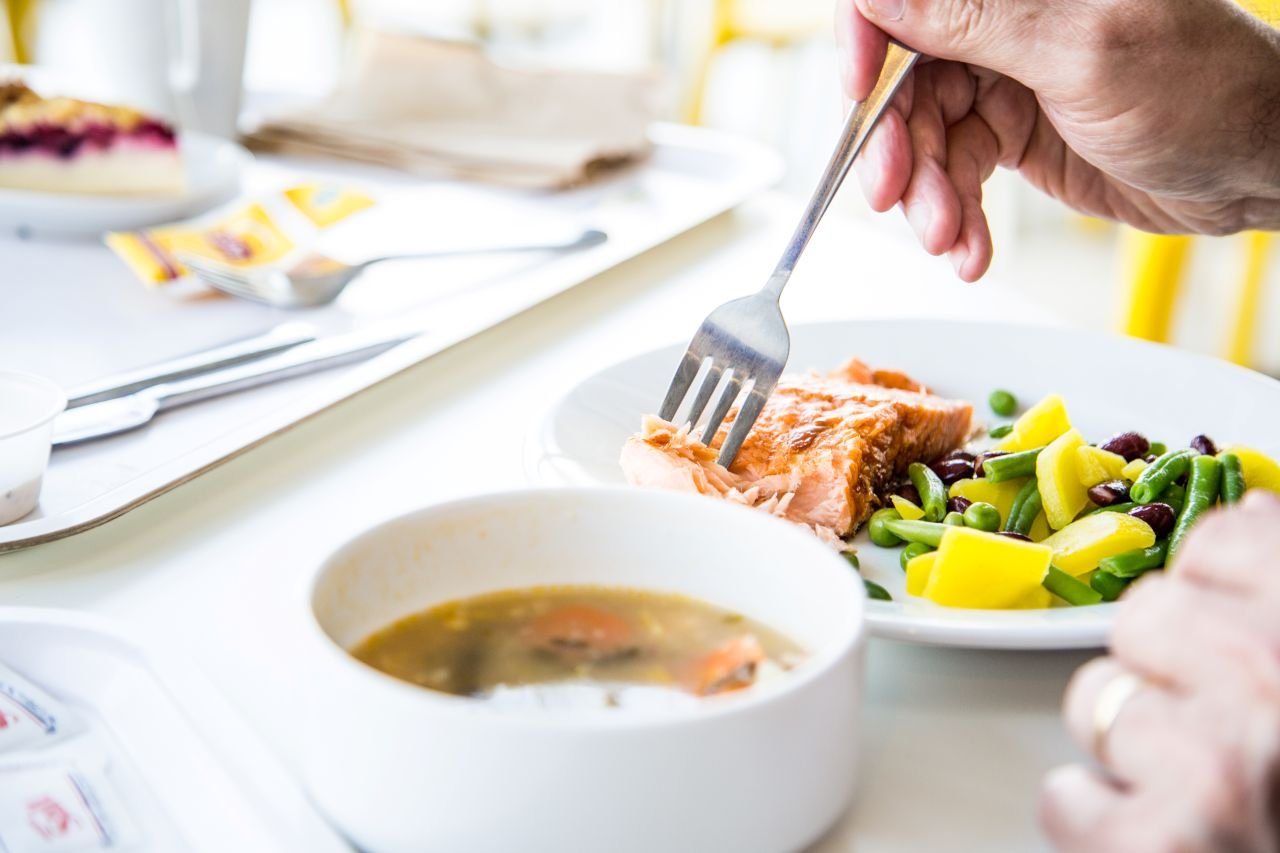
    Adult woman over 55 eating a salmon and vegetable meal representing foods for knee health over 55 that help reduce OA pain.

    More than most adults over 55 have been told.

    A 2025 systematic review and meta-analysis examined 9 randomized clinical trials involving 898 participants. Dietary interventions — Mediterranean, anti-inflammatory, plant-based, and low-fat patterns — significantly improved OA pain with a standardized mean difference of –0.67. That is a medium effect size, not a marginal one (Asadi et al., 2025).

    The mechanism is inflammation. OA involves chronic low-grade inflammation that food can either reduce or amplify. Diets that reduce systemic inflammation reduce the baseline pain the joint is managing each day.

    This is not a claim that foods for knee health over 55 cure osteoarthritis. It is a claim that they measurably shift the conditions under which your knee operates. If you have read about how sugar affects knee pain, the principle runs in both directions.

    If you are considering significant dietary changes, speaking with a physician or registered dietitian first is worth doing.

    Which foods have the strongest evidence for knee health?

     Flat lay of salmon, berries, walnuts, leafy greens, and olive oil representing the foods with the strongest evidence for knee health over 55.

    Two categories stand out across the research.

    The first is omega-3 fatty acids. A systematic review of 8 clinical trials found that adults consuming the most omega-3 fatty acids showed the greatest improvements in pain and physical function of any dietary component studied (Stanfar et al., 2024). On a plate: fatty fish two or three times a week — salmon, sardines, mackerel. Olive oil instead of vegetable oil. Walnuts or flaxseed where they fit naturally.

    The second is plant phenols. Berries, dark leafy greens, whole grains, and legumes are the primary sources. Not exotic. These are the same foods that have appeared in evidence-based dietary guidance for decades because the evidence keeps pointing in the same direction.

    Together, these two categories form the practical core of foods for knee health over 55. The 7 anti-inflammatory foods post covers specific options in more detail.

    What should you cut back on for knee health over 55?

    Adult man over 55 at a kitchen counter moving processed food aside while choosing whole foods for better knee health.

    The same research that identified which foods help also identified which foods hurt.

    The systematic review that found omega-3s and plant phenols to be beneficial specifically found that adults consuming higher proportions of saturated fats, omega-6 fatty acids, and refined carbohydrates had worse pain and function outcomes compared to those eating fewer of them (Stanfar et al., 2024). The two patterns are opposite sides of the same finding.

    In practical terms, this means three things worth reducing: ultra-processed foods, refined grains like white bread and white rice, and fried foods cooked in seed oils high in omega-6 fatty acids. Not eliminating — reducing. The research did not find a clean threshold. It found a graded pattern.

    This is not about eating perfectly. Foods for knee health over 55 are not a strict protocol. They are a direction. The adult who eats salmon twice a week and reduces packaged snack food is moving in the right direction, even if nothing else changes.

    Why does the Mediterranean diet reduce knee pain?

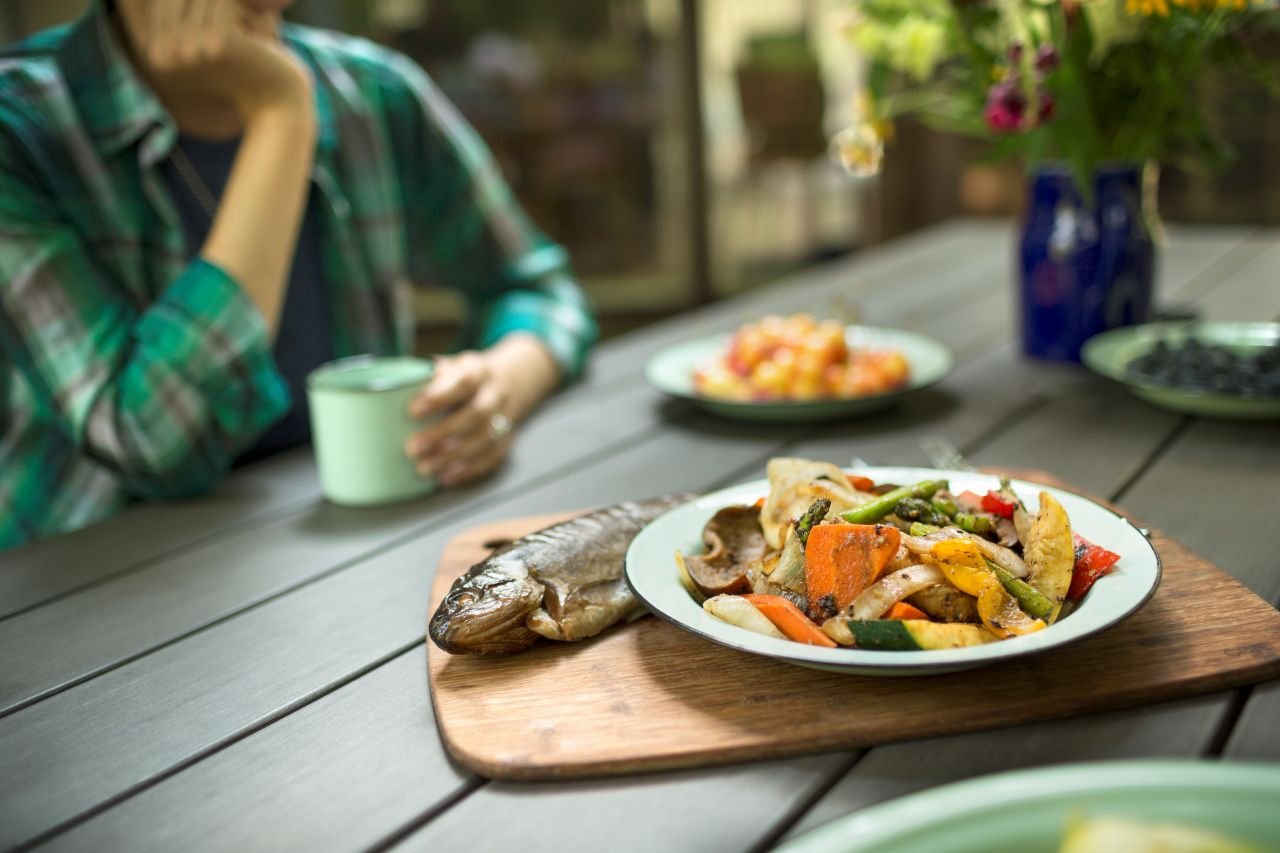
    Adult woman over 55 at a dinner table with a Mediterranean-style meal of grilled fish and vegetables supporting knee health through diet.

    Because the foods in it are the ones the research consistently points toward.

    A randomized trial of 129 knee OA patients assigned them to a Mediterranean diet, a low-fat diet, or a regular diet for 12 weeks. Pain was significantly reduced in the Mediterranean group vs both the low-fat group (p=0.04) and the regular diet group (p=0.002). Importantly, both the Mediterranean and low-fat groups lost similar amounts of weight, but only the Mediterranean group showed significant pain improvement. The dietary components, not weight loss, drove the result (Sadeghi et al., 2022).

    What this looks like in practice: fatty fish twice a week, olive oil as the primary cooking fat, more vegetables and legumes, and less processed food on the plate. Not a rigid meal plan. A daily pattern that gradually shifts the inflammatory load the knee is managing. For adults tracking foods for knee health over 55, it is the most researched and most practical starting point available.

    How does what you eat connect to how far you can walk?

    Figure stepping outside for a morning walk representing how better food choices for knee health over 55 support more consistent daily movement.

    More directly than most adults expect.

    A study of 413 adults aged 60 and older with lower extremity osteoarthritis found that higher diet quality scores were positively associated with faster walking speed on the six-minute walk test and better performance on chair-stand tests. Adults who ate better moved better (Schering et al., 2020).

    The connection makes sense when you trace it. Lower dietary inflammation means less joint swelling overnight. Less overnight swelling means less morning stiffness. Less morning stiffness means easier first steps. Easier first steps mean more walks that actually get started.

    This is where foods for knee health over 55 connect directly to the capability goal. Learning how to walk with bad knees covers the movement side of that equation. What you eat is the other half. Neither works as well without the other.

    Wrap-up: Foods for knee health over 55

    Dennis’s offhand comment turned out to be one of the most useful things he brought to those early sessions. He had simply never been told the research existed.

    Dietary interventions significantly reduce OA pain, confirmed across nearly 900 trial participants. Omega-3 fatty acids and plant phenols produce the most consistent improvements. Cutting back on saturated fats and refined carbohydrates moves the pattern in the right direction as meaningfully as adding the right foods.

    The goal is not a perfect diet. The goal is walking 30 minutes, and foods for knee health over 55 are one of the clearest levers for getting there.

    Foods for knee health over 55 is one piece of a larger picture. The complete guide to knee pain relief for adults over 55 covers the full approach.

    Ready to Find Out What Your Body Can Do?

    It takes less than 3 minutes. No gym. No equipment. Just a simple test that shows you if your body can do more than it’s been telling you.

    Take the 3-Minute Walk Test

    M3 is a behavioral wellness coaching program. It is not medical treatment and does not replace advice from your physician. Consult your doctor before beginning any new movement or nutrition program.

    Frequently Asked Questions

    Is the Mediterranean diet expensive or hard to follow?

    Not as much as its reputation suggests. The core of the pattern — sardines, canned fish, beans, leafy greens, olive oil, oats, and walnuts — is available at most grocery stores at modest cost. The shift is more about proportion than premium ingredients. Foods for knee health over 55 do not require a specialty store or a kitchen overhaul to get started.

    How long does it take for dietary changes to affect knee pain?

    The clinical trials that confirmed the most benefit from foods for knee health over 55 ran for 8 to 12 weeks. Most participants showed meaningful improvement within that window. Some adults report less morning stiffness within two to four weeks of consistent changes. The pattern needs time and consistency. It is not a same-day intervention.

    Do omega-3 supplements work as well as food sources?

    Research on supplements shows mixed results, less consistent than dietary sources. Foods for knee health over 55 that are naturally rich in omega-3s, like fatty fish and plant oils, deliver the fatty acids alongside other nutrients that appear to work together. Supplements may help adults who cannot regularly include fatty fish in their diet, but whole food sources are the better-evidenced starting point.

    What foods should adults with knee pain avoid?

    Three categories are worth reducing: ultra-processed foods, refined grains like white bread and white rice, and foods high in omega-6 fatty acids from fried fast food and seed oil-based snacks. These are the dietary patterns associated with worse pain and function outcomes in the same studies that identified foods for knee health over 55 as beneficial.

    Does losing weight through diet help knee pain?

    It can, but it is not the whole explanation. A 12-week trial found that a Mediterranean diet reduced pain significantly more than a low-fat diet, despite both groups losing similar amounts of weight. The dietary pattern itself, not just calorie reduction, appears to drive the pain benefit. Dietary quality matters independently of weight change.

    Can what you eat affect your energy for walking?

    Yes. A study of 413 older adults with lower extremity OA found that higher diet quality was associated with faster walking speed and better physical function. Lower inflammation from better foods for knee health over 55 means less morning stiffness, easier first steps, and more capacity for daily walks. The dietary and movement improvements tend to build on each other.

    References

    Asadi, S., Grafenauer, S., Burley, C. V., Fitzgerald, C., Humburg, P., & Parmenter, B. J. (2025). The effectiveness of dietary intervention in osteoarthritis management: A systematic review and meta-analysis of randomized clinical trials. European Journal of Clinical Nutrition. Advance online publication. https://doi.org/10.1038/s41430-025-01622-0

    Sadeghi, A., Zarrinjooiee, G., Mousavi, S. N., Abdollahi Sabet, S., & Jalili, N. (2022). Effects of a Mediterranean diet compared with the low-fat diet on patients with knee osteoarthritis: A randomized feeding trial. International Journal of Clinical Practice, 2022, Article 7275192. https://doi.org/10.1155/2022/7275192

    Schering, T., Schiffer, L., McLeod, A., DeMott, A., Hughes, S., Fitzgibbon, M. L., & Tussing-Humphreys, L. (2020). Association of diet quality and physical function among overweight and obese primarily African American older adults with lower extremity osteoarthritis. Nutrition and Healthy Aging, 5(4), 301–314. https://doi.org/10.3233/nha-190081

    Stanfar, K., Hawes, C., Ghajar, M., Byham-Gray, L., & Radler, D. R. (2024). Diet modification reduces pain and improves function in adults with osteoarthritis: A systematic review. Journal of Human Nutrition and Dietetics, 37(4), 847–884. https://doi.org/10.1111/jhn.13317

  • Sleep and Knee Pain Over 55: Why Poor Rest Makes It Harder to Walk

    Sleep and Knee Pain Over 55: Why Poor Rest Makes It Harder to Walk

    Carol had started keeping notes. Not formally, just a few words in her phone each morning about how her knees felt when she got up. After a few weeks, she noticed something. The bad knee mornings almost always followed the nights she had not slept well. She had not read anything about sleep and knee pain over 55. She had just paid attention.

    The pattern she noticed is real, and it runs in both directions. Poor sleep makes knee pain worse the next day. Knee pain makes it harder to sleep. Research has confirmed both sides of that relationship, and there is a specific sleep threshold where knee pain starts to meaningfully improve.

    Key Takeaway

    Among adults 45 and older, poor sleep predicted future pain (OR 1.74) and pain predicted future poor sleep (OR 1.87) — each making the other harder to manage (Duan et al., 2024). In adults with comorbid knee OA and insomnia, reaching approximately 6.5 hours of sleep predicted clinically significant pain reduction at 6 months (Salwen et al., 2017).

    This post covers whether sleep and knee pain over 55 are actually connected, why the relationship runs both ways, what the research says about improving sleep to reduce pain, and what this means for walking.

    Ready to Find Out What Your Body Can Do?

    It takes less than 3 minutes. No gym. No equipment. Just a simple test that shows you if your body can do more than it’s been telling you.

    Take the 3-Minute Walk Test

    M3 is a behavioral wellness coaching program. It is not medical treatment and does not replace advice from your physician. Consult your doctor before beginning any new movement or nutrition program.

    Does poor sleep actually make knee pain worse?

    Adult man over 55 sitting in the kitchen after a poor night showing how sleep and knee pain over 55 are connected in a documented cycle.

    Yes. And the evidence runs in both directions.

    In a study of 169 adults aged 71 to 80 with radiographic knee OA, higher knee pain scores significantly predicted poor sleep quality. Half of the women reported poor sleep, and knee pain was one of the clearest predictors (Kirkham-Wilson et al., 2025).

    The other direction is equally documented. A large longitudinal study found that poor sleep quality predicted future pain and pain predicted future poor sleep. Each condition made the other harder to manage (Duan et al., 2024). For adults who have noticed that their worst knee mornings follow their worst nights, this is not a coincidence. It is a documented pattern. If you want to understand why knee pain tends to feel worse at night, that post covers the nighttime mechanics specifically. What matters here is that sleep and knee pain over 55 are not separate problems. They are the same loop.

    Why does knee pain make it harder to sleep?

    Adult woman over 55 lying awake at night with knee pain, illustrating why sleep and knee pain over 55 disrupt each other.

    Three things happen when you try to sleep with a knee that has been managing pain all day.

    The first is position. A knee with OA is sensitive to sustained pressure and certain angles. Lying still long enough to reach deep sleep means holding a position that the joint may not tolerate. Small adjustments wake you up, and over time, sleep becomes lighter and more fragmented.

    The second is inflammation. OA is an inflammatory condition. Inflammatory signals do not stop at bedtime. Without the distraction of movement and activity, they are easier to notice.

    The third is the nervous system. Chronic pain trains the body to stay more alert. A nervous system managing persistent knee pain becomes more vigilant, more likely to register discomfort that would otherwise stay below the threshold of awareness during sleep.

    None of this means sleep is impossible with knee pain. It means sleep and knee pain over 55 interact in ways that require a specific approach rather than just trying harder to fall asleep.

    Can improving your sleep reduce knee pain?

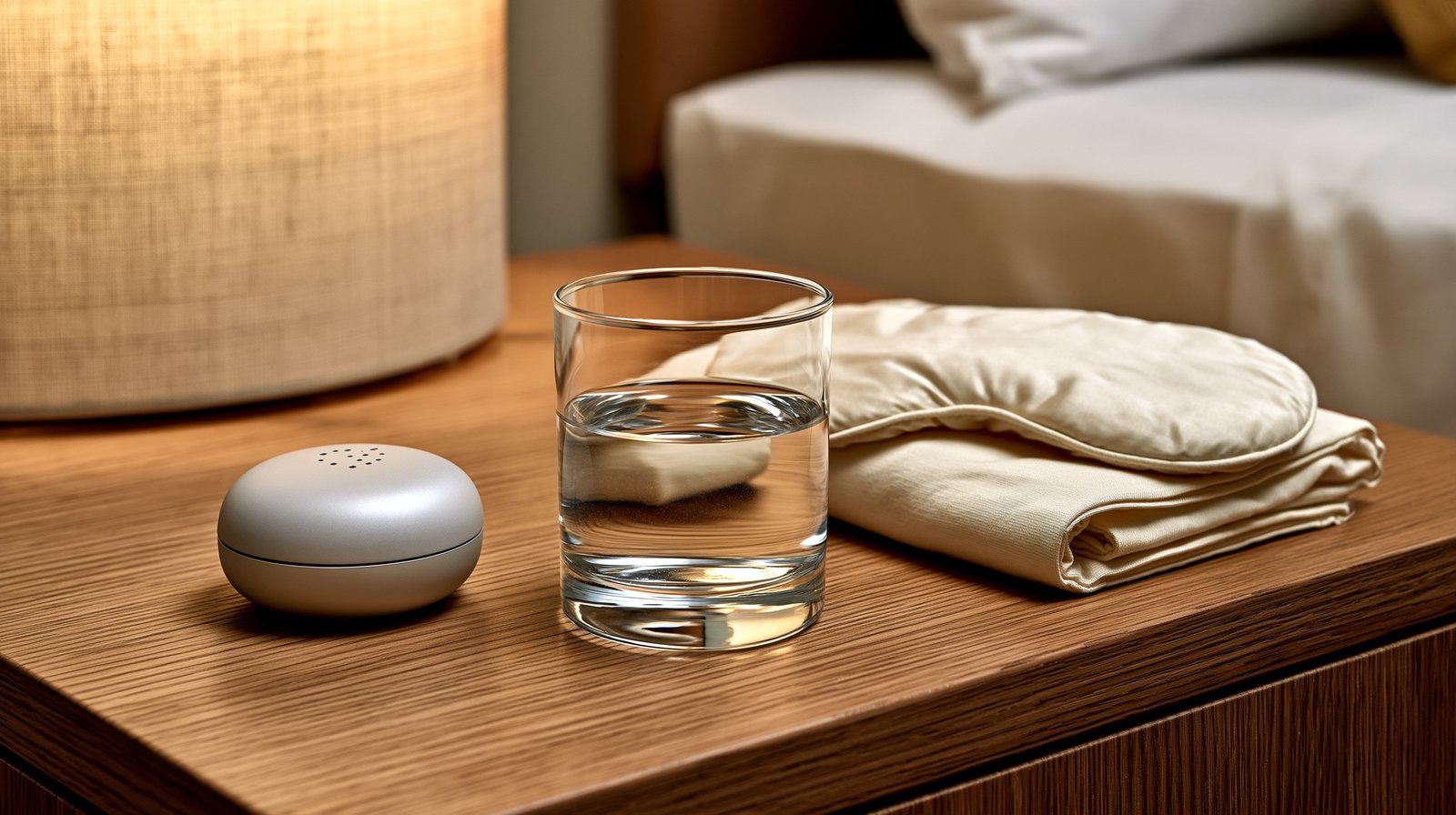
    Bedroom nightstand with a glass of water, white noise device, and sleep mask representing intentional sleep preparation for adults managing knee pain.

    The research says yes, and it gives a specific threshold worth knowing.

    In a clinical trial of adults with comorbid knee OA and insomnia, reaching approximately 6.5 hours of sleep by mid-treatment was the strongest predictor of clinically significant knee pain reduction at six months (Salwen et al., 2017).

    A study of 327 adults aged 60 and older with chronic OA pain and insomnia found that those who improved their sleep in the first two months showed sustained reductions in pain, fatigue, and depression across 12 months (Vitiello et al., 2021). Six and a half hours is not an ambitious target. For many adults with knee pain, it simply does not happen. The morning knee stiffness that follows a poor night is one of the clearest signs that the body did not get enough restorative time. For adults managing sleep and knee pain over 55, improving sleep is not a workaround. It is one of the most direct routes toward less pain.

    What does sleep have to do with walking?

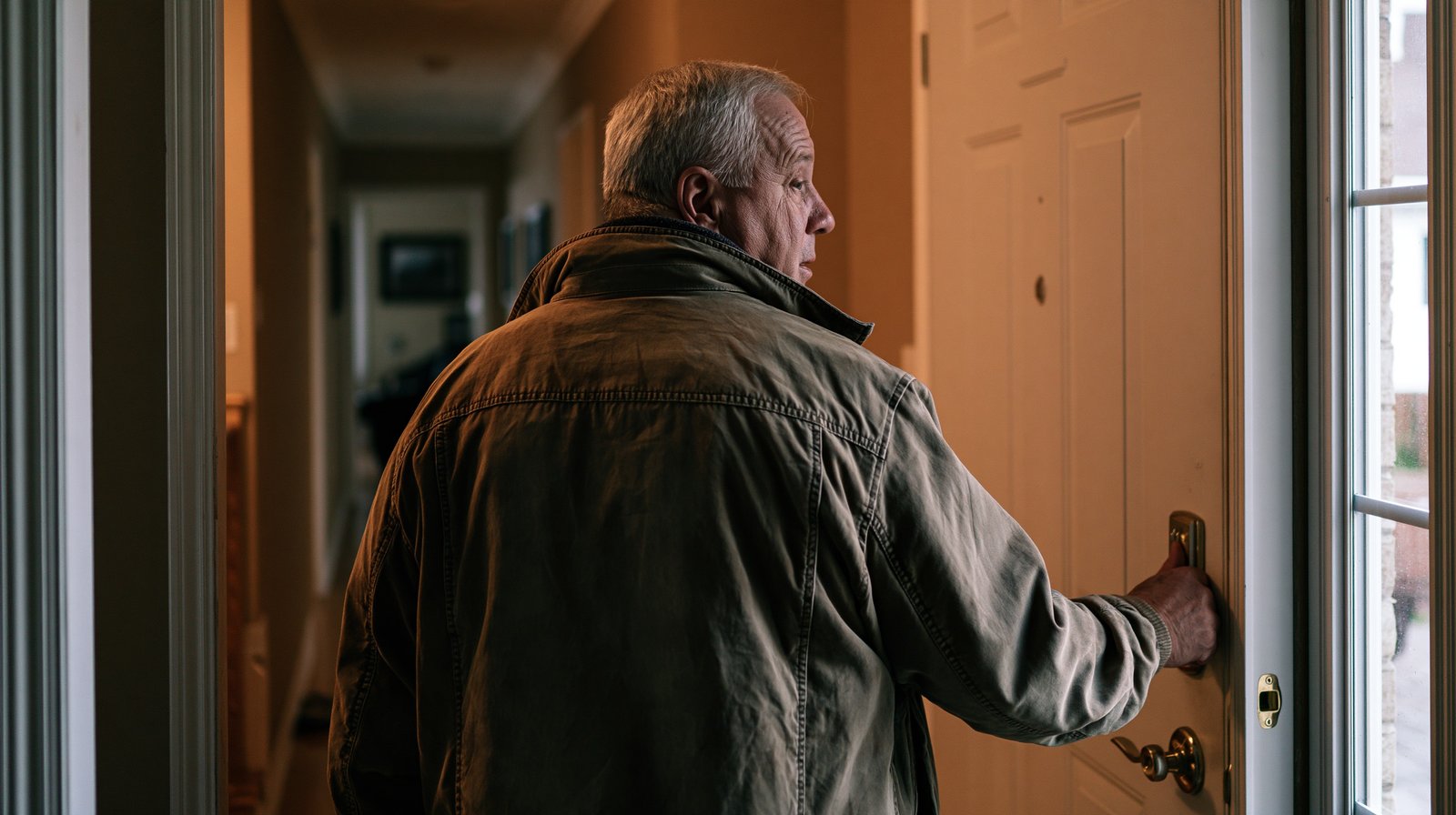
    Adult man over 55 viewed from behind at his front door about to begin a morning walk after a good night of sleep.

    Filename: sleep-and-knee-pain-over-55-walking-connection.jpg

    More than most adults with knee pain realize.

    Poor sleep amplifies pain signals the next morning. Fatigue compounds the effect. First steps that feel harder than they should are first steps that often do not happen. For adults building a walking practice, a bad night does not just affect how they feel. It affects whether they walk.

    This is not a motivation problem. A body without enough restorative sleep is managing more pain and less capacity for movement before the day has started.

    The good news is the relationship runs both ways. Better sleep means less morning pain and more consistent walks. Consistent walking supports better sleep. The loop that compounds the problem can also compound the solution.

    Protecting sleep and knee pain over 55 as a connected pair is one of the most reliable ways to keep walking days on track. Learning how to walk with bad knees covers the walking side. The goal is walking 30 minutes. Better nights are one of the clearest paths toward it.

    Wrap-up: Sleep and knee pain over 55

    The relationship Carol noticed in her morning notes is real. Poor sleep makes knee pain harder to manage the next day. Knee pain makes it harder to sleep. And improving sleep toward that 6.5-hour threshold is associated with meaningful pain reductions over time.

    Three honest facts from the research: the relationship runs both ways, the threshold is within reach, and better sleep nights produce better walking days.

    The goal is not just sleeping through the night. The goal is walking 30 minutes, and better sleep is one of the clearest paths toward it.

    Sleep and knee pain over 55 is one piece of a larger picture. The complete guide to knee pain relief for adults over 55 covers the full approach.

    Ready to Find Out What Your Body Can Do?

    It takes less than 3 minutes. No gym. No equipment. Just a simple test that shows you if your body can do more than it’s been telling you.

    Take the 3-Minute Walk Test

    M3 is a behavioral wellness coaching program. It is not medical treatment and does not replace advice from your physician. Consult your doctor before beginning any new movement or nutrition program.

    Frequently Asked Questions

    Why is knee pain often worse in the morning after a bad night?

    During sleep, joints that are not moving do not circulate synovial fluid, the lubricant that keeps knee cartilage working smoothly. A fragmented night compounds this. Less restorative sleep also means inflammatory signals have been active longer without the buffering effect of daytime movement. For adults managing sleep and knee pain over 55, the first steps of the day reflect the quality of the night before.

    How many hours of sleep should adults over 55 with knee pain aim for?

    Research on adults with comorbid knee OA and insomnia found that reaching approximately 6.5 hours of sleep predicted clinically significant pain reduction at six months. That is not a hard prescription, but it is a useful target. For adults where sleep and knee pain over 55 are both present, 6.5 hours is where the research suggests meaningful improvement begins.

    Does sleeping position affect knee pain?

    Yes. Side sleeping with a pillow placed between the knees reduces rotational stress on the hip and knee joint. Back sleeping with a pillow or rolled towel under the knees keeps them in a slightly flexed position, which many adults with OA find more comfortable. Stomach sleeping places the most strain on the knee and is worth avoiding if nighttime pain is a consistent problem.

    Can napping help with knee pain and fatigue?

    A short nap of 20 minutes or less can reduce afternoon fatigue without disrupting nighttime sleep. Longer naps, especially those over 45 minutes, can make it harder to fall asleep at night, which works against the sleep improvement goal. If fatigue from poor sleep is affecting daily activity, a brief early-afternoon rest is reasonable. Late-day or long naps are more likely to extend the problem than solve it.

    Does exercise help with sleep when you have knee pain?

    Yes, and this is one of the clearest examples of how sleep and knee pain over 55 respond to the same intervention. Regular walking and low-impact movement improve sleep quality in older adults by reducing inflammation, regulating the body’s internal clock, and reducing the nighttime anxiety that often accompanies chronic pain. Avoid vigorous exercise within two hours of bedtime, but gentle movement earlier in the day consistently supports better sleep.

    What should you do if knee pain keeps you awake at night?

    Start with a pillow between or under the knees, depending on sleep position. A light blanket over the knee can help with the temperature sensitivity that often increases at night with OA. If disrupted sleep and knee pain over 55 is a consistent nightly pattern rather than an occasional bad night, it is worth raising with your doctor before it compounds further.

    References

    Duan, Y., Yang, M., Luo, Q., Li, H., Kong, L., & Cheng, Q. (2024). Bidirectional relationship between pain and sleep disturbance in middle-aged and older adults: Evidence from the China Health and Retirement Longitudinal Study. Frontiers in Psychiatry, 15, 1485822. https://doi.org/10.3389/fpsyt.2024.1485822

    Kirkham-Wilson, F., Westbury, L., Bevilacqua, G., Laskou, F., Fuggle, N., & Dennison, E. (2025). Relationships between pain, physical activity and sleep quality among older adults with radiographic knee osteoarthritis: Findings from the Hertfordshire Cohort Study. Aging Clinical and Experimental Research, 37, 77. https://doi.org/10.1007/s40520-025-03238-7

    Salwen, J. K., Smith, M. T., & Finan, P. H. (2017). Mid-treatment sleep duration predicts clinically significant knee osteoarthritis pain reduction at 6 months: Effects from a behavioral sleep medicine clinical trial. Sleep, 40(2), zsw064. https://doi.org/10.1093/sleep/zsw064

    Vitiello, M. V., Zhu, W., Von Korff, M., Wellman, R., Morin, C. M., & Yeung, K. (2021). Long-term improvements in sleep, pain, depression, and fatigue in older adults with comorbid osteoarthritis pain and insomnia. Sleep, 44(10), zsab231. https://doi.org/10.1093/sleep/zsab231

  • How to Walk With Bad Knees: A Step-by-Step Guide for Adults Over 55

    How to Walk With Bad Knees: A Step-by-Step Guide for Adults Over 55

    Most adults with bad knees make one of two mistakes. They push through the pain until something forces them to stop, or they quit moving altogether and wait for things to improve. Frank tried both. A friend who had dealt with her own knee pain finally talked him into making that first call. He showed up certain that knowing how to walk with bad knees was not his problem. Walking was.

    For adults over 55 with knee osteoarthritis, the evidence says otherwise. Among 1,212 adults aged 50 and older with knee OA, those who walked for exercise had 40% lower odds of developing new frequent knee pain than those who did not (Lo et al., 2022). The issue is rarely the walking. It is how the walking gets done.

    Key Takeaway

    Among 1,212 adults aged 50 and older with knee OA, walkers had 40% lower odds of developing new frequent knee pain vs. non-walkers (Lo et al., 2022). Walking at least 6,000 steps daily was the strongest predictor of avoiding functional limitation over two years in knee OA adults (White et al., 2014). Walking helps. The approach determines how much.

    This post covers whether walking is safe for bad knees, why most adults start wrong, and a 6-step approach to how to walk with bad knees that builds from 2 minutes toward 30.

    Ready to Find Out What Your Body Can Do?

    It takes less than 3 minutes. No gym. No equipment. Just a simple test that shows you if your body can do more than it’s been telling you.

    Take the 3-Minute Walk Test

    M3 is a behavioral wellness coaching program. It is not medical treatment and does not replace advice from your physician. Consult your doctor before beginning any new movement or nutrition program.

    Is it safe to walk with bad knees?

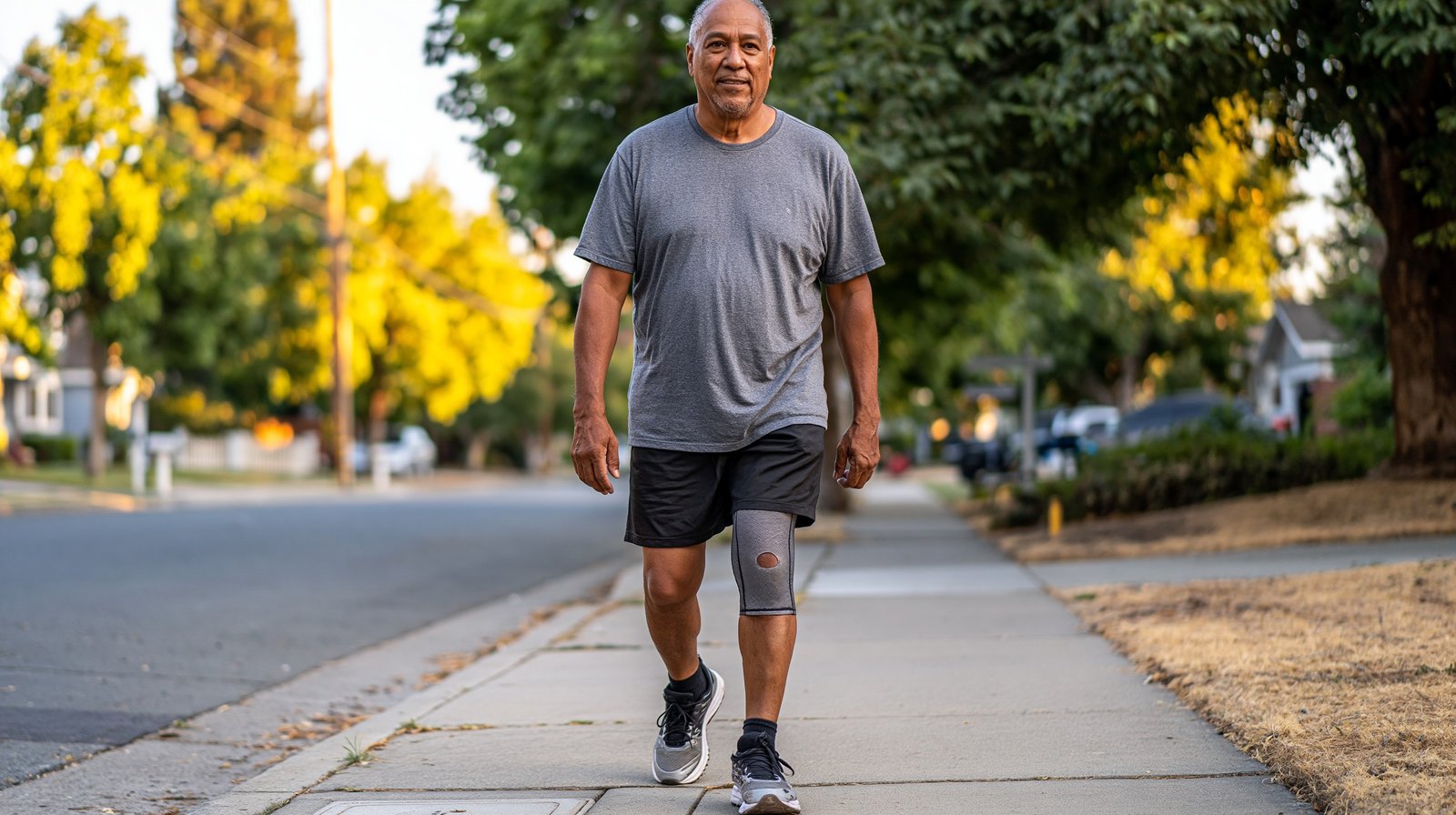
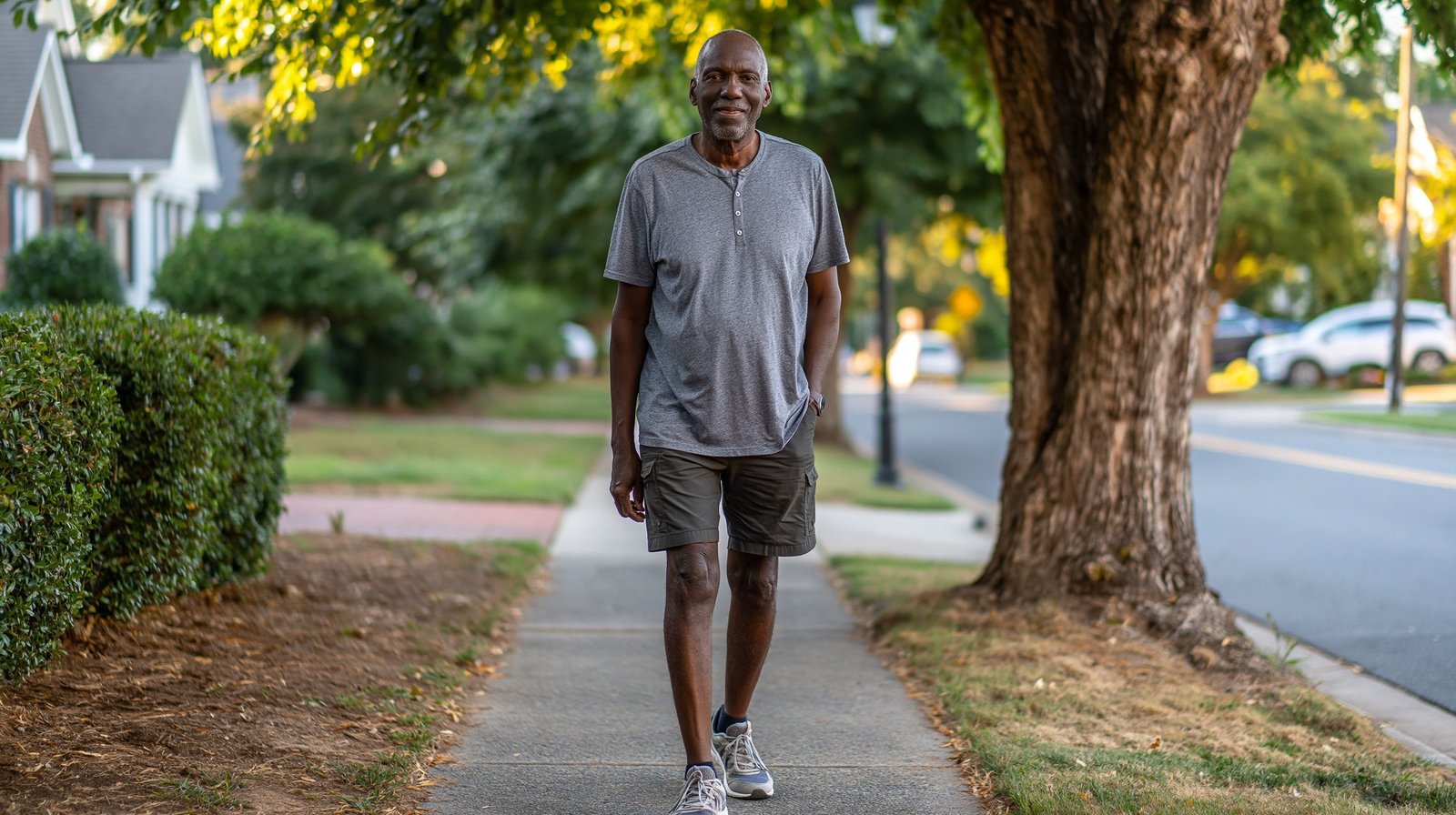
    Adult woman over 55 walking comfortably on a park path showing how to walk with bad knees safely and without aggravating pain.

    For most adults with knee osteoarthritis, yes. And not just safe, but beneficial.

    Among 1,212 adults aged 50 and older with knee OA, those who walked for exercise had 40% lower odds of developing new frequent knee pain compared to those who did not walk. Walkers also showed less structural damage inside the joint over four years (Lo et al., 2022). The evidence points in one direction: movement protects, inactivity compounds the problem.

    The fear that walking will accelerate joint damage is one of the most common reasons adults with bad knees stop moving. A five-year study of adults with advanced structural knee OA found that daily walking did not increase the risk of knee replacement and may be protective in some cases (Master et al., 2021). Even in the most affected knees, walking did not make things worse.

    Knowing how to walk with bad knees starts with understanding that the activity itself is not the enemy. The approach is what matters.

    Why do most adults with bad knees walk too far too soon?

    Adult man over 55 sitting at the start of a walking path considering the right approach for walking with bad knees.

    Because the standard advice does not fit them.

    The CDC recommends 30 minutes of moderate activity a day for healthy adults. That is solid guidance for someone whose knees are not a limiting factor. For an adult with knee OA who has been mostly sedentary for months, 30 minutes on day one is not a starting point. It is an overload.

    A joint that has been guarded and underused needs time to relearn that movement is safe. Starting at 30 minutes bypasses that process. The result is a walk that ends badly, a knee that protests for two days after, and a conclusion that feels obvious but is wrong: walking made it worse.

    It did not. The dose made it worse.

    Most adults asking how to walk with bad knees already know they should walk. What they need is a starting point that matches where their body actually is right now.

    How do you walk with bad knees step by step?

    Walking shoes and a glass of water on a path representing the preparation steps before walking with bad knees.

    These six steps are how to walk with bad knees, whether you are starting from zero, starting over, or starting cautiously after a setback.

    Step 1: Choose a flat surface and supportive shoes

    Before distance or duration, surface and footwear matter. Asphalt, packed dirt trails, and indoor tracks absorb more impact than concrete sidewalks. Flat surfaces reduce the demand on a knee that is already managing more than it would like. Your walking shoes should have a low heel-to-toe drop, a firm heel cup, and a wide toe box. Hard, sloped, or uneven surfaces come later. Not on day one.

    Step 2: Drink a glass of water before you start

    This takes under sixty seconds, and it matters. Your knee joint relies on synovial fluid for lubrication and shock absorption. That fluid is mostly water. Walking when you are even mildly dehydrated means the joint is working with less of what it needs. Drinking a glass of water before your walk is also a behavioral cue. It signals to your body and your brain that the walk is beginning. Cues like this are how habits form.

    Step 3: Start at 2 to 3 minutes at a comfortable pace

    Two to three minutes. Not ten. Not the twenty minutes your doctor suggested last year. Two to three minutes at a pace where you could hold a conversation without effort. This is not a warm-up. This is the walk. For an adult with a knee that has been guarded for weeks or months, a 2-minute walk is real data. It tells you what your body can do right now without overloading a joint that has not been asked to do much lately.

    Step 4: Check in with how you feel when you finish

    When you return, ask one question: do you feel better, the same, or worse than when you started? Not how your knee scored on a pain scale. Just better, same, or worse. Better means your body responded well to movement. Worse, or significantly worse the following morning, means the next walk should be shorter or the surface should be softer. Three consecutive walks that finish better than they started is your green light to build. This three-day check is the same principle behind the 3-Minute Walk Test at enneadhealth.com.

    Step 5: Add 1 to 2 minutes every 3 to 4 days

    Once you have three consecutive walks that end better than they started, add 1 to 2 minutes to your next session. Not every walk. Every 3 to 4 days. Adults with knee OA who exercised aerobically at higher frequencies showed a graded pattern of improvement in both pain and function, with the greatest gains in those who exercised consistently 3 to 6 times per week (Komolsuradej et al., 2026). Consistency and gradual progression together are the mechanisms.

    Step 6: Anchor your walk to something you already do

    Pick one time of day and attach your walk to a habit you already have. After your morning coffee. Before dinner. The same time each day removes the daily decision. A walk that requires a fresh decision every morning gets skipped. A walk that follows the coffee does not. Consistency beats distance every time for adults building a walking practice with bad knees.

    How far should you walk when your knees hurt?

    Adult woman over 55 checking her step count while walking, illustrating how to walk with bad knees and track daily progress.

    The research gives a specific answer that most people never hear.

    A study of 1,788 adults with or at risk of knee OA found that walking at least 6,000 steps per day best predicted avoiding functional limitation over two years. Each additional 1,000 steps was associated with a 16 to 18 percent reduction in the risk of developing difficulty walking, climbing stairs, or rising from a chair (White et al., 2014).

    Six thousand steps is not a day-one target. It is a destination, the threshold where meaningful protection against functional decline begins.

    Build there gradually. A 2-minute walk is roughly 200 steps. A 10-minute walk is roughly 1,000. You do not need to reach 6,000 in a single session. You need to reach it across the day.

    One signal to watch as you build: waking with more morning stiffness than usual after a walk means you added too much too soon. Shorten the next session and rebuild from there.

    Knowing how to walk with bad knees means knowing not just how to start but how to read what your body tells you as you go.

    How do you keep walking consistently with bad knees?

    Adult man over 55 stepping outside with his morning coffee to begin a daily walking habit for managing bad knees.

    By making the decision once instead of every day.

    Adults with knee OA who exercised aerobically 3 to 6 times per week showed the greatest improvements in pain and function. Once a week produced modest results. The sweet spot is consistent, frequent movement with one or two rest days built in.

    Consistency at that frequency does not come from motivation. It comes from structure. If the walk requires a fresh decision every morning, it will get skipped on the hard mornings. If it follows the coffee, it does not.

    Pick one time of day and attach the walk to something that already happens. After your morning coffee works for most people. Before dinner works if mornings are unpredictable. The point is one consistent anchor, one consistent time, already built into the day.

    For adults learning how to walk with bad knees, the biggest predictor of keeping going is not pain tolerance. It is whether they built something the walk could attach to.

    Wrap-up: How to walk with bad knees

    Walking is not what hurts your knees. Doing too much too soon is. Adults with knee OA who walk regularly have lower rates of new pain, less structural damage, and better function over time than those who stop moving.

    The six steps here are a starting point, not a program. Surface, water, two minutes, a feel check, a gradual build, and a daily anchor. That sequence works because it matches where most adults with bad knees actually are.

    The goal is not staying at two minutes. The goal is walking 30 minutes, and these six steps are how you start building toward it.

    How to walk with bad knees is one piece of a larger picture. The complete guide to knee pain relief for adults over 55 covers the full approach.

    Ready to Find Out What Your Body Can Do?

    It takes less than 3 minutes. No gym. No equipment. Just a simple test that shows you if your body can do more than it’s been telling you.

    Take the 3-Minute Walk Test

    M3 is a behavioral wellness coaching program. It is not medical treatment and does not replace advice from your physician. Consult your doctor before beginning any new movement or nutrition program.

    References

    Komolsuradej, N., Boonlertwanich, P., Klaylian, N., Hiranchunha, K., Malang, D., Intharak, P., Sangkaew, P., Bandrapiwat, S., & Srikrajang, S. (2026). Frequency of aerobic exercise and association with pain and function in older adults with knee osteoarthritis: A cross-sectional study. Life, 16(3), 405. https://doi.org/10.3390/life16030405

    Lo, G. H., Vinod, S., Richard, M. J., Harkey, M. S., McAlindon, T. E., Kriska, A. M., Nevitt, M. C., & Driban, J. B. (2022). Association between walking for exercise and symptomatic and structural progression in individuals with knee osteoarthritis: Data from the Osteoarthritis Initiative cohort. Arthritis & Rheumatology, 74(10), 1660–1667. https://doi.org/10.1002/art.42241

    Master, H., Thoma, L. M., Neogi, T., Dunlop, D. D., LaValley, M., Christiansen, M. B., Voinier, D., & White, D. K. (2021). Daily walking and the risk of knee replacement over five years among adults with advanced structural knee osteoarthritis in the United States. Archives of Physical Medicine and Rehabilitation, 102(10), 1888–1894. https://doi.org/10.1016/j.apmr.2021.05.014
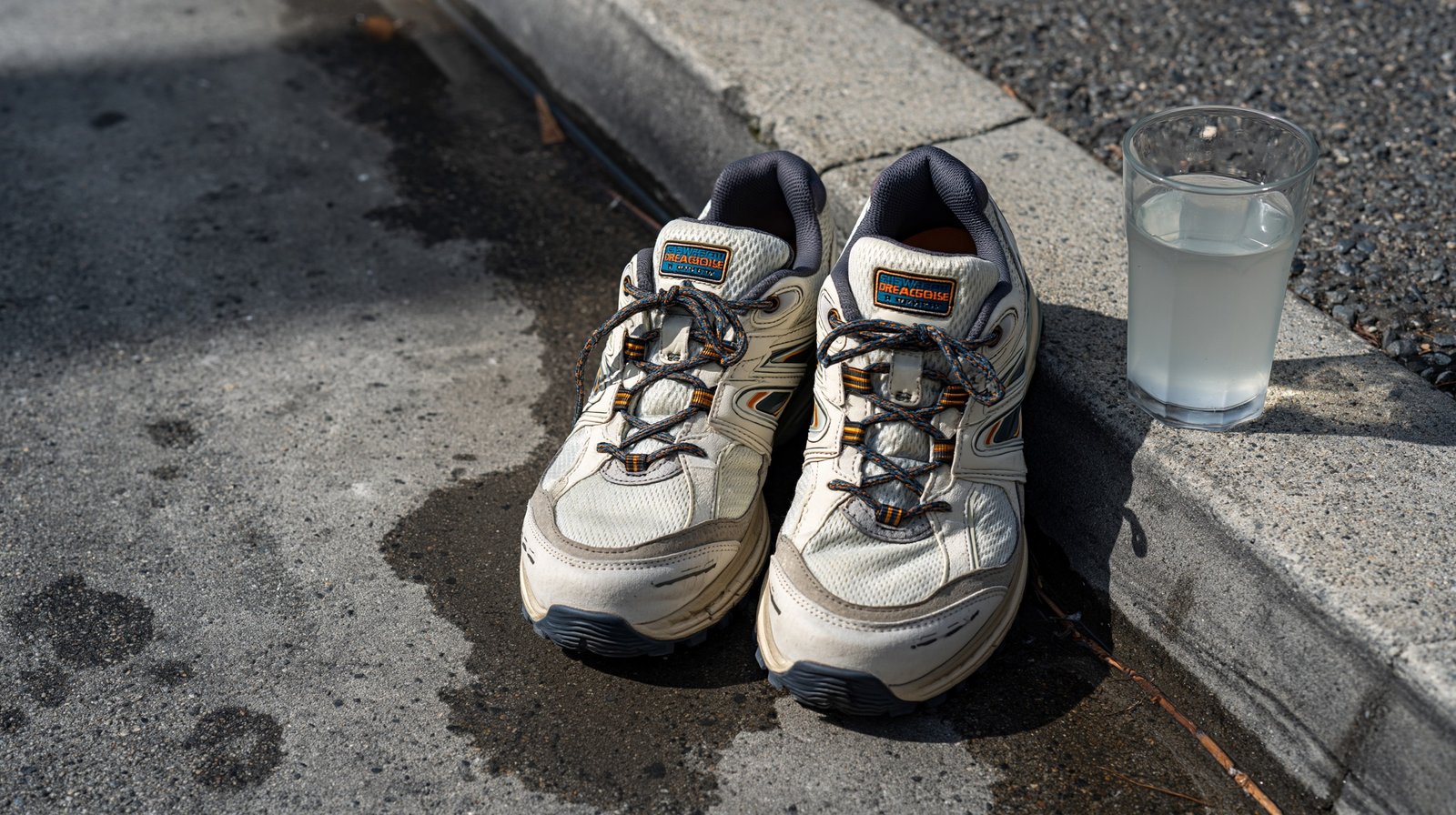
    White, D. K., Neogi, T., Nevitt, M. C., Peloquin, C. E., Zhu, Y., Boudreau, R. M., Newman, A. B., & Kwoh, C. K. (2014). Daily walking and the risk of incident functional limitation in knee OA: An observational study. Arthritis Care & Research, 66(9), 1328–1336. https://doi.org/10.1002/acr.22362

  • Do Knee Braces Help With Knee Pain? The Honest Answer for Adults Over 55

    Do Knee Braces Help With Knee Pain? The Honest Answer for Adults Over 55

    Gloria had been wearing a knee sleeve for three months when we first talked. Her neighbor had recommended it, and she had to admit her knee felt steadier when she had it on. What she could not stop thinking about was whether do knee braces help with knee pain or just make you feel like they do.

    It is a fair question. And the research has a clear answer: for adults over 55 with knee osteoarthritis, braces do help. The type you use and how you use it matter as much as whether you wear one at all.

    Key Takeaway

    In 44 adults with knee OA, a soft brace immediately reduced pain during walking, reduced instability, and improved knee confidence (Cudejko et al., 2017). In a placebo-controlled trial of 149 OA patients over one year, the brace group improved significantly on daily living and activity scores while the placebo group did not (Hjartarson & Toksvig-Larsen, 2018).

    This post covers whether do knee braces help with knee pain, which type works for which condition, when a brace helps and when it does not, and what to look for before buying one.

    Ready to Find Out What Your Body Can Do?

    It takes less than 3 minutes. No gym. No equipment. Just a simple test that shows you if your body can do more than it’s been telling you.

    Take the 3-Minute Walk Test

    M3 is a behavioral wellness coaching program. It is not medical treatment and does not replace advice from your physician. Consult your doctor before beginning any new movement or nutrition program.

    Do knee braces actually help with knee pain when walking?

    Adult man over 55 walking outdoors with a knee sleeve showing do knee braces help with knee pain when walking.

    Yes. The evidence is clear on two levels.

    In the short term, a soft brace worn during walking significantly reduced pain, reduced self-reported knee instability, and improved confidence in the knee in adults with knee osteoarthritis. The effect showed up immediately, within a single session (Cudejko et al., 2017).

    Over the longer term, a placebo-controlled trial followed 149 OA patients for one year. The group wearing an active unloader brace improved significantly on daily living, sports, and recreation scores. The placebo group showed no significant improvement in any score (Hjartarson & Toksvig-Larsen, 2018).

    So when adults over 55 ask do knee braces help with knee pain, the honest answer is yes, and the evidence runs from the first time you put one on through at least a full year of use.

    What types of knee braces are there, and which one is right for you?

    Adult woman over 55 examining a soft knee compression sleeve at home while deciding which type of knee brace to use.

    Three types cover most situations adults over 55 will encounter.

    A compression sleeve is the most common. It fits over the knee, reduces swelling, and improves the body’s awareness of where the knee is in space. Most adults with general OA-related knee pain start here.

    An unloader brace is a more structured option for adults whose OA is worse on one side of the knee. It shifts the load away from the damaged compartment. It is bulkier than a sleeve, but the research on pain reduction is stronger.

    A hinged brace adds rigid support on either side of the knee. It is typically used for instability or ligament conditions rather than OA. Most adults over 55 asking do knee braces help with knee pain do not need one unless a clinician recommends it.

    If you are considering an unloader or hinged brace, talk to your doctor or physical therapist first. These are prescription-level devices, and the fit matters.

    When does a knee brace actually help, and when does it not?

    Knee compression sleeve, walking shoes, and water bottle arranged together representing a complete walking support system for adults over 55.

    A brace is most useful during an activity that typically causes pain. Walking longer distances. Navigating stairs. Time on your feet. That is when joint load is highest, and support matters most.

    What a brace does not do is fix the underlying condition. Cartilage is not regenerating because you wore a sleeve. A brace manages load during movement. That is its job.

    One orthopedic surgeon at Mass General Brigham put it plainly: only wear a knee brace if it decreases pain with activity and helps you move better. If it does not do both, it is not the right brace for you.

    You also do not need to wear it all day. When you are sitting still or sleeping, it is not doing anything productive. Knowing when do knee braces help with knee pain means knowing what footwear you pair them with, too. The two work as a system.

    Can a knee brace become a crutch over time?

    Adult man over 55 doing gentle knee strengthening exercises at home while wearing a soft knee sleeve.

    It can, if you use it instead of moving, rather than to keep moving.

    The concern is real. When a brace does the stabilizing work your muscles should be doing, those muscles get less stimulus to strengthen. Relying on a brace without building the surrounding muscle can leave you more dependent on it over time.

    Research on 196 adults with knee OA found that combining structured exercise with a knee brace produced significantly better outcomes in pain and function than conventional physiotherapy alone (Dhumale & Shinde, 2025). The brace and the movement worked together. Neither was as effective as both.

    The right answer to do knee braces help with knee pain is yes, but only as part of a bigger picture. Use the brace to keep moving. Let the movement build the strength that reduces how much you need it. For adults over 55, morning knee stiffness is often the first sign that the muscles supporting the joint need more work, not more bracing.

    What should you look for in a knee brace for walking after 55?

    Adult woman over 55 reading the label on a knee compression sleeve in a store while choosing the right brace for walking.

    Four things matter more than brand or price.

    The first is fit. A compression sleeve should feel snug without restricting circulation. If your fingers go numb or the skin below turns white, it is too tight.

    The second is breathability. Walking generates heat. For extended wear, a breathable knit material holds up better than neoprene without causing skin irritation.

    The third is the patella design. An open patella design works well for most OA-related knee pain. A closed design offers more general compression. Your condition determines which serves you better.

    The fourth is ease of putting it on. Arthritis in the hands is common at 55 and older. A brace that requires significant grip strength to don will not get used.

    If you are still unsure whether do knee braces help with knee pain enough to justify buying one, start with a basic compression sleeve and give it three to four weeks of consistent use during walking.

    Wrap-up: Do knee braces help with knee pain?

    Yes. The research is clear that knee braces reduce pain, improve stability, and build walking confidence in adults with osteoarthritis. The effect shows up immediately and holds over time.

    The fuller answer is that the type matters, the timing matters, and what you do alongside it matters most. For most adults over 55 with OA-related knee pain, a compression sleeve is the right starting point. An unloader brace fits better when one side of the knee is more affected. And in every case, movement alongside the brace beats movement instead of it.

    Do knee braces help with knee pain is one piece of a larger picture. The complete guide to knee pain relief for adults over 55 covers the full approach.

    Ready to Find Out What Your Body Can Do?

    It takes less than 3 minutes. No gym. No equipment. Just a simple test that shows you if your body can do more than it’s been telling you.

    Take the 3-Minute Walk Test

    M3 is a behavioral wellness coaching program. It is not medical treatment and does not replace advice from your physician. Consult your doctor before beginning any new movement or nutrition program.

    Frequently Asked Questions

    How long should you wear a knee brace each day?

    Wear it during activities that typically cause pain, then take it off. Most adults do well with 2 to 4 hours of active wear rather than all day. Constant wear without movement is not productive and can cause skin irritation. That steady daily use is how most adults find out do knee braces help with knee pain in practice.

    Should you wear a knee brace to bed?

    Generally no. A brace provides support during load-bearing movement. Lying down puts no load on the joint, so the brace offers nothing useful. If nighttime knee pain is the issue, sleep position and pillow placement help more. Do knee braces help with knee pain most during movement, not rest.

    Can you wear a knee brace with swollen knees?

    A mild compression sleeve can help reduce swelling and is generally safe on a mildly swollen knee. If swelling is significant, sudden, warm to the touch, or accompanied by redness or fever, see a doctor before putting anything compressive on the joint. For most adults, do knee braces help with knee pain during everyday activity is the right question to answer first.

    Do knee braces help with climbing stairs?

    Yes. Stair climbing places a higher load on the knee than level walking, which is when a brace earns its keep. A compression sleeve improves proprioception and reduces instability on stairs. For adults over 55 who find stairs consistently trigger knee pain, this is one of the strongest use cases for wearing one.

    Is a tighter knee brace better for knee pain?

    Not necessarily. Research comparing tight and non-tight soft braces in knee OA patients found no significant difference in pain or instability outcomes. The exception was walking speed, where a tighter fit was marginally faster on a short walk test. A snug fit that stays in place is the goal. Cutting off circulation is counterproductive.

    When should you see a doctor before buying a knee brace?

    See a doctor first if your knee pain started suddenly after a fall, if the knee is significantly swollen or unstable, or if you have had recent surgery. A compression sleeve for general walking discomfort is low-risk for most adults. Prescription-level braces need a proper diagnosis before buying. Knowing what is causing the pain is where to start.

    References

    Cudejko, T., van der Esch, M., van der Leeden, M., van den Noort, J. C., Roorda, L. D., Lems, W., Twisk, J., Steultjens, M., Woodburn, J., Harlaar, J., & Dekker, J. (2017). The immediate effect of a soft knee brace on pain, activity limitations, self-reported knee instability, and self-reported knee confidence in patients with knee osteoarthritis. Arthritis Research & Therapy, 19(1), 260. https://doi.org/10.1186/s13075-017-1456-0

    Dhumale, A., & Shinde, S. (2025). Effect of closed kinetic chain exercise with customized knee brace on pain and functional performance in patients with bilateral medial compartment knee osteoarthritis. Cureus, 17(8), e89674. https://doi.org/10.7759/cureus.89674

    Hjartarson, H. F., & Toksvig-Larsen, S. (2018). The clinical effect of an unloader brace on patients with osteoarthritis of the knee, a randomized placebo controlled trial with one year follow up. BMC Musculoskeletal Disorders, 19(1), 341. https://doi.org/10.1186/s12891-018-2256-7

    Thut, D. C. (n.d.). Knee brace for osteoarthritis: What to look for. Mass General Brigham. Retrieved April 29, 2026, from https://www.massgeneralbrigham.org/en/about/newsroom/articles/knee-brace-for-osteoarthritis-what-to-look-for

  • Will Knee Pain Go Away on Its Own? The Truth for Adults Over 55

    Will Knee Pain Go Away on Its Own? The Truth for Adults Over 55

    Will knee pain go away on its own? That is the question John called me with eight months after his knee pain started. He had managed to keep it together through the doctor visits, the exercises, and the nights he lay awake with the ache. But what he really wanted to know, the question he had been sitting with for months, was whether this was just his life now.

    For most adults over 55 with osteoarthritis, the honest answer is no. Knee pain from a degenerative condition does not typically resolve without the right approach. But that is only half the answer. The other half matters more.

    Key Takeaways

    Chronic knee pain affects one in four adults aged 55 and older, with osteoarthritis as the commonest diagnosis (Mallen & Peat, 2007). In 514 adults with knee OA, those with higher self-efficacy and more positive outcome expectations were significantly more active at 3 and 6 months (Quicke et al., 2017). What you believe about your body shapes what it does.
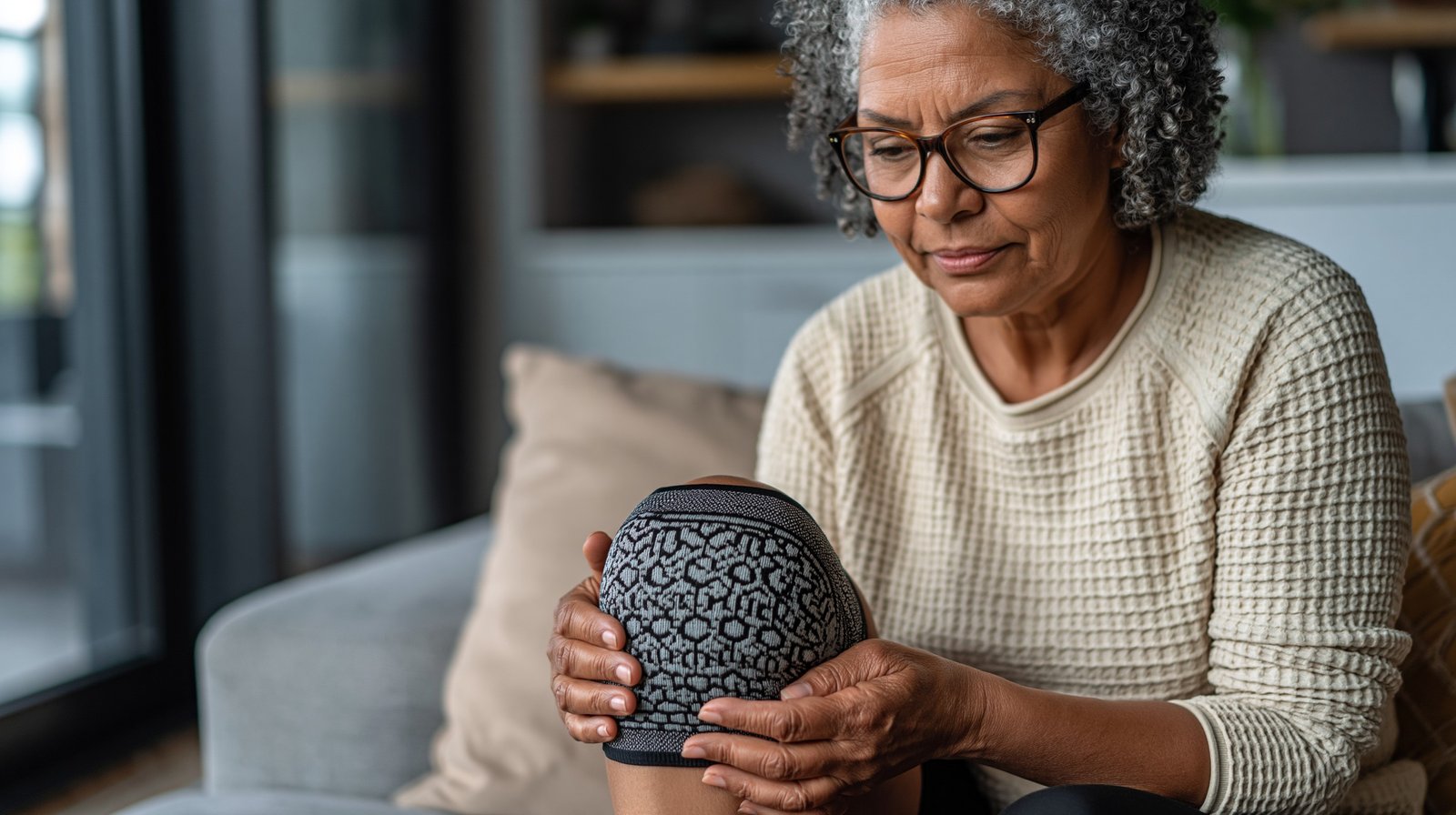
    This post covers why knee pain tends to stick around, how your mindset shapes your outcomes, and a better question to ask than will knee pain go away on its own.

    Ready to Find Out What Your Body Can Do?

    It takes less than 3 minutes. No gym. No equipment. Just a simple test that shows you if your body can do more than it’s been telling you.

    Take the 3-Minute Walk Test

    M3 is a behavioral wellness coaching program. It is not medical treatment and does not replace advice from your physician. Consult your doctor before beginning any new movement or nutrition program.

    Will knee pain go away on its own for most adults over 55?

    Adult woman over 55 sitting quietly at home wondering will knee pain go away on its own or persist with osteoarthritis.

    For most adults over 55 with osteoarthritis, the answer is no. Not without a change in approach.

    Chronic knee pain affects one in four people aged 55 and older, and osteoarthritis is the most common diagnosis (Mallen & Peat, 2007). OA is a degenerative condition. The cartilage that cushions your knee joint thins over time. Waiting does not reverse that process.

    What waiting does is give pain more time to become familiar. The nervous system learns pain patterns the same way it learns any other pattern, through repetition. The longer the knee pain stays without a response, the more normal it starts to feel.

    That is the honest answer to will knee pain go away on its own. It does not disappear by itself. But that is not the whole story.

    Why does knee pain from osteoarthritis tend to stick around?

    Adult man over 55 looking thoughtfully at his knee in the kitchen considering why osteoarthritis pain tends to persist.

    The short version is that OA is a structural condition. The cartilage that cushions the knee joint thins over time and does not grow back. When cartilage thins, the bones experience more friction, and the tissue around the joint becomes more sensitive.

    That sensitivity compounds. A nervous system that has been managing pain signals for months gets efficient at producing them. In plain terms, the body becomes better at generating pain the longer the cycle runs without interruption.

    Rest alone does not break this cycle. In fact, sustained inactivity makes it worse. Muscles weaken, the joint loses support, and the threshold for pain drops further.

    This structural picture is part of why will knee pain go away on its own is the wrong question for adults over 55 with OA. The structure is not changing on its own, and the nervous system is adapting in the wrong direction.

    How does what you believe about your knees affect what they can do?

    Open journal and pen on a wooden table representing the role of mindset and reflection in managing chronic knee pain.

    More than most people expect.

    In a study of 514 adults with knee pain due to osteoarthritis, those with higher self-efficacy and more positive expectations about movement were significantly more physically active at 3 and 6 months, independent of pain severity, age, and other health conditions (Quicke et al., 2017).
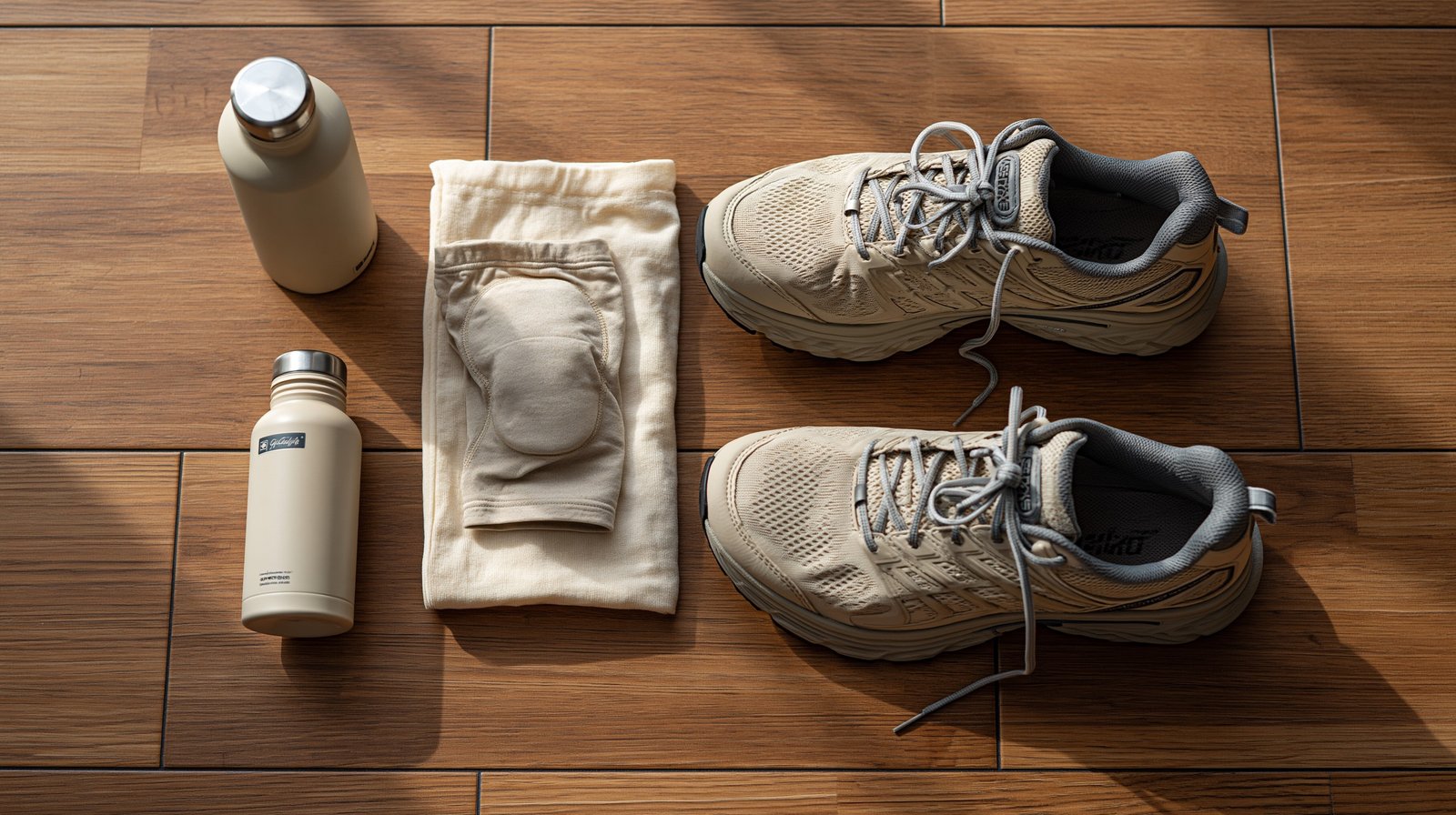
    What that means in practice: two adults with similar knee pain and similar OA severity can have very different activity levels based on what they believe their bodies can do. The one who expects movement to help tends to move more. Movement, in turn, shapes what the knee can actually do over time.

    For anyone still asking will knee pain go away on its own, this is where the question starts to shift. The belief that progress is possible responds to the right environment, which is exactly the gap that structured support after physical therapy ends is designed to fill.

    What does a mind-body approach to knee pain actually change?

    Adult woman over 55 practicing gentle mind-body movement at home to improve both knee function and psychological wellbeing.

    More than one thing at a time.

    In a randomized clinical trial (RCT) of older adults with knee osteoarthritis, a structured Taichi intervention produced significant improvements in knee function, lower limb strength, and balance. Depression, anxiety, and stress also improved significantly in the same group (He & Wang, 2025).

    The physical and psychological dimensions moved together. That matters for anyone still asking will knee pain go away on its own and waiting for the physical problem to resolve first. The mind-body connection in chronic joint conditions is measurable, not metaphor.

    An approach that treats movement and mindfulness as one practice rather than two tends to produce outcomes in both. Not meditation. Not positive thinking. A way of moving that integrates how you feel with what you do.

    What is a better question than will my knee pain go away?

    Adult man over 55 walking calmly in the morning as part of a capability-focused approach to managing chronic knee pain.

    This one: what can my body do today that it could not do three months ago?

    For adults over 55 with chronic knee pain, the question will knee pain go away on its own keeps attention fixed on a destination OA cannot reliably deliver. Pain levels fluctuate. Using pain as the only measure means good weeks feel fragile and bad weeks feel like failure.

    Capability is a steadier measure. Can you walk to the end of the street? Around the block? For ten minutes without stopping? These are questions your body can answer with a yes.

    The adults who move forward tend to share one thing. They stopped waiting for the pain to leave and started paying attention to what they could do. That shift is where nights with knee pain that used to wake you up start to matter less than the mornings where you lace up and go anyway.

    Wrap-up: Will knee pain go away on its own?

    For most adults over 55 with osteoarthritis, knee pain does not resolve on its own. The joint structure is not repairing itself, and a nervous system managing pain for months does not simply reset with rest.

    But that is not the most useful thing to know.

    What you believe about your body’s capacity to move predicts how much you actually move. A mind-body approach improves both physical function and psychological health at the same time. The question that creates forward progress is not, “Will knee pain go away on its own?” but “What can my body do today?”

    Will knee pain go away on its own is one piece of a larger picture. The complete guide to knee pain relief for adults over 55 is where the full approach lives.

    Ready to Find Out What Your Body Can Do?

    It takes less than 3 minutes. No gym. No equipment. Just a simple test that shows you if your body can do more than it’s been telling you.

    Take the 3-Minute Walk Test

    M3 is a behavioral wellness coaching program. It is not medical treatment and does not replace advice from your physician. Consult your doctor before beginning any new movement or nutrition program.

    Frequently Asked Questions

    Is it normal to have knee pain every day after 55?

    For adults with osteoarthritis, daily knee pain is common but not inevitable. Research shows 1 in 4 adults over 55 experience chronic knee pain, but severity varies widely. Daily pain that limits basic movement, like walking across a room or getting out of a chair, is worth discussing with your doctor rather than accepting as normal aging.

    Can stress make knee pain feel worse?

    Yes, and the research supports it. Psychological stress activates the same inflammatory pathways that contribute to joint pain. Adults managing high stress alongside chronic knee OA often report pain that feels disproportionate to their physical condition. Addressing stress directly, through movement, sleep, or mindfulness practices, is not separate from managing the knee. It is part of it.

    How do you know if your knee pain is getting better or worse?

    Track what your body can do, not just how much it hurts. Pain fluctuates for reasons unrelated to actual joint health. A more reliable measure is functional capability: can you walk further than you could last month? Climb stairs with less hesitation? Get up from the floor more easily? Consistent gains in capability over 4 to 6 weeks indicate forward progress.

    What is the difference between knee pain that heals and knee pain that is managed?

    Healing implies that the underlying cause resolves completely. For OA-related knee pain after 55, the structural changes are permanent. Management means reducing how much those changes affect daily life, how far you walk, how easily you move, and how well you sleep. For most adults with OA, will knee pain go away on its own is the wrong goal. Walking well is the right one.

    Should you push through knee pain or rest when it flares up?

    Neither extreme serves you well. Pushing through sharp pain risks injury. Extended rest weakens the muscles that support the knee and lowers your pain threshold over time. A flare-up calls for reduced intensity, not a full stop. Gentle movement within a comfortable range keeps joint fluid moving and prevents the deconditioning cycle from starting.

    How do you stop worrying about your knee pain getting worse?

    Start tracking what your body can do rather than what it cannot. Worry grows when the only measure of progress is pain, which fluctuates unpredictably. When you shift to capability, a 5-minute walk that becomes 8 minutes is visible progress. That visibility reduces the uncertainty that feeds worry. Movement is both a physical and a psychological intervention.

    References

    He, Q., & Wang, F. (2025). Taichi is medicine: Effects of Taichi exercise on knee fitness and psychological health in older adults with knee osteoarthritis (KOA): A randomized controlled trial. Medicine, 104(38), e44612. https://doi.org/10.1097/MD.0000000000044612

    Mallen, C. D., & Peat, G. (2007). Chronic knee pain. BMJ, 335(7614), 303. https://doi.org/10.1136/bmj.39231.735498.94

    Quicke, J. G., Foster, N. E., Ogollah, R. O., Croft, P. R., & Holden, M. A. (2017). Relationship between attitudes and beliefs and physical activity in older adults with knee pain: Secondary analysis of a randomised controlled trial. Arthritis Care & Research, 69(8), 1192–1200. https://doi.org/10.1002/acr.23104

  • What to Do After Physical Therapy for Knee Pain: A Simple Roadmap

    What to Do After Physical Therapy for Knee Pain: A Simple Roadmap

    Raymond showed up to our first call three weeks after his last physical therapy session. He was walking better than he had in years. His therapist had discharged him with a home exercise sheet and a handshake. What to do after physical therapy for knee pain was not something anyone had planned out with him. He just assumed he would figure it out.

    Most adults over 55 in his situation do the same thing. And most of them, within a few months, are right back where they started.

    Key Takeaway

    A systematic review of 176 clinical trials found that mean unsupervised exercise adherence in knee osteoarthritis patients was 67.9%, with a range of 3.7% to 100% (Smith et al., 2023). The gap between those who kept going and those who stopped had one variable in common. Structure.

    This post covers why PT gains disappear, what fills the gap, and a 3-step roadmap for what to do after physical therapy for knee pain so the progress you earn stays with you.

    Ready to Find Out What Your Body Can Do?

    It takes less than 3 minutes. No gym. No equipment. Just a simple test that shows you if your body can do more than it’s been telling you.

    Take the 3-Minute Walk Test

    M3 is a behavioral wellness coaching program. It is not medical treatment and does not replace advice from your physician. Consult your doctor before beginning any new movement or nutrition program.

    Why do so many people lose their PT gains after discharge?

    Adult man over 55 reviewing his home exercise sheet wondering what to do after physical therapy for knee pain ends.

    The honest answer is that PT works while someone is watching. The moment the appointments stop, adherence to unsupervised exercise drops fast, and the gains that came from supervised care start to erode.

    A systematic review of 176 clinical trials found that when knee osteoarthritis patients exercised on their own, adherence ranged from 3.7% to 100% depending on the individual (Smith et al., 2023). The mean was 67.9%. That means roughly 1 in 3 people stop doing what their PT prescribed, on average, once no one is checking.

    Knowing what to do after physical therapy for knee pain is not the problem. Most people got a sheet of exercises and a handshake. The problem is that the structure disappeared when the appointments did.

    What is actually happening when PT ends, and the appointments stop?

    Adult woman over 55 at home after physical therapy discharge wondering what comes next for her knee pain.

    Two things collapse at the same time.

    The first is the external structure. Appointments, accountability, and someone watching your form all disappear on discharge day.

    The second is internal confidence. Research on older adults with knee osteoarthritis found that outcome expectations, what people believe exercise will do for them, are a primary driver of whether they keep going (Chu & Wang, 2023). When the therapist stops reinforcing that the work is paying off, those expectations erode quietly.

    A qualitative study found that structured coaching alongside PT improved exercise adherence because it kept the feedback loop alive after supervised sessions ended (Hinman et al., 2016). Without that loop, what to do after physical therapy for knee pain becomes a question most adults answer by doing less and less.

    The gap is not a willpower problem. It is a structure problem.

    How do you find your starting point after physical therapy for knee pain?

    Walking shoes on a doorstep ready for a short assessment walk as the first step after physical therapy for knee pain.

    Before adding anything new, you need to know what your body can actually do right now.

    Most adults leaving PT have a sense of their pain level, but not their capability. Pain scores tell you how much something hurts. Capability tells you what you can do. Those are different measurements, and capability is the one that matters for building forward.

    The simplest assessment is a short walk. Go around the block at a comfortable pace. When you get back, note what felt easy and what felt harder than you expected. Write it down. That is your baseline.

    Figuring out what to do after physical therapy for knee pain starts with an honest look at where you are right now. Once you know that, the next step has somewhere to begin.

    How do you take your first small win after PT ends?

    Adult man over 55 pausing after a short walk to check whether he feels better than when he started.

    This is the step most people skip. They go straight from “PT ended” to “I need a full routine,” and the gap stops them before they start.

    A small win is simpler. Walk for 2 to 3 minutes. Drink a glass of water first. When you finish, check one thing: do you feel better than when you started?

    That single question is more useful than any pain score. If the answer is yes, your body just told you it can still respond. When thinking about what to do after physical therapy for knee pain, that moment is the foundation on which everything else builds.

    The 3-Minute Walk Test at enneadhealth.com is built around exactly this idea. It takes under 3 minutes and tells you more than a week of wondering.

    How do you make daily movement a habit without a therapist?

    Adult woman over 55 stepping out her front door for a short morning walk as part of her daily movement habit after physical therapy.

    The answer is not a new workout program. It is one small anchor.

    Pick a time of day you can protect. After your morning coffee. Before dinner. Attach a short walk to something you already do every day. The goal is not distance or intensity. The goal is to show up at the same time every day until the movement becomes automatic.

    This is what the research on post-PT drop-off points consistently points to. When the external schedule disappears, the internal one has to take its place. If you have not built one yet, mornings tend to work well for adults over 55 because the morning stiffness that comes with inactivity gives you an immediate reason to move.

    Small and daily beats long and occasional. That is how you make daily movement a habit without a therapist guiding what to do after physical therapy for knee pain.

    Ready to Find Out What Your Body Can Do?

    It takes less than 3 minutes. No gym. No equipment. Just a simple test that shows you if your body can do more than it’s been telling you.

    Take the 3-Minute Walk Test

    M3 is a behavioral wellness coaching program. It is not medical treatment and does not replace advice from your physician. Consult your doctor before beginning any new movement or nutrition program.

    Wrap-up: What to do after physical therapy for knee pain

    Physical therapy gives you a window. What you do in the weeks after determines whether that window stays open.

    The research is clear that unsupervised exercise adherence drops without structure. The people who keep their PT gains are not more motivated than those who lose them. They have a plan. Three steps: find your starting point, take your first small win, and build a daily anchor that grows with you.

    What to do after physical therapy for knee pain is not a mystery. It is a practice. And like any practice, it works better with a structure behind it.

    If you want to understand the full approach to knee pain relief for adults over 55, the complete guide is the place to start.

    Frequently Asked Questions

    How long does it take to lose PT gains if you stop exercising?

    Deconditioning starts within 2 weeks of stopping structured movement. Strength gains from supervised PT can show measurable decline within 4 weeks without follow-through. For adults over 55, the window between keeping what you earned and starting over is shorter than most people expect.

    Can I do my PT exercises forever on my own?

    You can, and for many adults, the PT home program is a solid foundation. The challenge is that home programs are usually static — the same exercises at the same level indefinitely. Bodies adapt and need progression. Doing the same 8 exercises for 12 months stops being therapeutic and becomes maintenance at best.

    What should I tell my doctor if my knee gets worse after PT ends?

    Be specific about what changed and when. Note whether the worsening followed a change in activity, a period of inactivity, or appeared without a clear trigger. Sudden swelling, increased pain at rest, or any locking of the joint are worth flagging promptly. Gradual worsening over several weeks warrants a routine follow-up.

    How often should I exercise after physical therapy for knee pain?

    Daily light movement beats infrequent intense sessions for adults over 55 with knee pain. A 2-to-3-minute anchor every day is a stronger foundation than a 45-minute session twice a week that gets skipped when motivation dips. Once the daily habit is solid, adding one longer session per week is the natural next step.

    Is it normal for knee pain to come back after physical therapy?

    Yes, and it does not mean PT failed. Pain fluctuates with activity levels, sleep quality, stress, and diet. A flare-up after discharge is common, especially in the first 4 to 8 weeks when the transition from supervised to self-directed movement is most vulnerable. It is a signal to adjust, not a reason to stop.

    What is the difference between finishing PT and being done with PT?

    Finishing PT means your sessions ended or your therapist discharged you. Being done with PT means you no longer need structured movement support. For most adults over 55 with chronic knee pain, finishing PT and being done with PT are two very different things. Confusing them is where progress stalls.

    References

    Chu, S.-F., & Wang, H.-H. (2023). Outcome expectations and older adults with knee osteoarthritis: Their exercise outcome expectations in relation to perceived health, self-efficacy, and fear of falling. Healthcare, 11(1), 57. https://doi.org/10.3390/healthcare11010057

    Hinman, R. S., Delany, C. M., Campbell, P. K., Gale, J., & Bennell, K. L. (2016). Physical therapists, telephone coaches, and patients with knee osteoarthritis: Qualitative study about working together to promote exercise adherence. Physical Therapy, 96(4), 479–493. https://doi.org/10.2522/ptj.20150260

    Smith, K. M., Massey, B. J., Young, J. L., & Rhon, D. I. (2023). What are the unsupervised exercise adherence rates in clinical trials for knee osteoarthritis? A systematic review. Brazilian Journal of Physical Therapy, 27(4), 100533. https://doi.org/10.1016/j.bjpt.2023.100533